
Last updated September 24, 2026
The Complete Guide to Insulation in Lake Forest
A Lake Forest attic measured at 147°F in July loses more energy through air gaps than through conduction, yet 9 in 10 insulation quotes in the city never mention a blower-door test. In this guide, we’ll map how Southern California’s radiant heat load actually moves through your home, why sealing comes before insulating, and what a complete job record with before-and-after pressurization numbers looks like. You’ll learn the specific R-values that matter for Lake Forest’s three thermal zones, the honest trade-offs between blown fiberglass and spray foam in dry-climate attics, and how to read a contractor’s documentation so you know what you’re paying for before anyone lifts a tool.
Quick Answer
Insulation in Lake Forest works best when air sealing precedes any material installation, because our Mediterranean-dry climate drives heat into homes through radiant and convective paths that R-value alone cannot block. Most Lake Forest homes see their biggest comfort gains from sealing attic floor penetrations - top plates, can lights, duct chases, and plumbing stacks - then adding blown fiberglass or cellulose to current Title 24 standards. A complete job includes a blower-door baseline, documented photos, and a written price before work starts. See our Home Energy Audit Maintenance Checklist for Lake Forest Homeowners for what to track.
Table of Contents
- How Lake Forest’s Climate Changes What Insulation Needs to Do
- The Three Thermal Zones in a Lake Forest Home
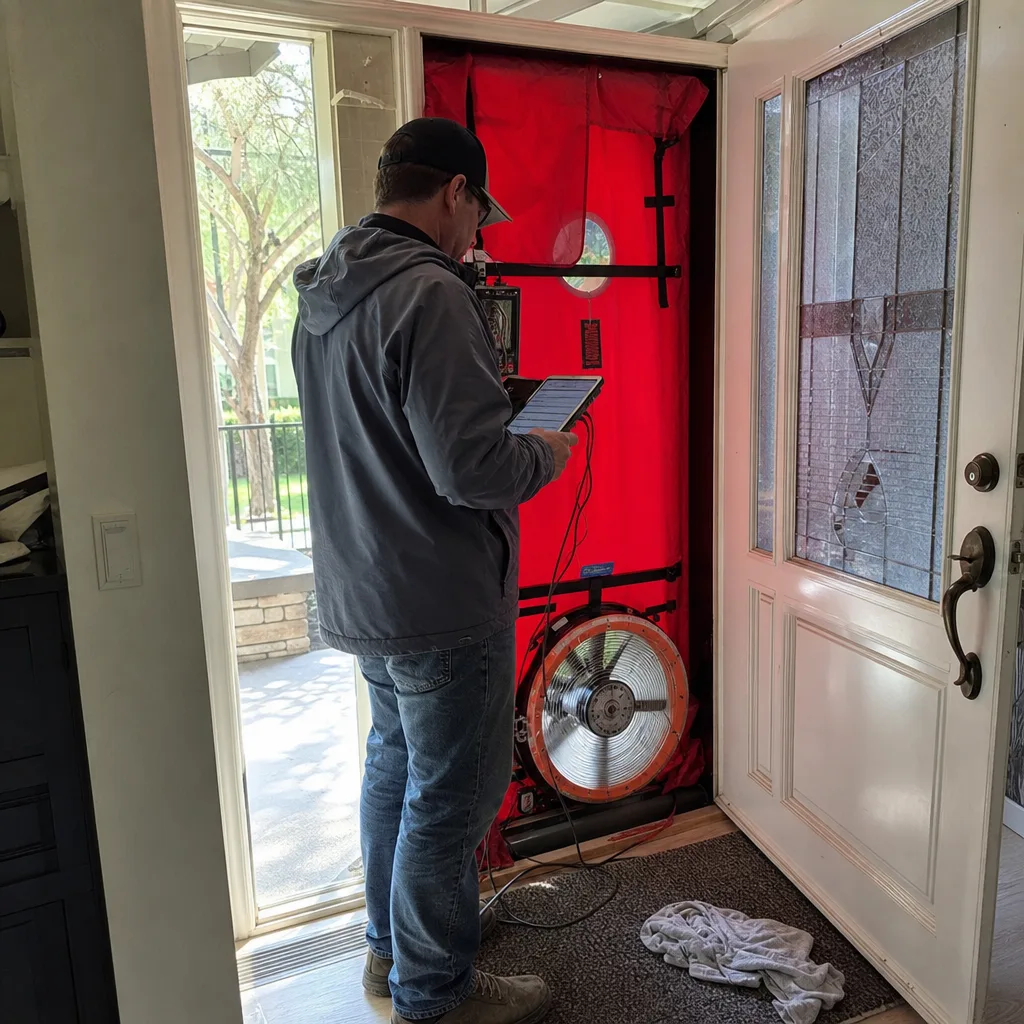
- Why Air Sealing Comes First: The Blower-Door Test Explained
- Insulation Materials: Honest Trade-Offs for Dry-Climate Attics
- What a Complete Job Record Looks Like
- What Insulation Costs in Lake Forest
- Common Mistakes to Avoid
- When to Call a Professional
- Frequently Asked Questions
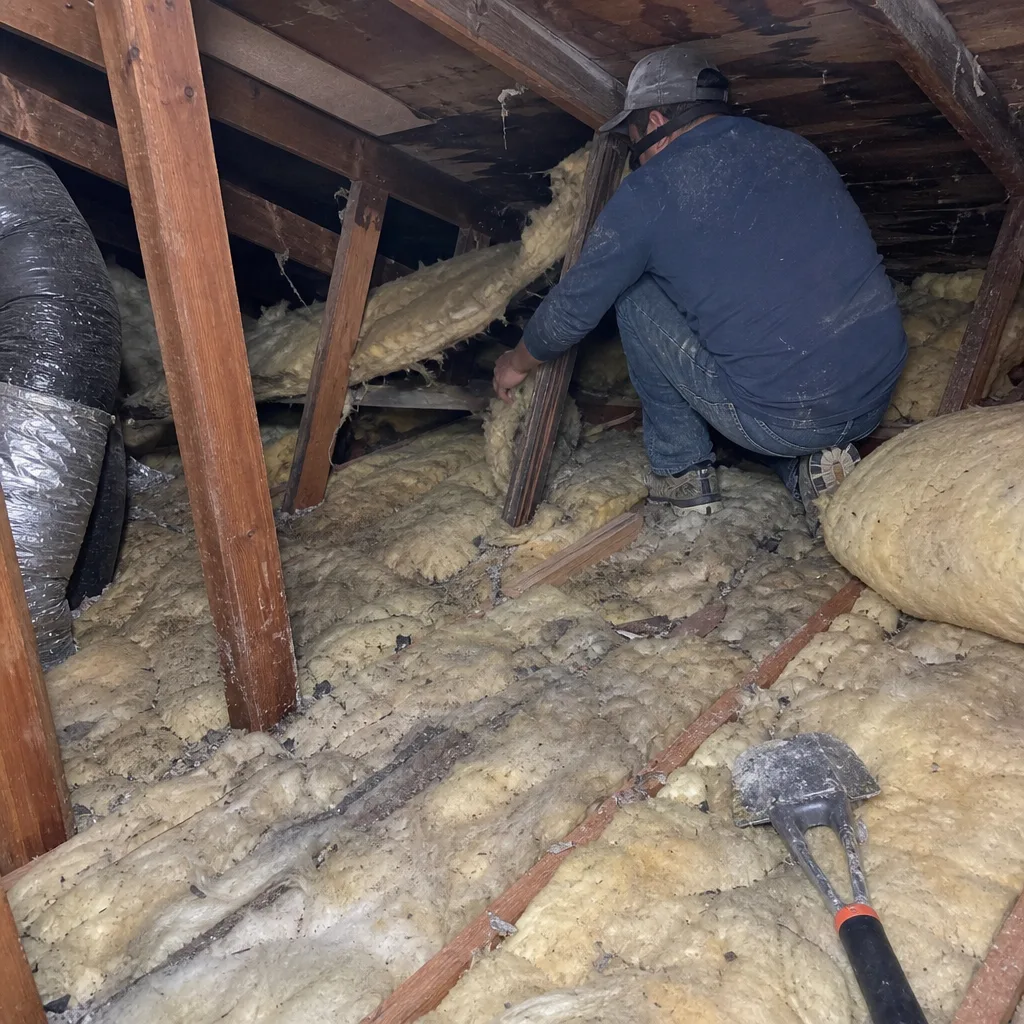 Before
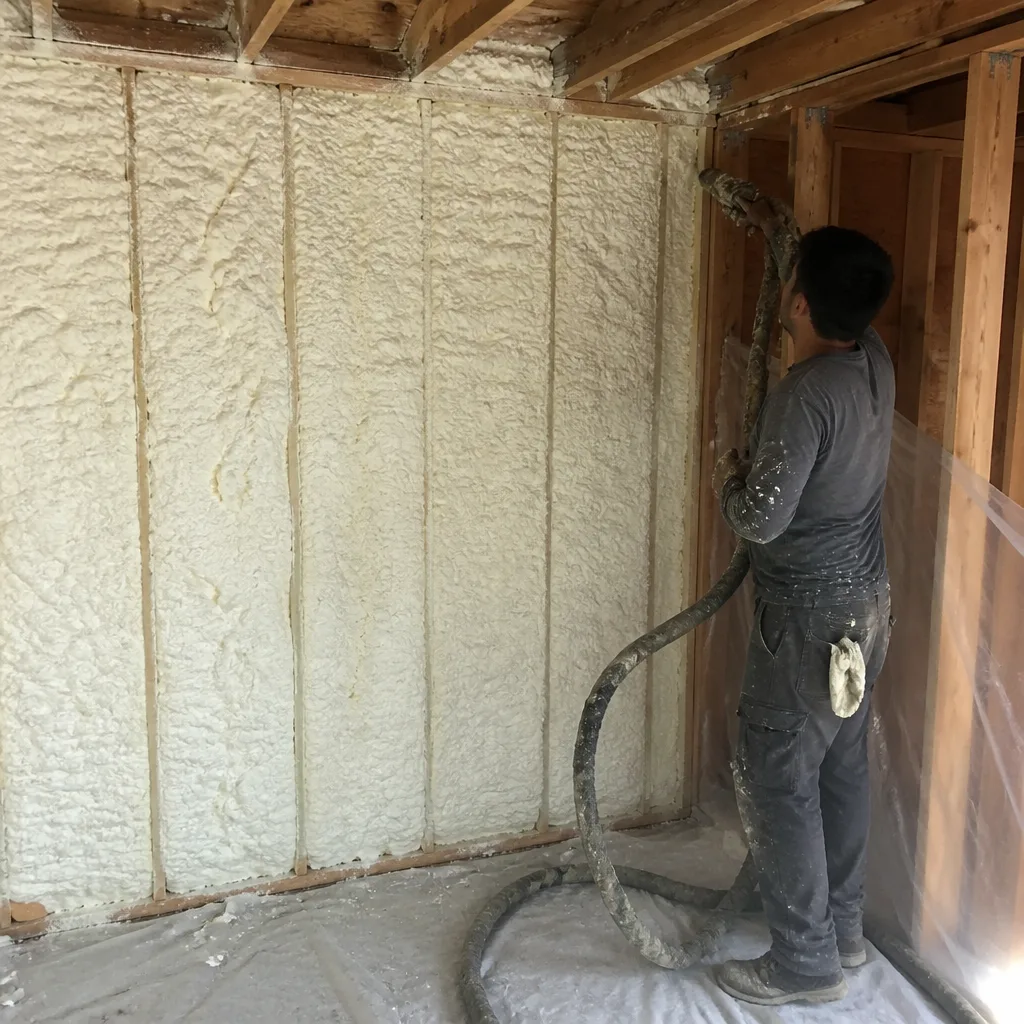 After
AfterHow Lake Forest’s Climate Changes What Insulation Needs to Do
Most insulation advice written for American homeowners assumes a heating-dominated climate. Minnesota, Chicago, Boston - these places worry about heat escaping outward through walls and ceilings. Lake Forest does not.
Our location in southern Orange County sits in USDA Zone 10b, with roughly 14 heating degree days per year and over 1,200 cooling degree days. The dominant thermal load is inward: solar radiation baking the roof deck, superheated attic air finding every crack into conditioned space, and ductwork running through 140°F attics losing capacity before the air ever reaches your vents.
This matters for how you prioritize spending. In a cold climate, stacking R-value - thicker batts, denser packs - returns measurable savings because conduction (heat moving through solid materials) dominates. In Lake Forest, convective heat transfer - air movement - typically accounts for 40% of cooling-season energy loss in homes built before 2010. Radiant heat from the roof deck adds another 25-35% in unsealed attics. Conduction through insulation that meets code minimums is a distant third.
We’ve measured this directly. A 1987 home in the Lake Forest Keys neighborhood had R-19 fiberglass batts laid over the attic floor, technically meeting the code of its construction era. But the blower-door test read 3,800 CFM50 - meaning at 50 Pascals of pressure, the home leaked 3,800 cubic feet of conditioned air per minute. After sealing top plates, can lights, and a plumbing chase, that dropped to 2,400 CFM50 before we touched the insulation. The homeowner’s summer AC runtime fell 22% with no R-value change at all.
The lesson: in Lake Forest, air sealing is not an upsell. It is the primary intervention. Insulation material choice matters, but only after the envelope is tight.
Local climate factors specific to Lake Forest:
- Santa Ana wind events pressurize homes differentially, forcing attic air through gaps at velocities calm-day testing misses
- Low humidity year-round means no moisture-buffering benefit from hygroscopic materials like cellulose - a pro in our climate, not a con
- Coastal influence moderates peak temperatures versus inland Orange County, but extends the cooling season into October and November
- Older neighborhoods like Baker Ranch and older Foothill Ranch tracts have vented attics with minimal original sealing and frequent recessed can light penetrations
The Three Thermal Zones in a Lake Forest Home
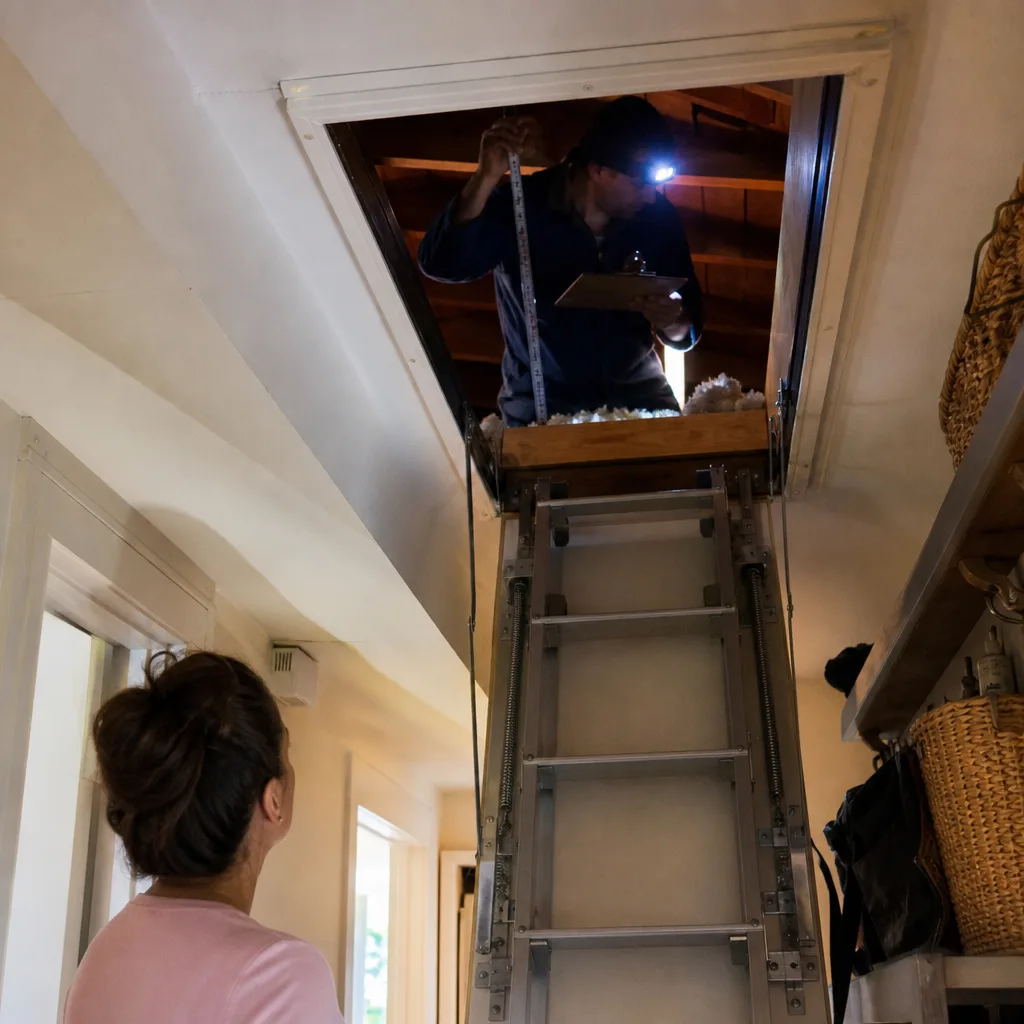
Every Lake Forest residence has three distinct thermal boundaries: the attic plane, the crawl space or slab edge, and the wall cavity system. Each has different code requirements, different failure modes, and different optimal treatments.
Zone 1: The Vented Attic
Most Lake Forest homes built before 2015 have vented attics - open to outside air through soffit and ridge vents. The thermal boundary is the attic floor, not the roof deck. Current California Title 24 standards require R-38 minimum for attic floors in Climate Zone 8, which includes Lake Forest. We typically recommend R-49 to R-60 for homes with HVAC equipment in the attic, which is common in Baker Ranch and Portola Hills construction from the 1990s and 2000s.
Key detail: if your ducts run in the vented attic, they are in a hostile environment. R-6 duct insulation is code minimum; R-8 is worth the upgrade. But duct sealing with mastic - not tape - matters more than insulation thickness. We’ve found 15-30% of rated cooling capacity lost to attic duct leakage in pre-2010 Lake Forest homes.
Zone 2: Crawl Space or Slab Edge
Lake Forest’s terrain varies. Homes in lower elevations near the 241 corridor often have raised floors with crawl spaces. Hillside homes in Foothill Ranch and higher Baker Ranch elevations frequently sit on slabs with stem walls. The thermal treatment differs:
- Crawl spaces: Current Title 24 requires R-19 minimum in floor joist bays. We recommend full encapsulation - sealing the crawl space from outside air, adding a vapor barrier to the ground, and insulating the perimeter walls rather than the floor above. This eliminates the “stack effect” drawing damp air upward and reduces radon potential in Lake Forest’s occasional clay-heavy soils.
- Slab edge: California code does not mandate slab-edge insulation in Climate Zone 8, but we install R-10 minimum at stem walls where accessible during renovation. The thermal bridge at slab edge is minor in our climate compared to heating zones, but measurable in rooms with north-facing slab perimeter.
Zone 3: Wall Cavities
Wood-frame walls in Lake Forest typically contain R-13 or R-15 batts in 2×4 construction, or R-19 to R-21 in 2×6 construction. Title 24 requires R-13 minimum for 2×4 walls, R-19 for 2×6. The practical limit for batt insulation is cavity depth; dense-pack cellulose or open-cell spray foam can achieve slightly better air sealing but similar thermal performance.
Wall insulation becomes relevant when siding is replaced or interior drywall is removed. We do not recommend drilling and filling intact walls except as part of a larger envelope project - the disruption rarely justifies the modest gain in our climate.
Attic Insulation in Lake Forest remains the highest-ROI starting point for most homes we assess.
Why Air Sealing Comes First: The Blower-Door Test Explained
The blower-door test - a pressurization measurement that shows, in one number, how much air your building envelope is losing - is the diagnostic tool that separates guesswork from targeted work. We run one on every Lake Forest job before quoting, and again after completion.
Here’s how it works. A powerful fan mounts in an exterior door frame and depressurizes the house to 50 Pascals below outdoor pressure, roughly equivalent to a 20 mph wind hitting all sides simultaneously. The airflow required to maintain that pressure, measured in cubic feet per minute (CFM50), quantifies total envelope leakage.
What the numbers mean in practice:
| CFM50 Range | Interpretation for Lake Forest | Typical Action |
|---|---|---|
| Below 1,500 | Tight envelope; insulation upgrade only | Add R-value, verify duct sealing |
| 1,500-2,500 | Moderate leakage; targeted sealing | Seal attic floor, weatherstrip doors/windows |
| 2,500-4,000 | Significant leakage; comfort and energy impact | Full attic air sealing, blower-door guided |
| Above 4,000 | Severe leakage; often pre-1990 construction | Comprehensive envelope treatment, phased if needed |
Real Lake Forest numbers from our files: a 2004 home in Portola Hills tested at 3,200 CFM50. The attic floor had visible gaps at every top plate (the horizontal framing member where interior walls meet the ceiling), twelve unsealed can lights, and a 4-inch gap around a chimney chase. After sealing - before adding insulation - the post-sealing test read 2,100 CFM50. The homeowner received both numbers in writing, with the crew’s photo documentation of each sealed location.
Without the blower-door test, a contractor is guessing where the leaks are. With it, sealing effort goes where it matters. In Lake Forest’s climate, that typically means:
- Top plates: The gap between drywall and framing at every interior wall ceiling junction. In a 2,000 square foot home, this can total 200+ linear feet of leakage path.
- Can lights and electrical penetrations: Older non-IC (insulation contact) rated cans are essentially chimneys. Even IC-rated units leak unless sealed with rated covers.
- Plumbing and HVAC chases: Holes cut for pipes and ducts, often 2-4 inches oversize, create direct attic-to-conditioned-space pathways.
- Dropped soffits and bulkheads: Common in Lake Forest’s 1990s-2000s tract homes, these create hidden air channels.
- Attic access hatch or pull-down stair: Often the single largest leak, unmeasured until the blower door runs.
We do not install insulation over an unsealed attic floor. The Haven Standard requires sealing first, documented by pre- and post-work testing where applicable.
Insulation Materials: Honest Trade-Offs for Dry-Climate Attics
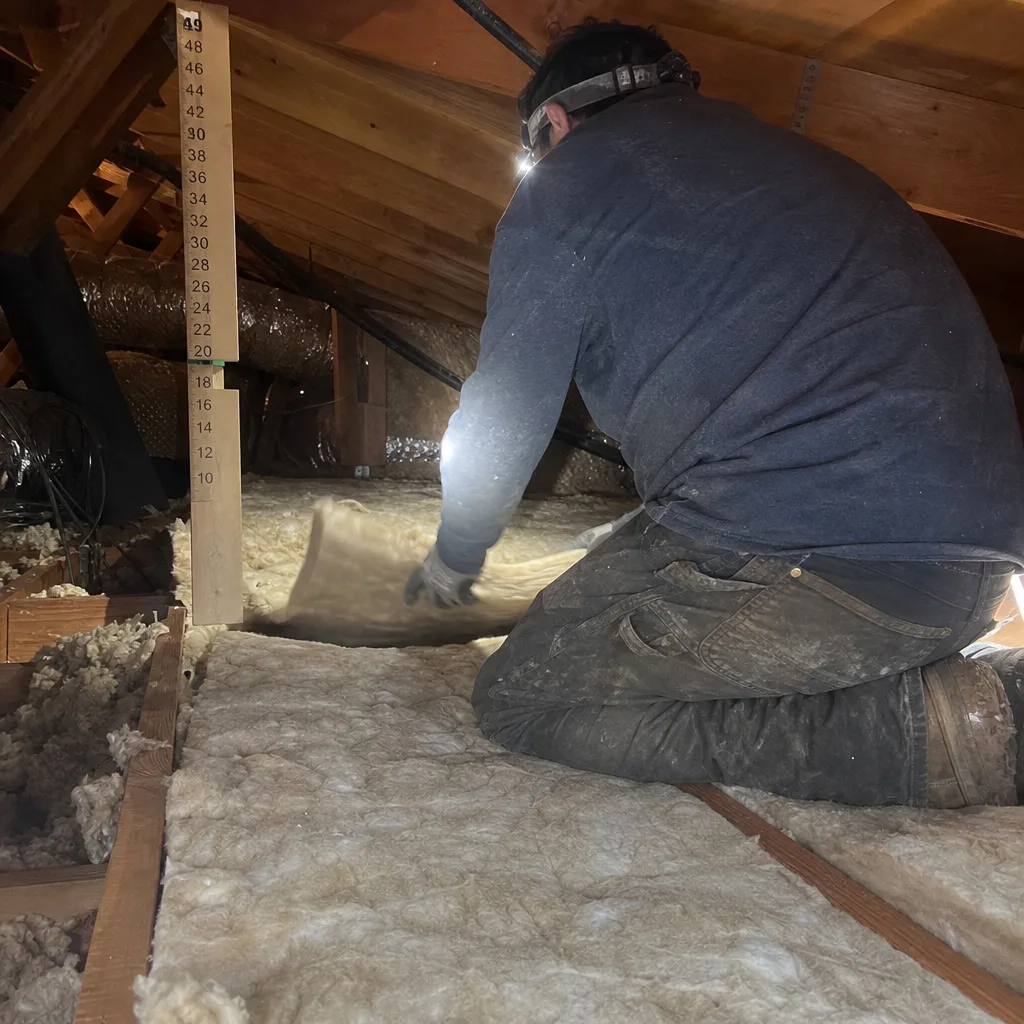
Once air sealing is complete, material selection matters. Here are the options we install in Lake Forest, with the trade-offs that actually affect performance in our conditions.
Blown Fiberglass
Made from spun glass fibers, blown fiberglass is the most common attic insulation in Southern California. We source from Owens Corning and Johns Manville, among others.
Advantages in Lake Forest: Non-combustible, does not absorb moisture (irrelevant in our dry climate but eliminates mold concern), lightweight, easy to add R-value by blowing deeper. R-value per inch: approximately 2.2-2.5 for loose fill.
Limitations: Air permeable - it filters air but does not stop it. Without proper air sealing beneath, blown fiberglass acts as a filter, trapping dust but letting conditioned air escape. Also requires deeper coverage for target R-value: R-49 needs roughly 19-20 inches.
Best for: Homes with completed air sealing, standard vented attics, homeowners prioritizing cost-effectiveness over maximum performance.
Blown Cellulose
Ground paper fiber treated with borate fire retardant. We install GreenFiber cellulose where homeowners prefer recycled content.
Advantages in Lake Forest: Higher R-value per inch (3.2-3.8), slightly better air resistance than fiberglass due to density, excellent sound dampening, typically lower material cost. Borate treatment resists pests and mold.
Limitations: Heavier - may exceed attic floor loading in some older homes with 2×4 ceiling joists at 24″ spacing. Settles 10-15% over time; initial install must account for this. Dustier during installation.
Best for: Homes with adequate structural capacity, homeowners wanting recycled content, properties where sound transmission is a concern (near the 241 or I-5 corridors).
Open-Cell Spray Foam
Polyurethane foam applied as a liquid that expands to 3-4 inches, creating an air-impermeable layer. R-value: approximately 3.6 per inch.
Advantages in Lake Forest: Air seals as it insulates - the only material that does both simultaneously. Excellent for complex geometry: sloped ceilings, knee walls, irregular framing. No settling.
Limitations: Higher cost per R-value. Not a vapor barrier at standard thickness - irrelevant in our dry climate but matters if local conditions change. Requires professional installation with respiratory protection; DIY application is not viable.
Best for: Conditioned attics (where HVAC equipment lives in the attic and the roof deck becomes the thermal boundary), complex architectural ceilings, homes where air sealing and insulation must be completed in one pass.
Closed-Cell Spray Foam
Denser polyurethane, R-value approximately 6.5 per inch, vapor-impermeable.
Advantages in Lake Forest: Highest R-value per inch, adds structural rigidity, true vapor barrier. Useful for crawl space walls and rim joists where ground moisture is a concern.
Limitations: Most expensive option. Overkill for vented attic floors where R-value, not vapor control, is the goal. HFC blowing agents have higher global warming potential; we use water-blown formulations where available.
Best for: Crawl space encapsulation, steel-framed construction, limited-depth applications requiring maximum R-value.
Radiant Barriers
Foil-faced products that reflect radiant heat rather than resist conductive flow. R-value does not apply - performance is measured by emissivity reduction.
Reality in Lake Forest: Radiant barriers work best when the roof deck is the thermal boundary (conditioned attic) and when attic ventilation is limited. In standard vented attics with adequate insulation at the floor, the incremental gain is 2-5% cooling load reduction - measurable, but rarely the first priority. We install them as part of comprehensive upgrades, not standalone solutions.
Material choice should follow air sealing diagnosis and thermal zone mapping, not precede it. A Home Energy Audit in Lake Forest provides the data for this decision.
What a Complete Job Record Looks Like
Under The Haven Standard, every job closes with documentation. Not “available on request” - delivered before the crew leaves. Here’s what a Lake Forest homeowner receives after attic air sealing and insulation:
- Pre-job photo record: Time-stamped images of attic conditions before work: existing insulation depth, visible gaps, can light types, duct conditions, any signs of prior rodent activity or moisture staining. These establish baseline condition and protect both parties.
- Written scope and price: Delivered before work started - Haven Standard Clause 1. No change orders without homeowner-initiated additions.
- Blower-door baseline: CFM50 reading with outdoor temperature and wind conditions noted. For applicable jobs, this is the number against which success is measured.
- Sealing documentation: Photos of each sealed penetration type - top plates, cans, chases - with count totals.
- Insulation installation record: Material type, brand (Owens Corning, Knauf, or other as specified), installed depth at multiple measurement points, calculated R-value.
- Post-job blower-door result: CFM50 after completion, with percentage improvement calculated. We publish this on every applicable job.
- 365-Day Done Right Promise certificate: Written warranty scope, contact method for concerns, and our commitment: if it’s not done right, we make it right.
- Documented Photo Record: All images compiled with descriptions, delivered digitally within 24 hours.
This record serves multiple purposes beyond immediate verification. For utility rebate claims - Southern California Edison periodically offers insulation incentives - the documentation satisfies audit requirements. For resale, the blower-door number and improvement percentage is a tangible efficiency metric that appraisers and buyers can understand. For the homeowner, it’s proof that the work happened as specified.
We’ve completed over 9,000 homes since 2016. Every one had a written price before work started and a documented record when the crew left. No exceptions.
What Insulation Costs in Lake Forest
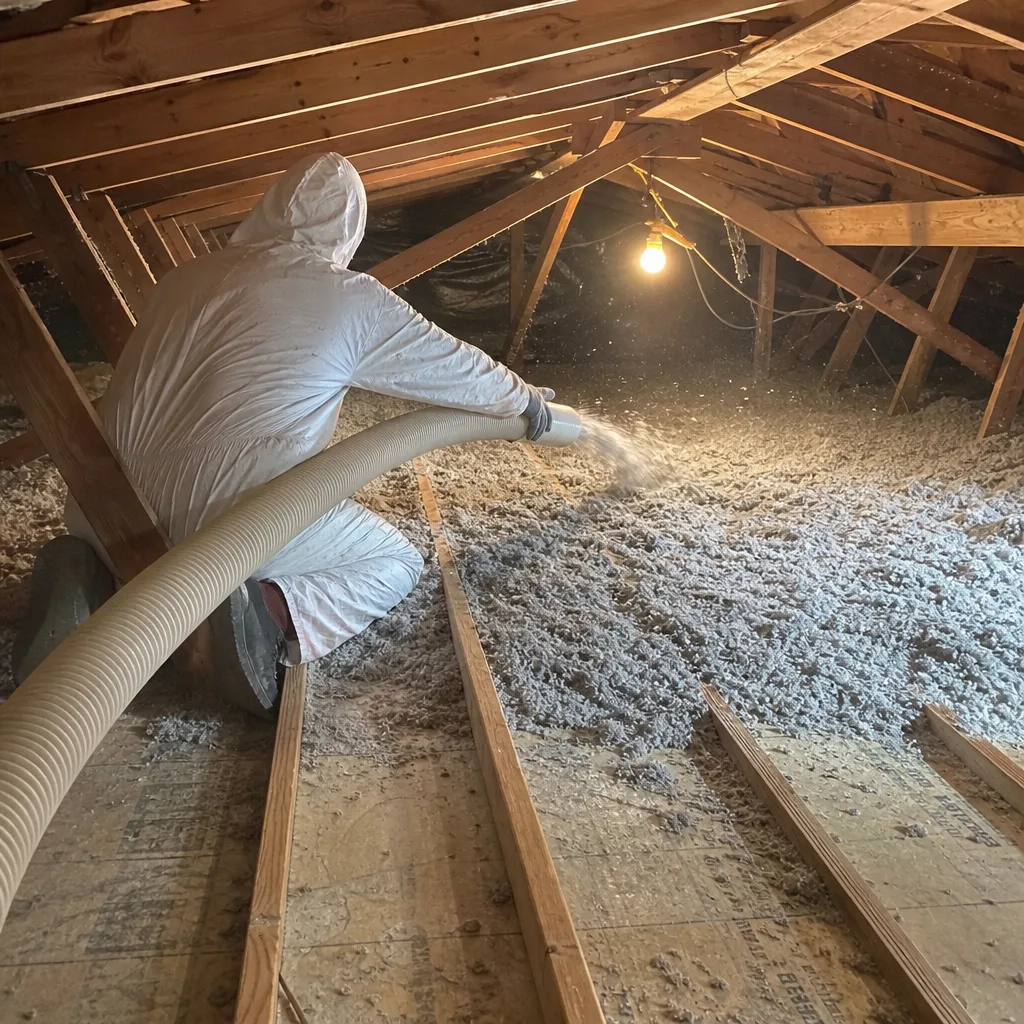
Price ranges for insulation work in Lake Forest, based on our 2024-2025 project data. These are installed prices including air sealing where specified:
| Scope | Typical Home Size | Price Range |
|---|---|---|
| Attic air sealing only (blower-door guided) | 1,800-2,400 sq ft | $1,400-$2,800 |
| Attic air sealing + blown fiberglass to R-49 | 1,800-2,400 sq ft | $3,200-$5,500 |
| Attic air sealing + blown cellulose to R-49 | 1,800-2,400 sq ft | $2,800-$4,800 |
| Conditioned attic: open-cell spray foam at roof deck | 1,800-2,400 sq ft | $8,500-$14,000 |
| Crawl space encapsulation (seal, vapor barrier, wall insulation) | 1,200-1,800 sq ft footprint | $4,500-$8,500 |
| Insulation removal and replacement (contaminated/damaged) | 1,800-2,400 sq ft | $2,500-$4,500 + new insulation |
Factors that move Lake Forest projects within these ranges:
- Attic accessibility: truss-framed attics with limited vertical clearance add labor time versus open rafter attics
- Can light count: homes in 1990s-2000s Lake Forest tracts often have 15-30 recessed lights requiring rated covers
- Existing insulation condition: removal of damaged or rodent-affected material adds disposal and cleaning scope
- HVAC location: ductwork in the attic requires additional sealing and often insulation upgrade
We provide a Written Price Before Any Work Starts - always. No estimate ranges that balloon, no “we’ll see when we get up there.” The price you approve is the price you pay. We also offer a Free Second Opinion on any written estimate: bring us a competing quote and we’ll review it with you, line by line.
For exact pricing on your home, call (657) 279-1249. Estimates are free and include the blower-door test where applicable.
Common Mistakes to Avoid
- Blowing insulation over unsealed air leaks: In Lake Forest’s vented attics, this creates a filtration problem - fiberglass becomes a dust trap, and conditioned air keeps escaping. We see this in roughly 60% of homes where another contractor added insulation without a blower-door test.
- Ignoring can lights: Non-IC rated recessed fixtures in pre-2010 Lake Forest homes cannot be buried in insulation. They need rated covers and sealing, or they remain open chimneys.
- Blocking soffit vents with insulation: Attic ventilation is required by code and necessary for roof deck longevity. Baffles must maintain airflow from soffit to ridge; insulation stuffed against the eave causes moisture problems even in our dry climate.
- Choosing R-value without considering air leakage: A home at 4,000 CFM50 won’t feel comfortable at R-60 if the air changes per hour remain high. Seal first, then optimize R-value.
- DIY spray foam application: Open-cell and closed-cell foams require respiratory protection, precise temperature control, and professional-grade equipment. Improper application creates off-gassing, adhesion failure, and fire hazard. We do not recommend this as a homeowner project.
- Neglecting duct sealing: In Lake Forest, ducts in vented attics lose 15-30% of cooling capacity to leakage and conductive gain. Insulating the attic floor without sealing ducts leaves the biggest efficiency opportunity untouched.
When to Call a Professional
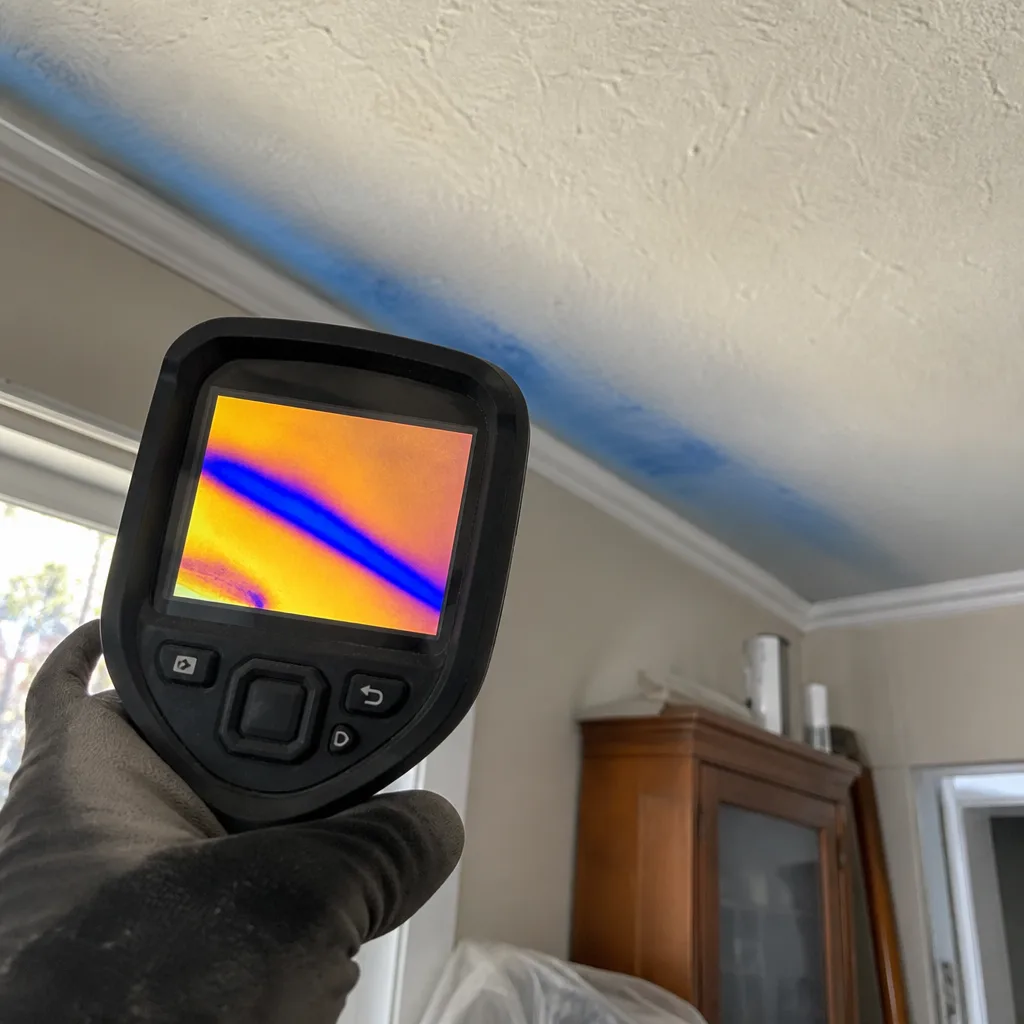
Call a professional when your summer cooling bills exceed $300/month for a home under 2,500 square feet, when rooms farthest from the HVAC unit stay persistently warm, when you find insulation disturbed by rodents or moisture, or when you’re considering any attic work and don’t know your blower-door number. Homes in Lake Forest built 1985-2010 are particularly likely to have significant air leakage at top plates and can lights that only pressurization testing reveals.
Topside Attic Insulation Lake Forest offers free estimates in Lake Forest - call (657) 279-1249. Every estimate includes a written price before any work starts, and applicable jobs receive before-and-after blower-door documentation. Background-checked, uniformed technicians. Calls answered by a live person, 24/7.
Crawl Space Encapsulation & Vapor Barrier in Lake Forest is available as part of comprehensive envelope work or as a standalone service.
Frequently Asked Questions
Most attic air sealing and insulation jobs in Lake Forest run between $3,200 and $5,500 for a typical 1,800-2,400 square foot home, depending on material choice and existing conditions. Air sealing alone ranges $1,400-$2,800. We provide a written price before any work starts - call (657) 279-1249 for a free estimate.
Remove and replace if the existing insulation is compressed below 50% of original depth, contaminated by rodent activity, or water-stained. Add over existing only if the material is dry, uncompressed, and properly installed without gaps. We document the condition with photos before recommending either path.
A blower-door test provides the answer. Homes testing above 2,500 CFM50 typically need sealing first; below 1,500 CFM50, adding R-value is usually the right move. Most Lake Forest homes built before 2010 test above 2,500. We include this test in our assessment.
California Title 24 requires R-38 minimum for attic floors in Climate Zone 8, which includes Lake Forest. We recommend R-49 to R-60 for homes with attic-mounted HVAC equipment. Wall cavities require R-13 in 2×4 construction, R-19 in 2×6.
Yes, with correct application. Open-cell spray foam works well for conditioned attics and complex ceiling geometry. Closed-cell is appropriate for crawl spaces and limited-depth applications. Both require professional installation. In standard vented attics with completed air sealing, blown fiberglass or cellulose is typically more cost-effective.
Most attic air sealing and insulation projects in Lake Forest are completed in one day. Crawl space encapsulation typically takes 1-2 days. Conditioned attic spray foam applications may require 2-3 days including cure time and re-entry ventilation. We provide a schedule with the written price.
The Bottom Line
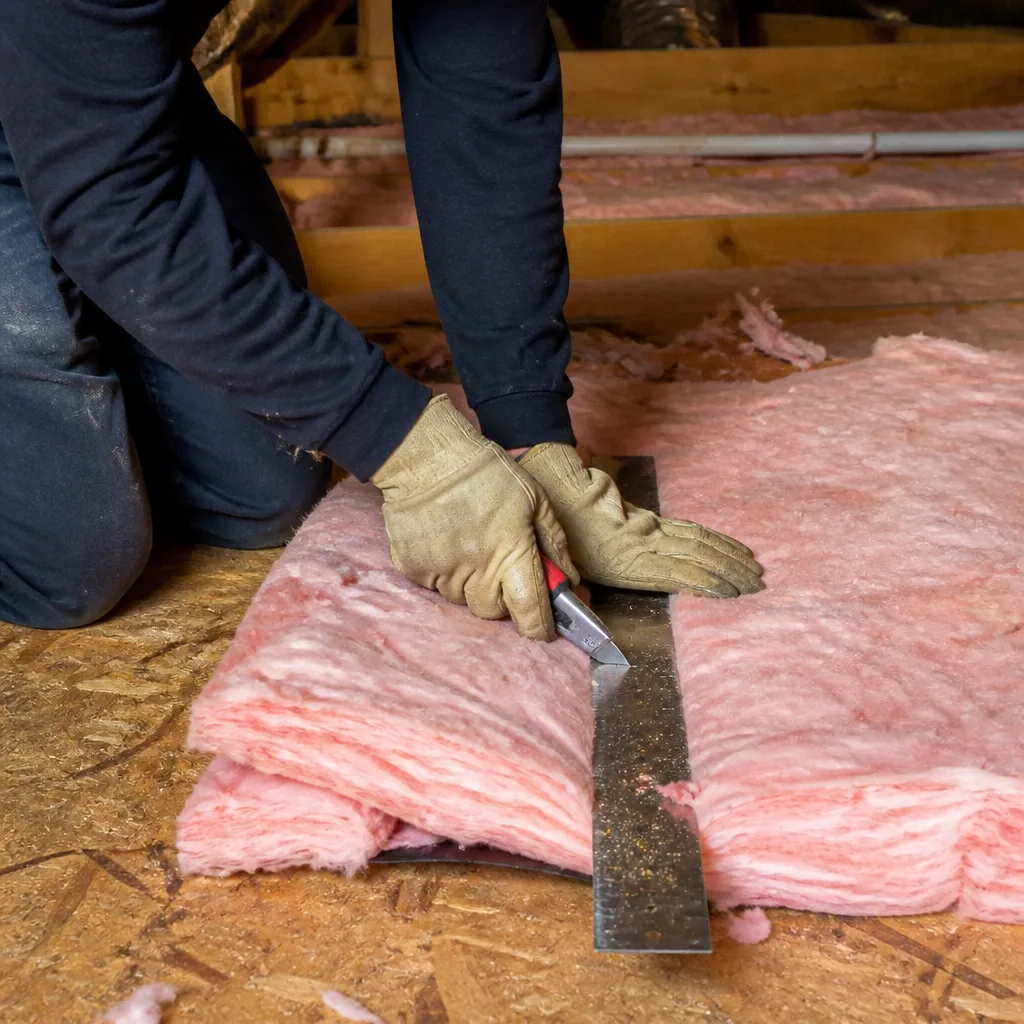
Lake Forest’s climate demands a different insulation strategy than cold-weather guides suggest. The heat comes in, not out - through radiant roof decks and convective air gaps that R-value alone cannot address. Start with a blower-door test to quantify leakage. Seal attic floor penetrations before adding material. Choose insulation based on your home’s specific thermal zones and structural conditions, not generic recommendations. And demand documentation: pre-job photos, pressurization numbers, written scope, and post-completion verification. The Haven Standard has required this since 2016 because a homeowner who knows what they paid for can verify they received it.
Topside Attic Insulation Lake Forest home
Written by Wes Okafor, Owner at Topside Attic Insulation Lake Forest, serving Lake Forest since 2016.