
Last updated September 24, 2026
How to Hire a Insulation Contractor in Lake Forest: A Step-by-Step Guide
Of the insulation contractors licensed to operate in Orange County, fewer than a quarter own or rent a blower-door - a fact you can verify by asking for the test report from their last three jobs. In Lake Forest, where summer attic temperatures routinely climb past 140°F and winter marine-layer moisture creeps through every unsealed penetration, the difference between a material installer and a diagnostic contractor is the difference between insulation that performs and insulation that merely exists. This guide will show you how to tell them apart before anyone steps foot in your attic.
Quick Answer
The most reliable way to hire an insulation contractor in Lake Forest is to verify their CSLB license classification (C-2 or C-39), demand a blower-door baseline test before any work begins, and refuse any quote that does not include five written deliverables: a fixed price, scope of work, material specifications with R-value, permit confirmation, and post-job documentation including a second blower-door reading. Contractors who cannot produce these are installing products, not solving envelope problems.
Table of Contents
- How to Verify a California Insulation Contractor’s License
- The Blower-Door Filter: Separating Diagnostics From Installation
- The Five Written Deliverables Every Legitimate Contractor Provides
- How to Read a Blower-Door Number (ACH50 Explained)
- Three Contractor Behaviors That Signal an Air-Sealing Shortcut
- The Six-Question Phone Script to Qualify Any Contractor
- Lake Forest Climate, Code, and Neighborhood Considerations
- Common Mistakes to Avoid
- When to Call a Professional
- Frequently Asked Questions
- The Bottom Line
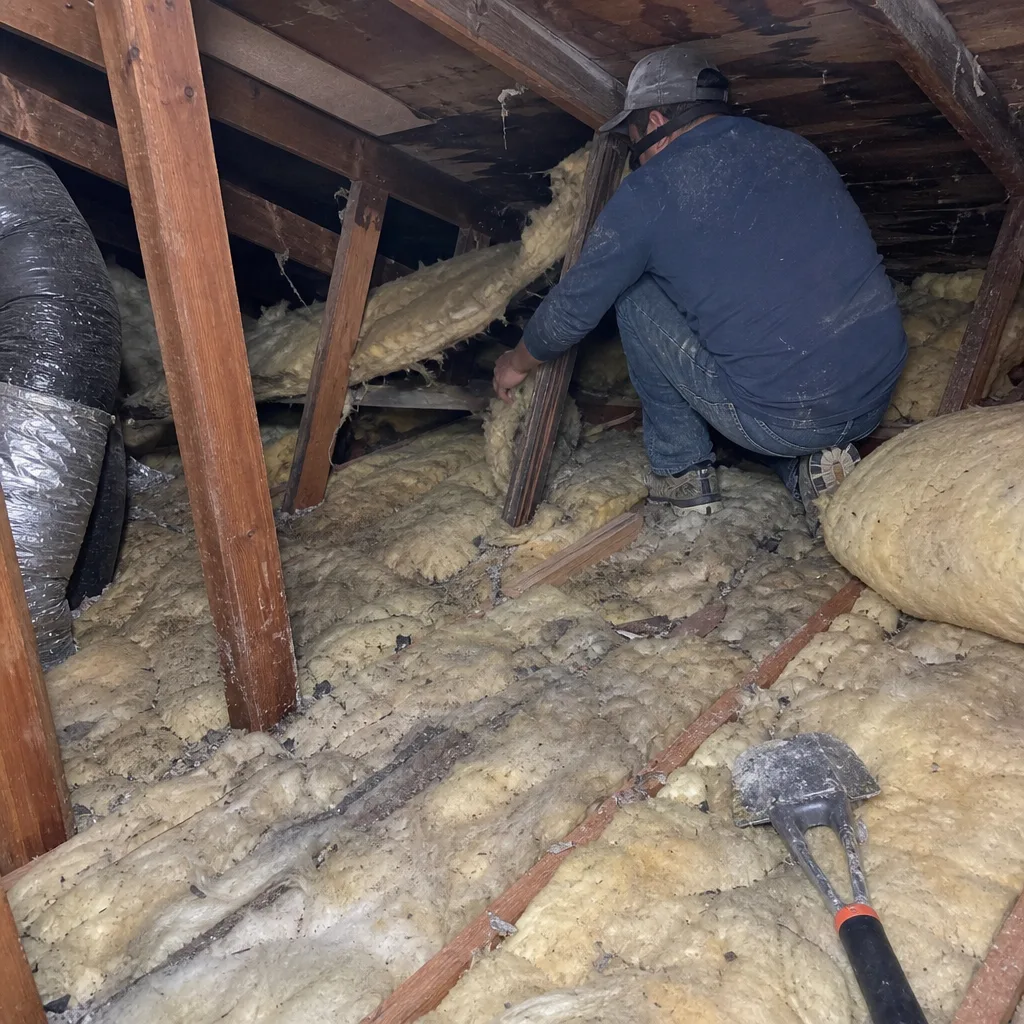 Before
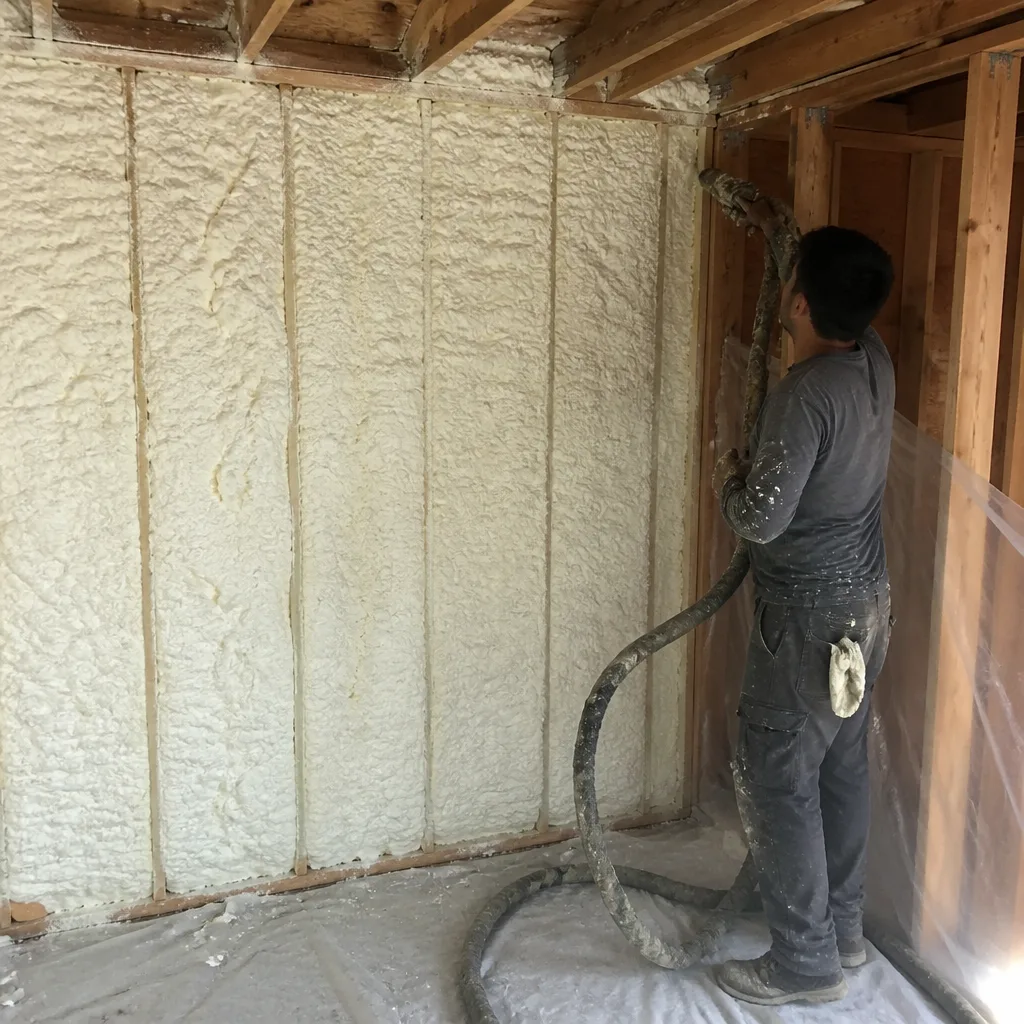 After
AfterHow to Verify a California Insulation Contractor’s License
Every insulation contractor working in Lake Forest must carry an active license from the California Contractors State License Board. The license number should appear on every proposal, business card, and vehicle. If you do not see it, ask. If they hesitate, stop the conversation.
Here is the exact verification process:
- Go to checkthelicensefirst.com (the CSLB’s official lookup portal).
- Enter the contractor’s seven-digit license number or business name.
- Confirm the Classification reads either C-2 (Insulation and Acoustical) or C-39 (Roofing, which covers radiant barrier and some attic work). A B-General license is legal but insufficient for specialized envelope work; it means the contractor can build a house but has not passed the specific trade examination for insulation.
- Check License Status - it must read “Active.” “Inactive,” “Suspended,” or “Delinquent” means no legal work can proceed.
- Click Workers’ Compensation Insurance and verify coverage is current. Attic work involves heat stress, confined-space exposure, and fall hazards. Uninsured contractors leave you liable for injuries on your property.
- Review the Disciplinary Actions section. Even resolved complaints reveal patterns worth knowing.
In Orange County, we have seen homeowners in the Topside Attic Insulation Lake Forest home service area discover too late that their contractor’s C-2 had lapsed three months prior. The CSLB lookup takes ninety seconds. Perform it before scheduling any site visit.
One additional check: verify the license holder matches the person signing your contract. Some Lake Forest-area contractors operate under borrowed or rented licenses, a practice CSLB investigates aggressively but cannot catch in real time. If the name on the license does not match the name on your proposal, ask why. A legitimate subcontracting arrangement is legal; an undisclosed one is not.
The Blower-Door Filter: Separating Diagnostics From Installation
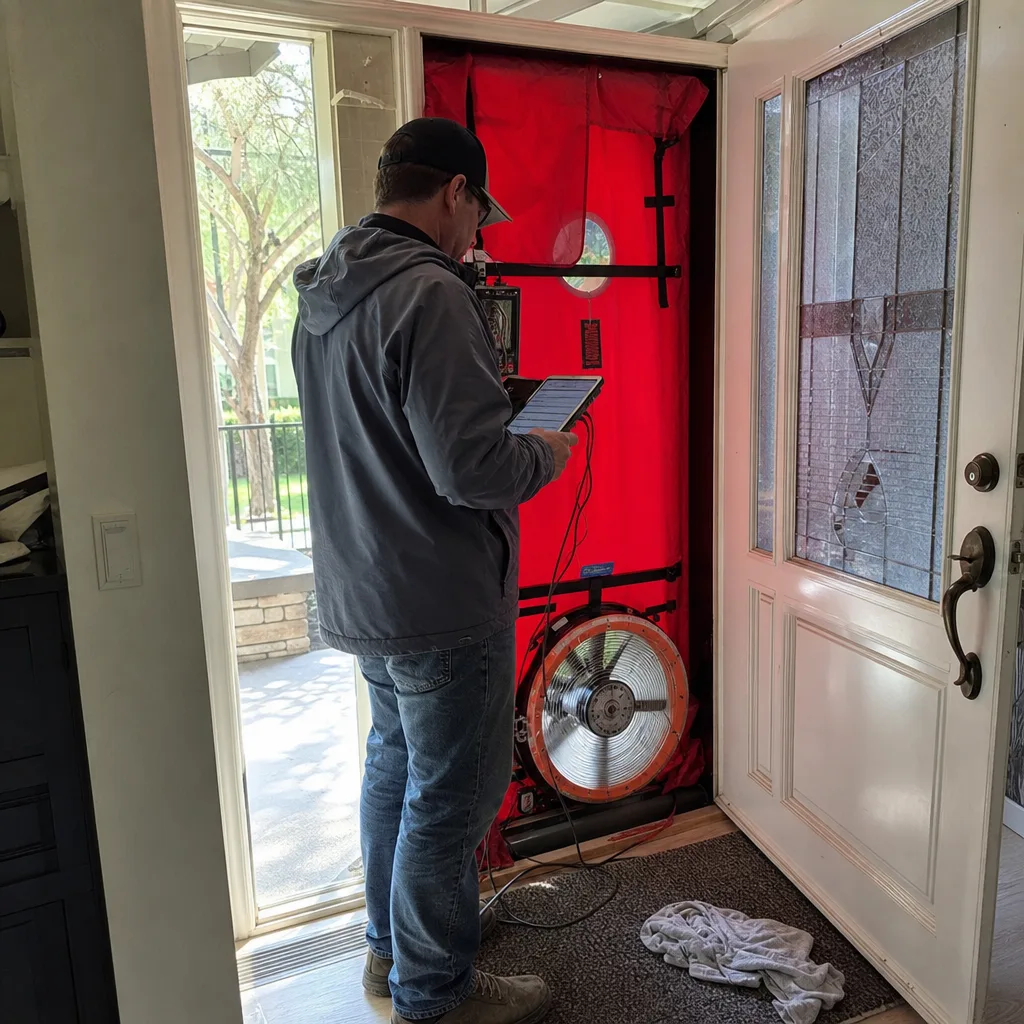
The single most important question you can ask an insulation contractor in Lake Forest is not about price or brand. It is whether they perform a blower-door test before pulling permits.
A blower-door test - a pressurization reading that shows, in one number, how much air your building envelope is losing - is the only objective measure of whether insulation will perform or merely occupy space. Insulation does not stop air movement. It slows conductive heat transfer. If air moves through or around it, the R-value printed on the bag becomes irrelevant.
Here is what happens when a diagnostic contractor arrives at a Lake Forest home:
- They set up a calibrated fan in an exterior door frame.
- They depressurize the house to 50 pascals, a standardized pressure difference.
- They measure airflow in cubic feet per minute at that pressure (CFM50).
- They walk the house with a smoke pencil or infrared camera, locating leaks at top plates, can lights, duct chases, and plumbing penetrations.
- They seal what they find, then test again.
- Only then do they calculate insulation volume and type.
Material installers skip this sequence. They measure attic square footage, multiply by desired R-value, and quote a price per square foot. In Lake Forest’s Baker Ranch or Foothill Ranch neighborhoods, where 1990s construction often features recessed can lights directly below unconditioned attic space, this approach guarantees continued energy loss. The insulation buries the problem rather than solving it.
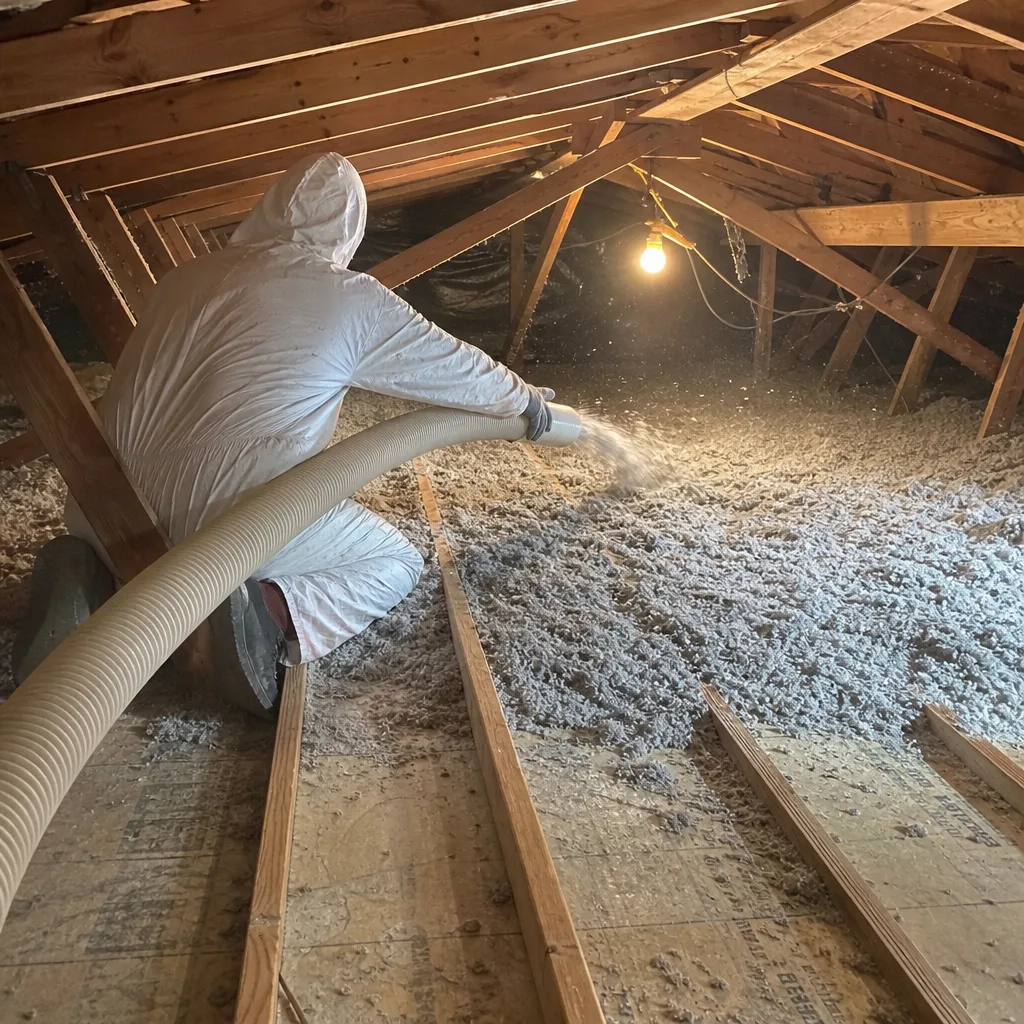
We have tested homes in Lake Forest’s older Trabuco Highlands sections where post-installation blower-door readings showed no improvement from the pre-installation baseline. The previous contractor had blown fiberglass over unsealed top plates and unboxed can lights. The homeowner paid for R-38 and received R-38 in appearance only.
Ask for the test report from their last three jobs. A contractor who owns or rents a blower-door will have PDFs ready. One who does not will change the subject.
The Five Written Deliverables Every Legitimate Contractor Provides
Under Haven Standard Clause 1, every job begins with a written price - no work starts without it. But a legitimate contractor in Lake Forest should provide more than a price. They should provide a complete documentation package that lets you verify what was promised against what was delivered.
Before any crew arrives, you should hold these five items:
- Scope of Work - A line-item description of every task: air-sealing locations, insulation type and depth, areas to be treated, and areas explicitly excluded. Not “insulate attic.” Rather: “Air seal 14 can-light penetrations, 3 plumbing chases, and 6 top-plate seams with fire-rated caulk and rigid foam baffles. Install Knauf EcoFill blown fiberglass to 14-inch depth (R-38) across 1,200 square feet of attic floor.”
- Material Specifications with R-Value - Brand name, product line, and installed R-value. Not “Owens Corning” but “Owens Corning AttiCat PINK blown-in fiberglass, R-38 at 14 inches.” This matters because compressing insulation reduces R-value, and some contractors quote theoretical rather than installed performance.
- Blower-Door Baseline Reading - The pre-work CFM50 and ACH50 (air changes per hour at 50 pascals), with date, time, and outdoor temperature noted. This is your benchmark for improvement.
- Permit Pull Confirmation - In Lake Forest, attic insulation work exceeding certain thresholds requires a permit from the City of Lake Forest Building Division. Your contractor should specify whether they pull the permit (standard) or whether you must (a red flag). The permit number should appear on your documentation before work begins.
- Fixed Price - A single number, not a range. Not “$3,500-$4,200.” Not “estimate subject to change.” The price you sign is the price you pay, with change orders requiring your written approval for any additional work.
At Attic Insulation in Lake Forest, we have refined this package over 9,000+ homes sealed and insulated since 2016. Every homeowner receives these five items before anyone lifts a tool. The written scope, written warranty, and fixed price are non-negotiable under The Haven Standard.
Be wary of contractors who describe these deliverables as “paperwork” or “administrative overhead.” They are your only protection against scope reduction, material substitution, and unverifiable claims.
How to Read a Blower-Door Number (ACH50 Explained)
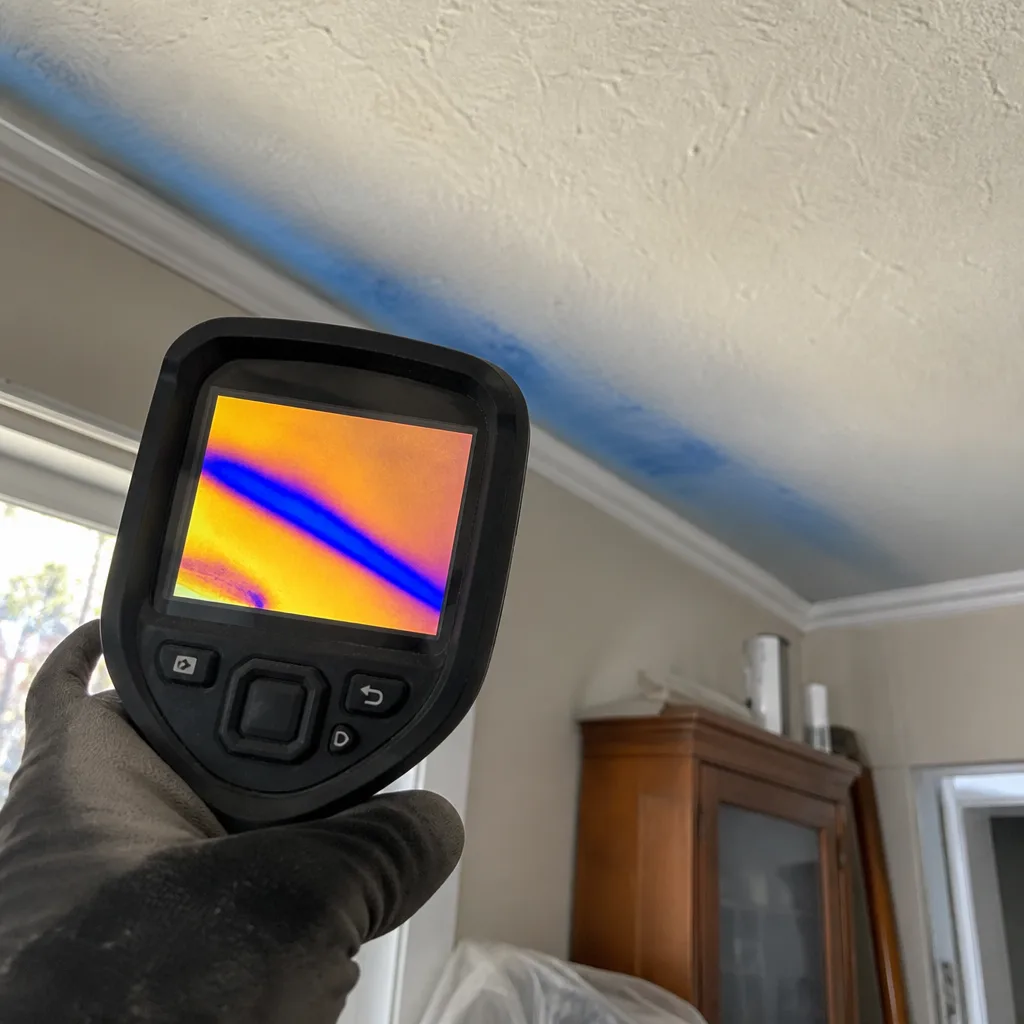
ACH50 - air changes per hour at 50 pascals of pressure - translates the abstract CFM50 reading into something meaningful: how many times per hour your entire home’s volume of air would leak out and be replaced, if the wind blew at standardized pressure all day.
Here is how to evaluate your number:
| ACH50 Range | What It Means | Typical Lake Forest Home |
|---|---|---|
| 15+ | Very leaky. Significant energy loss, comfort issues, potential moisture problems. | Pre-1980s homes with original construction, unsealed attic hatches, no weatherstripping |
| 10-15 | Moderately leaky. Improvement likely to yield noticeable comfort and bill reduction. | 1980s-1990s tract homes in Foothill Ranch, original can lights |
| 7-10 | Acceptable but improvable. Air sealing before insulation still recommended. | 2000s construction with some builder-grade air sealing |
| 5-7 | Tight. Good envelope performance. Insulation upgrade without sealing may still help. | Newer Baker Ranch homes, some energy-code-compliant builds |
| Below 5 | Very tight. Requires mechanical ventilation to maintain indoor air quality. | Rare in Lake Forest; usually custom builds with dedicated airtightness strategy |
The critical measurement is not the starting number but the reduction achieved. A home starting at 12 ACH50 and ending at 8 ACH50 after air sealing represents meaningful improvement. A home starting at 12 and ending at 11.5 after “insulation only” represents wasted money.
In Lake Forest’s climate - hot, dry summers with intense solar gain on roofs, and mild winters with marine-layer humidity - the attic is the dominant thermal boundary. A 30% reduction in ACH50 typically correlates with 15-25% cooling load reduction, though exact savings depend on duct location, HVAC efficiency, and occupant behavior.
We publish before-and-after blower-door numbers on every applicable job so homeowners can verify the air-sealing result they paid for. A contractor who will not share comparable data is asking for trust they have not earned.
Three Contractor Behaviors That Signal an Air-Sealing Shortcut
Shortcuts in insulation work are invisible on day one. They reveal themselves in summer electric bills, winter comfort complaints, and attic inspections years later. Here are three behaviors that predict trouble:
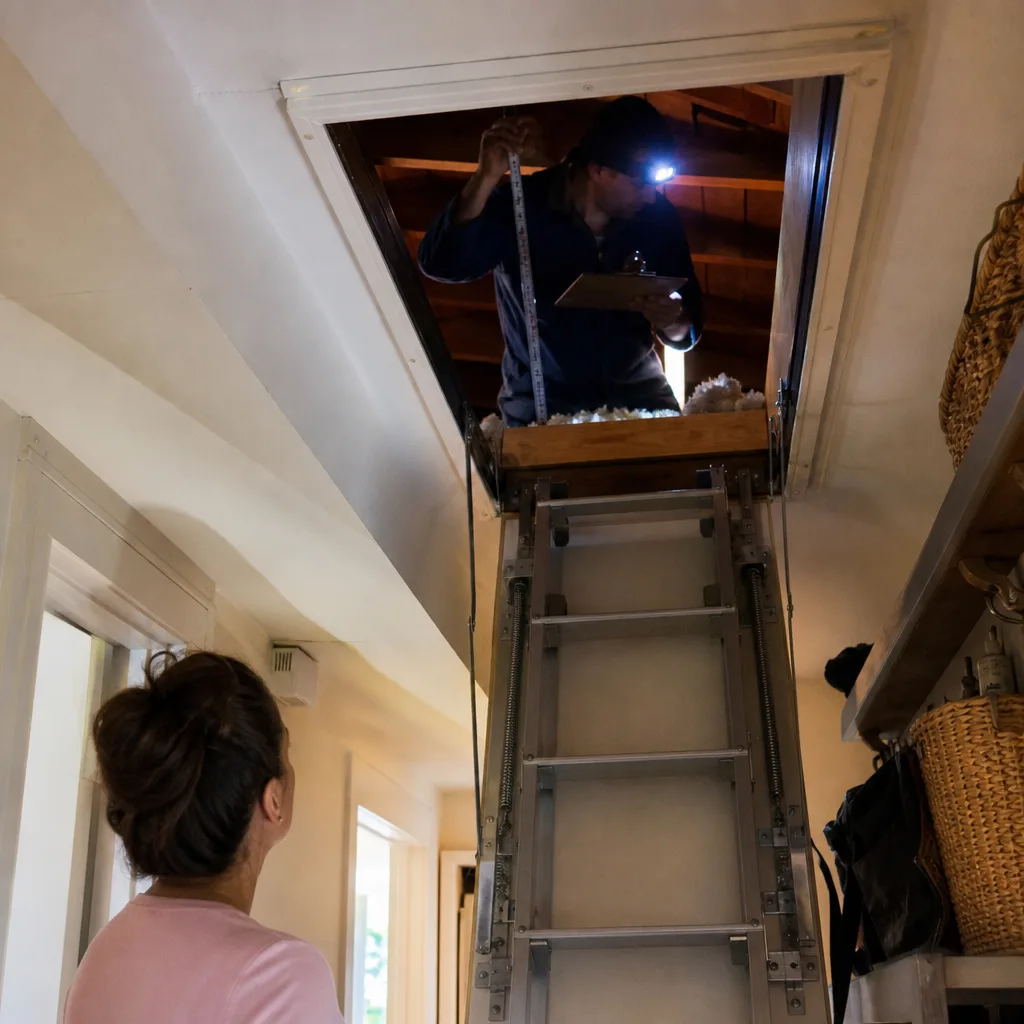
Quoting over the phone without an attic inspection. No contractor can assess air-leakage paths, existing insulation condition, or combustion safety from a phone description. In Lake Forest, where some Crawl Space Encapsulation & Vapor Barrier in Lake Forest jobs reveal rodent-damaged insulation or abandoned HVAC ductwork, the attic inspection is diagnostic, not optional. A phone quote guarantees either price inflation later or scope reduction on site.
Proposing blown insulation without addressing can-light penetrations. Recessed can lights in contact with attic insulation are a fire hazard unless rated IC (insulation contact). Even IC-rated cans leak air. A contractor who proposes burying them with additional insulation without sealing the housing or installing a protective cover is violating basic building science and, in some cases, code. We regularly find this in Lake Forest’s 1990s-era homes, where original non-IC cans were later surrounded by retrofit insulation.
Declining to provide post-job documentation. The work is not complete when the crew leaves. It is complete when you hold documentation proving what was done: photos of sealed penetrations, depth measurements verifying R-value, the post-work blower-door reading, and the final permit sign-off. Contractors who “will email that later” or describe photos as “available on request” are betting you will not follow up. Under The Haven Standard, the Documented Photo Record on Every Visit is included, not available on request.
The Six-Question Phone Script to Qualify Any Contractor
Read these verbatim. The answers will qualify or disqualify a contractor in under five minutes.
- “What is your CSLB license number, and is it classified C-2 or C-39?” - Pause for the number. Write it down. Verify it while on the call if possible.
- “Will you perform a blower-door test before providing a final quote, and will you share the baseline ACH50 with me?” - “We can if you want” is a no. “Yes, and we will email you the report before you sign” is a yes.
- “What are the five written items I will receive before work begins?” - Listen for scope, materials with R-value, blower-door baseline, permit confirmation, and fixed price. Missing any one is a gap.
- “Will you pull the permit, or do I need to?” - The contractor should handle this. Homeowner-pulled permits for contractor work shift liability incorrectly.
- “What blower-door result do you guarantee after air sealing, and what happens if you do not achieve it?” - A specific number or percentage reduction, with a written remedy if missed, indicates confidence. Vague promises indicate hope.
- “Can you send me the blower-door report and photo documentation from your last three Lake Forest-area jobs?” - Local relevance matters. A contractor active in Lake Forest will have this immediately.
Contractors who become defensive, rush you off the phone, or answer in generalities have told you what you need to know. The right contractor will appreciate detailed questions because detailed homeowners become satisfied customers, not complaint filings.
Lake Forest Climate, Code, and Neighborhood Considerations
Lake Forest occupies a specific position in Orange County’s climate gradient: far enough inland to escape consistent coastal moderation, close enough to the ocean to experience marine-layer humidity and temperature swings that stress building envelopes.
Summer attic temperatures in Lake Forest regularly exceed 140°F. Without proper air sealing and adequate insulation, this heat radiates through ceiling drywall, forces HVAC systems into extended runtime, and creates stratified comfort zones - bedrooms too warm, living areas overcooled. The 2022 California Energy Code (Title 24, Part 6) requires minimum attic insulation of R-38 in Climate Zone 8, which includes Lake Forest; for a deeper look at local requirements, see our guide to Insulation Permits, Codes & Inspections in CA: What You Need to Know. Many homes built before 2010 fall below this.
Neighborhood-specific patterns we have documented:
- Baker Ranch (2015-present): Generally built to code but often with minimal air sealing at top plates and electrical penetrations. Blower-door baselines typically 8-11 ACH50. Improvement potential: 20-35% reduction with targeted sealing.
- Foothill Ranch (1980s-2000s): Widespread use of recessed can lights, often non-IC rated. Original insulation frequently R-19 or R-30, compressed below labeled depth. Baselines 10-16 ACH50 common.
- Trabuco Highlands / Older Lake Forest (pre-1980): Minimal original insulation, significant air leakage at eaves and chimneys, occasional knob-and-tube wiring that complicates insulation contact. Baselines 15+ ACH50. Require careful combustion safety testing before sealing.
The City of Lake Forest Building Division enforces Title 24 compliance for insulation retrofits that involve permit triggers: typically, removal of more than 50% of ceiling finish, or any work involving structural modification. Your contractor should know whether your project triggers permitting and should handle the submittal. We have seen homeowners in Portola Hills delayed weeks because a contractor deferred permit responsibility.
Material selection also varies by Lake Forest microclimate. Homes in higher-elevation areas with greater sun exposure benefit from radiant barrier retrofit more than canyon-cooled properties. Homes in low-lying areas with poor drainage may need Home Energy Audit in Lake Forest assessment of crawl space moisture before attic work, as stack effect draws ground-level humidity upward through the envelope.
Common Mistakes to Avoid
- Prioritizing price per square foot over air-sealing quality. A lower bid that skips sealing costs more over the life of the home. In Lake Forest’s climate, every CFM50 of leakage adds measurable cooling load.
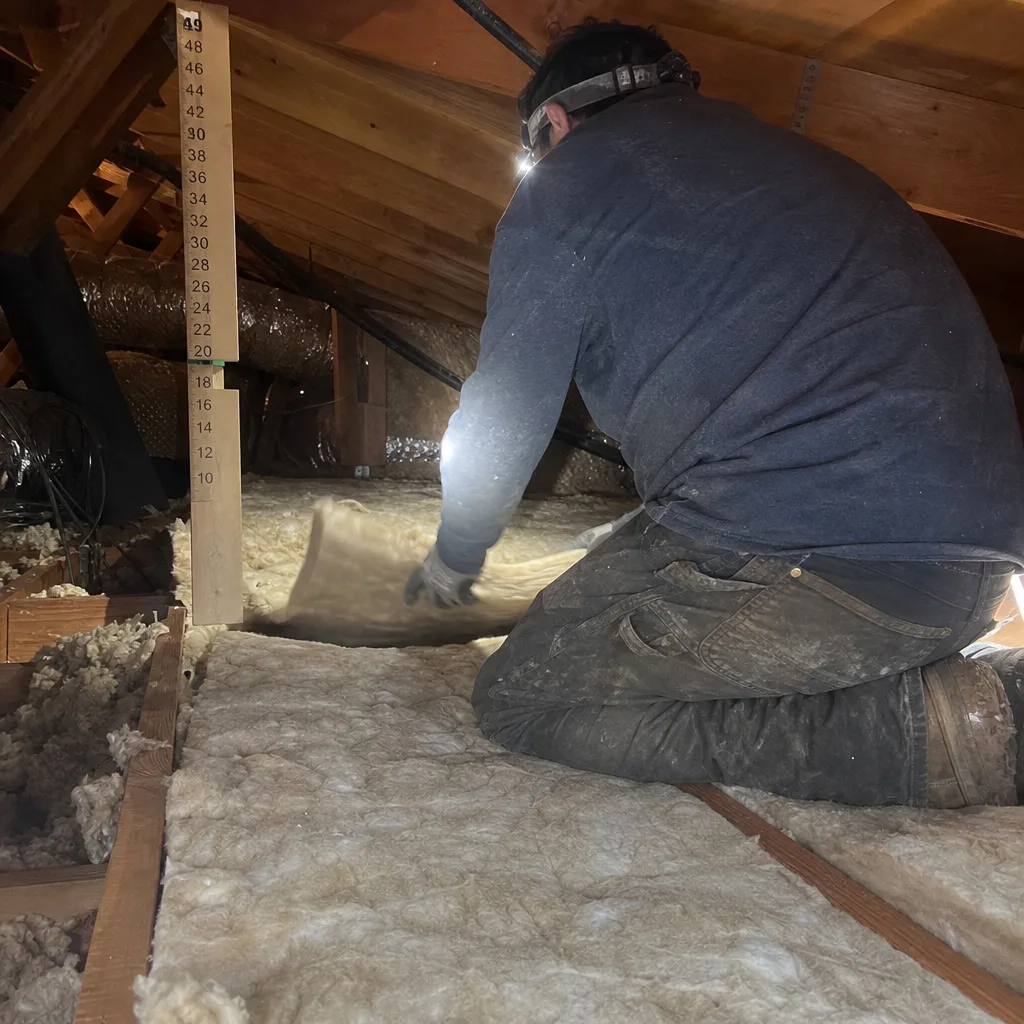
- Accepting R-value quotes without installation depth specifications. Blown fiberglass at R-38 requires 14-16 inches depending on product and density. A contractor quoting “R-38” without specifying depth leaves room for compression and underperformance.
- Ignoring combustion safety in older homes. Sealing a home with a naturally drafted water heater or furnace in the attic can cause backdrafting and carbon monoxide intrusion. A diagnostic contractor tests this before sealing.
- Permitting the contractor to use proprietary foam products you cannot verify. We source from established manufacturers - Johns Manville, Knauf, Rockwool, CertainTeed among them - with published specifications and third-party testing. Proprietary products lack this transparency.
- Failing to verify that added insulation does not block soffit vents. In Lake Forest’s warm climate, attic ventilation is critical. Insulation baffles at eaves maintain airflow from soffit to ridge vent. Missing baffles create moisture traps and void warranty coverage from some manufacturers.
- Neglecting to request post-job documentation. Without photos, blower-door results, and final inspection sign-off, you have no recourse if problems emerge. The 365-Day Done Right Promise requires documentation to enforce.
- Hiring based on speed of availability alone. A contractor who can start tomorrow may be available for a reason. In Lake Forest’s peak seasons (pre-summer and pre-winter), reasonable lead times indicate demand from informed customers.
When to Call a Professional
Call a diagnostic insulation contractor when your summer cooling bills exceed comparable homes in your Lake Forest neighborhood, when upstairs rooms stay uncomfortably warm despite thermostat settings, when you feel drafts from outlets and light switches on exterior walls, or when your attic inspection reveals compressed, displaced, or moisture-stained existing insulation - all Insulation Warning Signs: A Lake Forest Homeowner’s Reference Guide.
Do not wait for visible mold or ceiling discoloration. By then, air leakage has caused consequential damage requiring remediation beyond insulation work. Early intervention - a Home Energy Audit in Lake Forest with blower-door testing - identifies problems before they become expensive repairs.
Topside Attic Insulation Lake Forest offers free estimates in Lake Forest - call (657) 279-1249. Every estimate includes a preliminary attic inspection, and we provide a Free Second Opinion on any written estimate from another contractor. Bring us a competing quote; we will read it with you line by line.
Frequently Asked Questions
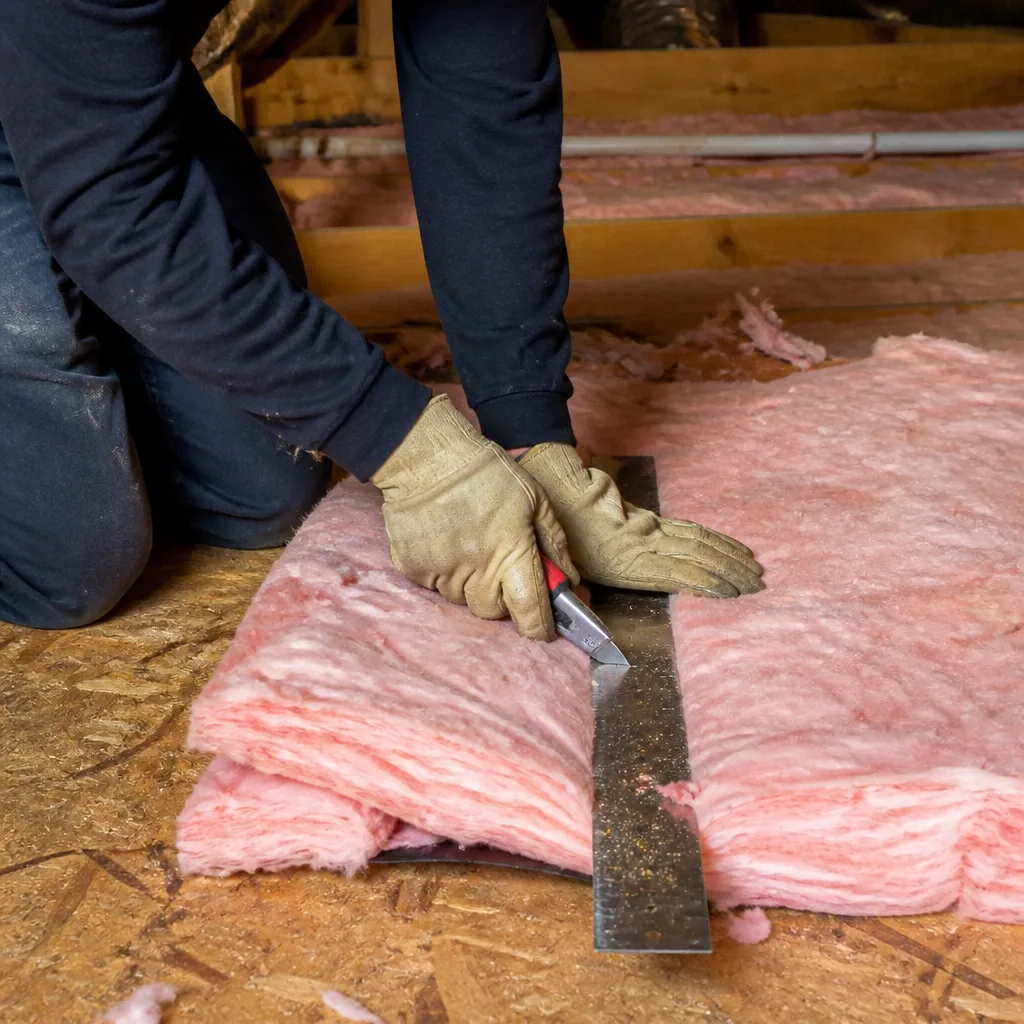
Most complete attic insulation jobs in Lake Forest run between $2,800 and $6,500 for a typical single-family home between 1,500 and 2,500 square feet, with final cost depending on air-sealing complexity, insulation type, and whether existing material must be removed; for detailed pricing factors, see our Insulation Cost Breakdown: The Lake Forest Homeowner’s Reference for 2026. Spray foam applications cost more per square foot but achieve air sealing and insulation in one step. Call (657) 279-1249 for an exact quote - estimates are free, and we provide a Written Price Before Any Work Starts.
Repair is rarely cheaper than replacement when existing insulation is compressed below 50% of original depth, contaminated by rodent activity, or water-stained - all common conditions we find in Lake Forest attics. Spot repair leaves thermal bridges and air-leakage paths intact. A full replacement with integrated air sealing typically delivers lower lifetime cost through energy savings and eliminates the need for subsequent remedial work.
Same-day service is possible for small air-sealing repairs but not for complete attic insulation replacement, which requires material staging, blower-door baseline testing, and permit verification. In Lake Forest, we typically schedule within 3-5 business days of estimate approval. Emergency situations - such as insulation displacement from roof leaks - receive priority scheduling. Call (657) 279-1249 to discuss timeline.
Attic insulation work in Lake Forest requires a permit from the City of Lake Forest Building Division when it involves removal of more than 50% of ceiling finish, structural modification, or changes to combustion appliance venting. Purely additive insulation over intact drywall typically does not require permitting, though some contractors pull permits voluntarily for homeowner protection. We specify permit status in every written scope before work begins.
A blower-door test is a pressurization reading that shows, in one number, how much air your building envelope is losing. It matters because insulation cannot perform if air moves through or around it. The test provides a baseline for improvement and verifies that air sealing was effective. We publish before-and-after blower-door numbers on every applicable job so homeowners can see the performance change they paid for.
Measure the depth of existing attic insulation with a ruler. In Lake Forest, R-38 (approximately 14-16 inches of blown fiberglass) is current code minimum. If you measure less, or if insulation is uneven with visible floor joists, you are below standard. However, depth alone does not indicate performance - air leakage can render adequate depth ineffective. A blower-door test combined with thermal imaging reveals the full picture.
The Bottom Line
Hiring an insulation contractor in Lake Forest is not a price-shopping exercise. It is a qualification process, and our more guides & resources can help you through each step. Verify the CSLB license. Demand blower-door testing. Insist on five written deliverables before work begins. Reject phone quotes, can-light burial without sealing, and any contractor who treats documentation as optional. The contractors who pass this filter are diagnostic professionals who solve envelope problems. The ones who fail are material installers who bury them.
We have sealed and insulated 9,000+ homes since 2016, every one with a written price before work started and a documented record when the crew left. Our 365-Day Done Right Promise applies to all completed work. Calls are answered by a live person, 24/7.
Written by Wes Okafor, Owner at Topside Attic Insulation Lake Forest, serving Lake Forest since 2016.