
Last updated September 24, 2026
DIY vs Professional Insulation: The Lake Forest Homeowner’s Decision Guide
A homeowner can legally install their own attic insulation in California, but cannot legally sign the CF3R compliance certificate that closes the permit. That single fact reshapes the entire DIY-versus-professional debate in Lake Forest. This guide - alongside our How to Hire a Insulation Contractor in Lake Forest: A Step-by-Step Guide - maps exactly where the line falls between what you can do yourself, what you can rent, and what California law reserves for licensed contractors. We’ll cover equipment rental economics in Orange County, the specific attic hazards common in Lake Forest’s 1980s-2000s tract housing, and the one hybrid approach that can actually save money without creating permit or insurance problems.
Quick Answer
Most Lake Forest homeowners can handle attic air sealing themselves with caulk and canned foam, but cannot legally complete the permit process without a licensed contractor’s CF3R certification. Blower-door testing requires $150-$250 per day in equipment rental plus trained interpretation, and blown insulation installation demands commercial machines that cost more to rent than a professional crew charges to operate. The honest break-even point: DIY makes sense only for air sealing in accessible attics, while full insulation replacement with permit compliance almost always requires professional involvement. See our Insulation Cost Breakdown: The Lake Forest Homeowner’s Reference for 2026 for detailed numbers.
Table of Contents
- The Three Tasks in Every Attic Insulation Project
- What Is Genuinely DIY-Accessible
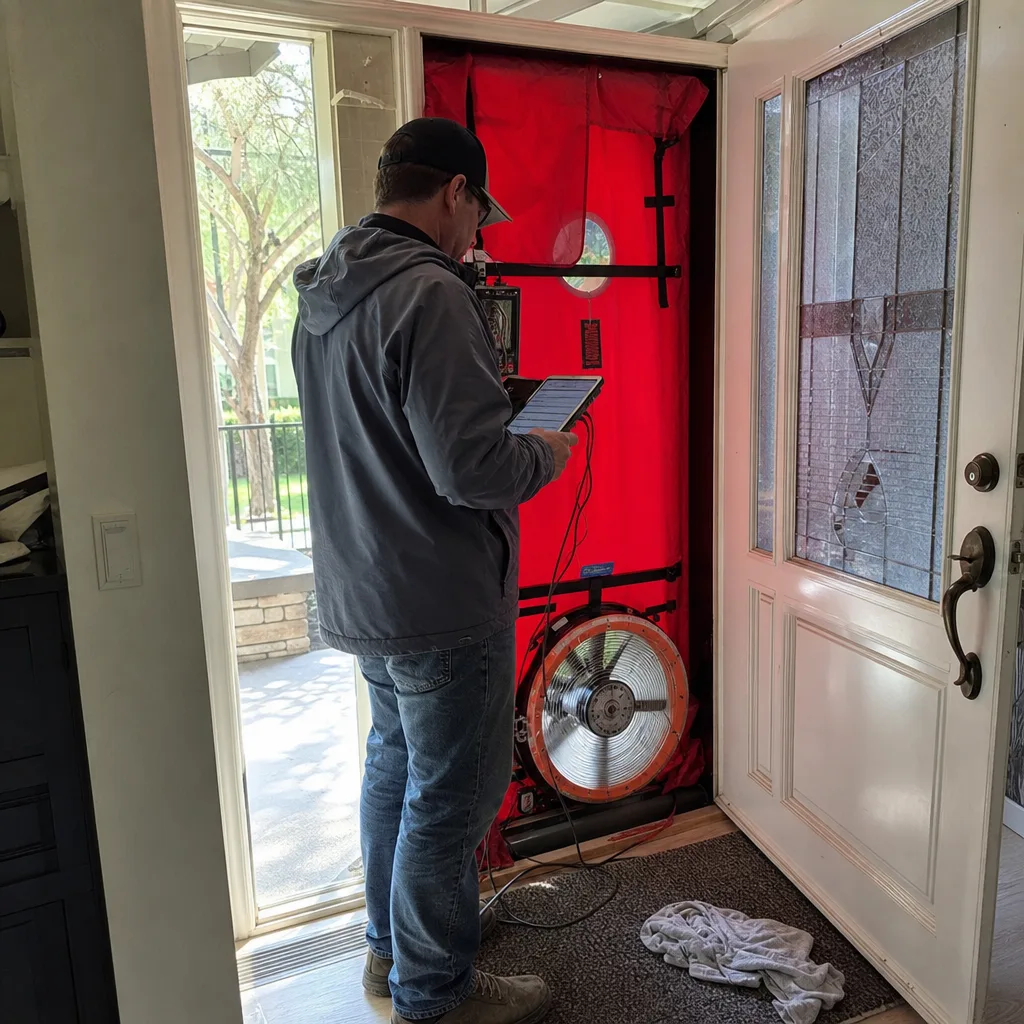
- Blower-Door Testing: The Equipment Reality
- Permit Compliance and Title 24 in Lake Forest
- Lake Forest Attic Hazards That Change the Math
- The Insurance Gap Most Homeowners Miss
- The Hybrid Approach That Actually Works
- Cost Comparison: Real Numbers for Lake Forest
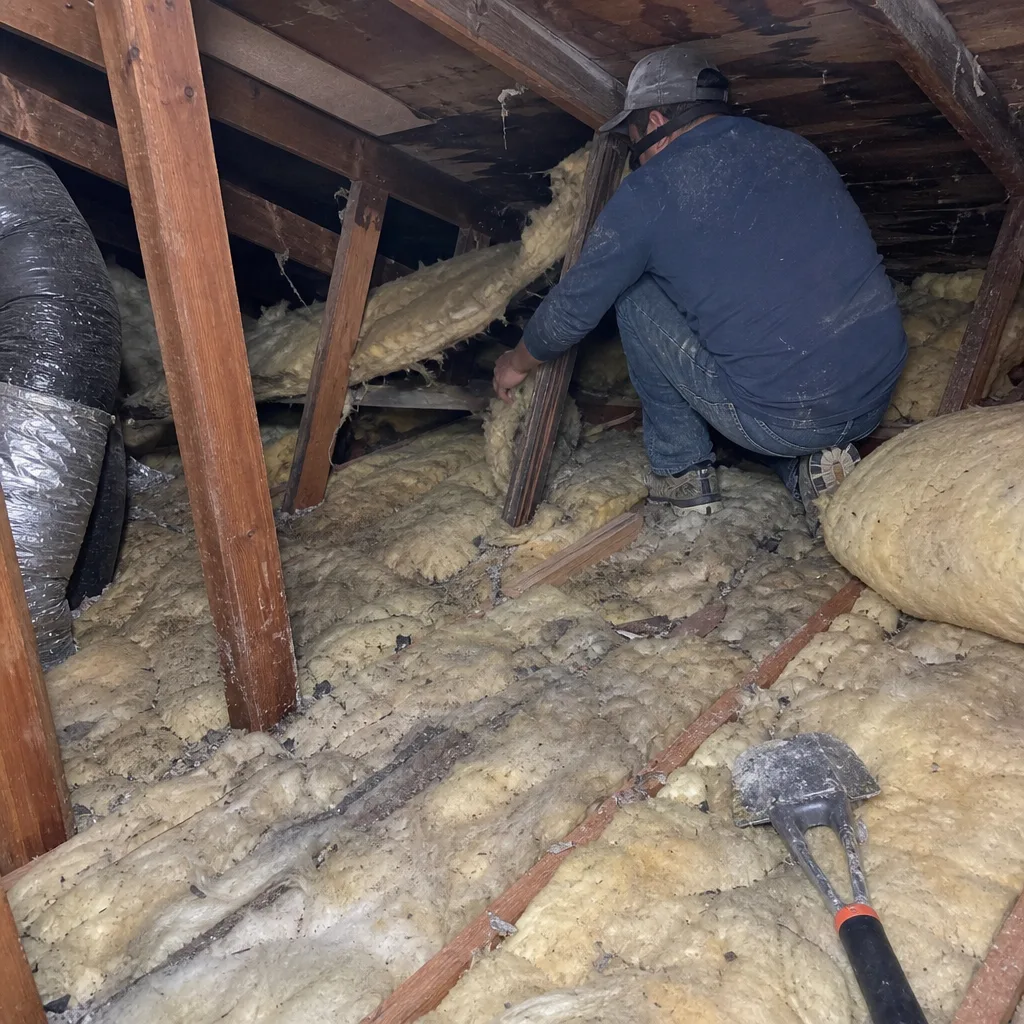 Before
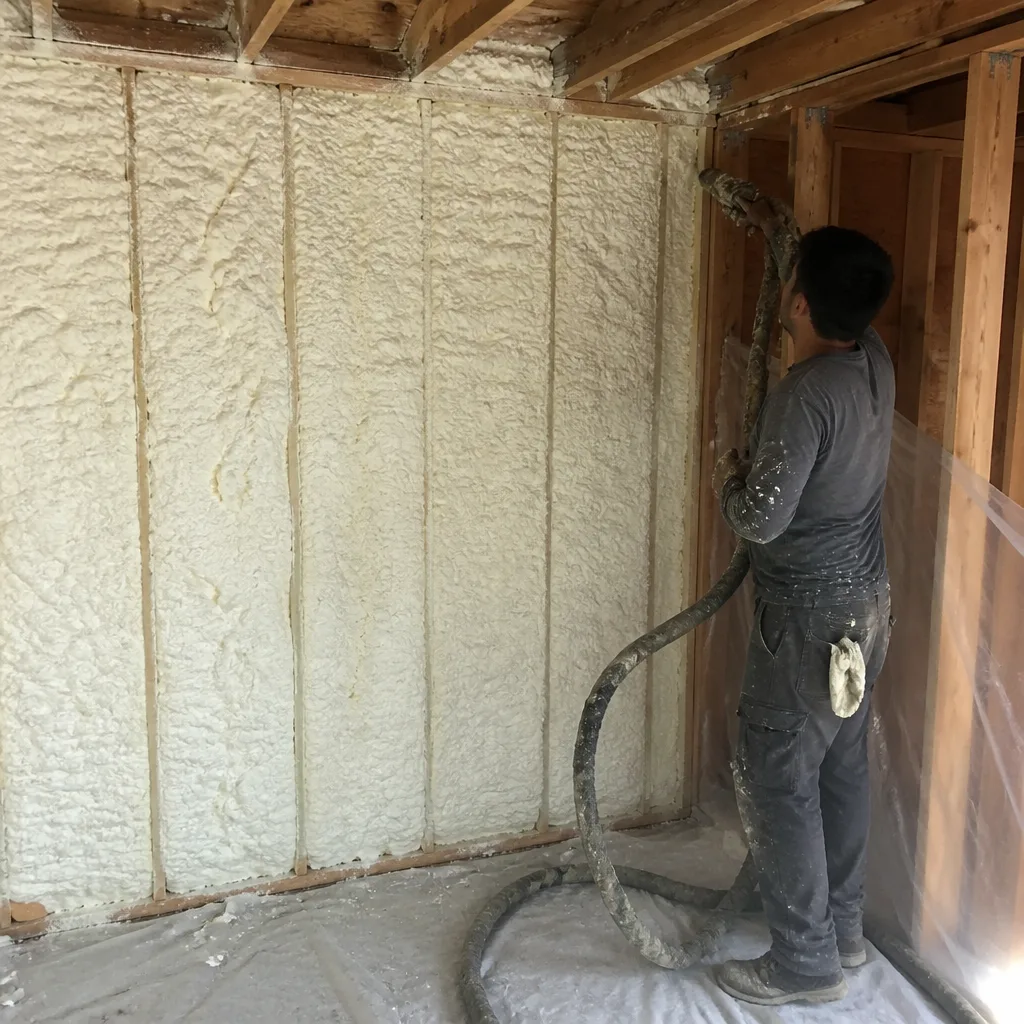 After
AfterThe Three Tasks in Every Attic Insulation Project
Every attic insulation job in Lake Forest breaks into three distinct tasks. Classifying them honestly matters more than any brand comparison or R-value chart.
Task one: air sealing. This means finding and closing the gaps that let conditioned air escape into the attic - top plates where walls meet the ceiling, plumbing and electrical penetrations, can light housings, and the chase around flues or chimneys. Materials are cheap: acoustical sealant, fire-rated foam, metal flashing. The skill is patience and a headlamp, not a license.
Task two: diagnostic testing. A blower-door test - a pressurization reading that shows, in one number, how much air your building envelope is losing - measures the leakage rate before and after sealing. The equipment is specialized. The interpretation matters more than the number itself. A reading of 3,500 CFM50 means nothing without context: the home’s volume, the climate zone, the occupancy pattern.
Task three: insulation installation and permit compliance. This is where California’s Title 24 energy code enters. Any insulation upgrade that triggers a permit - which includes most attic jobs involving removal and replacement - requires a CF3R certificate signed by a licensed contractor. The homeowner can do the physical work. They cannot sign the form.
Understanding this three-task framework prevents the most common mistake we see in Lake Forest: homeowners who spend a weekend air sealing, feel proud of the result, and discover at permit inspection that their work cannot be legally certified without bringing in a contractor to re-inspect and potentially re-do portions of it.
What Is Genuinely DIY-Accessible
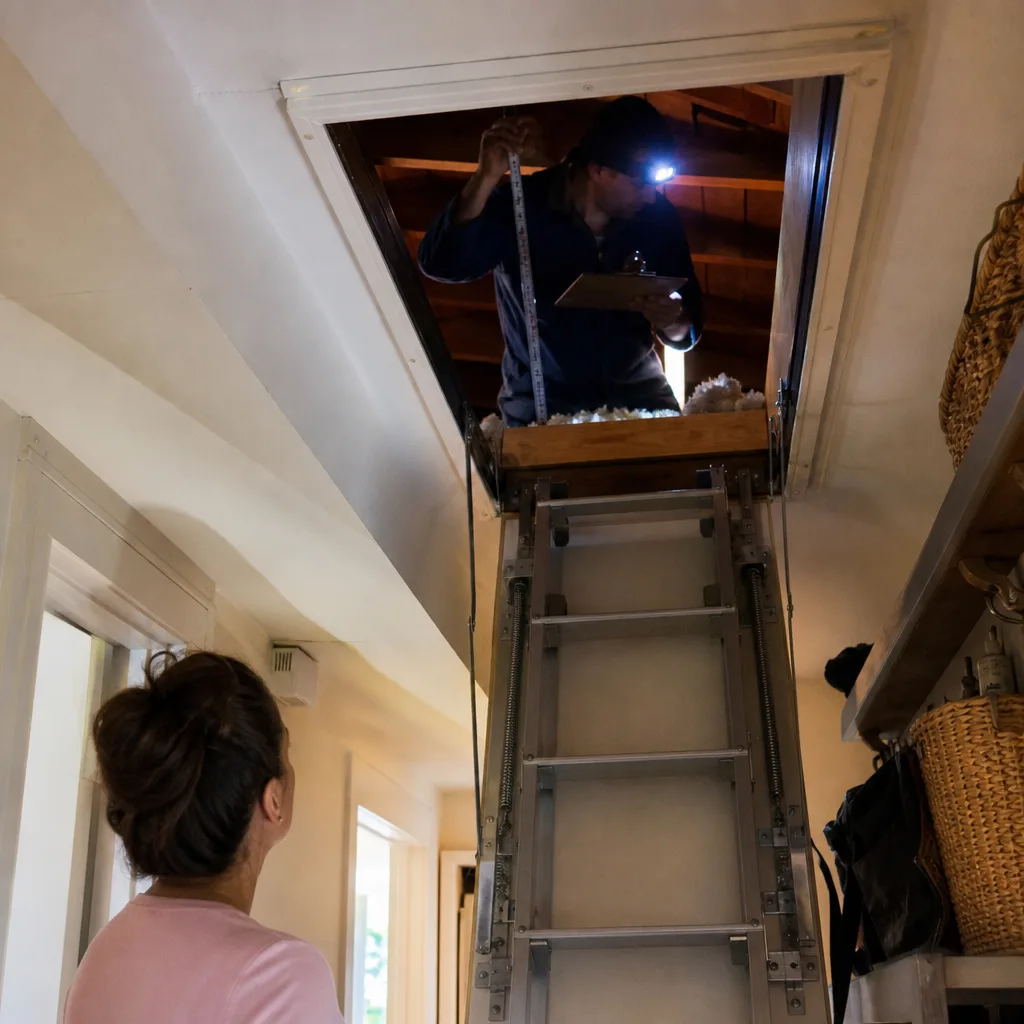
Attic air sealing is genuinely DIY-accessible for a careful homeowner with the right conditions. We’ve walked hundreds of Lake Forest attics, and the ones that lend themselves to homeowner work share three traits: a single-story footprint with a central hatch, truss construction that leaves a clear walking path, and no HVAC equipment installed in the attic itself.
Here’s what a competent homeowner can realistically accomplish in a weekend:
- Seal top plates with acoustical sealant. These are the horizontal boards where interior walls meet the ceiling drywall. In Lake Forest’s typical 1980s-1990s construction, they’re often visible as dark lines in blown insulation. Run a bead of sealant along both sides where the drywall gap opens to the attic.
- Box out can lights with fire-rated covers, then foam the edges. Recessed lights are massive leakage points. Pre-made covers cost $15-$25 each. Seal the cover to the drywall with fire-rated caulk - standard foam melts at light-operating temperatures.
- Seal plumbing and electrical penetrations with expanding foam. Use minimal-expansion foam around electrical boxes to avoid warping. For larger gaps around vent stacks, use backer rod first, then foam.
- Install baffles at eaves before any new insulation goes in. These keep soffit vents open. Without them, blown insulation blocks airflow and creates moisture problems in Lake Forest’s mild but occasionally humid coastal climate.
The materials cost roughly $200-$400 for a 1,500-square-foot attic. The time investment is one long weekend for a first-timer, less for someone who’s done it before.
What changes this math: vermiculite insulation, which appears as pebbly gray-brown granules and may contain asbestos; knob-and-tube wiring still in service; or any attic with a floor system that won’t support body weight between joists. In Lake Forest specifically, homes in the older Baker Ranch area and some Foothill Ranch builds from the late 1980s have these conditions more frequently than newer construction.
Blower-Door Testing: The Equipment Reality
A blower door is a powerful fan mounted in an exterior door frame, paired with pressure gauges that measure how hard the house leaks under controlled depressurization. The result - CFM50, or cubic feet per minute at 50 pascals of pressure difference - is the single most useful number in home performance work. But getting that number, and understanding it, involves real costs.
In Orange County, two regional tool-rental firms list blower-door setups: one at $185 per day, another at $245 per day with a refundable $500 deposit. Both require pickup in Santa Ana or Anaheim, not Lake Forest. The equipment weighs roughly 50 pounds and requires a cargo van or pickup truck. Delivery is not typically offered.
Renting the equipment is not the hard part. Operating it correctly is. The setup protocol - sealing the fireplace, closing interior doors, setting up the manometer, running the multi-point depressurization sequence - takes training to execute consistently. We’ve seen homeowners generate readings that varied by 40% between morning and afternoon because wind conditions changed and they didn’t know to account for it.
Interpreting the reading matters more than generating it. A Lake Forest home built in 1995 might read 4,200 CFM50 before air sealing. Is that good? Bad? The answer depends on the conditioned floor area, the volume of the house, the number of stories, and the climate zone. The standard metric - ACH50, or air changes per hour at 50 pascals - requires dividing CFM50 by house volume and multiplying by 60. A competent pro does this in their head. Most homeowners need to look it up, and online calculators vary in accuracy.
The honest economics: if you’re doing a single project, the rental cost plus your time plus the risk of a bad reading exceeds what a professional blower-door test costs as a standalone service. In our Home Energy Audit in Lake Forest, we include blower-door testing with written results as part of a flat-priced visit. Homeowners who want the number for their own air-sealing work can get it without the rental logistics.
Where rental does make sense: a homeowner planning multiple projects across several months, or someone with construction trade experience who already understands pressure diagnostics. For everyone else, the build-versus-buy decision tilts toward hiring the test.
Permit Compliance and Title 24 in Lake Forest
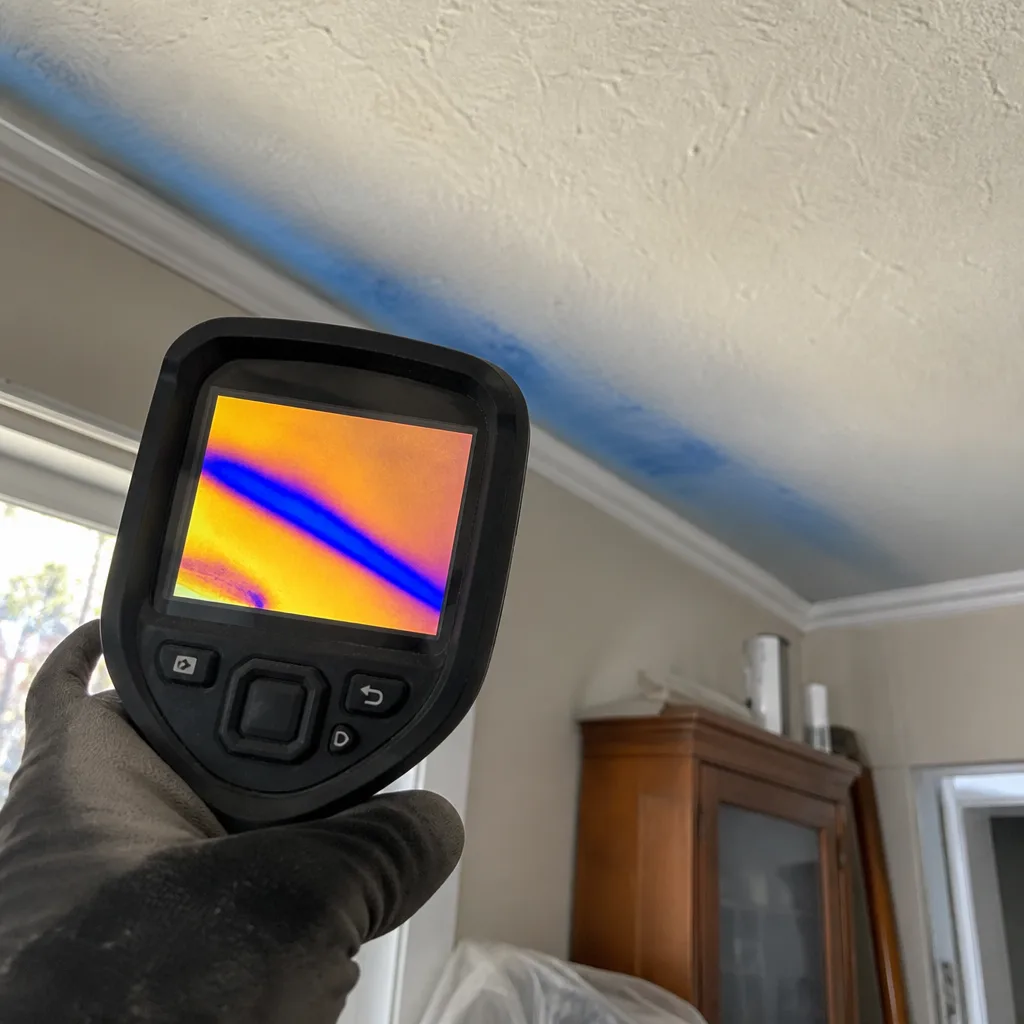
California’s Title 24 energy code requires compliance documentation for insulation upgrades that alter the thermal envelope. In Lake Forest, which falls under Orange County’s building department jurisdiction, this typically means a permit for attic insulation removal and replacement, with a final inspection and CF3R certificate.
The CF3R - Certificate of Final Installation for Insulation - is the sticking point. This form must be signed by a C-2 (Insulation and Acoustical) or B (General Building) contractor licensed in California. A homeowner cannot sign it. A handyman without the correct license cannot sign it. The contractor’s license number goes on the form, and that license is checked against the CSLB database.
This creates three possible paths for a Lake Forest homeowner:
- Path one: full DIY, no permit. The homeowner installs insulation, never pulls a permit, and hopes no future sale or insurance claim triggers scrutiny. This is common. It is also a material disclosure issue when selling, and some insurers decline claims where unpermitted work contributed to damage.
- Path two: DIY installation, professional certification. The homeowner does the physical work, then pays a licensed contractor to inspect and sign the CF3R. This sounds ideal. In practice, most contractors won’t sign off on work they didn’t supervise because their license and insurance are on the line. The ones who will charge inspection fees that erase any DIY savings.
- Path three: professional installation with permit. The contractor handles everything, provides the CF3R, and the job is fully documented. This is what we do on every Attic Insulation in Lake Forest project - written scope, written price, documented completion.
The Haven Standard applies here directly. Under Haven Standard Clause 1, every job begins with a written price and scope before any work starts. The permit path, the materials spec, the blower-door target - all documented in writing. No homeowner should start an insulation project without knowing which path they’re on and what documentation they’ll receive. Our Home Energy Audit Maintenance Checklist for Lake Forest Homeowners can help you prepare.
Lake Forest Attic Hazards That Change the Math
Lake Forest’s housing stock has specific characteristics that make some attics genuinely risky for DIY work. We’ve documented these across 9,000+ homes sealed and insulated since 2016, and the patterns in Lake Forest are consistent enough to warn about directly.
W-truss configurations with minimal bottom chords. Many Lake Forest homes built between 1985 and 2005 use engineered trusses with 2×4 bottom chords spaced 24 inches on center. These are designed to carry drywall and insulation load, not concentrated body weight. Stepping between chords puts stress on joints that weren’t engineered for it. We’ve seen three attic floor failures in Orange County in the past four years - two involved homeowners, one a handyman. All were avoidable with walkboards.
HVAC equipment in the attic. Lake Forest’s warmer inland microclimate, especially in the Portola Hills and Baker Ranch areas, drove builders to put air handlers and ductwork in attics. Adding insulation around or over this equipment requires understanding clearances - combustion appliances need specific air gaps, and refrigerant lines can’t be buried in cellulose without protection. Disconnecting or relocating equipment requires an EPA 608-certified technician. A homeowner who doesn’t know this can create a safety hazard or void equipment warranties.
Vermiculite and older foil-faced materials. Pre-1990 attics in Lake Forest occasionally contain vermiculite insulation, which requires asbestos testing before disturbance at $75-$150 per sample. Foil-faced polyurethane boards from the 1970s and early 1980s can off-gas when heated. We test before we touch; homeowners working alone often don’t know to.
Steep roof pitches in custom homes. The custom builds in Lake Forest’s hillside areas - think the upper Foothill Ranch zones - have roof pitches exceeding 8:12. Working on these slopes without fall protection is dangerous. Professional crews use harness anchors and walkboards. Most homeowners don’t own this equipment and shouldn’t buy it for a single project.
The safety caveat: if your attic has any of these conditions, the DIY cost savings evaporate against injury risk or the cost of proper safety equipment. A professional crew carries workers’ compensation and general liability specifically for these scenarios.
The Insurance Gap Most Homeowners Miss
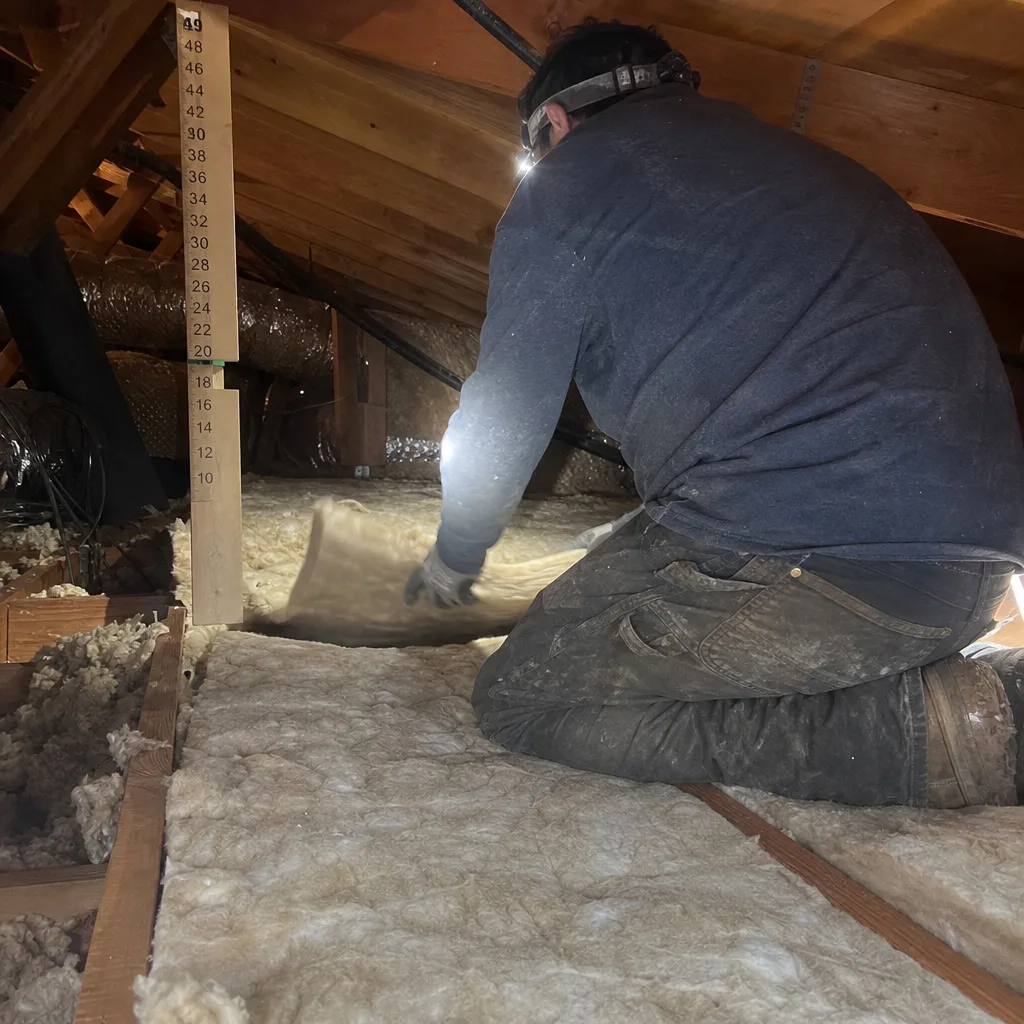
Homeowner’s insurance and contractor’s insurance cover different things, and the gap matters when something goes wrong in an attic.
A standard HO-3 homeowner’s policy covers the dwelling and usually covers DIY improvements the homeowner makes themselves. If a homeowner falls through their own ceiling, their medical payments coverage or health insurance applies. If their DIY insulation job later causes a roof leak, their dwelling coverage may respond, though the insurer can argue faulty workmanship.
What homeowner’s insurance does not cover: third-party injury. If a homeowner’s friend helps with the project and falls, the homeowner is personally liable. If the DIY work creates a condition that damages a neighbor’s property - say, a vent misrouted to dump moisture into an adjoining attic - there’s no coverage for that liability.
Contractor’s insurance is structured differently. General liability covers property damage and bodily injury to third parties. Workers’ compensation covers crew injuries without the homeowner being named in a lawsuit. These policies are rated for construction work, with premiums that reflect the actual risk class.
The critical distinction: when a professional crew works in your Lake Forest attic, their insurance responds to their errors and their injuries. When you work alone, your health insurance and net worth are the only backstops. For a project with genuine fall and electrical hazards, this is not a theoretical concern.
We’ve been called to jobs where a homeowner started DIY air sealing, discovered a wasp nest in a soffit, and fell retreating. The medical bills exceeded what professional installation would have cost by a factor of ten. We don’t share this to frighten; we share it because the build-versus-buy decision should include the full cost of risk, not just materials and labor.
The Hybrid Approach That Actually Works
There is one scenario where DIY and professional work combine cleanly in Lake Forest: the homeowner handles air sealing, a licensed contractor installs blown insulation and pulls the permit, and both parties agree in writing on the blower-door target before work begins.
This saves $400-$600 in labor - the typical air-sealing line item in an attic insulation quote - while keeping permit compliance clean and insurable. But it requires structure. Here’s how to set it up:
- Get a written scope and price for the full job first. This establishes the baseline. At Topside Attic Insulation Lake Forest, we provide this under Haven Standard Clause 1: flat price, written scope, written warranty before anyone lifts a tool.
- Request a line-item breakout of air-sealing labor. This tells you exactly what your DIY effort is worth. Typical range in Lake Forest: $400-$600 for a 1,500-square-foot attic with standard access.
- Perform your air sealing, then schedule the contractor for blower-door verification. The contractor tests your work, identifies any missed leaks, and documents the pre-insulation reading. This step costs $150-$250 as a standalone service if you’re not using the same contractor for installation.
- Sign a written agreement specifying the blower-door target and who is responsible for achieving it. If your DIY sealing doesn’t hit the target, who pays for additional sealing? Get this in writing. Under the Haven Standard, we specify this before work starts - no surprises.
- Let the contractor install insulation, pull the permit, and sign the CF3R. They handle the blown-in machine, the material depth verification, and the compliance documentation. You keep the $400-$600 labor savings from your weekend of sealing.
This hybrid only works with a contractor willing to participate. Many won’t, because signing a CF3R on work they didn’t fully supervise exposes their license. At Envelope Insulation Co., we’ve done hybrid jobs when the homeowner’s air sealing is documented with photos and passes our blower-door check. We don’t do them when the sealing is visibly incomplete or when the attic has hazard conditions we identified in our initial visit.
The materials for these jobs come from the same suppliers we use on full-service projects: Owens Corning, Johns Manville, Knauf, and for spray foam applications, Icynene or Demilec. No proprietary lock-in means the hybrid approach doesn’t constrain material choice.
Cost Comparison: Real Numbers for Lake Forest
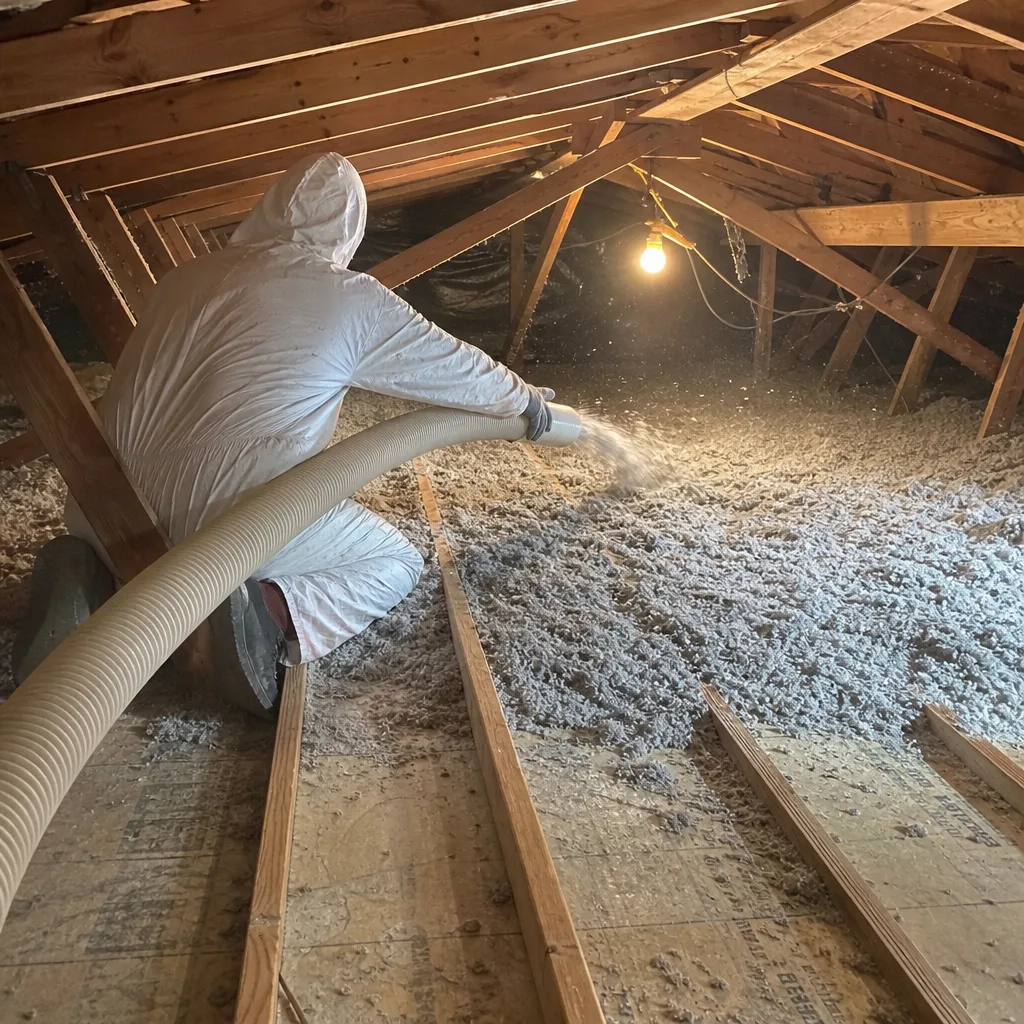
Below are actual price ranges for attic insulation work in Lake Forest’s current market. These are not estimates for your specific home; they’re benchmarks for decision-making. For an exact quote, we provide a written price before any work starts - no exceptions.
| Approach | Cost Range | What’s Included | What’s Missing |
|---|---|---|---|
| Full DIY (no permit) | $600-$1,200 | Materials only; batt or loose-fill from big-box store | Permit, CF3R, blower-door test, warranty, professional installation depth |
| DIY air sealing + pro insulation | $1,800-$3,200 | Homeowner sealing labor; pro blown-in, permit, CF3R | Blower-door verification (unless added separately at $150-$250) |
| Professional full service (batt) | $2,400-$4,000 | Air sealing, batt installation, permit, CF3R, photo documentation | Blower-door test (available as add-on or included in energy audit) |
| Professional full service (blown-in) | $2,800-$5,500 | Air sealing, blown insulation, permit, CF3R, photo documentation | Blower-door test (available as add-on or included in energy audit) |
| Professional with blower-door verification | $3,200-$6,000 | Full service plus before-and-after blower-door readings with written report | Nothing - complete documented package |
Notes on these ranges: Lake Forest’s attic sizes vary significantly. A 1,200-square-foot condo in the lower Foothill Ranch area has very different material requirements than a 3,500-square-foot home in Portola Hills. Access difficulty matters too - a truss attic with a central hatch is faster to work in than a hip roof with multiple small access points.
The rental economics of blower-door equipment become clear in this table. At $185-$245 per day plus transport, a homeowner performing a single project pays nearly as much for the test alone as the incremental cost of professional service that includes it. The break-even for rental requires multiple projects or existing construction knowledge.
For homes with Crawl Space Encapsulation & Vapor Barrier in Lake Forest needs in addition to attic work, the hybrid approach becomes more complex. Crawl space work involves different permits, different safety considerations, and typically cannot be split between homeowner and contractor as cleanly as attic air sealing.
Common Mistakes to Avoid
- Installing new insulation over unsealed air leaks. This is the most common error we correct in Lake Forest. Blown fiberglass or cellulose over a leaky attic floor is an expensive filter - it traps dust, loses R-value to air movement, and wastes the material cost. Seal first, insulate second. Always.
- Compressing batts to fit. A compressed R-30 batt performs like R-15. Homeowners trying to save money by buying thicker batts and squashing them into undersized cavities are buying worse performance at higher cost.
- Blocking soffit vents with insulation. Lake Forest’s coastal influence means attics need ventilation to manage humidity. Stuffing insulation tight to the eaves without baffles creates moisture problems that show up as mold in two to three years.
- Skipping the permit to save time. An unpermitted insulation job must be disclosed on sale. In Lake Forest’s active resale market, this becomes a negotiation point or a deal delay. The permit cost - typically $150-$350 - is trivial against home value.
- Using the wrong foam around heat sources. Standard expanding foam melts at temperatures above 240°F. Recessed lights, flues, and chimney chases require fire-rated products. We’ve found charred foam in attics where homeowners learned this the hard way.
- Assuming all vermiculite is safe. Lake Forest homes built before 1990 have a non-trivial chance of asbestos-containing vermiculite. Disturbing it without testing is a health risk and a legal liability. Test first, at $75-$150 per sample.
When to Call a Professional
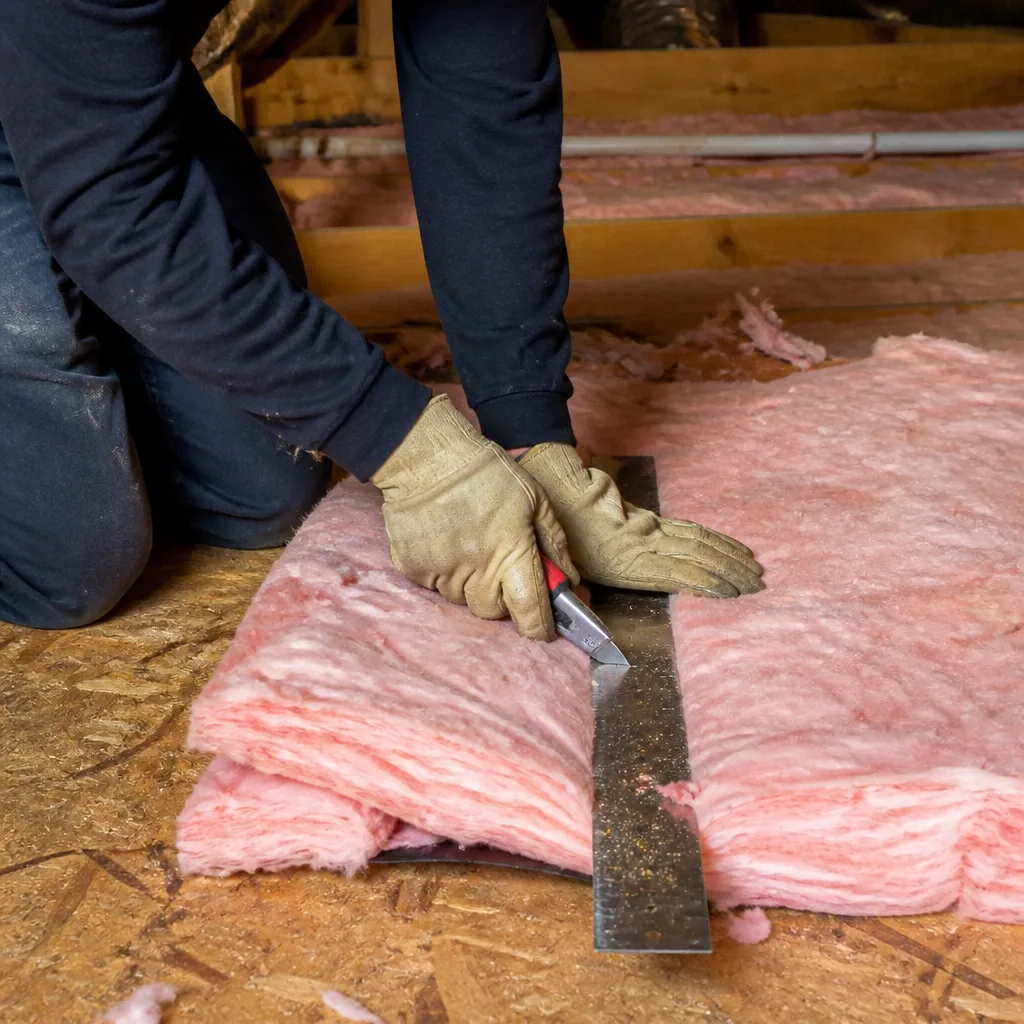
Call a professional when your attic has HVAC equipment, steep roof pitches, suspect old materials, or when permit compliance matters for your sale timeline. Call a professional when the cost of proper safety equipment exceeds the labor you’re trying to save. Call a professional when you want before-and-after blower-door numbers that prove the work performed. For more guides & resources on attic insulation and home performance, visit our blog.
Topside Attic Insulation Lake Forest offers free estimates in Lake Forest - call (657) 279-1249. Every estimate includes a written scope and flat price before any work starts, under Haven Standard Clause 1. We also provide a Free Second Opinion on any written estimate from another contractor; bring us their quote and we’ll review it with you, line by line.
Frequently Asked Questions
Yes, California law allows homeowners to perform their own construction work on their primary residence. However, you cannot sign the CF3R compliance certificate required to close a Title 24 permit, which means a DIY insulation job either goes unpermitted or requires a licensed contractor to inspect and certify work they didn’t perform. For a fully permitted, documented job, professional involvement is legally necessary.
Professional blower-door testing as a standalone service runs $150-$250 in the Lake Forest area. Equipment rental through regional firms in Santa Ana or Anaheim costs $185-$245 per day plus a refundable deposit, but requires pickup, transport, and trained operation. For most homeowners doing a single project, professional testing is less expensive when time and transport are included. Call (657) 279-1249 to schedule a test with written results.
In Lake Forest’s climate, damaged or compressed insulation almost always costs more to repair effectively than to remove and replace. Top-dressing old batts with new material creates layering problems, traps moisture, and often violates manufacturer warranty terms. Removal plus new blown-in insulation typically runs $2,800-$5,500 for a standard Lake Forest attic, while the “repair” approach often requires redoing within five years. We provide a Free Second Opinion on any written estimate to help you compare real numbers.
Same-day service is available for urgent conditions - significant air leaks causing extreme energy bills, or insulation displacement from rodent activity - but standard attic insulation replacement requires scheduling to ensure proper material staging and crew assignment. Our live person answers calls 24/7 to discuss urgency and timeline. Written pricing is provided before any work starts, never after.
We source from Owens Corning, Johns Manville, Knauf, Rockwool, CertainTeed, Icynene, Demilec, and GreenFiber, selecting by application rather than brand loyalty. For Lake Forest’s climate zone, blown fiberglass or cellulose in attics typically performs best on cost-effectiveness; spray foam applications from Icynene or Demilec excel in tight spaces and air-sealing-critical jobs. No proprietary lock-in means we specify what fits your home, not what moves inventory.
The only reliable verification is a blower-door test - a pressurization reading that shows, in one number, how much air your building envelope is losing. In our experience across Lake Forest homes, homeowner air sealing typically achieves 30-50% leakage reduction when done carefully, versus 60-75% for professional sealing with thermal imaging and smoke-pencil verification. We offer blower-door verification of homeowner work as a standalone service; if it hits target, we credit that toward your insulation installation.
The Bottom Line
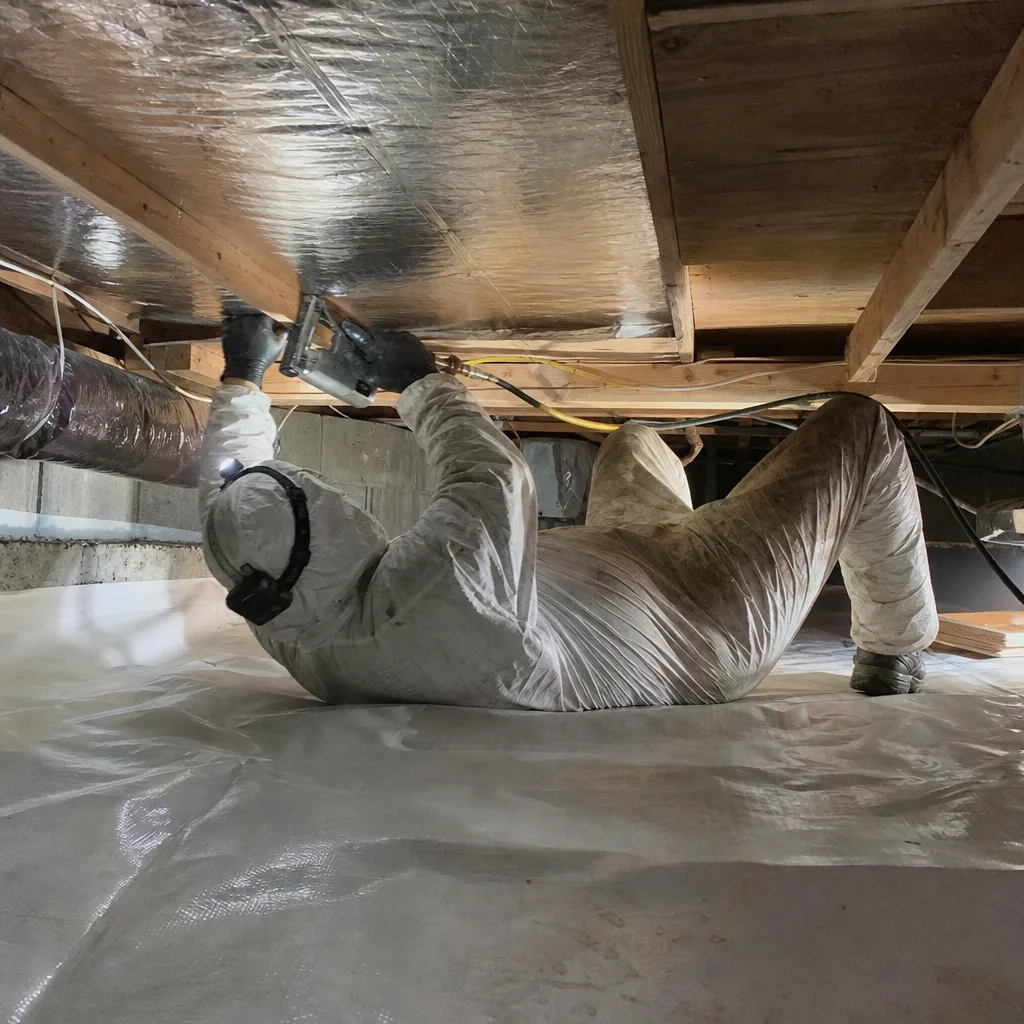
The DIY-versus-professional question in Lake Forest is not about whether you’re capable of caulking a top plate. Most homeowners are. It’s about whether you have access to the diagnostic equipment that proves the work, and whether you can legally complete the permit process that documents it. Air sealing is genuinely DIY-accessible in safe, simple attics. Blower-door testing is technically rentable but rarely economical for single projects. Permit compliance is legally restricted to licensed contractors regardless of who did the physical work. The one hybrid approach that saves money - homeowner sealing, professional insulation and permitting - requires a written agreement and a contractor willing to participate. For everything else, the full professional path provides documented results, legal compliance, and insurance coverage that DIY cannot replicate.
Written by Wes Okafor, Owner at Topside Attic Insulation Lake Forest, serving Lake Forest since 2016.