
Last updated September 24, 2026
Home Energy Audit Maintenance Checklist for Lake Forest Homeowners
California’s Title 24 requires performance documentation at the time of sale, yet most Lake Forest homeowners who paid for an audit in 2021 cannot locate a single measurable number from that visit. We’ve been in attics across Lake Forest since 2016, and the pattern repeats: a binder sits on a shelf, its pages unmarked, while the house drifts further from the baseline that was supposed to guide every improvement decision. This checklist reframes the audit as a living document, not a one-time event. You’ll learn which six items change measurably year-over-year in Lake Forest’s climate, how to keep a dated log that satisfies rebate programs, and when a visual inspection ends and a diagnostic audit begins.
Quick Answer
A home energy audit maintenance checklist for Lake Forest homeowners tracks six inspectable items that degrade predictably: attic insulation depth, duct leakage at connections, weatherstripping at attic hatches, can-light penetrations, exhaust fan dampers, and ridge vent blockage. Record each item’s measured condition annually in a dated log, and re-check after Santa Ana wind events and peak cooling season. This running document satisfies Southern California Edison and SoCalGas rebate requirements and provides the baseline Title 24 demands at time of sale.
Table of Contents
- Why Most Lake Forest Energy Audits Fail Within Two Years
- The Six Inspectable Items That Change Year-Over-Year
- How to Build a Dated Log That Becomes Your Baseline
- Visual Inspection vs. Diagnostic Audit: Hiring the Right Professional
- Lake Forest’s Two Seasonal Triggers for Mid-Year Checks
- Which Findings Qualify for SCE and SoCalGas Rebates
- What You Can Check Yourself and What Requires a Blower Door
- Common Mistakes to Avoid
- When to Call a Professional
- Frequently Asked Questions
 Before
 After
AfterWhy Most Lake Forest Energy Audits Fail Within Two Years
The audit industry sells deliverables, not continuity. A technician arrives with an infrared camera, produces color images of your walls, and hands you a PDF scored on a hundred-point scale. Six months later, you cannot recall whether the attic insulation measured R-30 or R-38, and the company has no record they will share without a new service fee.
In Lake Forest, this problem is acute for three reasons. First, our housing stock spans three distinct eras: the 1970s tract homes near Lake Forest Drive, the 1990s expansion around Portola Parkway, and the 2015-plus infill near the Orange County Great Park. Each era has different envelope vulnerabilities, and a generic audit template misses the specifics. Second, Lake Forest’s position in the Saddleback Valley exposes homes to Santa Ana winds that pressurize attics and accelerate insulation settlement. Third, California’s rebate programs require dated, measured documentation, not narrative summaries, yet few auditors provide log formats that homeowners can continue themselves.
We’ve audited homes in Lake Forest where the homeowner paid $400 for an audit, received a 30-page report, and retained exactly zero measurable data points. The report described the attic as “adequately insulated” without stating depth. It noted “some duct leakage” without a CFM25 reading. It recommended “air sealing improvements” without identifying which top plates or penetrations were tested. When that homeowner called us for a Home Energy Audit in Lake Forest, we started from scratch because the previous document was unusable.
The failure is structural, not personal. Audits are marketed as diagnostic events, not as the first entry in a maintenance record. This checklist corrects that by giving you the format and the items to track.
The Six Inspectable Items That Change Year-Over-Year
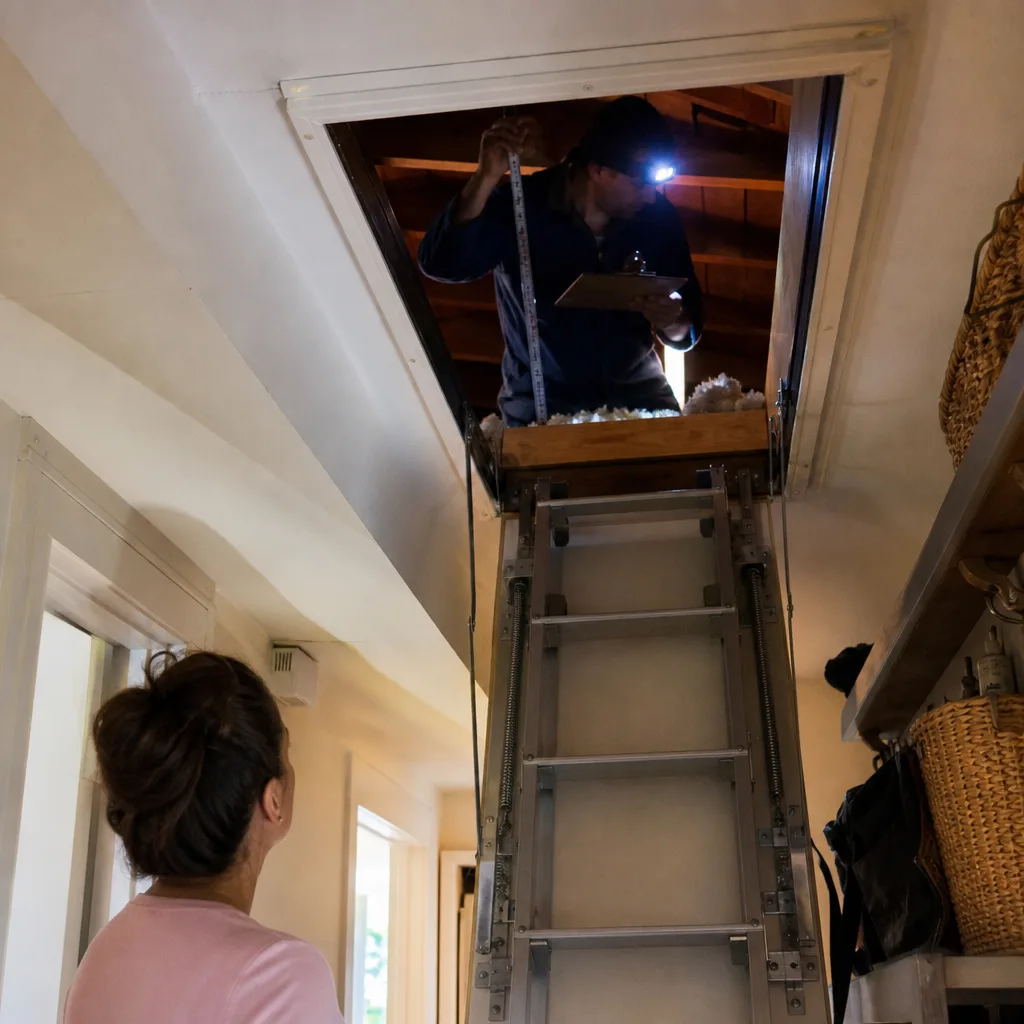
These six items degrade predictably in Lake Forest homes. Each can be measured, recorded, and compared against prior readings. Skip any one, and your audit becomes a snapshot instead of a baseline.
1. Attic Insulation Depth
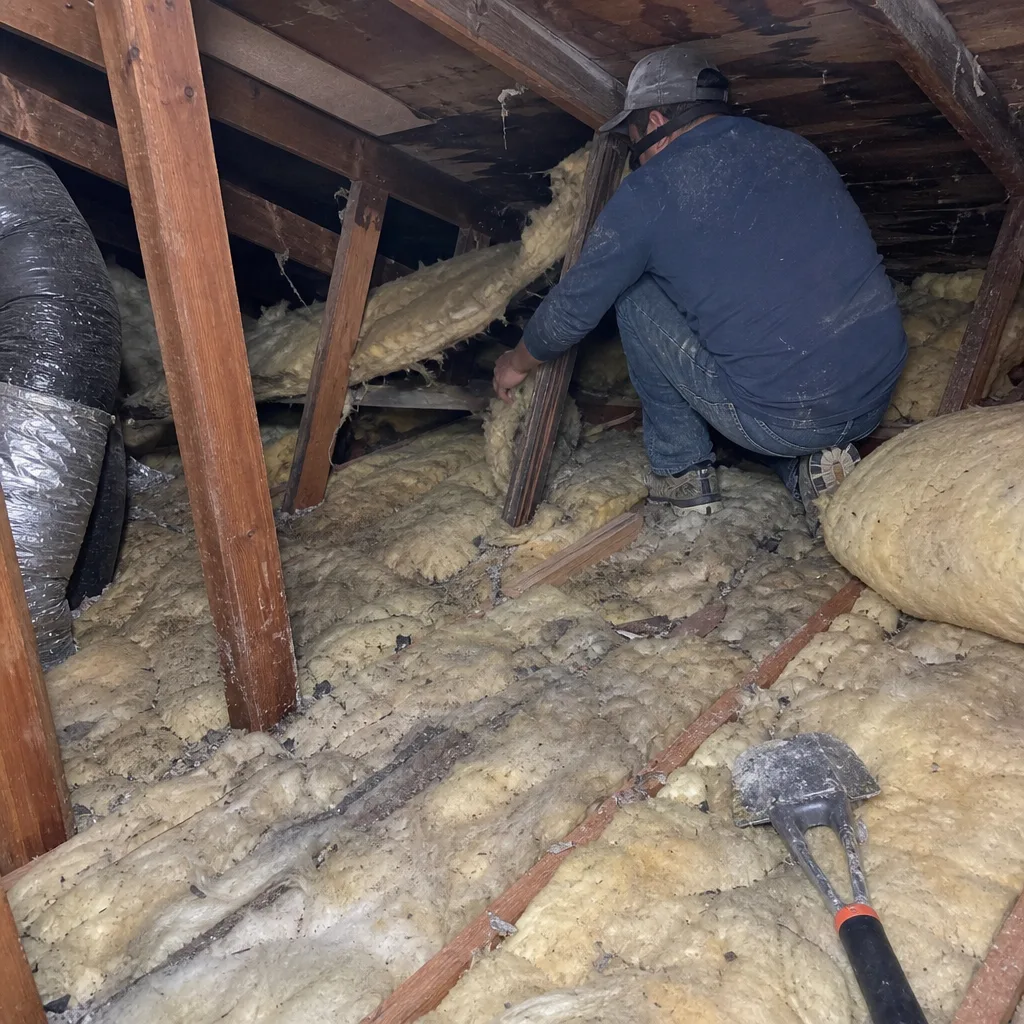
Blown-in fiberglass and cellulose settle. In Lake Forest, where summer attic temperatures exceed 140°F, thermal cycling accelerates compaction. We’ve measured GreenFiber cellulose that lost 15% of its installed depth within four years in the Baker Ranch area, and Owens Corning fiberglass that settled to R-30 from an original R-38 in homes near Foothill Ranch. The measurement is simple: a ruler inserted at multiple points, recorded to the nearest half-inch, with location noted (e.g., “north slope, 6 feet from ridge”).
2. Duct Leakage at Connections
Flexible duct connections to plenums and registers loosen with thermal cycling. A duct blaster test, pressurizing the duct system to 25 Pascals and measuring leakage in CFM25, provides the number. In Lake Forest’s 1990s homes with attic ductwork, we regularly see initial readings of 15-20% of fan flow, worsening to 25-30% after five years of peak-season operation. The critical measurement is at the connection points, not total duct leakage, because connections are where annual change occurs.
3. Weatherstripping at Attic Hatches
The attic hatch is the largest unsealed penetration in most Lake Forest homes. Compression weatherstripping degrades in 2-3 years. Check by closing the hatch on a strip of paper: if it pulls free without resistance, the seal has failed. Record the weatherstripping type (closed-cell foam, bulb gasket, or none) and the paper-test result.
4. Can-Light Penetrations
Recessed can lights, especially IC-rated fixtures installed before 2015, create thermal bypasses. In Lake Forest’s older homes near El Toro Road, we’ve found original fixtures with no gasket between the housing and drywall, allowing conditioned air to escape continuously. The inspectable item is the presence and condition of an airtight gasket or cover, not just whether the fixture is IC-rated. Record: gasket present (Y/N), intact (Y/N), cover type if added.
5. Exhaust Fan Dampers
Bathroom and kitchen exhaust fans rely on gravity dampers that stick open or fail to seal. In Lake Forest’s coastal-influenced climate, corrosion accelerates damper failure. The test: operate the fan, then power it off and feel for backdraft at the exterior hood. Record: damper closes fully (Y/N), exterior hood condition, and any daylight visible around the damper when closed.
6. Ridge Vent Blockage
Lake Forest’s mature tree canopy, especially in older neighborhoods near Lake Forest Drive, deposits debris that blocks ridge vents. A blocked ridge vent turns the attic into a solar oven, accelerating every other degradation pattern. Inspect from the exterior with binoculars, or from the interior with a flashlight at the ridge peak. Record: percentage of vent length blocked, debris type, and any bird or rodent nesting evidence.
How to Build a Dated Log That Becomes Your Baseline
A useful log fits on one page, uses numbers not adjectives, and can be updated by any competent inspector in future years. Below is the format we provide to every Home Energy Audit in Lake Forest customer, modified for homeowner self-use.
| Item | Location/Identifier | Measured Condition | Date | Inspector | Re-check Date |
|---|---|---|---|---|---|
| Attic insulation depth | North slope, 6 ft from ridge | 10.5 in. (R-30.5 blown fiberglass) | 3/15/2024 | Self | 3/15/2025 |
| Duct leakage | Return plenum connection | 185 CFM25 (12% of fan flow) | 3/15/2024 | Envelope Insulation Co. | 3/15/2025 |
| Hatch weatherstripping | Hallway hatch, 2nd floor | Closed-cell foam, paper test: holds | 3/15/2024 | Self | 3/15/2025 |
| Can-light gasket | Kitchen, 4 fixtures | 2 intact, 2 missing | 3/15/2024 | Self | 9/15/2024 |
| Exhaust damper | Master bath | Closes fully, hood intact | 3/15/2024 | Self | 3/15/2025 |
| Ridge vent blockage | Full length, south-facing | Approx. 10% blocked, leaf debris | 3/15/2024 | Self | 9/15/2024 |
The re-check dates reflect Lake Forest’s two seasonal triggers, covered in the next section. Items with higher degradation rates (can-light gaskets, ridge vents after wind events) get six-month intervals. Stable items get annual checks.
Store this log with your property records. When you sell, Title 24 compliance requires documentation of energy efficiency measures; a five-year dated log satisfies auditors and buyers more reliably than any narrative report. When you apply for SCE or SoCalGas rebates, the measured baseline and post-improvement readings are the evidence required.
Visual Inspection vs. Diagnostic Audit: Hiring the Right Professional
Not every professional who examines your attic performs an energy audit. The distinction matters because the wrong hire produces the wrong documentation, and the wrong documentation cannot become your baseline.
A visual inspection is what a home inspector provides at purchase. The inspector notes insulation type, estimates depth visually, identifies obvious defects, and reports in narrative form. This satisfies disclosure requirements but produces no measurable baseline. A home inspector in Lake Forest will tell you the attic “appears to have fiberglass batt insulation” and may note “some gaps visible near the eaves.” They will not tell you the blower-door reading, the duct leakage in CFM25, or the exact R-value at six points.
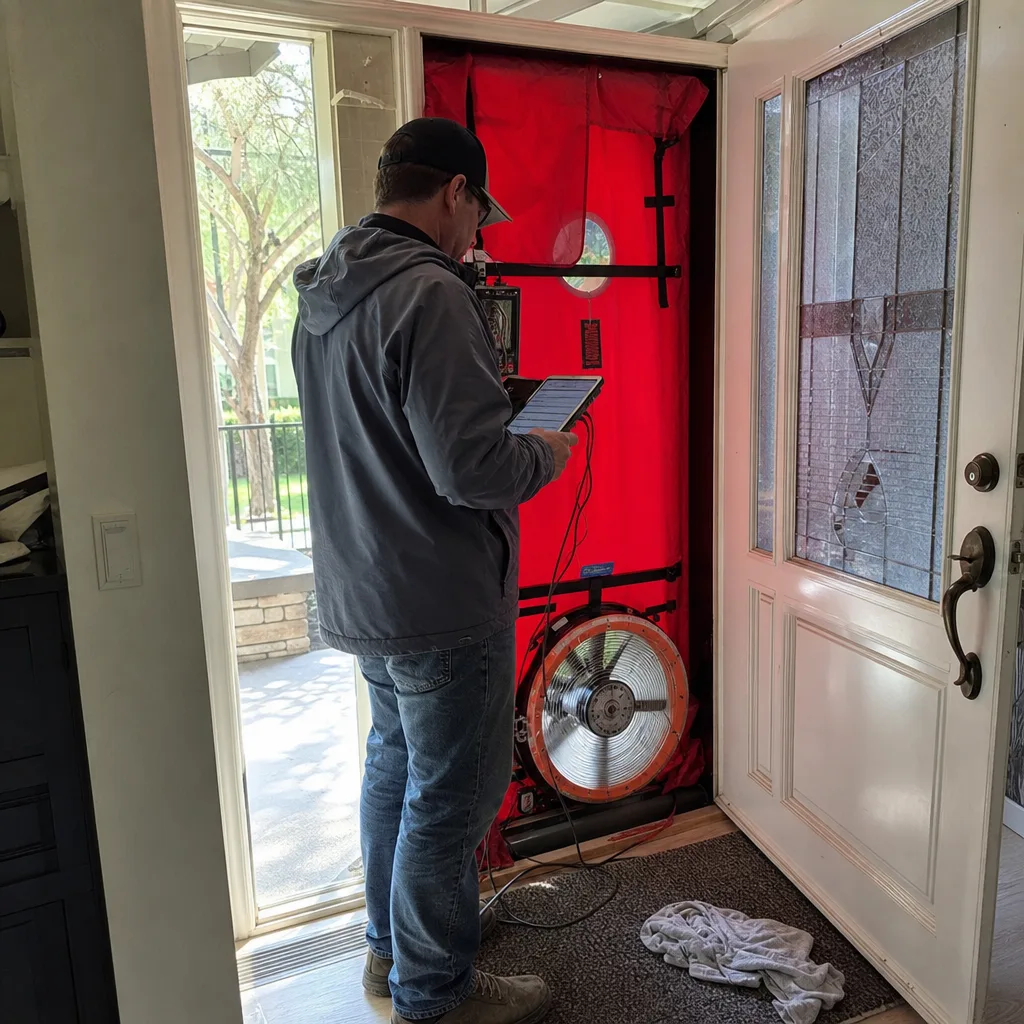
A diagnostic audit requires calibrated equipment and a technician trained to operate it. The core tool is the blower door, a pressurized frame fitted to an exterior door that measures building envelope leakage in CFM50, cubic feet per minute at 50 Pascals of pressure. A single number summarizes your home’s airtightness. The second core tool is the duct blaster, which isolates and pressurizes the duct system to measure leakage independent of the envelope. Infrared cameras, combustion analyzers, and manometers support these primary measurements.
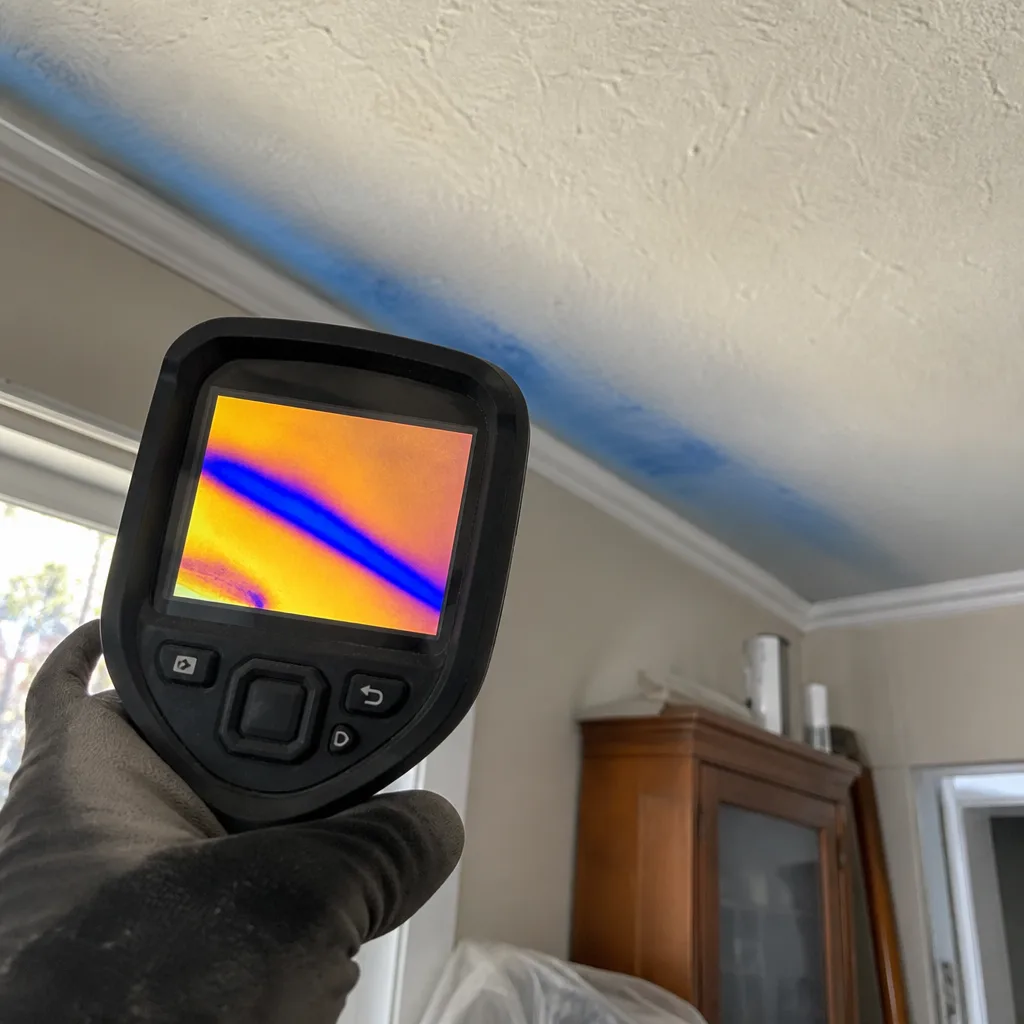
In Lake Forest, we’ve encountered homeowners who paid for an “energy audit” and received only a visual inspection with infrared images. The images are dramatic, red and blue swirls on a screen, but without blower-door data to quantify the leakage paths they reveal, the images are unmoored from priority. A $400 infrared picture of a cold wall is less useful than a $400 blower-door reading that tells you your home leaks 3,800 CFM50 and that 40% of that leakage is through the attic floor.
When hiring, ask three questions:
- Will you perform a blower-door test and provide the CFM50 reading before and after any air sealing?
- Will you perform duct leakage testing in CFM25 if ductwork is accessible?
- Will you provide a dated log format I can update annually, or only a narrative report?
A “no” to any of these indicates a visual inspection, not a diagnostic audit. At Topside Attic Insulation Lake Forest, every Home Energy Audit in Lake Forest includes blower-door testing and a log format as standard deliverables.
Lake Forest’s Two Seasonal Triggers for Mid-Year Checks
Lake Forest’s climate demands two re-checks outside the annual cycle. These are not calendar preferences; they are responses to specific mechanical stresses that produce measurable change.
Post-Santa-Ana-Wind Event Check
Santa Ana winds, typically October through March, pressurize attics through ridge vents, gable vents, and any envelope breach. In Lake Forest’s exposed ridges, especially homes above Portola Parkway with sightlines to the Santa Ana Mountains, we’ve documented blown insulation displacement after single wind events. Fiberglass and cellulose migrate from the attic center toward the eaves, creating thin spots at the highest heat-gain locations.
The check is simple: measure insulation depth at your prior measurement points within two weeks of a significant wind event (sustained gusts above 40 mph, which Lake Forest experiences 3-5 times annually). If depth has shifted by more than 2 inches at any point, redistribution or supplemental insulation is warranted. Record the event date, wind speed if available, and the new depth readings.
Post-Summer Cooling-Season Check
Lake Forest’s cooling season runs May through October, with peak attic temperatures in August. Ductwork in unconditioned attics undergoes thermal stress: metal expands and contracts, flex duct ages at connection points, and tape adhesives degrade. The post-season check focuses on duct leakage and exhaust fan dampers, the items most stressed by continuous operation.
Run your duct system and note any new whistling at registers, which indicates leakage. Check exhaust dampers for heat-warping that prevents full closure. In homes near the Irvine Spectrum border, where cooling loads are highest, we’ve seen damper failure rates double compared to coastal Lake Forest neighborhoods. Record any changes and schedule diagnostic testing if leakage indicators appear.
Which Findings Qualify for SCE and SoCalGas Rebates
Southern California Edison and SoCalGas operate separate rebate programs with overlapping requirements. Both require pre-improvement and post-improvement documentation. Your dated log is the foundation; without it, you cannot prove the improvement occurred or calculate the savings.
SCE Energy Upgrade California
SCE’s Home Energy Upgrade program rebates air sealing, insulation, and duct sealing based on measured improvement in building performance. The critical documentation: blower-door readings before and after air sealing, and insulation depth measurements with location photos. Rebate amounts vary by improvement type and percentage reduction in leakage; a 15% reduction in CFM50 typically qualifies for the base tier, while 30% reduction qualifies for enhanced rebates.
In Lake Forest, we’ve seen the strongest rebate outcomes in pre-1990 homes with original envelope construction. A 1978 home near Lake Forest Drive that measured 4,500 CFM50 pre-sealing and 2,800 CFM50 post-sealing qualified for $1,200 in SCE rebates plus additional incentives through the Energy Upgrade California whole-home path. The homeowner’s dated log, with our before-and-after blower-door numbers, was the entire documentation requirement.
SoCalGas Residential Energy Efficiency Programs
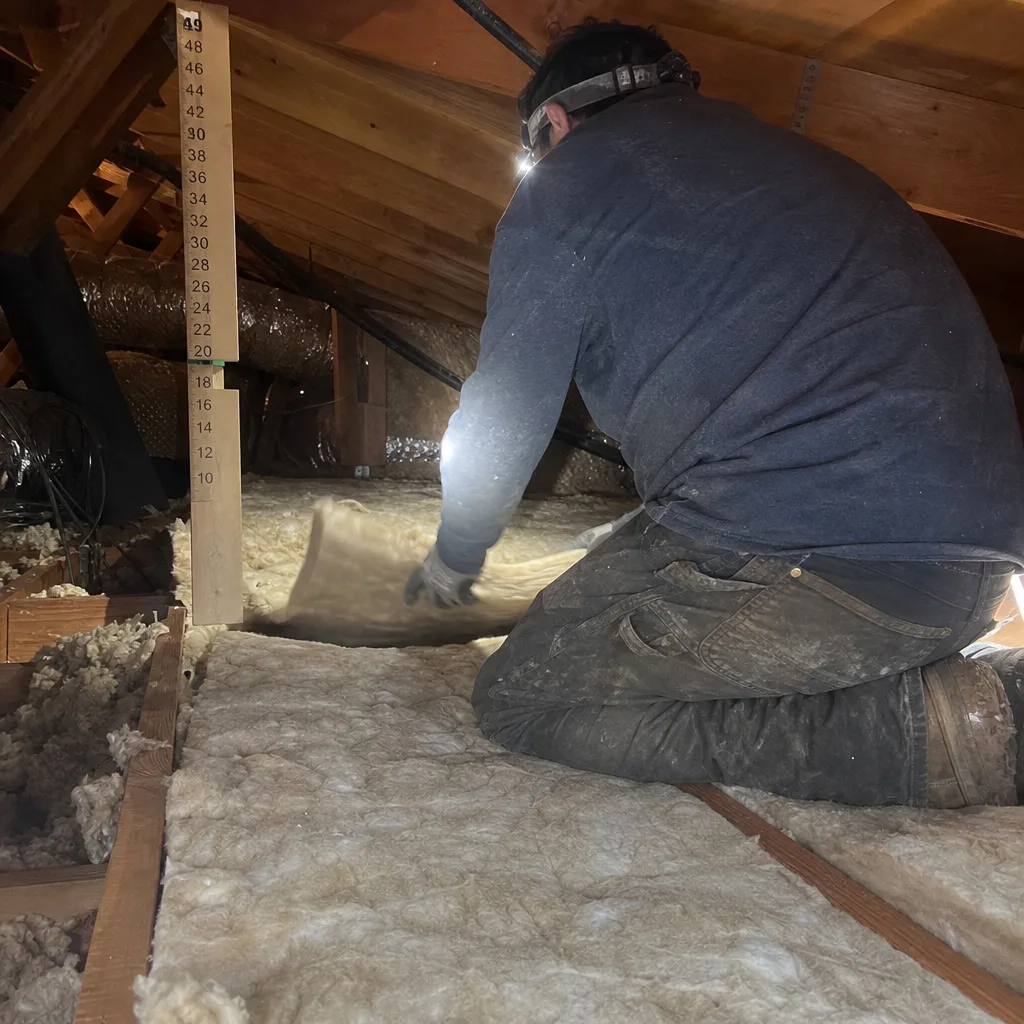
SoCalGas rebates attic insulation, wall insulation, and water heater improvements. For insulation, the requirement is pre- and post-installation depth measurements with R-value verification. For attic work, photos of the full attic floor before and after are required, with date stamps. The dated log format satisfies this if it includes photo references or embedded images.
A critical detail: SoCalGas requires that insulation be installed to Title 24 prescriptive levels, which for Lake Forest’s climate zone (Zone 8) means R-38 minimum for attic floors. If your log shows R-30 and you upgrade to R-38, the improvement is rebate-eligible. If your log shows R-38 and you supplement to R-49, the improvement may still qualify under the “exceeding code” tier, but documentation of the prior condition is mandatory.
Both programs accept homeowner-maintained logs if the measurements are verified by a program-participating contractor at time of claim. We provide the verification as part of our standard Attic Insulation in Lake Forest service, with the written scope and blower-door documentation required for submission.
What You Can Check Yourself and What Requires a Blower Door
The dated log includes items at two skill levels. Understanding the boundary prevents false confidence and missed problems.
Homeowner-Appropriate Checks
- Attic insulation depth with a ruler and flashlight
- Weatherstripping paper test at attic hatches
- Exhaust damper operation by hand and backdraft check
- Ridge vent blockage by visual inspection from ladder or ground
- Can-light gasket presence by attic inspection
These require no special equipment, only access and attention to detail. Record measurements, not impressions. “Looks fine” is not a log entry. “Closed-cell foam, 3/8 inch, compresses to 1/8 inch under hatch weight, paper test holds” is a log entry.
Professional-Required Diagnostics
- Duct leakage in CFM25 (duct blaster required)
- Building envelope leakage in CFM50 (blower door required)
- Pressure mapping to identify dominant leakage paths (blower door plus manometer)
- Combustion safety testing if gas appliances are present (CAZ depressurization test)
- Infrared thermography with blower-door pressurization for meaningful interpretation
The blower door is not optional for a true baseline. We’ve audited Lake Forest homes where the homeowner was certain the attic was the primary leakage path, but blower-door pressure mapping showed 60% of leakage through the crawl space and garage-to-house connection. Without the diagnostic, every improvement dollar would have gone to the wrong location. For homes with Crawl Space Encapsulation & Vapor Barrier in Lake Forest needs, this distinction is especially critical.
Common Mistakes to Avoid
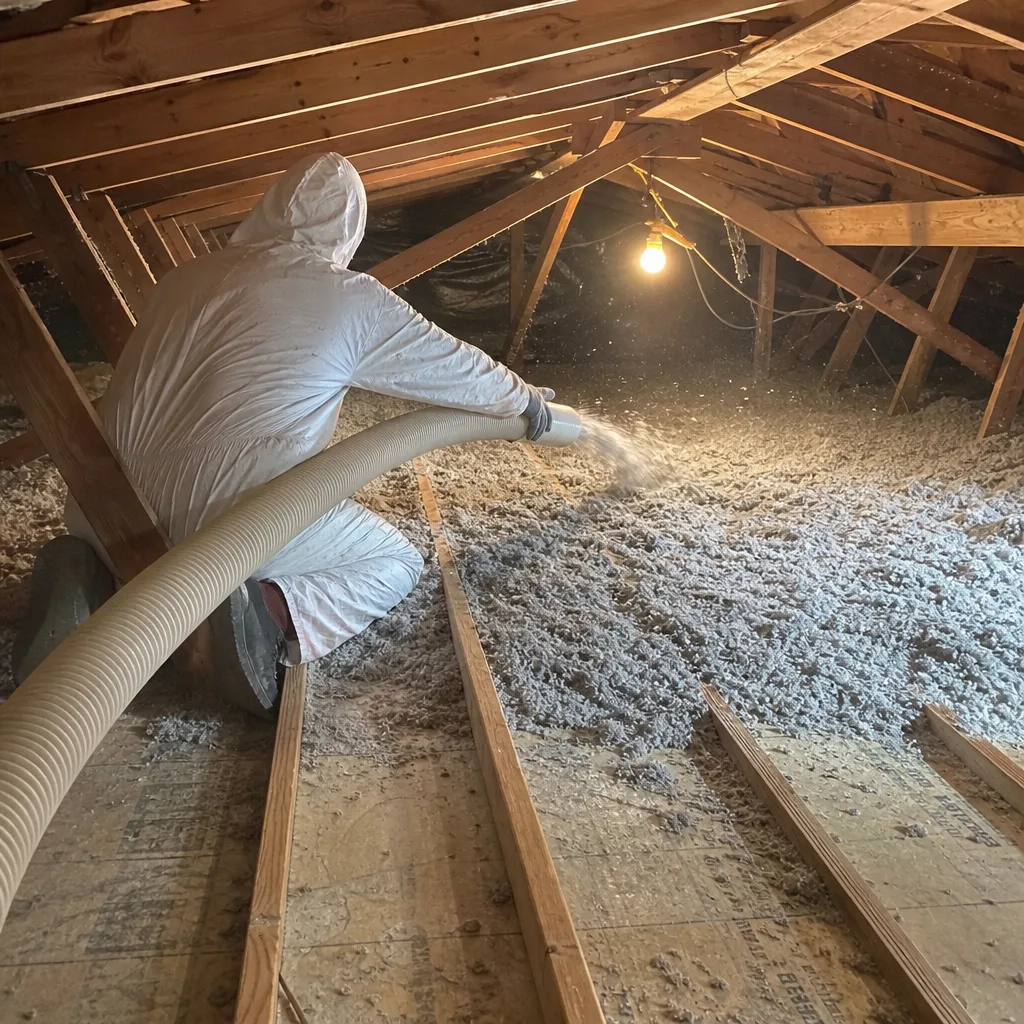
- Recording “R-38” without measuring. Insulation bags are labeled at loft, not settled depth. A bag labeled R-38 at 12 inches may settle to 10.5 inches and R-33. Measure what is in the attic, not what was installed.
- Checking only the attic center. Eaves and corners thin first due to wind washing and installer reach limitations. In Lake Forest’s hip-roof designs common in Foothill Ranch, corner depths are often 3-4 inches below center measurements.
- Ignoring the garage attic. Attached garage attics in Lake Forest homes often share a wall with conditioned space. Unsealed penetrations through that wall are significant leakage paths that standard attic inspections miss.
- Using a smoke pencil as definitive proof. Smoke pencils show air movement direction, not magnitude. A small but continuous leak through a can-light penetration can exceed a dramatic but brief draft at an outlet. Quantify with CFM where possible.
- Discarding old logs when selling. Title 24 compliance is easier with five years of documented improvement than with a single recent audit. Buyers and their lenders value continuous maintenance records.
- Assuming new construction is exempt. Lake Forest’s 2015-plus homes often have code-minimum insulation installed before final blower-door testing, with air sealing performed hastily to pass. We’ve measured 2,800 CFM50 in homes sold as “energy efficient” that should have been below 2,000.
- Waiting for high bills to trigger action. Energy bills are lagging indicators, degraded by rate structure changes and usage pattern shifts. A 20% increase in duct leakage produces no immediate bill change in mild months but accelerates equipment wear year-round.
When to Call a Professional
Call for diagnostic testing when your log shows measurable degradation, when you cannot safely access inspection points, or when rebate documentation requires contractor verification. Specific triggers: duct leakage indicators (whistling, uneven room temperatures), blower-door readings that exceed 3,500 CFM50 for homes under 3,000 square feet, or any combustion appliance backdrafting during exhaust fan operation. In Lake Forest’s older neighborhoods, knob-and-tube wiring active in attics creates both access hazard and insulation-contact code issues that require professional evaluation.
Topside Attic Insulation Lake Forest offers free estimates in Lake Forest. Call (657) 279-1249. Every estimate includes a written scope and written price before any work starts, under Haven Standard Clause 1. We publish before-and-after blower-door numbers on every applicable job, and we provide the dated log format described in this guide at no additional charge.
Frequently Asked Questions
A diagnostic audit with blower-door testing, duct blaster testing, and a dated log format typically runs $350-$550 in Lake Forest, depending on home size and duct accessibility. Visual inspections without diagnostic equipment cost less but produce no measurable baseline and cannot support rebate claims. Call (657) 279-1249 for a written price before any work starts, estimates are free.
Update the full checklist annually, with targeted re-checks after Santa Ana wind events and post-summer cooling season. Items with faster degradation rates, can-light gaskets and ridge vents, benefit from six-month intervals. The dated log format includes recommended re-check dates for each item.
No. Blower-door equipment requires calibration, training, and interpretation skills that are not homeowner-appropriate. The test involves pressurizing your home to 50 Pascals, which can backdraft combustion appliances and distribute contaminants if performed without safety protocols. Hire a certified technician for this diagnostic.
R-value measures thermal resistance of a material, insulation’s ability to resist heat flow. The blower-door number, CFM50, measures airtightness, how much conditioned air escapes through the building envelope. A home can have high R-value insulation and poor airtightness, or vice versa. Both numbers belong in your log because they measure different performance dimensions.
Lake Forest’s inland position in Climate Zone 8 requires R-38 minimum for attic floors, same as most of Orange County, but the Santa Ana wind exposure and higher summer attic temperatures make air sealing more critical than in coastal Zone 6 areas. We’ve seen Lake Forest homes with adequate R-value but unsealed top plates perform worse than coastal homes with lower R-value and tight envelopes. The checklist prioritizes airtightness for this reason.
Yes, if the audit produced a dated log with measurable baselines. California’s Title 24 requires energy performance disclosure at sale, and buyers increasingly request documentation of efficiency improvements. A five-year log showing maintained or improved blower-door numbers and insulation depths satisfies this demand more convincingly than any verbal assurance or single-point audit report.
The Bottom Line
A home energy audit is only as useful as the written record it produces, and that record only matters if you continue it. The six inspectable items in this checklist, attic insulation depth, duct leakage, hatch weatherstripping, can-light penetrations, exhaust fan dampers, and ridge vent blockage, change measurably year-over-year in Lake Forest’s climate. Record them in a dated log, re-check after seasonal triggers, and use the documentation for rebates, sales compliance, and informed improvement decisions. The alternative is the industry default: a forgotten PDF and a house that drifts further from efficient every year.
Written by Wes Okafor, Owner at Topside Attic Insulation Lake Forest, serving Lake Forest since 2016.