
Crawl Space Vapor Barrier in Lake Forest, CA
Our Crawl Space Encapsulation & Vapor Barrier services install a heavy-duty polyethylene sheet – typically 6 to 20 mils thick – across the bare soil floor of your crawl space to block ground moisture before it can migrate into your home’s framing and living areas. In Lake Forest, where summer humidity and Santa Ana wind cycles create fast swings between dry and damp conditions, a properly installed barrier is the first line of defense against wood rot, mold, and rising energy costs. Most vapor barrier installations in Lake Forest run between $1,200 and $3,800, depending on crawl space size and existing moisture conditions – and we put that number in writing before anyone starts work.
This page covers the full picture: when you need one, what the installation involves, what it costs, and what documentation you walk away with. If you want to understand the broader project first, our Crawl Space Encapsulation & Vapor Barrier in Lake Forest page covers how vapor barriers fit into a complete encapsulation system. Or call us directly at (657) 279-1249 – a live person answers, not a voicemail.
Topside Attic Insulation Lake Forest has been operating under The Haven Standard since 2016, completing more than 9,000 crawl space, attic, and insulation jobs – every one with a written price before work started and a photo record when the crew left. Wes Okafor leads the team, and that consistency in process is why Lake Forest homeowners in Serrano, Foothill Ranch, and Baker Ranch keep calling back when they have a second property or a neighbor who needs the same work done.
When You Need a Crawl Space Vapor Barrier
Vapor barriers aren’t just for homes with visible standing water. Moisture problems in Lake Forest crawl spaces often show up quietly – in a musty smell, a warped floor, or an HVAC bill that keeps climbing. Here are the situations where a vapor barrier is the right call:
- Musty or earthy odors coming up through floors or vents. Ground moisture evaporates into your crawl space air continuously. Without a barrier, that damp air finds its way into your living space through gaps in the subfloor. Homes in the older sections of Lake Forest near El Toro Road are particularly susceptible because their crawl spaces were built before California’s current moisture-control standards took hold.
- Visible condensation on floor joists, pipes, or insulation batts. If you’ve looked into your crawl space and seen water droplets on the wood framing or the underside of your subfloor, ground evaporation is already reaching the structure. This is the stage where you still have time to prevent rot – not repair it.
- Wood subfloor or joists that feel soft or show discoloration. Soft spots in your hardwood or laminate floors often trace back to compromised subfloor sheathing, which compromised because moisture had nowhere else to go. A vapor barrier stops the source.
- Existing fiberglass batts that have fallen from between the joists. Fiberglass insulation absorbs moisture, gains weight, and eventually drops. When we find batts on the crawl space floor, it’s almost always a sign that ground moisture has been working its way up unchecked.
- Higher-than-normal heating and cooling bills with no clear cause. Ground moisture raises the humidity in the crawl space, which raises the effective humidity in the home. Your HVAC system works harder to compensate. A vapor barrier – especially one that also covers the perimeter walls – reduces that moisture load and takes pressure off your system.
- Recent heavy rain or after the winter months in the Saddleback Valley. The Saddleback foothills channel runoff toward lower-lying neighborhoods after significant rain. Homes near Aliso Creek or in the Portola Hills area can see crawl space moisture spike sharply in January and February, even if the space looks dry in August. Post-rain inspections frequently reveal that an existing barrier has torn, pooled, or shifted.
Our Crawl Space Vapor Barrier Process
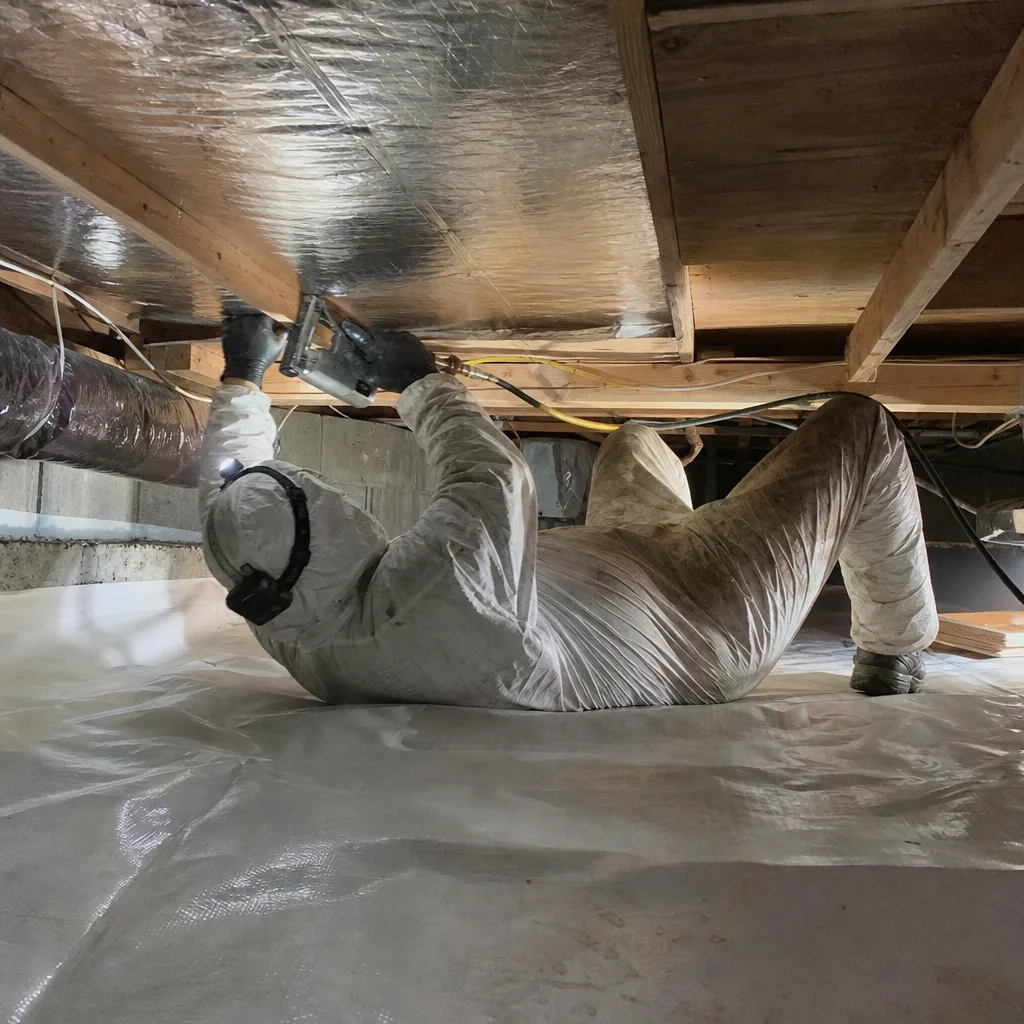
The work is methodical. We don’t cut corners on prep because a vapor barrier installed over debris, standing water, or old deteriorated plastic is just a new layer of problems. Here’s the sequence we follow on every Lake Forest job:
- Initial inspection and moisture reading. Before we touch anything, we document the crawl space with photos and take moisture readings at multiple points across the soil and on the wood framing. This gives us a baseline – and it’s the photo record you receive when the job closes. If we find standing water, active drainage issues, or existing vapor barrier material that needs to come out first, we call that out in writing before the scope changes.
- Debris removal and surface prep. Old torn poly sheeting, organic debris, and any loose material get pulled out. We’re not going to lay a new 20-mil barrier over a crawl space floor that has half-decayed fiberglass sitting on it – the prep matters as much as the product.
- Selection and staging of barrier material. For standard vapor barrier installations in Lake Forest, we typically work with 12-mil or 20-mil reinforced polyethylene. The mil thickness we recommend depends on the crawl space height, foot traffic expected (HVAC access, etc.), and whether the installation is a standalone vapor barrier or part of a full encapsulation. We source materials without proprietary product lock-in – the spec drives the choice.
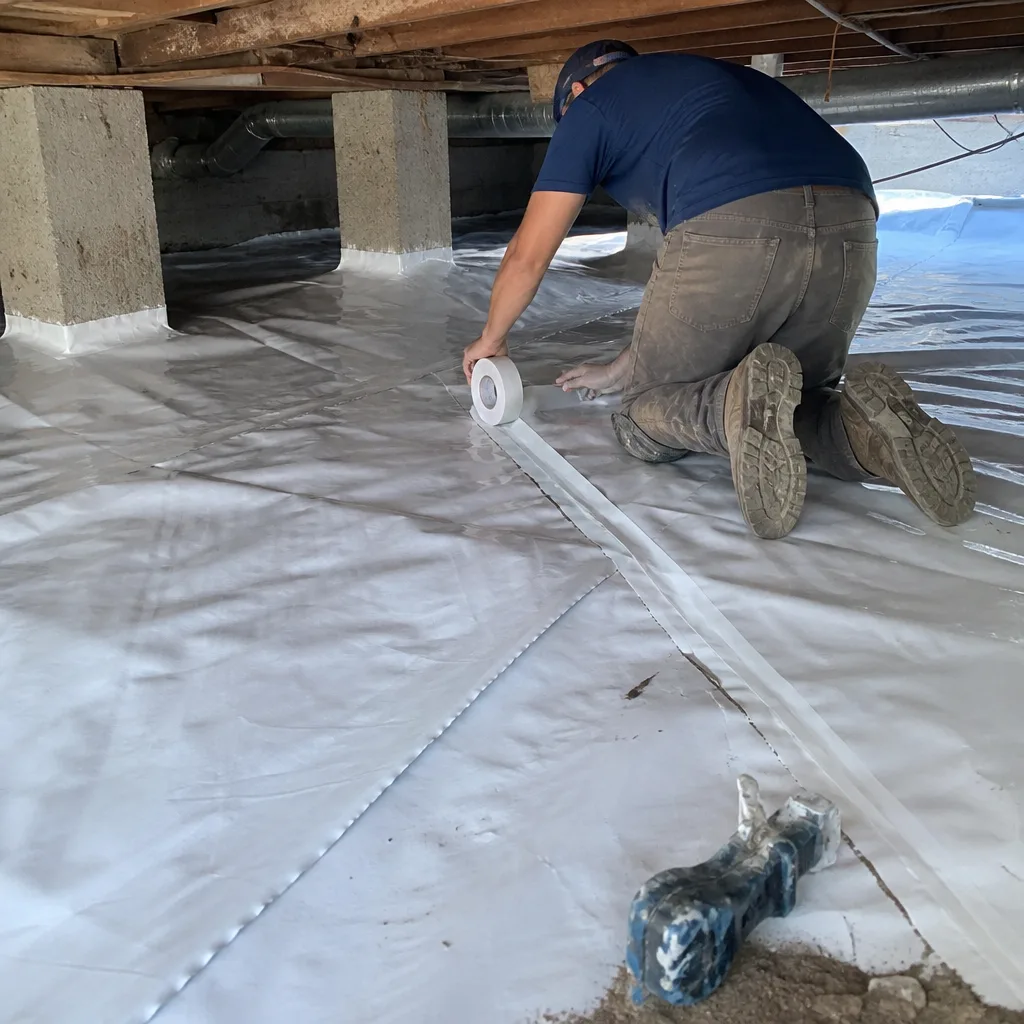
- Barrier installation across floor and up perimeter walls. Sheets are overlapped a minimum of 12 inches at seams and taped with a compatible butyl or foil tape that maintains adhesion in the temperature swings Lake Forest crawl spaces see between summer and winter. The barrier runs up the perimeter foundation walls and is mechanically fastened – not just taped to the concrete. Penetrations for pipes, posts, and columns are cut, wrapped, and sealed individually.
- Seam and penetration inspection. Every seam gets a second check before we move to the next section. A vapor barrier with an unsealed seam over a support post is doing maybe 60% of the job it should be doing. We don’t move forward until each penetration is properly terminated.
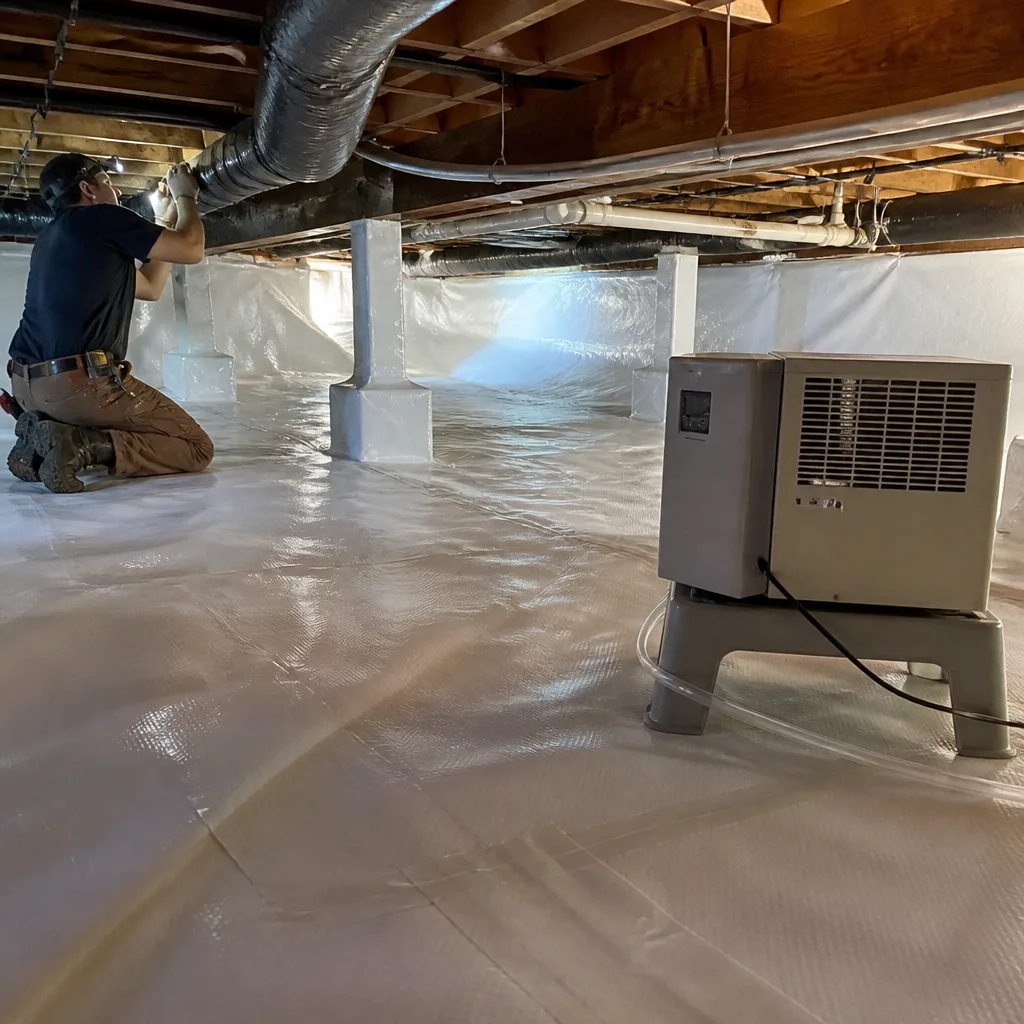
- Final documentation and written warranty delivery. We photograph the completed installation from multiple angles, take a final moisture reading at the soil surface, and compile the photo record before we leave. Your written warranty and the completed scope document are delivered the same day. Under Haven Standard Clause 1, the written price was in your hand before any of this started – the closing documentation is the other half of that promise.
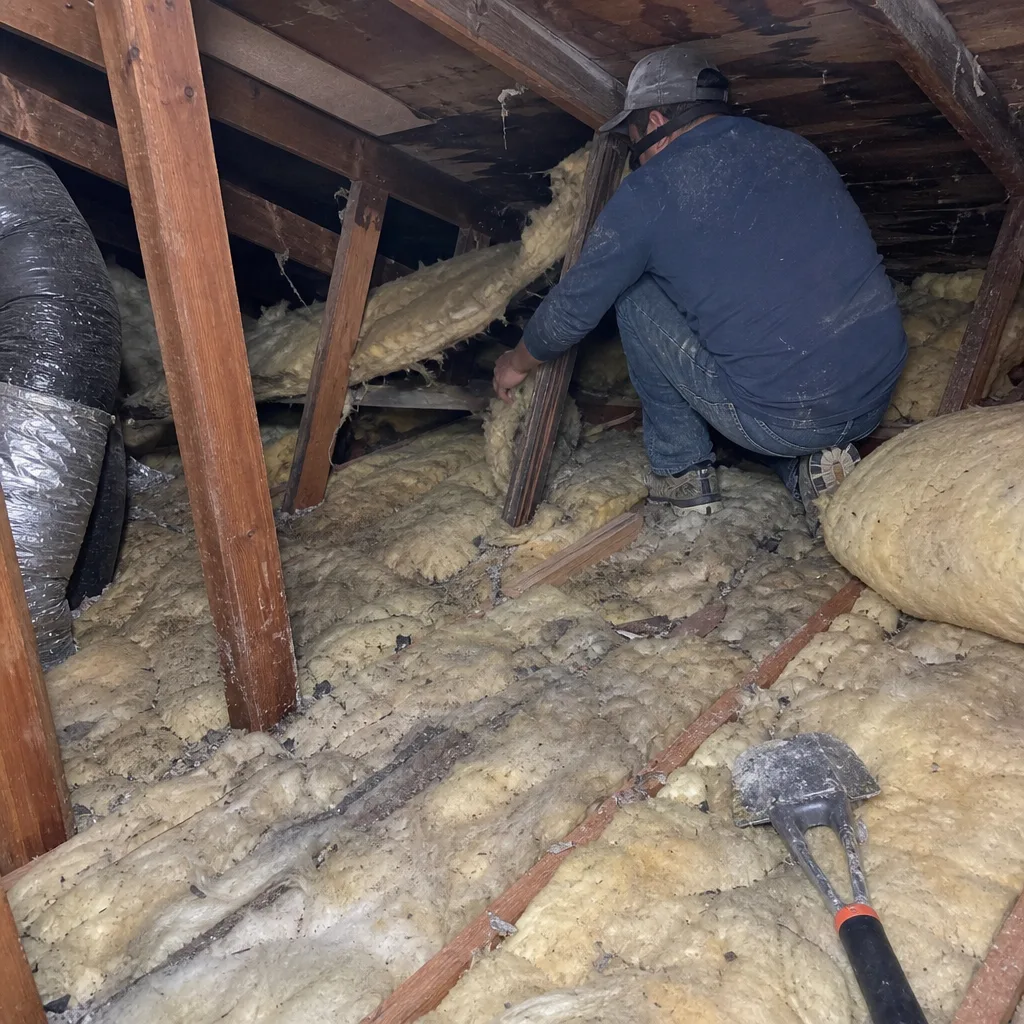 Before
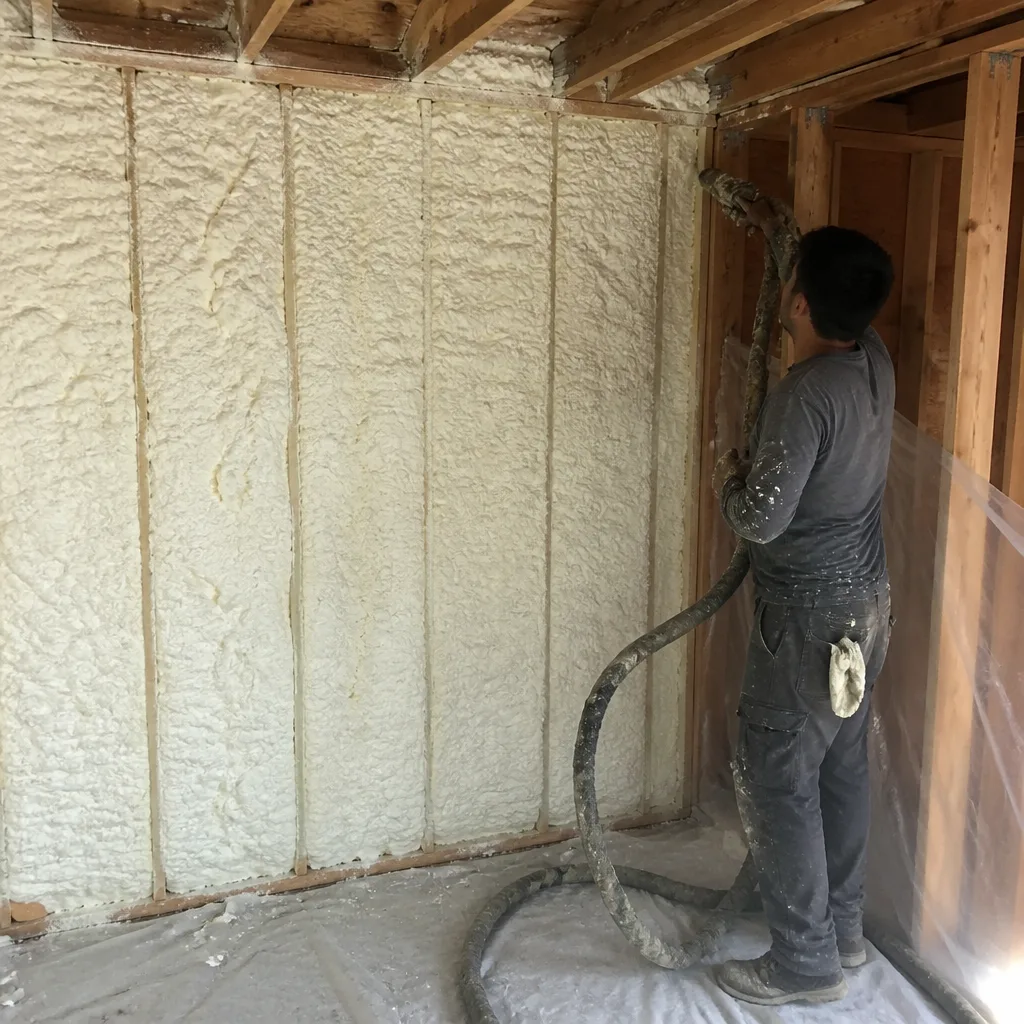 After
AfterCrawl Space Vapor Barrier Pricing in Lake Forest
How Much Does Crawl Space Encapsulation & Vapor Barrier Cost? (2026 Price Guide) - Lake Forest, CA is primarily driven by square footage, existing conditions, and barrier thickness. Most homeowners in Lake Forest spend between $1,200 and $3,800 for a vapor barrier installation. Here’s how that range breaks down:
| Scope | Typical Price Range |
|---|---|
| Small crawl space (under 800 sq ft), standard 6-mil poly | $1,200 – $1,700 |
| Mid-size crawl space (800-1,500 sq ft), 12-mil reinforced | $1,700 – $2,600 |
| Larger crawl space (1,500+ sq ft), 20-mil with full perimeter wall coverage | $2,600 – $3,800 |
| Old barrier removal (per job, in addition to new install) | $200 – $600 |
| Debris removal and crawl space prep (if needed) | $150 – $450 |
A few factors move your number up or down within those ranges:
- Crawl space height: A space under 18 inches takes longer and costs more in labor. Many older homes in Lake Forest’s Foothill Ranch and Serrano neighborhoods were built with tighter clearances than newer construction.
- Existing moisture damage: If joists need to be treated for mold before the barrier goes in, or if we find standing water that requires drainage work first, those are separate line items – called out in writing before work proceeds.
- Barrier thickness and type: A basic 6-mil poly sheet is adequate for many applications, but homes with high foot traffic in the crawl space (multiple HVAC units, plumbing access points) benefit from a 12-mil or 20-mil reinforced product. The thicker the barrier, the better it holds up over time.
- Scope of wall coverage: A full encapsulation that runs the barrier up all four foundation walls costs more than a floor-only installation, but it closes off more moisture pathways. We’ll explain exactly what each scope does and doesn’t cover before you decide.
Under Haven Standard Clause 1, you receive a flat written price before any work begins – no verbal estimates, no “we’ll figure it out when we’re in there.” If you have a written estimate from another contractor, bring it. We offer a free second opinion on any written estimate and will read it with you line by line.
To get a written price for your crawl space, call (657) 279-1249. We’ll schedule an inspection, document what we find, and give you a number you can compare and hold us to.
FAQs – Crawl Space Vapor Barrier
What thickness vapor barrier do I need in my Lake Forest crawl space?
For most Lake Forest homes, pairing Crawl Space Insulation with a 12-mil reinforced polyethylene barrier is the practical minimum for a long-lasting installation. A 6-mil sheet is technically sufficient under California building code for a sealed crawl space with no foot traffic, but it tears easily during access and degrades faster in the temperature swings between Lake Forest summers and winter nights in the Saddleback Valley area. If your crawl space gets regular access for HVAC service or plumbing work, 20-mil is worth the modest cost difference – it holds up under that kind of repeated contact for decades rather than years. We’ll specify the right mil in your written scope so there’s no ambiguity about what’s going in.
How much does crawl space vapor barrier installation cost in Lake Forest?
Crawl space vapor barrier installation in Lake Forest typically runs between $1,200 and $3,800, depending on square footage, barrier thickness, and whether old material needs to come out first. A mid-size crawl space (800 to 1,500 square feet) with a 12-mil barrier usually lands between $1,700 and $2,600. Those numbers are written down before anyone starts work – that’s Haven Standard Clause 1, not a policy we make exceptions to. Call (657) 279-1249 and we’ll schedule an inspection and give you a flat written price.
Is a vapor barrier the same thing as crawl space encapsulation?
A vapor barrier is one component of crawl space encapsulation, but encapsulation is a broader scope. A vapor barrier covers the ground floor – and sometimes the perimeter walls – to block soil moisture. Full encapsulation adds sealed vents, a conditioned air supply or dehumidifier, and sometimes rigid foam insulation on the perimeter walls to bring the crawl space inside the building’s thermal envelope. If you’re not sure which scope your home needs, our Crawl Space Encapsulation & Vapor Barrier in Lake Forest page lays out the difference clearly, or we can walk through it during the inspection.
Can I install a crawl space vapor barrier myself?
The installation itself – rolling out poly sheeting and taping seams – isn’t technically dangerous the way electrical or gas work is, but the quality of the result depends heavily on prep work and seam integrity that are easy to get wrong without experience. Gaps at penetrations, under-lapped seams, and barriers installed over debris or compromised framing are the three most common failure points we find when we’re called in to redo a DIY job. If you’re comfortable working in a confined space and you’ve confirmed there’s no standing water, active mold, or structural damage, a floor-only 6-mil barrier is something a careful homeowner can attempt. Anything involving wall termination, mechanical fastening to the foundation, or moisture conditions that suggest active drainage issues is better handled by someone who can document what they find and stand behind the result in writing.
Key Takeaways
- Vapor barrier installation in Lake Forest typically costs $1,200 to $3,800, with the mid-range landing around $1,700 to $2,600 for most standard crawl spaces.
- 12-mil or 20-mil reinforced poly is the practical choice for Lake Forest’s temperature swings and crawl spaces that see regular HVAC or plumbing access.
- Prep work – removing old material, debris, and addressing moisture readings – is as important as the barrier itself. Skipping it just creates a new problem under the new plastic.
- Every Topside Attic Insulation job comes with a written price before work starts, a documented photo record at completion, and the 365-Day Done Right Promise.
- A vapor barrier is one part of a complete encapsulation system. If your crawl space has active humidity, compromised vents, or no conditioned air supply, a vapor barrier alone may not be enough.
- Wes Okafor leads the team and has overseen more than 9,000 jobs across Lake Forest and the surrounding area since 2016 – every one documented, every one with a written price.
Get a Written Price for Your Lake Forest Crawl Space
If you’re seeing signs of moisture in your crawl space – or you just want to know what’s actually down there – call (657) 279-1249. A live person picks up. We’ll schedule an inspection, photograph the existing conditions, and hand you a flat written price before any decision is made. No verbal estimates, no surprises when the invoice arrives. If you have a competing quote in hand, bring it – we offer a free second opinion on any written estimate and will go through it line by line with you.
For homeowners who want to understand the full scope of what proper crawl space moisture control involves, our home page outlines every service we provide under The Haven Standard, from attic air sealing to insulation removal and replacement. The crawl space is one part of the building envelope – and every part of it should be documented before and after the work is done.
Written by Wes Okafor, Owner at Topside Attic Insulation Lake Forest, serving Lake Forest since 2016.