
How Much Does Crawl Space Encapsulation & Vapor Barrier Cost in Lake Forest?
Crawl space encapsulation in Lake Forest, CA typically runs between $3,800 and $8,500 for a standard single-family home, with vapor barrier-only installs (without full encapsulation) coming in lower at $1,200 to $3,000. Most Lake Forest homeowners with crawl spaces in the 800-to-1,800-square-foot range land somewhere around $5,000 to $6,200 for a complete job – sealed liner, drainage matting, and all penetrations taped and covered.
Crawl Space Encapsulation & Vapor Barrier Cost Breakdown (2026)
Crawl space encapsulation in Lake Forest, CA typically costs $3,800 to $8,500 for a complete system, or $1,200 to $3,000 for a vapor barrier-only install. The right scope depends on what’s already happening down there – standing moisture, deteriorated insulation, or venting configuration all shift the number.
Here’s how a typical Lake Forest job breaks down by line item:
| Scope of Work | Typical Lake Forest Price Range (2026) |
|---|---|
| Vapor barrier only (6-mil poly, basic install) | $1,200 - $2,200 |
| Vapor barrier upgrade (12-mil or 20-mil reinforced liner) | $1,800 - $3,000 |
| Full encapsulation – liner, tape, wall coverage, sealed vents | $3,800 - $6,500 |
| Full encapsulation + drainage matting | $4,500 - $7,200 |
| Full encapsulation + conditioned air or dehumidifier unit | $5,500 - $8,500+ |
| Old vapor barrier removal and disposal | $350 - $900 |
| Crawl space access improvement (enlarged hatch or door) | $200 - $600 |
| Insulation removal from subfloor (if deteriorated) | $600 - $1,800 |
| Spray foam rim joist sealing | $400 - $950 |
| Mold remediation (minor, pre-encapsulation) | $500 - $2,500 (varies significantly) |
A few things drive that range. Crawl space square footage is the biggest lever – a 600-square-foot footprint under a modest Foothill Ranch townhome takes considerably less material and labor than a 2,000-square-foot sprawl under an older El Toro-era ranch house. Liner thickness matters, too: a basic 6-mil poly sheet technically meets code minimums but won’t last or perform the way a 20-mil reinforced liner does. Most crews we send into Lake Forest crawl spaces today reach for the 12-mil minimum as a practical floor.
Accessibility is the other quiet cost driver. Some Lake Forest homes – particularly the hillside properties near Portola Hills – have crawl spaces with 18-inch clearances and irregular footings from original construction. Tight conditions slow the install and sometimes require smaller, more deliberate crew configurations. That adds time, and time adds cost. We price it honestly up front so there’s no renegotiation when the crew is already on site. Written price before any work starts – that’s Haven Standard Clause 1, and it doesn’t have an asterisk.
What Affects Crawl Space Encapsulation & Vapor Barrier Pricing in Lake Forest
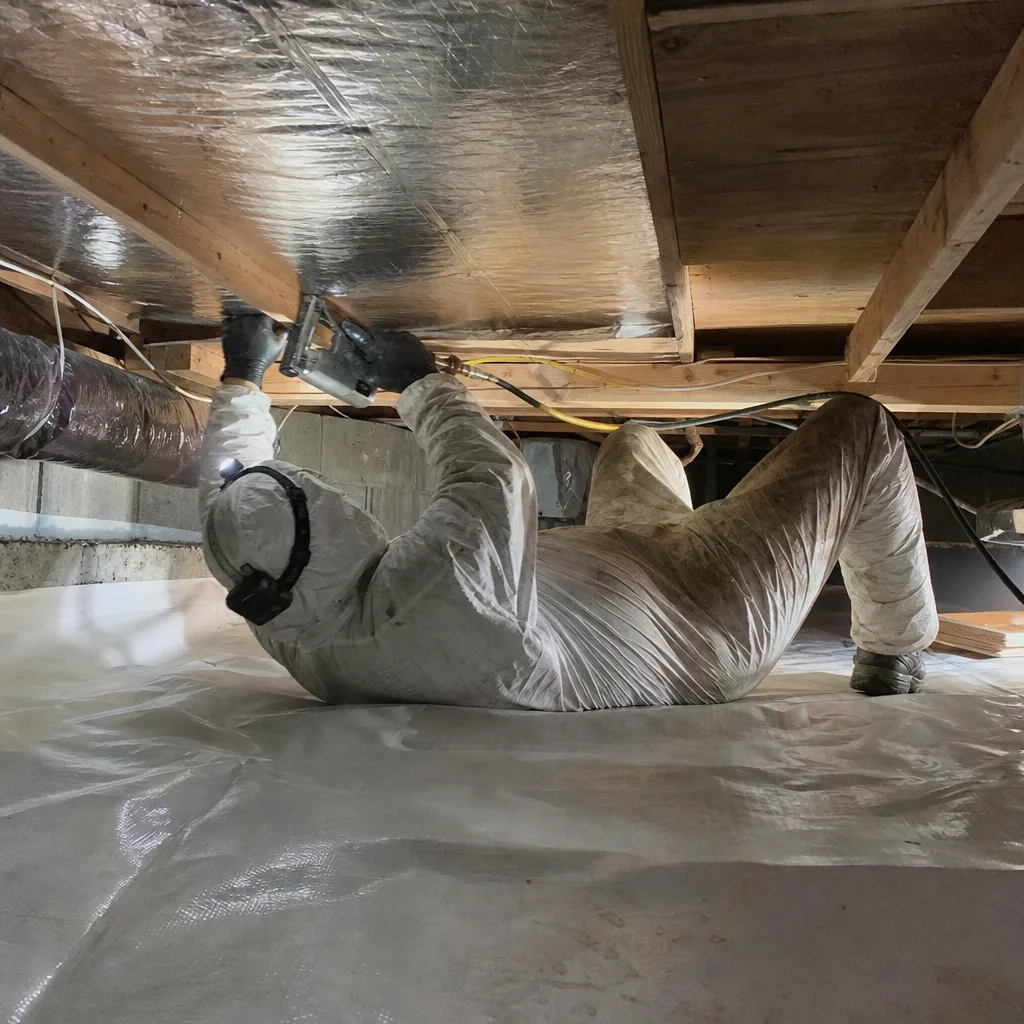
- Crawl space square footage and height: Labor is priced by accessible area. A standard Lake Forest single-story home with a 1,000-square-foot crawl runs differently than a two-story with a 2,200-square-foot footprint. Spaces under 18 inches of clearance carry a labor premium because installers are working on their stomachs through the entire job.
- Liner thickness and material grade: The jump from 6-mil to 20-mil liner is roughly $0.30 to $0.55 per square foot in material cost alone, which adds up quickly on a larger footprint. Thicker liners resist puncture from rocks, debris, and future pest intrusion better – a real consideration in Lake Forest’s clay-heavy soil areas near Aliso Viejo Road where ground movement is more common.
- Existing moisture damage and mold: If the crawl space shows active mold growth or saturated wood framing, encapsulation can’t begin until remediation is complete. We document what we find with photos before any scope is written. Minor surface mold runs $500 to $1,500 to address; anything penetrating the structural wood framing is a different conversation that goes to a licensed remediation contractor first.
- Venting configuration – vented versus unvented: Many Lake Forest homes built before 2000 have perimeter foundation vents. Converting to a fully conditioned (unvented) crawl space requires sealing those vents and either adding conditioned air from the HVAC system or installing a standalone dehumidifier. That conversion adds $800 to $2,000 to a standard encapsulation quote but usually delivers better long-term moisture control in Southern California’s marine-influenced inland climate.
- Subfloor insulation condition: Batts installed between floor joists that have absorbed moisture, fallen out of contact, or been disturbed by rodents need to come out before the liner goes in. Insulation removal from the subfloor runs $600 to $1,800 depending on how much material there is and how deteriorated it is. Skipping this step and encapsulating over damaged insulation creates a moisture trap, not a solution.
- Rim joist sealing: The rim joist – the band of framing that sits on top of your foundation wall at the perimeter of the floor system – is one of the most common air and moisture entry points in Lake Forest homes built in the 1980s and 1990s. Sealing it with two-component spray foam as part of the encapsulation scope adds $400 to $950 but closes a gap that a liner alone doesn’t address. At Envelope Insulation Co., air sealing is treated as a prerequisite, not an add-on. We seal first, then encapsulate – in that order.
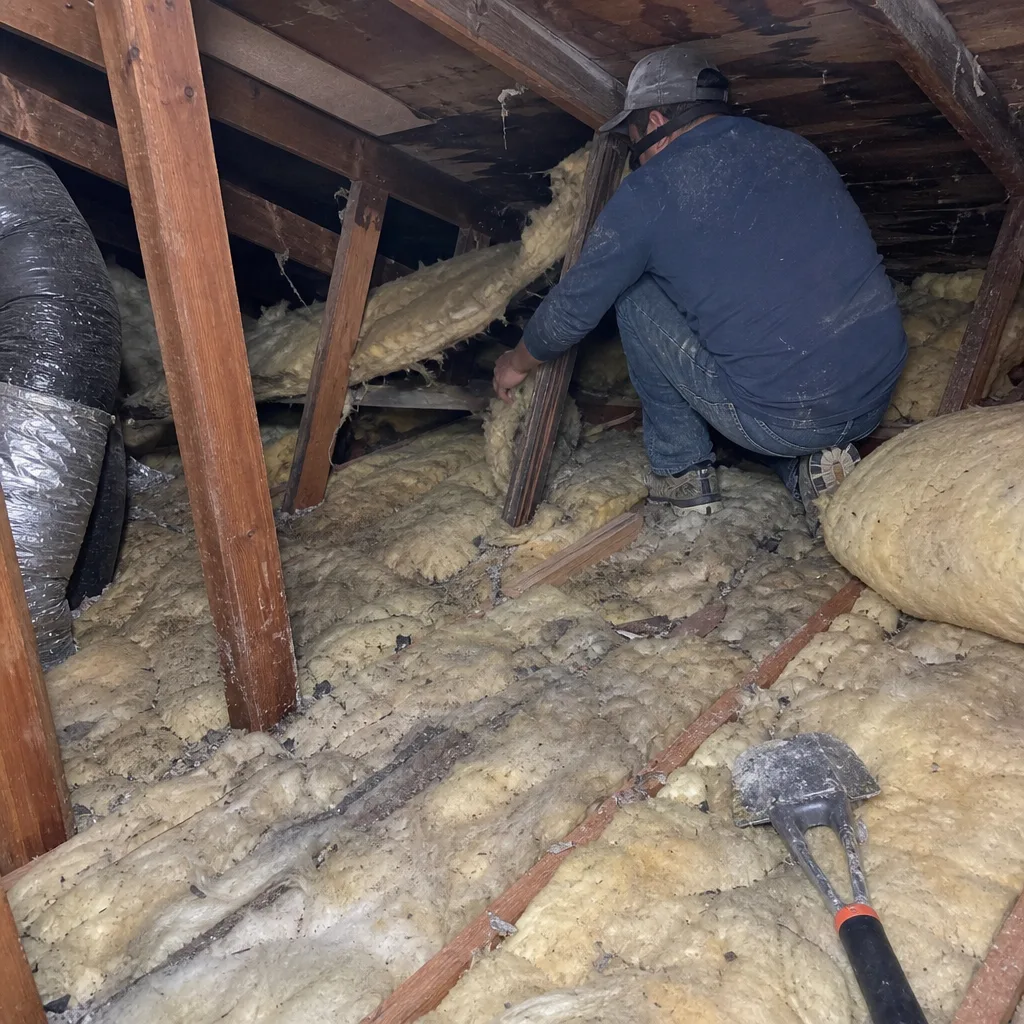 Before
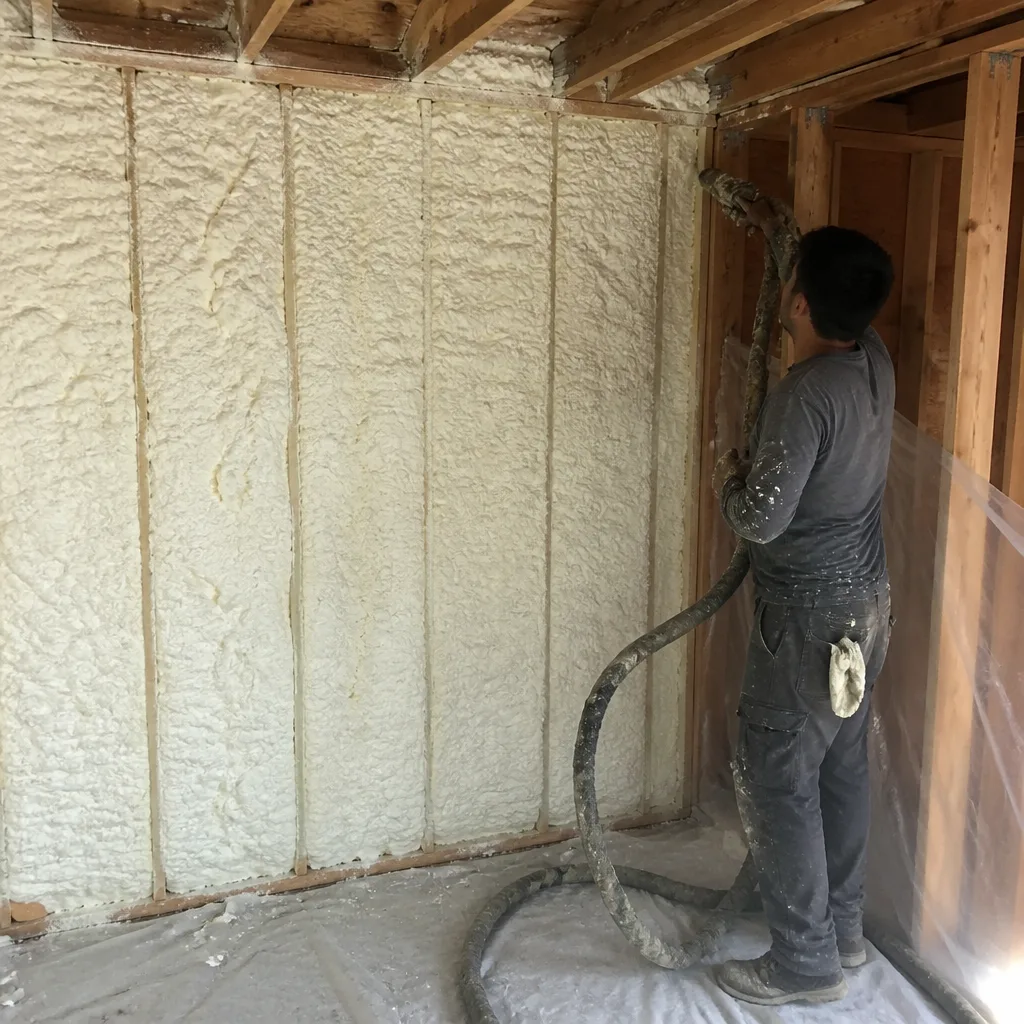 After
AfterLake Forest-Specific Conditions That Influence Crawl Space Costs
Lake Forest sits at the inland edge of the Aliso Creek watershed, where the soil transitions from sandy loam near the I-5 corridor to heavier, expansive clay as you move east toward Saddleback Valley. That clay holds moisture longer than most homeowners expect, especially during the December-to-March wet season. In Foothill Ranch and the Painted Trails neighborhood, we see crawl spaces that stay damp well into June if the subgrade drainage isn’t managed correctly. That lingering moisture is exactly what an undersized or aging crawl space vapor barrier can’t handle on its own.
Older homes in the El Toro area – properties that predate the city’s 1991 incorporation – were frequently built with minimal crawl space clearance and 6-mil poly sheeting that has since deteriorated, torn, or been partially removed by pest control companies. Replacing that material with a proper encapsulation system is a different job than starting fresh in a newer construction crawl space, and it’s priced accordingly.
Lake Forest also sits close enough to the coast that marine air moves through the Aliso Creek canyon corridor on summer evenings, pushing humidity into crawl spaces even when daytime conditions feel dry. A fully conditioned encapsulation with a dehumidifier addresses this better than a passive liner system.
For a detailed look at the full scope of what our crawl space work includes in this area, the Crawl Space Encapsulation & Vapor Barrier in Lake Forest service page covers our approach from inspection through the final documented photo record.
How to Save on Crawl Space Encapsulation & Vapor Barrier in Lake Forest
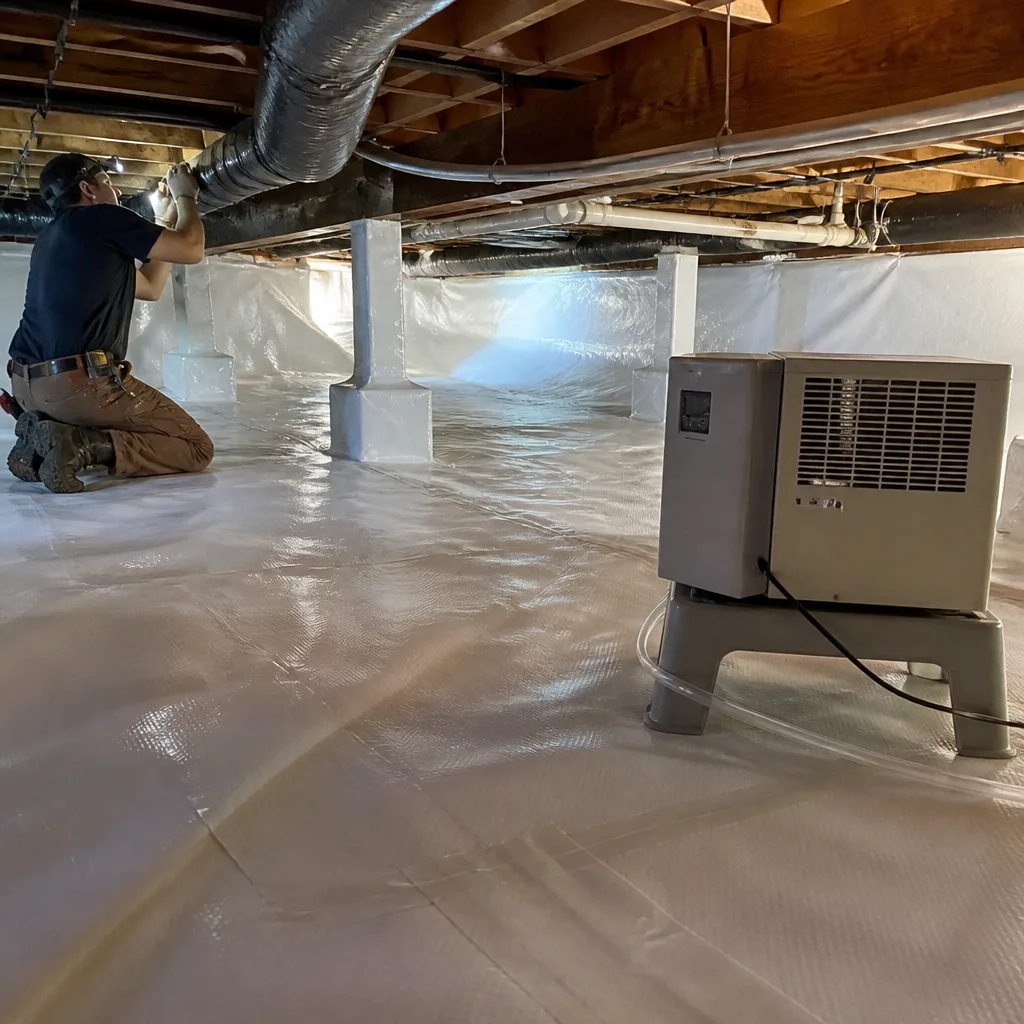
The most reliable way to control costs is to address the project before it becomes an emergency. Crawl spaces that have been wet for a season or more develop mold, rot, and pest activity that each add line items to the scope. A crawl space inspection when you first notice musty air in the house or moisture on the subfloor is a different conversation than one where the wood framing has already begun to soften.
Get a second opinion on any written estimate. If another contractor has already given you a quote, we’ll read it with you at no charge. That’s not a sales tactic – it’s a direct offer. Some Lake Forest homeowners have brought us quotes that listed “encapsulation” but specified a 6-mil liner with no wall coverage and no vent sealing. That’s a vapor barrier job at an encapsulation price. Knowing the difference before you sign matters.
Bundle the rim joist sealing. If you’re already having the liner installed, adding rim joist spray foam during the same mobilization costs significantly less than scheduling it as a separate job. The crew is already in the space; the additional material and time is incremental. This is also the better sequence – air sealing the rim before the liner goes up means the encapsulation system works as a single integrated unit.
Check for utility or energy efficiency rebates. Southern California Edison and SoCalGas have both offered rebates on crawl space insulation improvements in prior years. Programs change annually, and we make no guarantees about current availability, but it’s worth a call to your utility provider before committing to a scope. Some Lake Forest homeowners have recovered $300 to $800 on qualifying installs.
Don’t defer old liner removal to save money. Leaving a deteriorated 6-mil sheet under a new 20-mil liner sounds like a cost-saver but creates a void space that traps moisture and debris between the two layers. The right move is removal first, which we document with photos so you can see the condition of the subgrade before anything new goes in.
Call (657) 279-1249 to get a written estimate for your Lake Forest property. There’s no obligation and no ambiguity – you’ll have a flat price and a written scope in hand before anyone starts work.
FAQs – Crawl Space Encapsulation & Vapor Barrier Cost in Lake Forest
How much does crawl space encapsulation cost in Lake Forest, CA in 2026?
Most Lake Forest homes pay between $3,800 and $8,500 for a complete crawl space encapsulation – liner, wall coverage, sealed vents, and all penetrations taped. A vapor barrier-only install (liner on the ground, no wall coverage or vent sealing) runs $1,200 to $3,000 depending on square footage and liner thickness. Larger footprints, tight clearances, or existing moisture damage push toward the higher end of either range. Call (657) 279-1249 for a flat written price before any work starts – free for Lake Forest addresses.
Is crawl space encapsulation worth it in Southern California?
Yes, and the reason is specific to this region’s climate pattern. Lake Forest gets dry summers, but marine air moves inland through the Aliso Creek corridor on summer evenings, and the wet season from December through March can leave clay-soil crawl spaces damp well into spring. A proper encapsulation system keeps that moisture out of the subfloor assembly, which protects wood framing, reduces conditions favorable to mold, and keeps the air quality in the living space above cleaner. Homes with encapsulated crawl spaces also tend to show lower heating and cooling loads – not dramatically, but measurably – because the conditioned floor is no longer exposed to unconditioned air below it. The math usually works in favor of doing the job correctly once rather than repeatedly patching a failing vapor barrier.
How long does crawl space encapsulation last?
A properly installed 20-mil reinforced liner, sealed at all seams and transitions, carries a typical service life of 20 to 25 years under normal conditions. Thinner liners (6-mil to 10-mil) may degrade in 7 to 12 years, particularly if there’s ground contact with sharp rocks, rodent traffic, or foot traffic from pest control technicians. The liner’s longevity also depends on what happens to the space afterward – a crawl space that stays dry and sealed lasts longer than one that’s repeatedly opened and re-entered. We include a documented photo record when the job closes so you have a baseline to compare against at future inspections.
Can I install a vapor barrier myself to save money?
A basic ground cover of 6-mil poly is technically within a capable DIYer’s reach, but a full encapsulation is not – and the gap between the two is where most moisture problems originate. Proper encapsulation requires sealing the liner to the foundation walls, taping all seams with compatible tape, sealing around every pier, penetration, and support post, and either sealing or conditioning the foundation vents. Gaps at any of those transitions defeat the system. The materials alone for a correct install are available at building supply stores, but the sequencing, tape selection, and vapor retarder class requirements under California’s residential code take experience to get right. If the goal is saving money, the more reliable path is getting a written estimate and comparing it against the cost of redoing a partial job in three years.
Does encapsulation require a permit in Lake Forest?
In most Lake Forest cases, a vapor barrier or encapsulation liner installed in an existing crawl space does not require a building permit – it’s considered a maintenance or improvement item below the permit threshold. However, if the scope includes converting from a vented to an unvented crawl space (sealing the foundation vents permanently and adding conditioned air), that work may fall under a mechanical or energy permit depending on how it’s tied into the HVAC system. We review the scope before pricing and identify permit requirements as part of the written estimate. You’ll know what’s required before any work starts, not after. If you have questions about a specific property in Lake Forest, call (657) 279-1249 and we can walk through the scope with you.
What’s the difference between a vapor barrier and full encapsulation?
A vapor barrier is a sheet of poly film laid on the crawl space floor to slow moisture vapor from the soil. Full encapsulation goes further: the liner runs up the foundation walls and is taped to them, all seams are overlapped and sealed with compatible tape, every pipe, post, and pier penetration is wrapped and sealed, and the foundation vents are either sealed or replaced with conditioned air. The result is a closed system where outside humidity can’t enter from the ground or the perimeter. In Lake Forest’s soil and climate conditions, a ground-only vapor barrier slows the problem; encapsulation addresses it at every entry point. The price difference – typically $2,000 to $4,000 more for a full encapsulation over a basic vapor barrier – reflects the difference in long-term performance.
What You Get When Envelope Insulation Co. Does the Job
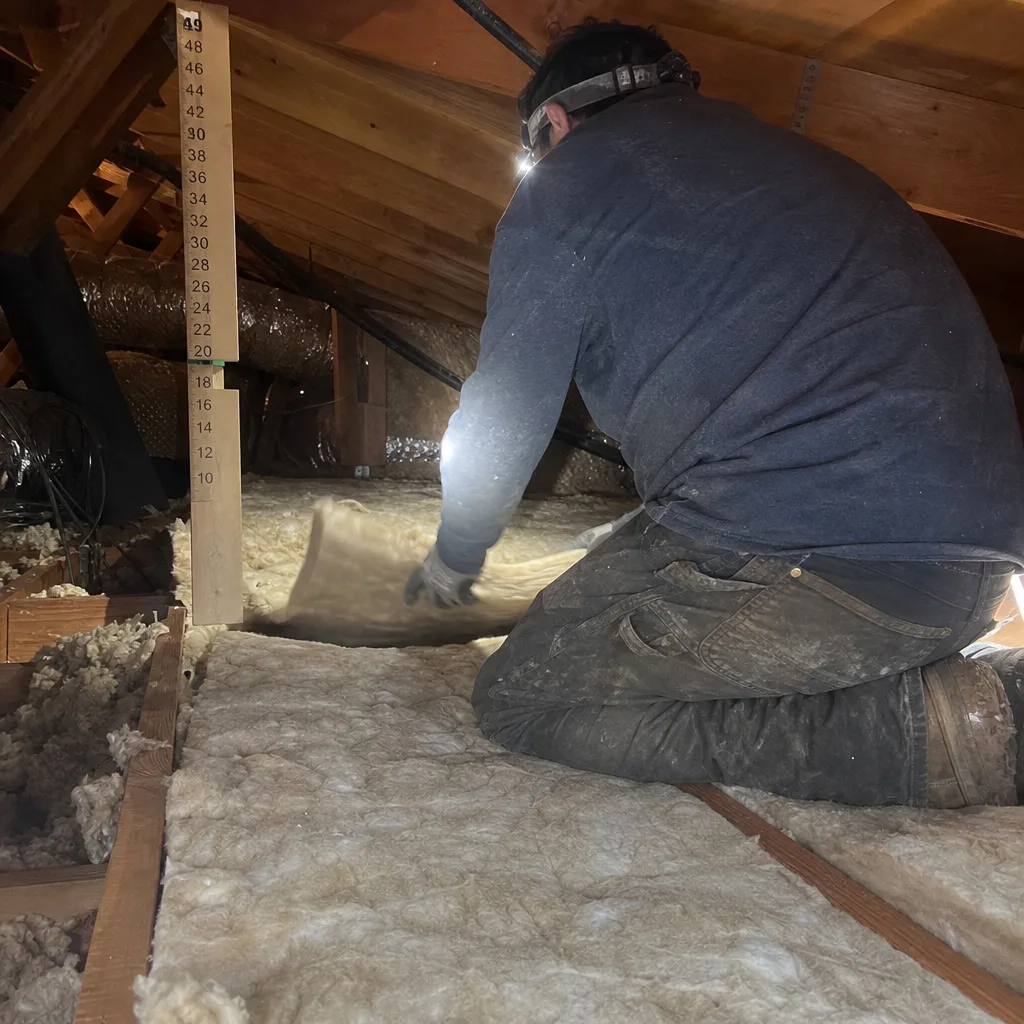
Every crawl space encapsulation job Envelope Insulation Co. completes in Lake Forest follows the same sequence. The written scope and flat price come first – before any tools come out of the van. That written price is the price; there’s no adjustment at the end because conditions were “worse than expected.” If we find something unexpected during the inspection, we document it with photos, explain what it means in plain terms, and revise the scope in writing before proceeding. That’s how Haven Standard Clause 1 works in practice.
When the job is complete, you receive a documented photo record of the crawl space before and after the work – the subgrade condition, liner placement, seam taping, wall termination, and vent sealing. You’re not taking our word for it. The photos are timestamped and yours to keep. On applicable jobs where air sealing is part of the scope, before-and-after blower-door readings – a pressurization measurement that shows in one number how much air your building envelope was losing – are provided so the performance change is documented, not just described.
The 365-Day Done Right Promise covers every job we complete. If something isn’t right within the first year, we make it right. That commitment is in writing before the job starts – not something we invoke only when asked.
Wes Okafor leads Envelope Insulation Co., and the standards above aren’t a marketing positioning – they’re the operating rules that Wes built into every job since the company started in 2016. In nine-plus years and more than 9,000 homes sealed and insulated, the written price and documented record have been on every single one. That’s not a streak we’re interested in breaking in Lake Forest.
Get a Written Price for Your Lake Forest Crawl Space
If you’ve been putting off the crawl space because you weren’t sure what it would cost or what you’d actually be getting, this is a straightforward next step: call (657) 279-1249 and schedule a free inspection and estimate for your Lake Forest property. You’ll get a flat written price, a clear scope of work, and a written warranty – all before anyone starts. No ambiguity, no callbacks measured in business days. A live person answers.
If another contractor has already given you a quote, bring it. We’ll read it with you at no charge under our Free Second Opinion offer and tell you exactly what it does and doesn’t include. Lake Forest homeowners deserve to know what they’re paying for before they sign anything.
Written by Wes Okafor, Owner at Envelope Insulation Co. (operating as Topside Attic Insulation Lake Forest), serving Lake Forest, CA since 2016.
Pricing reflects the Lake Forest market as of 2026. Topside Attic Insulation Lake Forest offers free estimates – call (657) 279-1249.
What Our Customers Say
"They air-sealed the attic floor before insulating and showed me the blower-door number before and after. The upstairs is finally the same temperature as downstairs."
- Marisol D."They photographed rodent damage in the old insulation that we had no idea about, and priced the exclusion work separately so we could decide."
- Harriet N."The winter gas bill dropped by about a third. They had estimated a quarter, so they under-promised."
- Genevieve R.