
Last updated September 24, 2026
Seasonal Insulation Care for Lake Forest: Year-Round Homeowner’s Guide
The best time to find a displaced blown-insulation pile in a Lake Forest attic is November, after the Santa Ana winds have finished shuffling everything around and before anyone remembers to turn on the heat. Yet almost no homeowner inspects their attic in November. In our experience across more than 9,000 homes since 2016, the insulation failures that cost Lake Forest homeowners the most on their energy bills aren’t dramatic collapses. They’re slow, seasonal degradations that compound across two distinct thermal stress windows: the radiant-heat siege of June through September, when attic temperatures regularly crest 130°F, and the marine-layer cold of December through February, when overnight lows drop into the low 40s and every air leak becomes a convection loop. This guide-along with The Complete Guide to Insulation in Lake Forest-is organized around those windows, not the calendar, because that’s how insulation actually lives and dies in Orange County’s particular climate.
Quick Answer
Seasonal insulation care in Lake Forest means inspecting your attic and crawl space during two transition windows: April through May, before the radiant-heat season, and October through November, after the Santa Ana winds but before the marine-layer cold sets in. Most homeowners need only a visual inspection, depth measurement, and seal check twice yearly; major interventions like added blown-in insulation or air sealing should be scoped and priced in writing during these transition periods, when crews are available and materials aren’t under thermal stress during installation.
Table of Contents
- Lake Forest’s Two Thermal Stress Windows
- Pre-Summer Checklist: April-May
- Post-Santa-Ana Checklist: October-November
- How Blown Cellulose and Fiberglass Age Differently in Lake Forest
- Warranty Repair vs. New Scope of Work
- Crawl Space and Vapor Barrier Seasonal Care
- Common Mistakes to Avoid
- When to Call a Professional
- Frequently Asked Questions
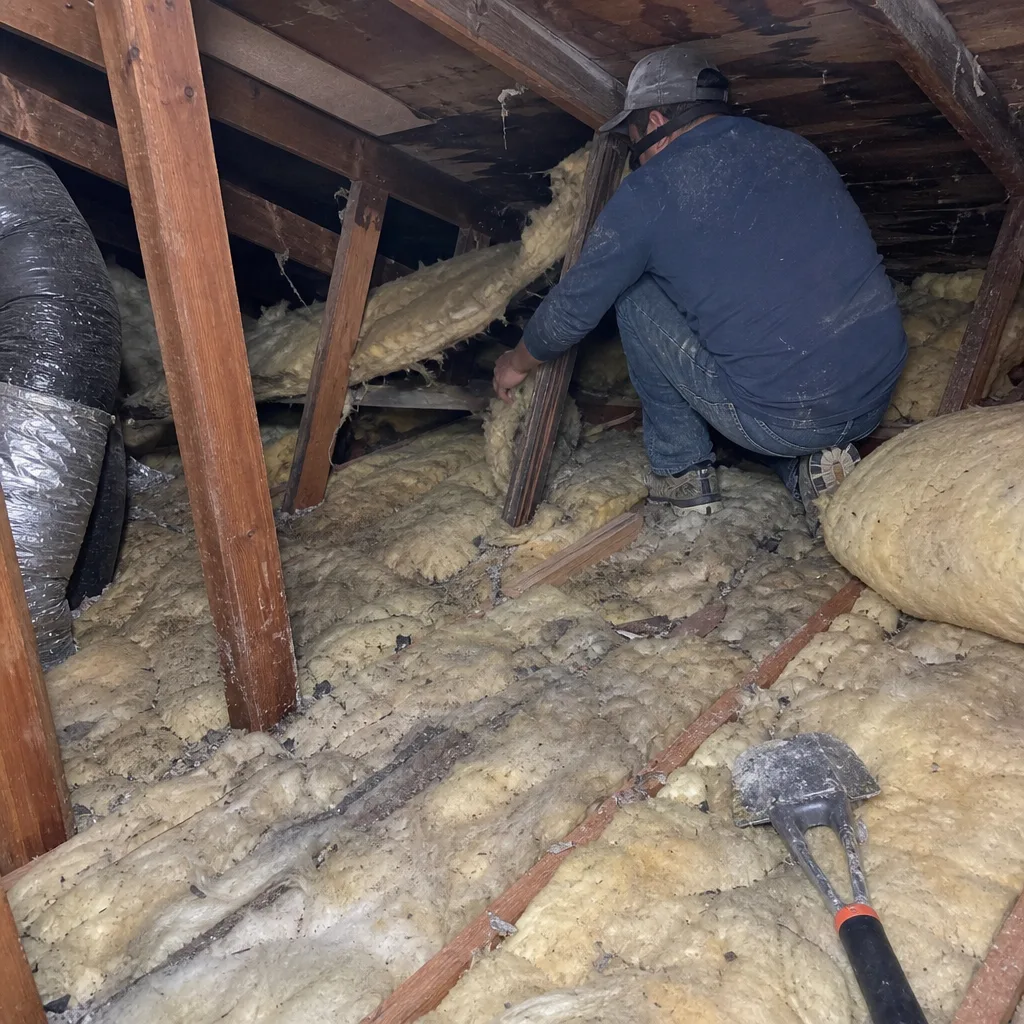 Before
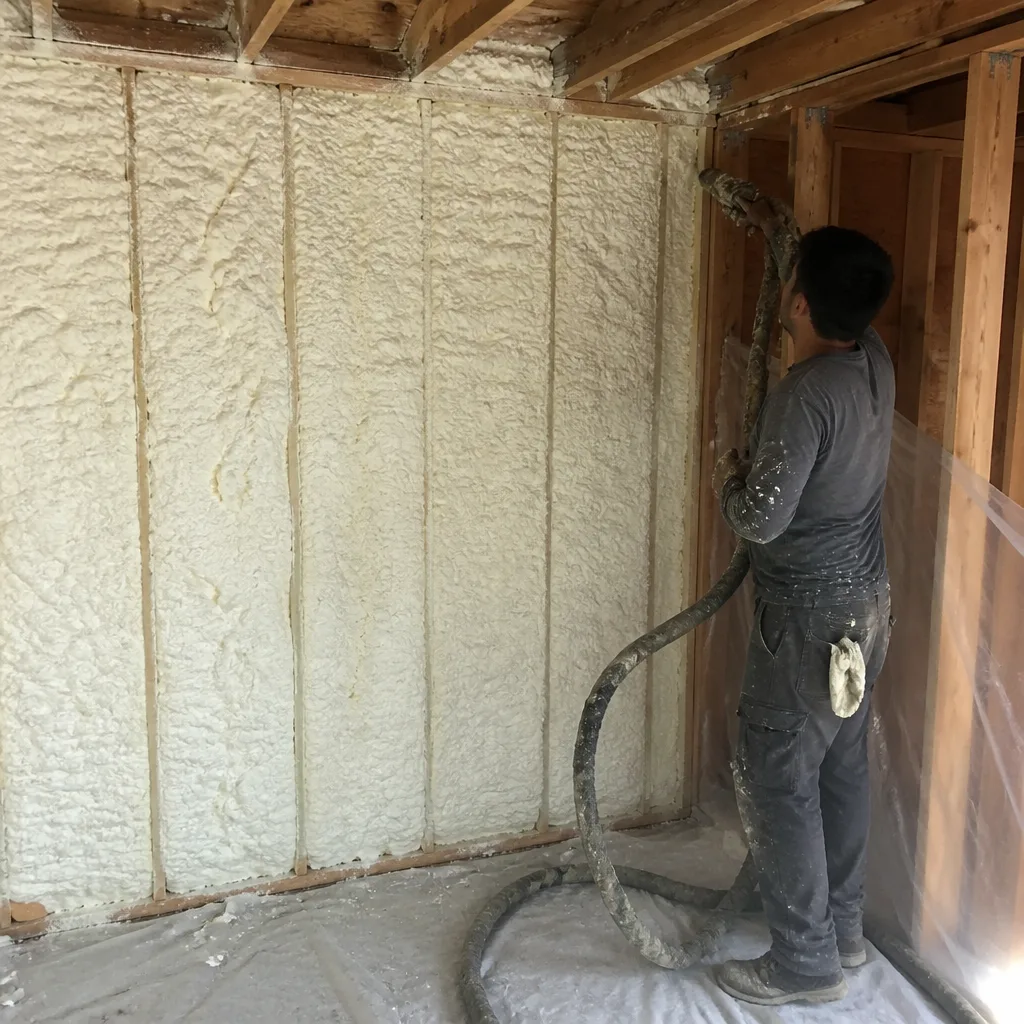 After
AfterLake Forest’s Two Thermal Stress Windows
Most insulation guides divide the year into heating season and cooling season. That binary works for Minneapolis or Phoenix. It fails for Lake Forest.
Our city’s thermal pattern is compressed and specific. From June through September, attic temperatures in Lake Forest regularly exceed 130°F. That radiant-heat window doesn’t just make your air conditioner run longer. It thermally cycles your attic insulation daily, expanding and contracting the materials, accelerating the off-gassing of any residual binders in cellulose, and testing every seal and penetration. The temperature delta between your conditioned space and the attic can reach 60°F or more on the worst August afternoons.
Then, from December through February, the marine layer rolls in and overnight lows settle in the low 40s. That cold window is shorter than in most of the country, but it’s sharp. Lake Forest homes aren’t built for sustained heating loads. Furnaces that ran thirty hours total in January 2023 suddenly run three hundred hours in a cold snap, and every unsealed top plate, every recessed can light without a proper collar, becomes a chimney for your heated air.
The gaps between these windows matter more than the windows themselves. April through May and October through November are when insulation is thermally relaxed, when materials are at their true resting depth, and when a crew can work in an attic without heat-stress protocols or cold-stiffened hands. These are the inspection and intervention windows. Miss them, and you’re either diagnosing insulation under thermal load or scheduling work during peak demand.
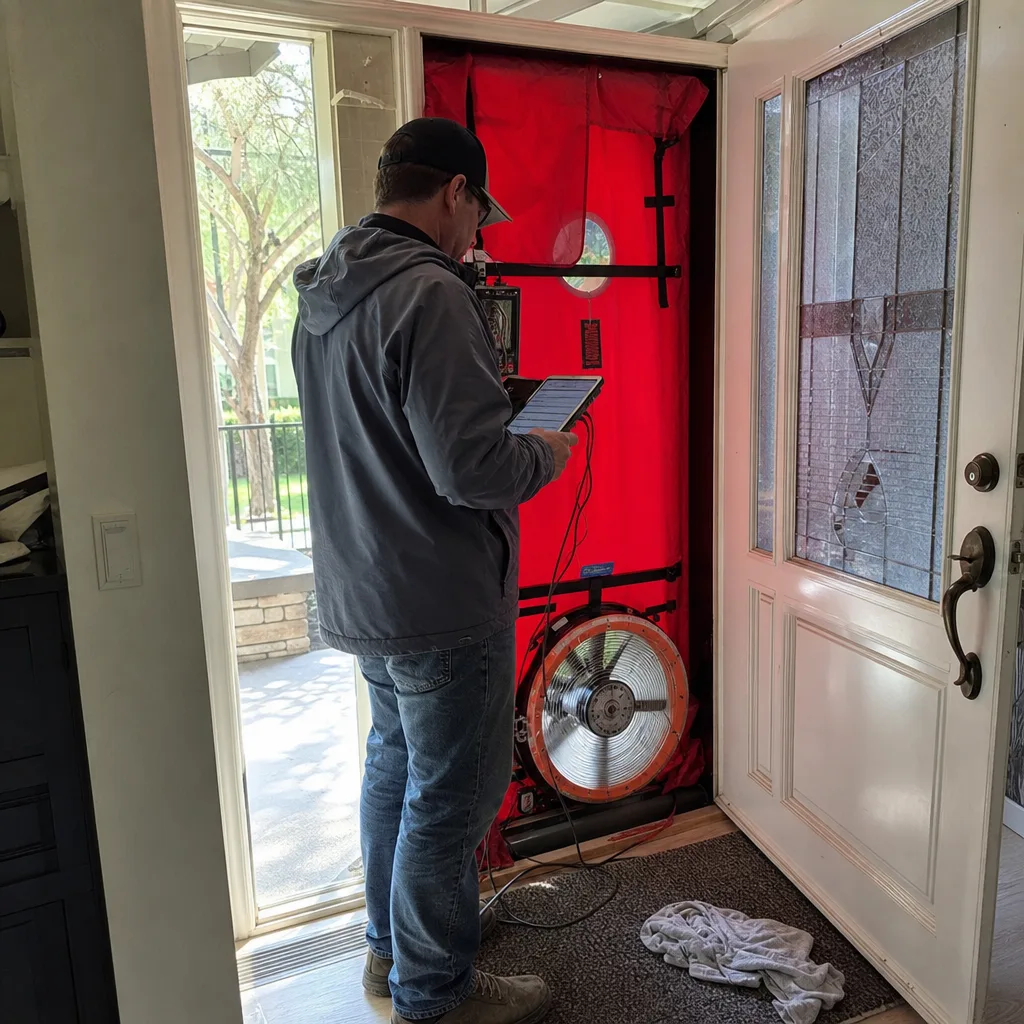
We’ve measured this directly. A Home Energy Audit in Lake Forest conducted in November typically shows blower-door readings 8-12% higher than the same home tested in April, not because the house changed, but because thermal expansion and contraction have opened and closed gaps that a spring audit catches at their average state. The number on the report is real either way, but the November reading better represents what the house does under stress.
Pre-Summer Checklist: April-May
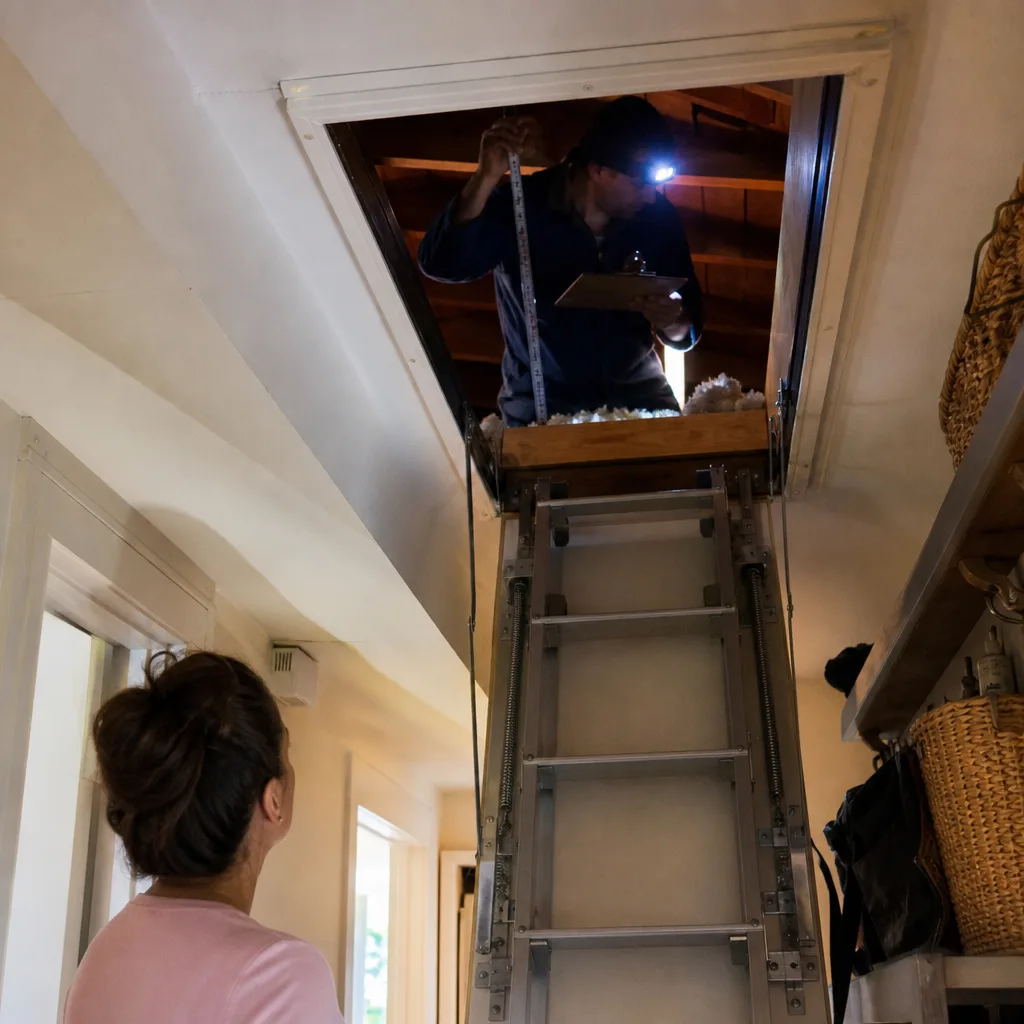
The goal before the radiant-heat window opens is simple: verify that your attic can survive four months of 130°F without losing conditioned air or degrading materials. Here’s what we check on every Attic Insulation in Lake Forest maintenance visit during this window.
- Attic hatch weatherstripping. The hatch is the most frequent leak we find in Lake Forest homes built between 1985 and 2010. The builder-grade fiberglass batt stuffed around the hatch frame compresses to nothing within five years. We replace it with closed-cell foam gasket material rated for the temperature range, then verify the seal with a smoke pencil while the house is pressurized.
- Ridge vent screen integrity. Santa Ana winds in the preceding months load ridge vent screens with dust and occasionally damage the mesh. A compromised screen lets in dust that settles on insulation and reduces its effective R-value, and in worst cases admits wind-driven rain that wets cellulose. We photograph the screen condition and note any tears or lifting.
- Radiant barrier condition, if present. Staple-up radiant barriers in Lake Forest attics often sag or tear after three to five summers. We check for gaps where the barrier has pulled away from the rafters, which creates convection channels that defeat the barrier’s purpose. A radiant barrier with 15% unfastened area performs like no barrier at all.
- Duct boot seal inspection. The flex duct connections to your ceiling registers are sealed with mastic or tape at the boot. Thermal cycling opens these seals predictably. We check each boot for separated tape, cracked mastic, or pulled flex. A failed boot seal dumps conditioned air directly into the attic; in summer, that’s your most expensive air.
- Insulation depth measurement at six points. Using a 4×4 grid, we measure depth with a ruled probe. For blown fiberglass, we note any wind-formed drifts or bare spots. For cellulose, we check for compaction, which shows as uniformly reduced depth across the grid. We record every measurement in the photo documentation.
Under Haven Standard Clause 1, any finding that requires work gets a written price before any tool is lifted. The April-May window is also when we can source materials like Knauf blown fiberglass or Rockwool batts without the summer backlog that hits every Orange County insulation contractor by June 1.
Post-Santa-Ana Checklist: October-November
This is the inspection window almost every homeowner misses, and it’s the most valuable one. After the Santa Ana winds have finished redistributing loose-fill insulation across your attic floor, and before the marine-layer cold makes you care about every thermal bridge, your attic is in its most honest state.
- Insulation depth measurement at six points on a 4×4 grid. We use the same grid as in spring to compare year-over-year. In Lake Forest, we typically see ½-inch to 2 inches of depth variation after wind events, with fiberglass migrating more than cellulose. Any point measuring below the DOE-recommended depth for our climate zone (R-30 to R-60, or roughly 10 to 20 inches of blown fiberglass) gets flagged for redistribution or top-off.
- Can-light collar inspection. IC-rated can lights with proper airtight collars are standard in post-2010 construction, but Lake Forest has thousands of homes with older cans or retrofit LED modules that compromise the original seal. We check for melted or displaced insulation around each fixture, heat staining on the housing, and any visible gap between the ceiling drywall and the can rim. A failed collar is a direct path for heated air to enter the attic in winter.
- Exhaust damper confirmation. Bathroom and kitchen exhaust fans terminate through the roof or gable wall with a dampered cap. Santa Ana winds damage these caps regularly in Lake Forest. A stuck-open damper is a 4-inch hole in your pressure boundary. We operate each fan and verify that the damper opens under airflow and seals by gravity when the fan stops.
- Top plate and penetration seal check. Using a thermal camera while the house is depressurized, we scan the attic floor perimeter for air streaming through top plates, wire penetrations, and plumbing stacks. The temperature contrast is sharpest in November, when the attic has cooled but the house is still warm from afternoon sun. We mark each leak with flagging tape and photograph the thermal image for the documented record.
The October-November window is also when we schedule any Crawl Space Encapsulation & Vapor Barrier in Lake Forest work that was deferred from summer. Crawl spaces in Lake Forest’s clay-heavy soils accumulate moisture through the cooling season; by November, the moisture pattern is fully expressed and the encapsulation design can be precise rather than speculative.
How Blown Cellulose and Fiberglass Age Differently in Lake Forest
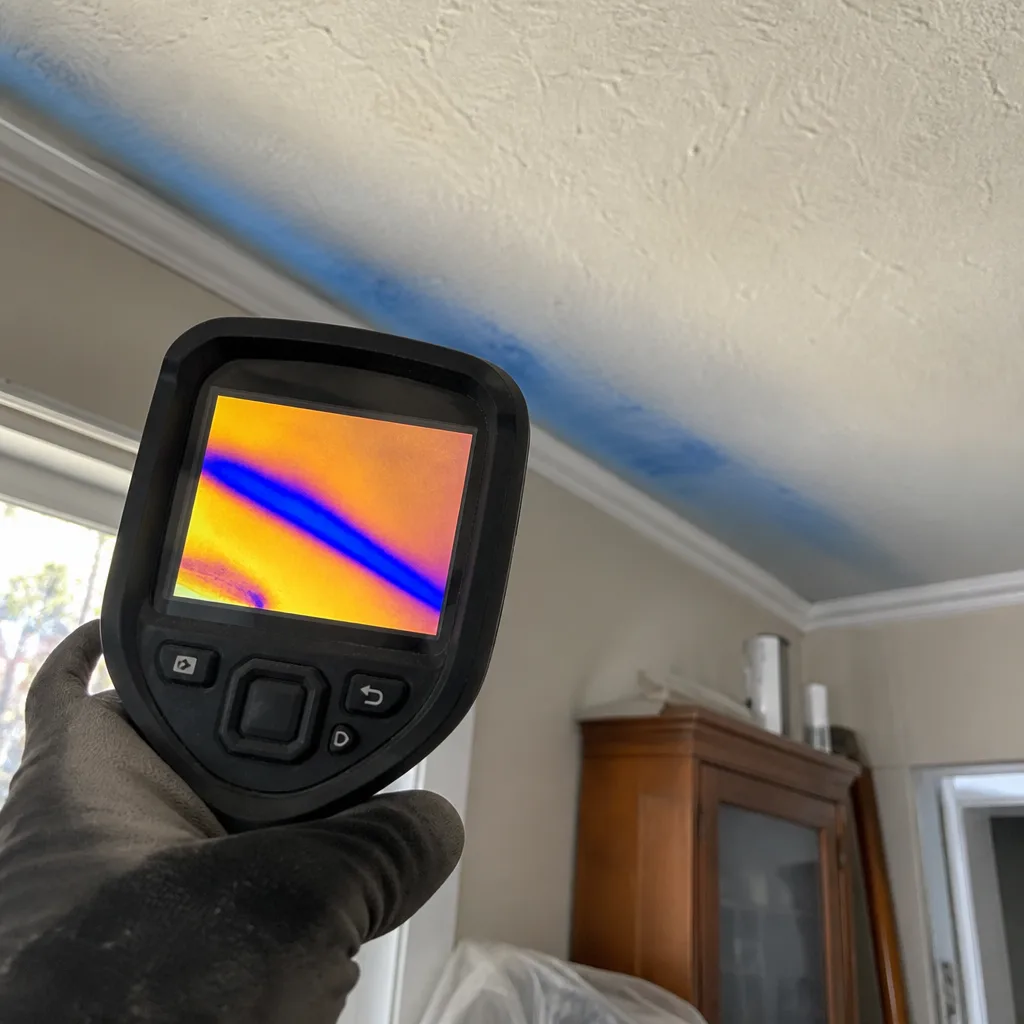
Lake Forest’s low-humidity climate, typically 45-55% relative humidity annually, changes how insulation materials degrade compared to coastal or inland extremes. We’ve removed and measured enough of both types to see the pattern clearly.
Blown cellulose compacts measurably over five to seven years in Lake Forest attics. The material starts at its labeled settled depth, then loses 10-15% of its loft as residual mechanical settling completes and thermal cycling breaks down the fiber structure. The low humidity actually accelerates this slightly; without moisture to maintain fiber pliability, the cellulose becomes brittle and settles into a denser mat. The R-value doesn’t drop proportionally, because density increases thermal resistance per inch, but the total R-value declines because there are fewer inches. A 12-inch cellulose installation that tested at R-42 in year one may measure R-36 in year six, with the top surface hardened enough to walk on without leaving footprints.
Blown fiberglass retains loft longer but migrates more easily in wind events. The fibers are less brittle, so they don’t compact the same way, but Santa Ana winds can redistribute fiberglass across an attic in a single afternoon. We’ve found bare spots against north gable walls and drifts two feet deep against south ridges. The material hasn’t degraded; it’s just in the wrong place. Fiberglass also performs poorly when it filters dust, which is common in Lake Forest’s dusty late-summer conditions. The dust loads the interstitial spaces and reduces the air-trapping effectiveness that gives fiberglass its R-value.
For homeowners with existing cellulose, we typically recommend a depth verification at year five and a top-off at year seven if the grid measurements show consistent compaction. For fiberglass, we recommend redistribution and spot-sealing at year three, with a full assessment after any documented Santa Ana event that produced visible dust accumulation indoors.
When we add new material, we specify the product by brand and type in the written scope. We’ve installed Knauf Jet Stream Ultra fiberglass and Rockwool ComfortBatt in Lake Forest homes where fire resistance or sound attenuation was a priority alongside thermal performance. The choice depends on the application, not a preferred-vendor arrangement.
Warranty Repair vs. New Scope of Work
Not every seasonal finding means a new invoice. Understanding what falls under a typical insulation warranty and what requires a fresh written price helps Lake Forest homeowners budget accurately.
Warranty repairs typically cover installation defects that manifest within the warranty period. For our work, under the 365-Day Done Right Promise, this includes: settling of blown material beyond the specified settled depth within twelve months; visible gaps or misses in coverage that were documented in the original photo record; and failure of air-sealing materials (caulk, foam, tape) that we applied. If we installed blown fiberglass in your Lake Forest attic and a year later the grid measurements show a uniform 2-inch drop with no wind event or rodent activity to explain it, that’s a warranty call. We return, verify, and correct at no charge.
New scope of work is required for: degradation from causes outside the installation, including Santa Ana wind redistribution, rodent displacement, or water intrusion from roof leaks; changes to the building envelope, such as new recessed lighting or HVAC modifications, that alter the original scope; and normal end-of-service-life compaction or degradation beyond the warranty term. If your cellulose has compacted over seven years of normal thermal cycling, that’s expected behavior, not a defect. The correction is a new scope with a new written price.
The line between these categories matters for scheduling. Warranty work can usually be completed within a week because the scope is defined by the original documentation. New scope work requires a fresh site visit, new measurements, and a new written price under Haven Standard Clause 1, even if the solution looks similar to what was done before.
We deliver the documented photo record from every job specifically so that these determinations are factual, not argumentative. A homeowner with our photo record from 2019 can compare it to our 2024 inspection photos and see exactly what changed, where, and by how much.
Crawl Space and Vapor Barrier Seasonal Care
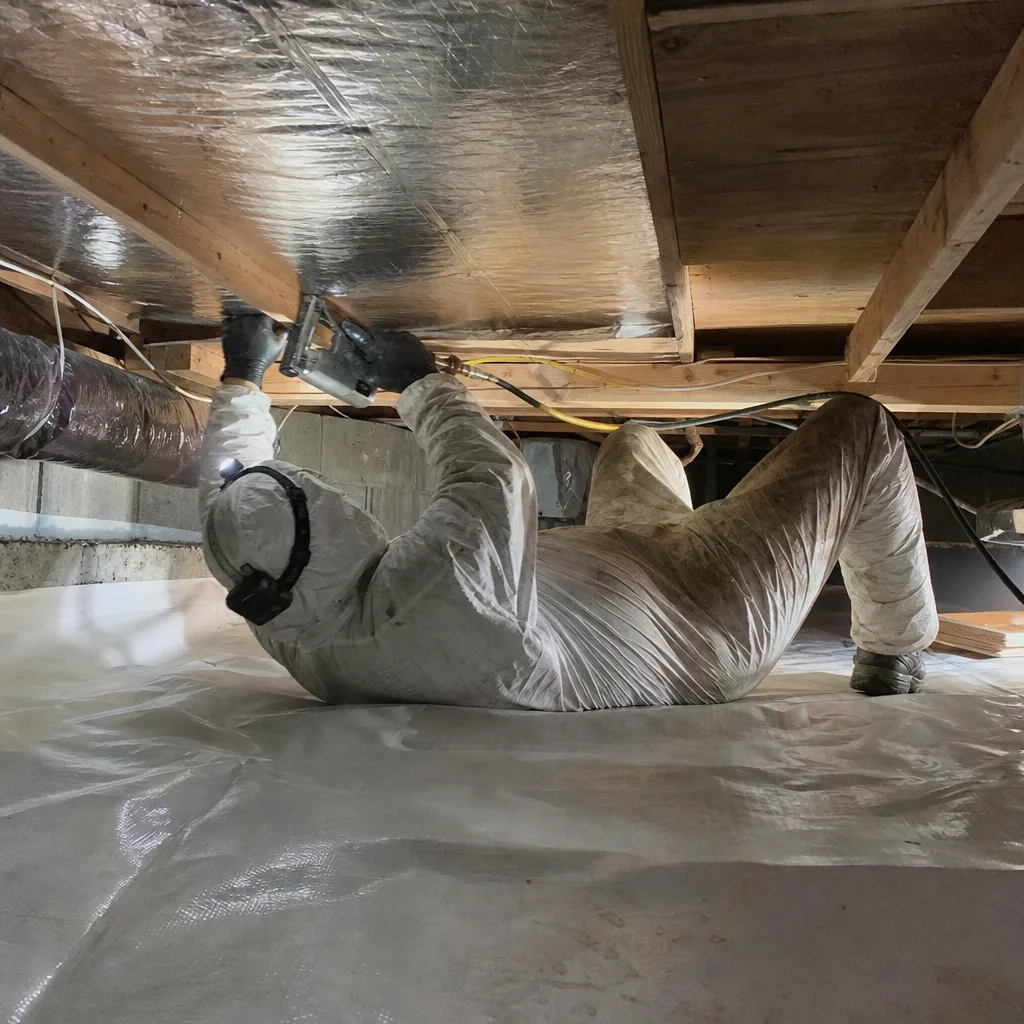
Lake Forest’s crawl spaces experience a different seasonal rhythm than attics, and the timing of inspection and intervention is correspondingly different.
The marine-layer moisture that reaches its peak in January and February doesn’t just enter through foundation vents. It diffuses through the soil and rises as vapor through the crawl space floor. A vapor barrier in good condition blocks this path; a compromised barrier, or one that was never installed to full coverage, allows moisture to load the floor framing and subfloor insulation. By March, we can smell the result in homes with inadequate barriers: a musty, mineral odor that enters the conditioned space through gaps around plumbing and ducts.
We inspect crawl spaces in Lake Forest during two windows: March, after the moisture peak has fully expressed any barrier failures, and September, before the fall moisture rise begins. The March inspection is diagnostic; the September inspection is preventive, an opportunity to seal gaps and reinforce barriers before the wet season.
Specific checks include: vapor barrier seam integrity, with 6-inch overlaps and acoustic-sealant bonds; pier and stem-wall gaps where the barrier meets vertical surfaces; and subfloor insulation condition, particularly at rim joists where air leakage concentrates. In Lake Forest’s older neighborhoods near the lakebed itself, we also check for standing water patterns that indicate drainage issues rather than vapor issues.
Crawl space work is constrained by access. If your access opening is smaller than 18×24 inches, some equipment won’t fit, and the crew time estimate in the written price reflects this. We note access dimensions in every crawl space photo record so that future visits can be scoped accurately.
Common Mistakes to Avoid
- Inspecting only when the bill arrives. The highest energy bills of the year arrive in August and February, but by then the damage is done. Schedule inspections in the transition windows, not the reaction windows.
- Adding insulation over unsealed leaks. We’ve removed decades of layered insulation in Lake Forest attics where each contractor blew new material over the old without sealing the air leaks first. The result is a thick, expensive blanket with a wind tunnel underneath. Air sealing must precede insulation, every time.
- Trusting depth without measuring. A visual check from the attic hatch can make 8 inches of insulation look like 14 inches if it’s drifted against a truss. The 4×4 grid measurement takes ten minutes and removes all guesswork.
- Ignoring the hatch. The attic hatch is the most accessible leak and the most frequently ignored. A ¼-inch gap around a standard 22×30 hatch is equivalent to a 6-inch hole in your wall. Weatherstripping costs less than $20 and takes fifteen minutes.
- Assuming all blown insulation is the same. Cellulose and fiberglass require different maintenance schedules and respond differently to Lake Forest’s specific climate stressors. Know which material you have, or have a professional identify it during the first inspection.
- Waiting for a comfort complaint. By the time a bedroom is too hot in August or too cold in January, the insulation system has been failing for months. Thermal comfort is a lagging indicator; energy use pattern and seasonal inspection are leading indicators.
- Accepting verbal scope or pricing. Under Haven Standard, every job begins with a written price. If a contractor offers to “just take a look and see what it needs,” you’re not getting documented accountability. Get the scope and price in writing before anyone enters your attic.
When to Call a Professional
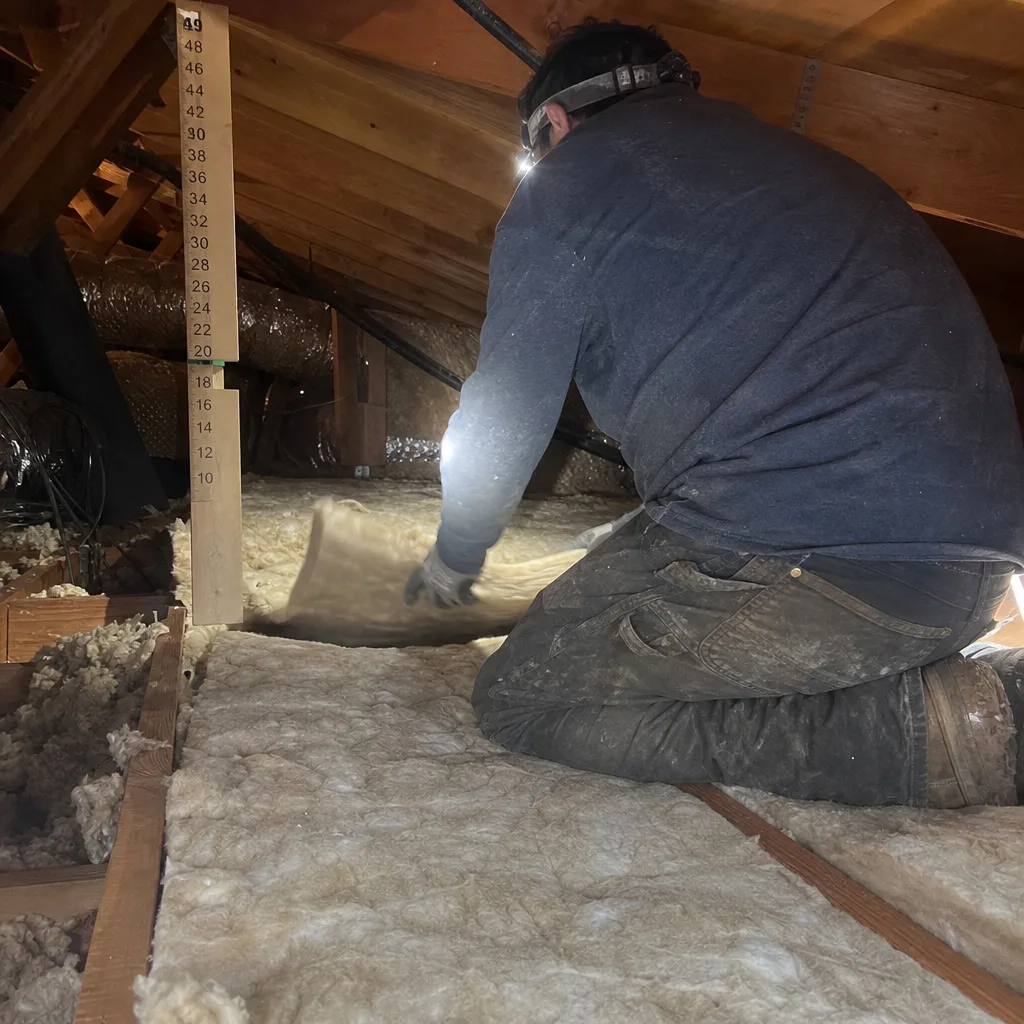
Call for a professional assessment when: your energy bills spike outside normal seasonal variation; you find insulation debris in living spaces after wind events; rooms on the top floor vary by more than 4°F from the thermostat setpoint; or your attic insulation is more than ten years old and has never been professionally inspected. In Lake Forest, we also recommend professional assessment before any roof replacement, since roofing crews routinely displace insulation and compromise seals.
Topside Attic Insulation Lake Forest home offers free estimates in Lake Forest. Call (657) 279-1249 to schedule. Every estimate includes a written scope and written price before any work starts, plus a Documented Photo Record of what we find. If you have a competing quote, bring it; we offer a Free Second Opinion on any written estimate, read line by line with you.
Frequently Asked Questions
Inspect your attic insulation twice yearly: once in April or May before the radiant-heat season, and once in October or November after the Santa Ana winds and before the marine-layer cold. These transition windows catch degradation when materials are thermally relaxed and crews can work without heat-stress protocols. Call (657) 279-1249 if your insulation is over ten years old and has never been professionally assessed; estimates are free.
Most seasonal maintenance inspections in Lake Forest run between $150 and $350, depending on attic accessibility and whether blower-door testing is included. Redepth and redistribution of existing blown fiberglass typically ranges from $400 to $800 for a 1,200-square-foot attic. Full air sealing with new blown insulation on a typical Lake Forest home generally falls between $2,200 and $4,500, scoped and priced in writing before work begins. Call (657) 279-1249 for an exact quote; estimates are free.
You can perform basic visual checks: verify attic hatch seal, look for obvious bare spots or moisture staining, and confirm exhaust damper operation. However, we do not recommend that homeowners enter attics with active knob-and-tube wiring, deteriorated decking, or steep roof pitches. For depth measurement, air-leak detection with a blower door, and thermal imaging, a trained professional has the equipment and safety training. If you’re unsure about your attic’s condition, call us for a free estimate.
Insulation depth alone doesn’t guarantee performance. In Lake Forest’s August heat, the most common causes of upstairs overheating are unsealed duct boots dumping cooled air into the attic, radiant barrier failure or absence, and wind-formed bare spots in blown fiberglass that create thermal bypasses. A Home Energy Audit Maintenance Checklist for Lake Forest Homeowners with blower-door testing and thermal imaging identifies which cause applies to your home. We’ve seen homes with 16 inches of fiberglass perform worse than homes with 10 inches because the better-insulated home had sealed ducts and an intact radiant barrier.
Repair is cheaper when the existing material is less than seven years old, the degradation is limited to wind redistribution or minor compaction, and the air sealing was done correctly at original installation. Replacement becomes more economical when: the insulation is over ten years old; there are multiple material types layered with unknown history; or rodent contamination requires removal for health reasons. We provide both options with written prices so you can compare directly. Call (657) 279-1249 for an assessment.
Santa Ana winds pressurize the attic through ridge vents, gable vents, and any envelope leak, then force loose-fill insulation across the attic floor like sand in a storm. Fiberglass migrates most dramatically because the fibers are lighter and less interlocked than cellulose. The wind also loads dust onto insulation surfaces, which reduces R-value in fiberglass specifically. After major Santa Ana events, we find bare spots against windward walls and compressed drifts against leeward ridges. The October-November inspection window is designed to catch this redistribution before the cold season begins.
The Bottom Line
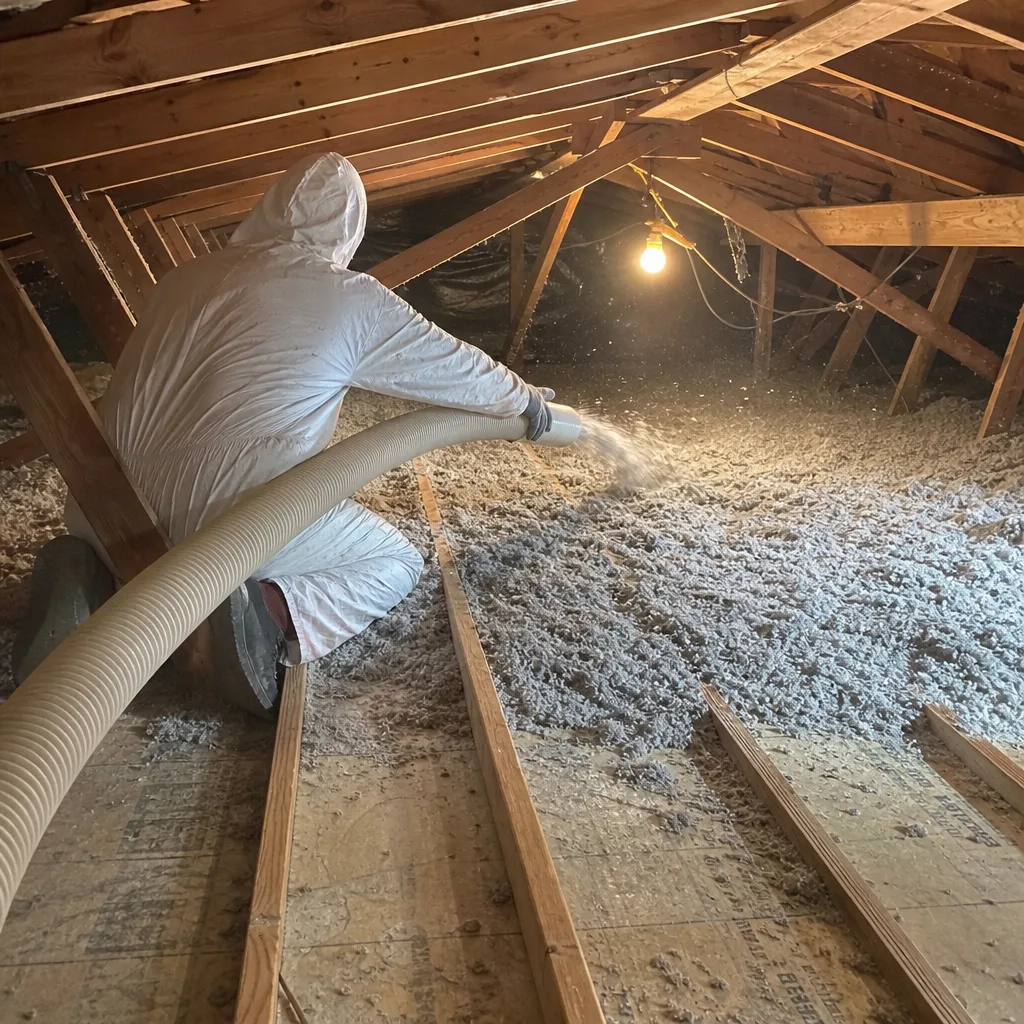
Lake Forest’s insulation calendar has two stress windows and two inspection windows. The stress windows, June through September and December through February, are when failures cost you money. The inspection windows, April through May and October through November, are when you find and fix those failures at lower cost and with better crew availability. Measure insulation depth on a grid, seal before you insulate, and get every scope and price in writing. The documentation, not the sales pitch, is what protects your investment. For more guides & resources, see our blog.
Written by Wes Okafor, Owner at Topside Attic Insulation Lake Forest, serving Lake Forest since 2016.