
Last updated September 24, 2026
Insulation Permits, Codes & Inspections in CA: What You Need to Know
A re-insulation job in California can legally fail a Title 24 inspection for inadequate air sealing even when the R-value is correct. That distinction most homeowners discover only when their permit closes without a final sign-off, leaving them with a certificate of occupancy they cannot produce for a future buyer. In Lake Forest, where the Building Division enforces both the California Energy Code and local amendments, the gap between what the code requires and what actually gets inspected is measurable and consequential. This guide - alongside our The Complete Guide to Insulation in Lake Forest - explains which projects need permits, what the 2022 Energy Code changed for Climate Zone 10, and how to read the paperwork that proves your job was done right.
Quick Answer
Most insulation projects in California that alter existing thermal envelopes or exceed 200 square feet require a permit from the local building department. In Lake Forest, this means submitting to the City of Lake Forest Building Division for projects within city limits, or to Orange County if your property sits in unincorporated territory. The permit triggers a Title 24 Part 6 compliance review, which checks both R-value and air barrier continuity, followed by rough and final inspections.
Table of Contents
- When Is a Permit Required for Insulation Work in California?
- Title 24 Part 6 Explained: More Than R-Value
- The Title 24 Compliance Certificates: CF1R, CF2R, CF3R
- What Changed in the 2022 Energy Code for Lake Forest
- The Inspection Process: What Actually Gets Checked
- The Real Cost of Unpermitted Insulation Work at Resale
- Lake Forest and Orange County: Local Rules and Exemptions
- Common Mistakes to Avoid
- When to Call a Professional
- Frequently Asked Questions
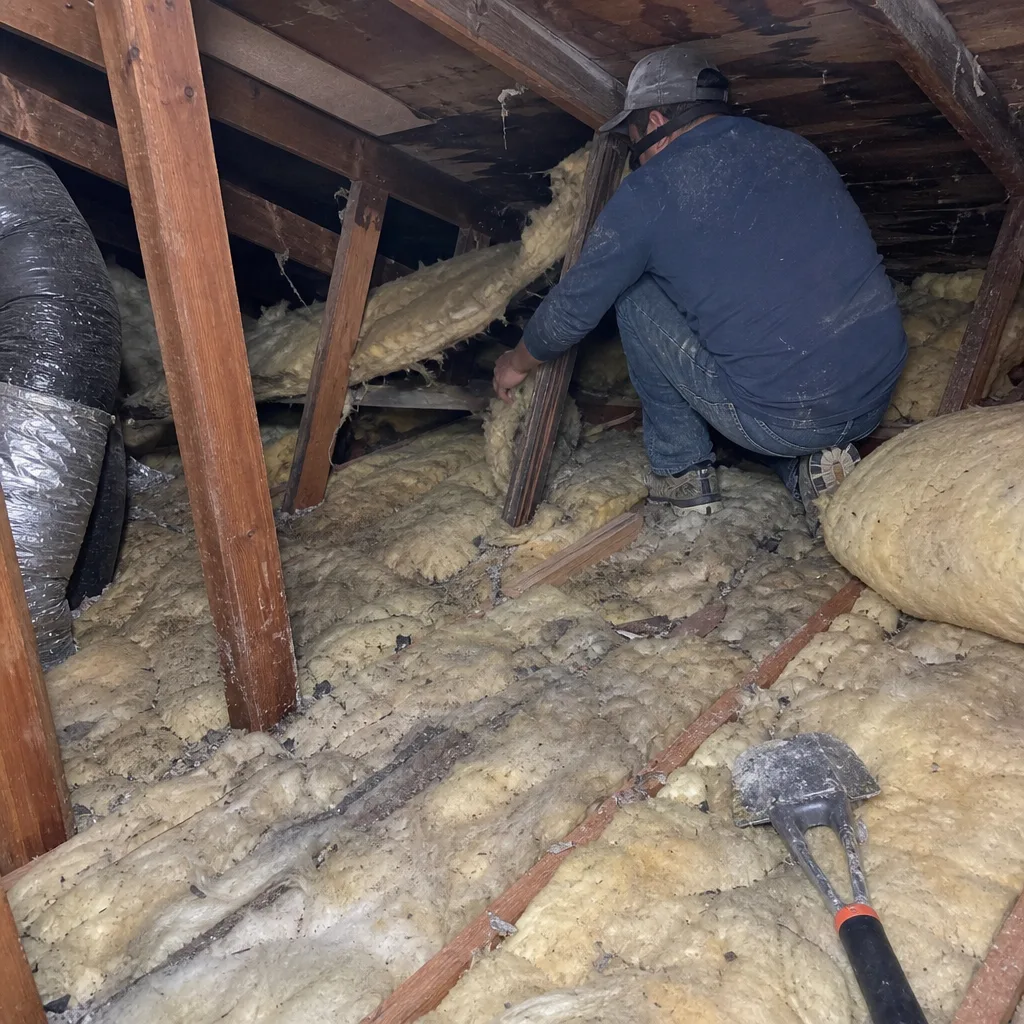 Before
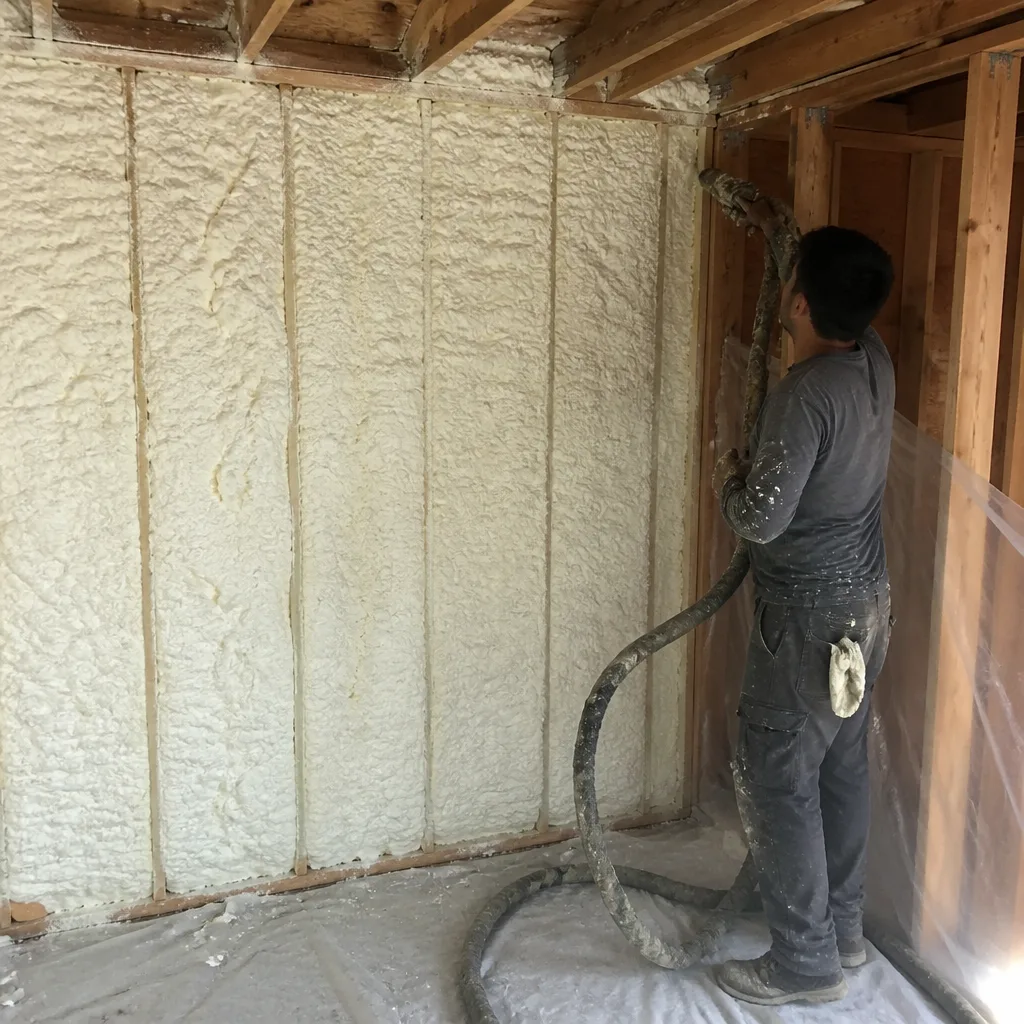 After
AfterWhen Is a Permit Required for Insulation Work in California?
California Building Standards Code Section 105.1 requires a permit for any alteration, repair, or addition to a building’s thermal envelope. For insulation specifically, this breaks down into three practical categories.
Permit required:
- Removing and replacing existing insulation in attics, walls, or crawl spaces where the area exceeds 200 square feet
- Adding insulation where none existed before, including spray foam in open cavities or blown-in fill in enclosed walls
- Any project that requires opening the building envelope, such as drilling access holes for dense-pack cellulose
- Crawl space encapsulation or vapor barrier installation that modifies ventilation or moisture control systems
Permit not required:
- Top-up insulation in attics where the existing material remains undisturbed and the total depth increase is less than 6 inches in unincorporated Orange County (check Lake Forest city limits separately)
- Weatherstripping, door sweeps, and other non-structural air sealing that does not penetrate the envelope
- Radiant barrier installation laid over existing attic insulation without mechanical fastening to structure
The 200-square-foot threshold is where homeowners often trip. A typical Lake Forest tract home built between 1975 and 1995 has 800 to 1,200 square feet of attic floor. Even a partial re-insulation usually triggers the permit requirement. We’ve reviewed competitor estimates in the Foothill Ranch and Portola Hills areas that describe “maintenance” or “repair” to avoid permitting, but the Building Division’s interpretation is straightforward: if you’re touching the thermal envelope, you need a permit.
Under Haven Standard: Have it in writing, we document the permit status on every written scope. If a job requires a permit, the permit fee and inspection schedule appear as line items before any work starts.
Title 24 Part 6 Explained: More Than R-Value
Title 24, Part 6 of the California Code of Regulations is the state’s energy efficiency standard for residential and nonresidential buildings. Most homeowners know it through the R-value numbers contractors recite: R-38 for attics, R-13 for walls, and so on. But the 2022 code cycle added requirements that are less familiar and more frequently failed.
The code divides compliance into two inseparable components:
- Prescriptive insulation values - the minimum R-value for each climate zone and assembly type
- Air barrier continuity - the requirement that the building envelope form a continuous plane without gaps, bypasses, or thermal bridges
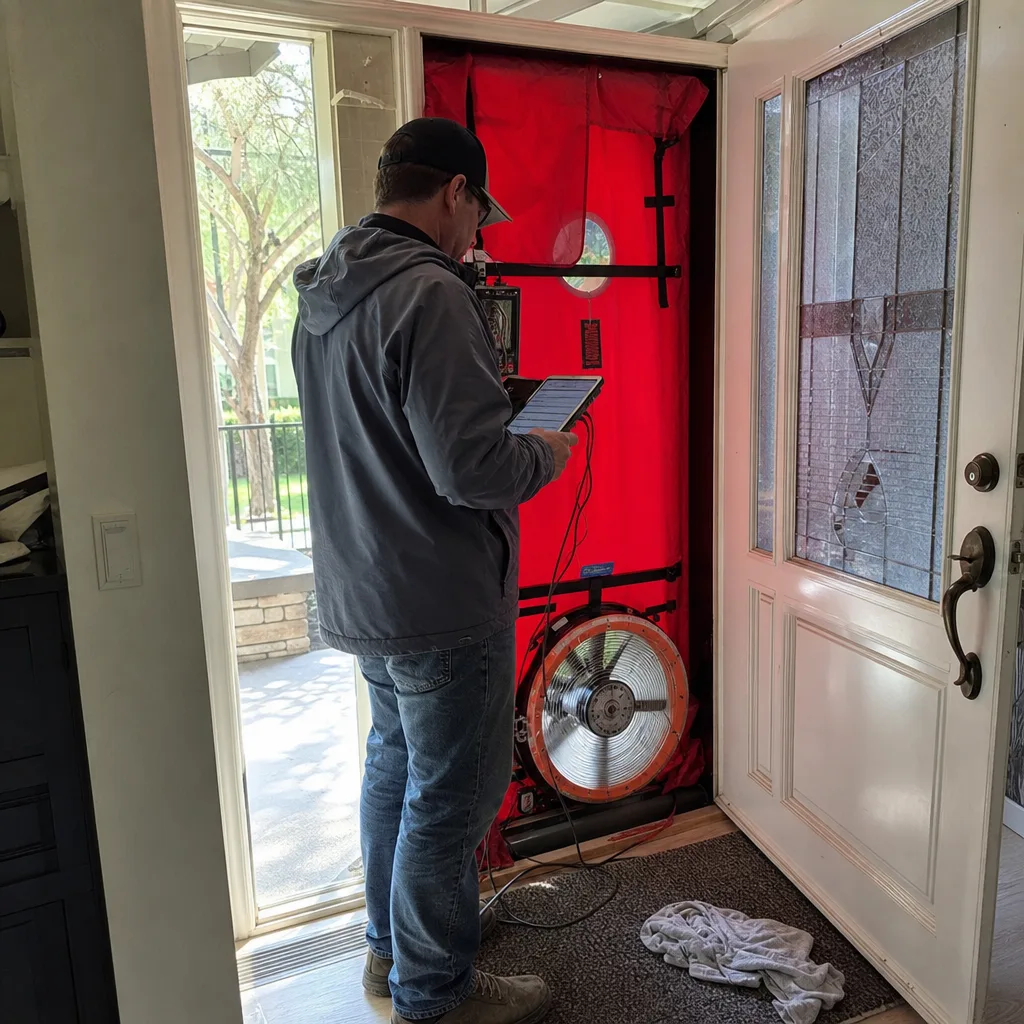
Here’s the critical point: a project can meet every R-value target and still fail Title 24 compliance if the air barrier is discontinuous. In our experience across Lake Forest neighborhoods from Baker Ranch to Glenwood, the most common failure mode is blown fiberglass or cellulose installed over an unsealed attic floor. The insulation achieves depth, but conditioned air escapes through top plate gaps, recessed can light penetrations, and plumbing stack chases. The blower-door test - a pressurization reading that shows, in one number, how much air your building envelope is losing - reveals what the R-value alone cannot.
We publish before-and-after blower-door numbers on every applicable job because the code now cares about both metrics. A typical pre-1990 Lake Forest home tests at 3,500 to 5,500 CFM50 before work begins. After proper air sealing and insulation, we expect 1,800 to 2,800 CFM50. The code does not set a specific CFM50 target for existing homes, but the performance path to compliance requires demonstrating improvement, and lenders increasingly ask for documentation.
Materials matter for compliance too. We source from Owens Corning, Johns Manville, Knauf, and other manufacturers whose products carry the thermal performance certifications the code recognizes. No proprietary lock-in means we specify what performs, not what a single brand happens to stock.
The Title 24 Compliance Certificates: CF1R, CF2R, CF3R
Every permitted insulation job in California generates three forms that track the project from design to completion. Homeowners rarely see these explained, yet they are the legal proof that your job meets code.
CF1R - Certificate of Compliance (Registration)
This is the pre-construction document. A HERS (Home Energy Rating System) rater or certified energy consultant prepares it based on the planned scope. For insulation work, the CF1R specifies the proposed R-values, air barrier details, and compliance path (prescriptive or performance). The homeowner should receive a copy before work starts. Under Haven Standard Clause 1, our written scope includes the CF1R reference number so you can cross-check.
CF2R - Certificate of Installation
The contractor completes this after installation but before final inspection. It documents what was actually installed: insulation type, manufacturer, installed R-value, and air sealing measures completed. The CF2R must match the CF1R within tolerance, or the HERS rater flags a discrepancy. We photograph every critical detail for our Documented Photo Record - insulation depth markers, sealed penetration details, manufacturer labels - so the CF2R has photographic backup.
CF3R - Certificate of Verification
The HERS rater or building inspector signs this after field verification. It confirms that the installed assembly matches the CF2R and that any required testing (blower-door, duct leakage, infrared scan) passed. The CF3R is what you hand to a buyer’s lender five years later. Without it, you have a permitted job with no proof of completion.
Here’s what your copy should show after a final inspection:
- Project address matching your property records
- HERS rater certification number and signature
- Installation date within 30 days of your final invoice
- Blower-door test results if the performance path was used
- Specific insulation products listed by manufacturer and model
We’ve reviewed CF3Rs from other contractors where the insulation product field reads “loose fill, unspecified” or the blower-door result is absent. Those are incomplete documents, and they create problems at resale.
What Changed in the 2022 Energy Code for Lake Forest
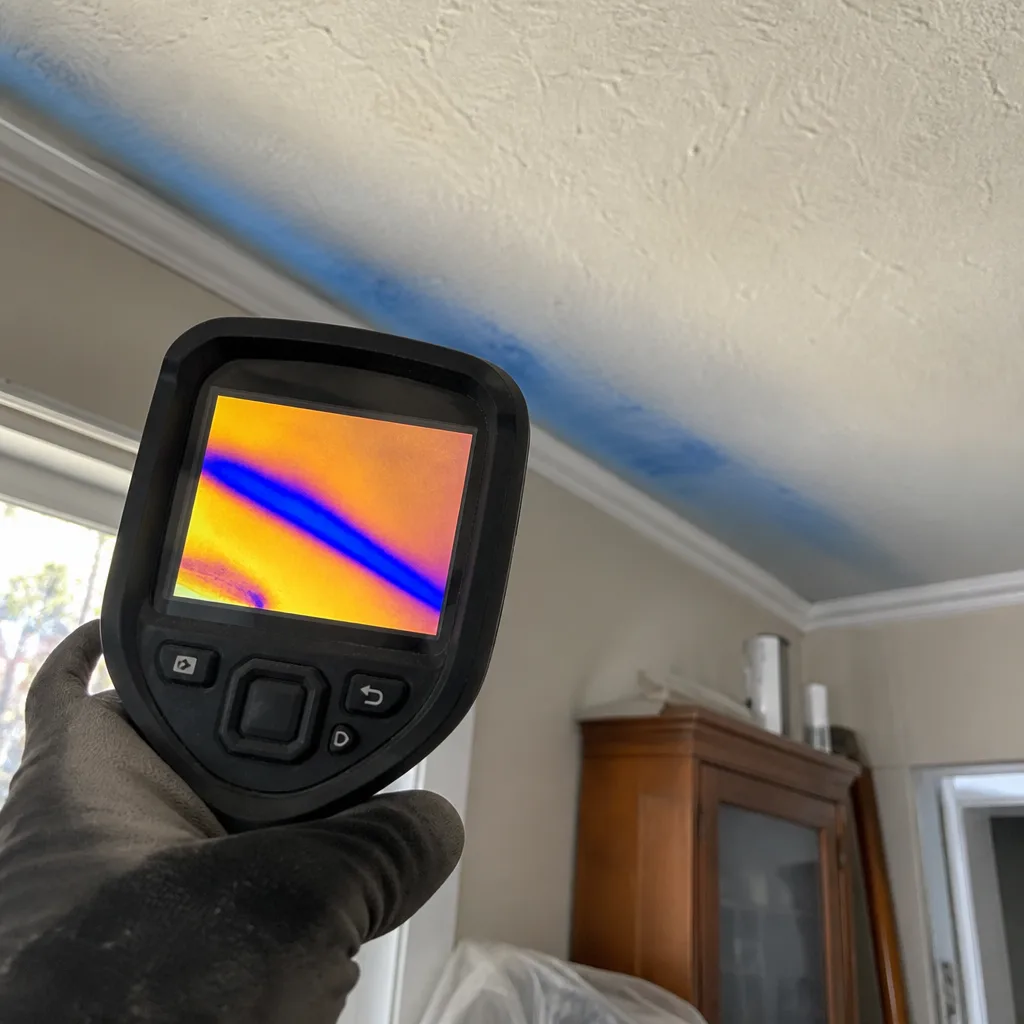
Lake Forest sits in California Climate Zone 10, a hot-dry zone that includes most of inland Orange County. The 2022 Energy Code, effective January 1, 2023, made three changes that affect re-insulation work here.
Attic insulation: R-38 minimum, R-49 recommended
The prescriptive minimum for wood-framed attic floors increased from R-30 to R-38. Many contractors in Lake Forest still quote R-30 because they reference the 2019 code or because R-30 batts are cheaper and easier to source. But a permitted job in 2024 or 2025 must meet R-38 unless the performance path demonstrates equivalent efficiency through superior air sealing. We specify R-38 as our Lake Forest standard for blown-in fiberglass or cellulose, with R-49 available for homeowners who want the additional thermal buffer against summer attic temperatures that regularly exceed 140°F.
Air barrier verification: now mandatory for alterations
The 2019 code required air barriers for new construction but treated existing home alterations more loosely. The 2022 code closes that gap. Any insulation project that opens the thermal envelope must include visual inspection of air barrier continuity, and the performance path requires blower-door testing. This is why we seal first, then insulate - in that order. Blowing GreenFiber cellulose or Owens Corning fiberglass over an unsealed attic floor now risks a failed inspection even at R-38.
Cool roof and radiant barrier integration
For Climate Zone 10, the 2022 code strengthened the relationship between roof surface properties and attic insulation requirements. Homes with non-cool roofs (thermal emittance below 0.75) face stricter attic insulation minimums. In Lake Forest neighborhoods like Lake Forest Keys and Rancho Viejo, where many homes retain original dark composite shingles, this means the attic insulation assembly must compensate for roof surface heat gain. We account for this in our written scopes, specifying either additional R-value or radiant barrier installation where the roof surface cannot be changed.
The practical cost impact: a code-compliant 2024 attic re-insulation in Lake Forest typically runs $3,200 to $5,800 for a 1,000-square-foot attic, including permit, R-38 blown-in insulation, air sealing of top plates and penetrations, and blower-door verification. The same scope quoted to 2019 standards might cost $2,400 to $4,000 but would not pass current inspection.
The Inspection Process: What Actually Gets Checked
Permitted insulation work in Lake Forest requires at least two inspections: rough and final. Understanding what each covers prevents the callback that delays your project by two to three weeks.
Rough inspection
The inspector verifies that air sealing is complete before insulation covers it. This means:
- Top plates between conditioned and unconditioned space are sealed with caulk or foam
- Recessed can lights in the attic floor are IC-rated or properly capped and sealed
- Plumbing vents, electrical penetrations, and chimney chases are sealed with fire-rated materials where required
- Baffles are installed at eaves to maintain ventilation channel where soffit vents exist
The rough inspection is where most insulation jobs fail in our experience. A crew eager to complete the blow-in phase skips the detailed sealing work, assuming the inspector will not crawl to the eaves. In Lake Forest, Building Division inspectors do crawl. We’ve had to remediate competitor jobs in the Serrano Creek area where the rough failed for unsealed top plates, requiring removal of newly installed insulation to access the gaps.
Final inspection
The inspector confirms:
- Insulation depth matches the CF1R specification, measured with a probe at multiple locations
- Insulation is evenly distributed without voids or compression
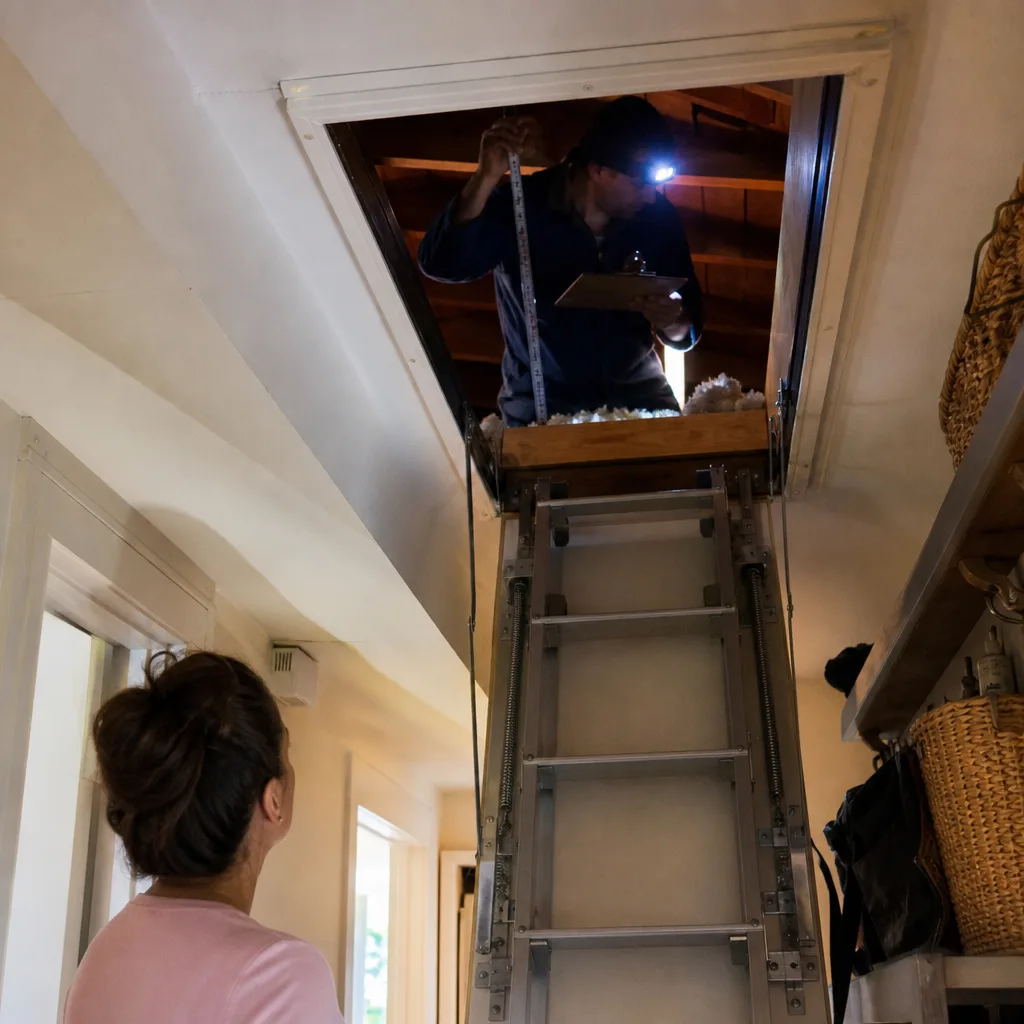
- Attic access hatch is insulated and weatherstripped
- Required markings and depth cards are visible
- HERS documentation is complete if the performance path was used
The final inspection also includes a paperwork review. The inspector checks that CF2R and CF3R forms are signed and that any HERS rater findings were corrected. We provide homeowners with a complete permit closure packet: final inspection sign-off, all three CF forms, our blower-door report, and the Documented Photo Record.
The Real Cost of Unpermitted Insulation Work at Resale
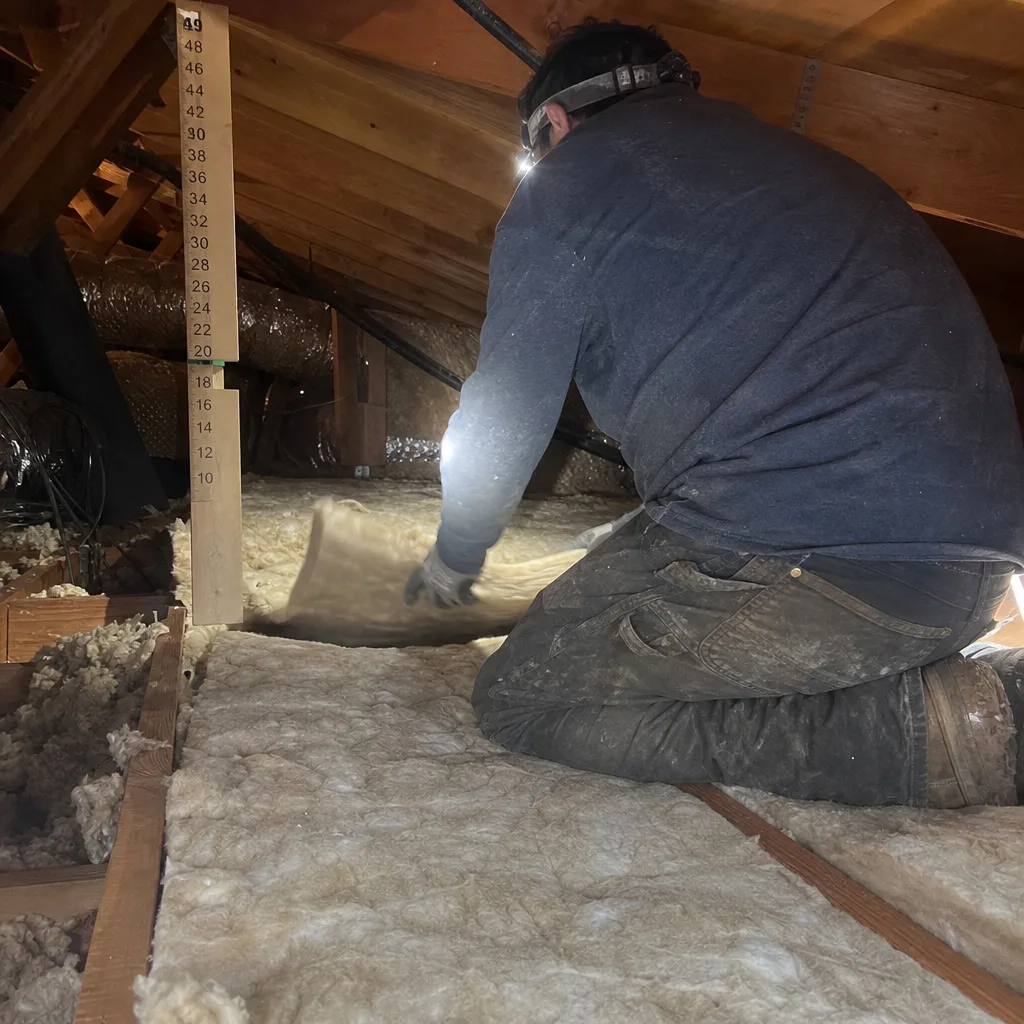
Unpermitted insulation work is common in California. Estimates suggest 30 to 40 percent of residential insulation installed between 2015 and 2023 lacked proper permits. Homeowners skip permitting to save $400 to $800 in fees and avoid inspection delays. The cost of this choice surfaces at resale, and it is not minor.
Lender requirements
Conventional loans, FHA loans, and VA loans all permit the lender to require proof of permit compliance for any structural or energy-related work. Since 2022, we’ve seen increased lender scrutiny of insulation and HVAC work in Orange County, particularly for homes sold above $900,000. A missing permit triggers one of three outcomes: the seller obtains retroactive permitting, the seller credits the buyer for estimated remediation, or the deal stalls while the issue is resolved.
Retroactive permitting cost
The City of Lake Forest charges standard permit fees plus a penalty for work completed without permit. More significantly, retroactive permitting requires opening the work for inspector verification. For attic insulation, this means removing enough material to demonstrate proper air sealing and depth. The total cost typically runs $1,200 to $3,500, or three to five times the original permit fee. We’ve completed retroactive permitting support for homeowners in the Foothill Ranch area who faced this exact scenario; in two cases, the original contractor was unresponsive, and the homeowner bore the full cost.
Disclosure liability
p>California’s Transfer Disclosure Statement asks directly whether structural modifications were permitted. Answering “don’t know” or “no” for unpermitted insulation creates liability if the buyer later discovers the omission. Answering “yes” without documentation is misrepresentation. The only clean answer is a closed permit with final inspection sign-off.
Insurance implications
Some homeowner policies exclude damage related to unpermitted work. If unpermitted spray foam installation contributes to a moisture or fire event, the insurer may deny coverage based on code violation. This is a narrow but real risk, particularly for spray foam jobs where off-ratio application or inadequate ignition barrier creates hazard.
Our position is straightforward: every job gets permitted if required, every permit gets closed, and every homeowner receives the documentation. The 365-Day Done Right Promise applies to permitted work with proper documentation; we do not extend it to unpermitted jobs because we cannot verify code compliance without inspection.
Lake Forest and Orange County: Local Rules and Exemptions
California’s energy code is statewide, but enforcement sits with local building departments. Lake Forest homeowners need to know which jurisdiction applies and where local amendments modify the base code.
City of Lake Forest Building Division
Properties within Lake Forest city limits permit through the Building Division at City Hall. The city enforces the full California Building Standards Code including Title 24 Part 6, with no local amendments that reduce energy requirements. Lake Forest does require a pre-application conference for any project exceeding $25,000 in valuation, which includes some whole-home envelope retrofits but not typical attic or crawl space re-insulation.
Unincorporated Orange County
Properties in unincorporated pockets near Lake Forest - some areas along Bake Parkway and the northern edge of the city - permit through Orange County. The county’s exemption threshold for minor repairs is more permissive: work valued under $1,000 that does not alter structure or systems may proceed without permit. However, insulation work in a typical home exceeds this threshold, and the thermal envelope alteration still triggers Title 24 review.
Lake Forest-specific climate considerations
Climate Zone 10’s hot-dry conditions create insulation challenges that coastal Climate Zone 6 does not face. Summer attic temperatures in Lake Forest regularly reach 130°F to 150°F, accelerating degradation of cellulose settled depth and increasing the effective temperature differential across the ceiling plane. This means:
- R-value degradation from settling is more consequential here than in milder zones
- Air sealing has outsized impact because the stack effect drives conditioned air upward into extreme heat
- Radiant barrier performance is more measurable in Lake Forest attics than in coastal Orange County
We’ve measured attic conditions in Baker Ranch homes where the original R-30 batt insulation, installed in 2016, had settled to effective R-22 by 2023 due to compression and thermal cycling. The 2022 code’s R-38 minimum partly addresses this degradation curve.
HOA considerations
Several Lake Forest neighborhoods with active HOAs, including Portola Hills and certain Baker Ranch villages, require architectural review for any exterior-visible work. Attic insulation is not typically visible, but crawl space vent modifications or exterior foam board applications may trigger HOA review. We note HOA requirements on our written scopes when the homeowner identifies them.
Common Mistakes to Avoid
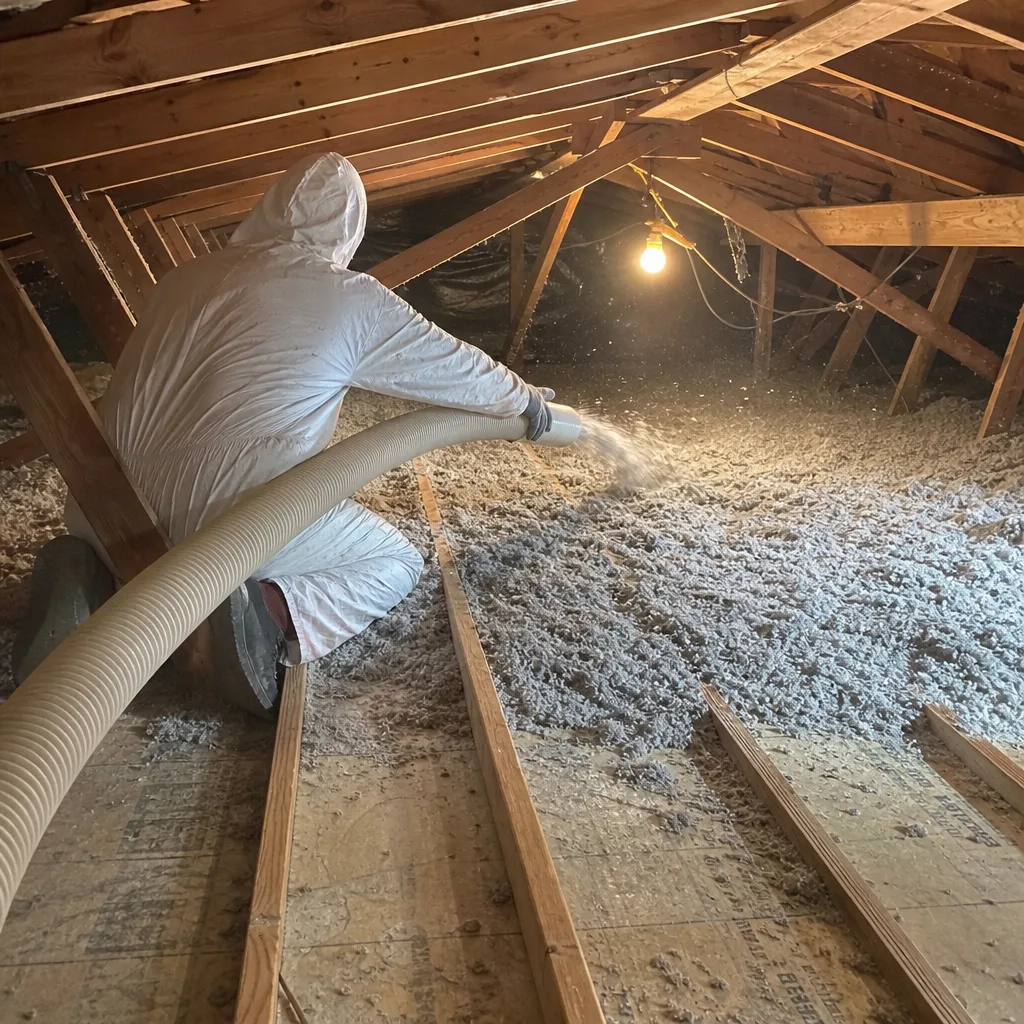
- Assuming R-value alone guarantees compliance. A Lake Forest attic with R-38 blown-in fiberglass can still fail Title 24 if the air barrier is discontinuous. We see this annually in homes where a homeowner or handyman added insulation without sealing first.
- Accepting a “permit optional” proposal. Any contractor who suggests skipping the permit to save money is transferring liability to you. The savings are typically $400 to $800; the retroactive cost is $1,200 to $3,500.
- Not requesting the CF3R at final. Homeowners who do not receive their Certificate of Verification have no proof of code compliance. Request it before final payment.
- Matching 2019 code specs in 2024. Contractors quoting R-30 attic insulation in Lake Forest are using outdated standards. The 2022 code requires R-38 minimum; verify your proposal reflects current requirements.
- Ignoring the blower-door result. A contractor who cannot produce before-and-after pressurization numbers has not verified air sealing performance. In Climate Zone 10, air leakage dominates summer cooling load.
- Permitting through the wrong jurisdiction. Lake Forest city limits and unincorporated Orange County interlock in ways that confuse even some contractors. Verify your property’s jurisdiction before application.
- Skipping inspection attendance. Homeowners who attend final inspection catch discrepancies immediately. We’ve corrected depth measurement errors and paperwork omissions in real time that would have delayed permit closure.
When to Call a Professional
Call a licensed insulation contractor when your project requires permit submission, involves spray foam or dense-pack techniques, or when your home was built before 1990 and has never had blower-door testing. The interaction between air sealing and insulation is not intuitive; we’ve measured homes in Lake Forest where the homeowner’s DIY batt installation actually increased air leakage by compressing existing material and creating bypass channels.
Topside Attic Insulation Lake Forest offers free estimates in Lake Forest. Every estimate includes a written scope, a written price before any work starts, and a clear statement of permit requirements. Call (657) 279-1249 to schedule. We also provide a Free Second Opinion on any written estimate from another contractor; bring us their scope, and we’ll read it with you.
For homeowners who want to understand their home’s baseline performance before deciding on scope, our Home Energy Audit in Lake Forest includes blower-door testing, infrared scanning, and a prioritized improvement list with estimated costs.
Frequently Asked Questions
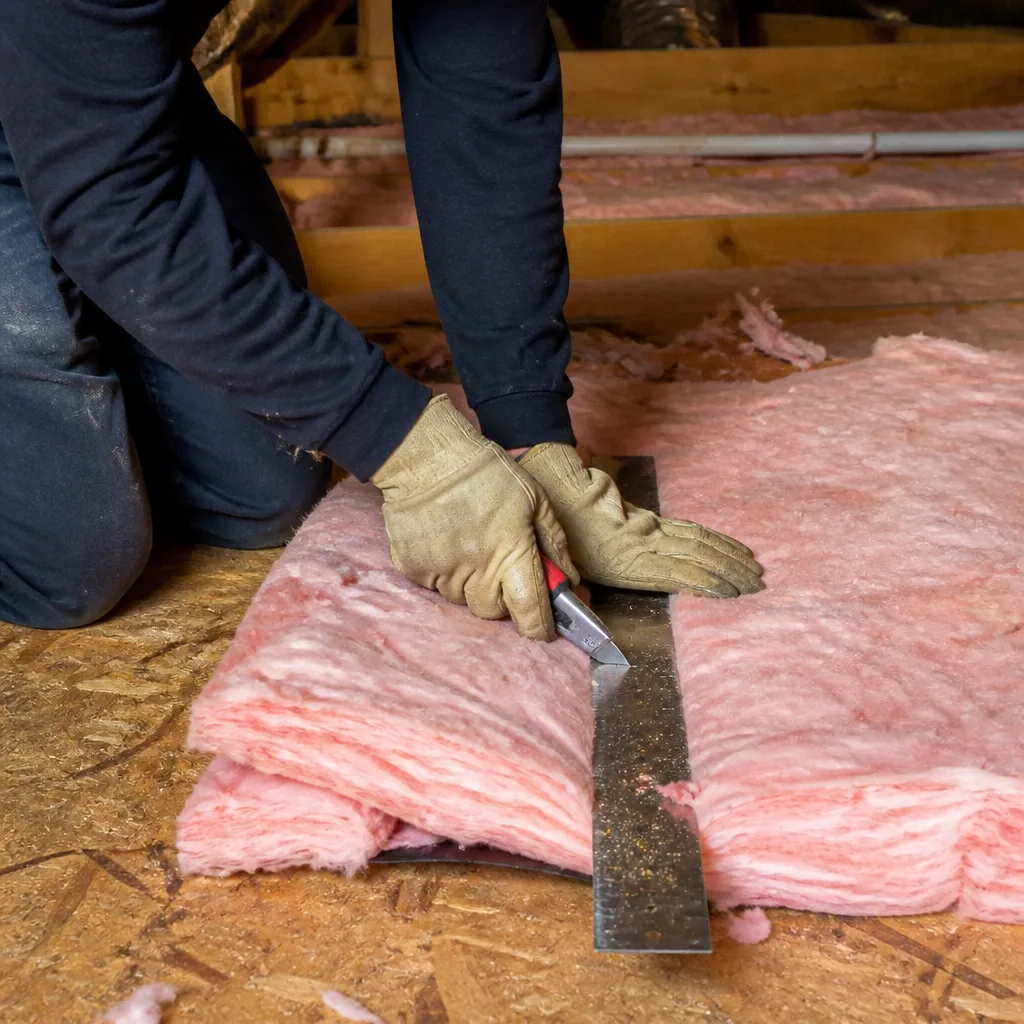
Permit fees for attic insulation in Lake Forest typically range from $380 to $650, depending on project valuation and whether a HERS rater is required for performance-path compliance. The City of Lake Forest Building Division publishes its fee schedule online, and we itemize this cost in every written scope. Call (657) 279-1249 for an exact quote on your specific project; estimates are free.
In unincorporated Orange County, top-up insulation adding less than 6 inches of depth over undisturbed existing material may fall below the permit threshold. Within Lake Forest city limits, any alteration to the thermal envelope typically requires permit regardless of depth. The safer approach is to confirm with the Building Division before work starts. We verify permit status as part of our initial site assessment.
The inspector issues a correction notice specifying the deficiency, which must be remedied and re-inspected before final sign-off. Common corrections in Lake Forest include inadequate air sealing at top plates, uneven insulation depth, and missing documentation. Our 365-Day Done Right Promise covers correction of any inspection failure attributable to our work, including re-inspection fees.
Request the permit number and verify it on the City of Lake Forest Building Division’s online permit portal or by phone. Active permits show inspection history and status. A legitimate contractor provides this information without hesitation. We include permit numbers on every invoice and encourage homeowners to verify independently.
Spray foam triggers additional requirements because it is both insulation and air barrier, and because off-ratio application creates health and fire hazards. The 2022 code requires ignition barrier protection for certain spray foam applications, and Orange County inspectors verify manufacturer certification and installer training. We use only certified spray foam products from established manufacturers and document training credentials on request.
Yes, increasingly so. Since 2022, we’ve supported multiple Lake Forest homeowners through retroactive permitting triggered by buyer or lender requirements. The cost and delay typically exceed original permitting by a significant margin. Proper documentation from the start prevents this scenario. If you’re unsure about past work, we can assess permit status and recommend remediation during a free estimate visit.
The Bottom Line
California’s Title 24 energy code governs insulation work through a framework most homeowners never see until something goes wrong. The 2022 code made air barrier continuity as important as R-value, raised attic minimums to R-38 in Climate Zone 10, and tightened documentation requirements that lenders now review at resale. In Lake Forest, the gap between code requirements and actual inspection practice is narrowing; Building Division inspectors are increasingly thorough, and retroactive permitting costs are rising. The permit is not an obstacle. It is the documentation that protects your investment, and the inspection is the verification that the work was done right. Get the permit, attend the inspection, and keep your CF3R with your property records.
Written by Wes Okafor, Owner at Topside Attic Insulation Lake Forest, serving Lake Forest since 2016.