
How Much Does Wall Insulation Cost in Lake Forest?
Our Wall Insulation services in Lake Forest, CA typically cost between $1,800 and $6,500 for a whole-home project, with most single-family homes landing in the $2,400 to $4,200 range depending on wall access method, material choice, and square footage. Blown-in insulation into existing closed walls runs $1.50 to $3.00 per square foot, while open-wall spray foam during a remodel or new construction can reach $3.00 to $7.00 per square foot. Those numbers reflect what we actually quote on jobs here in Lake Forest – not national averages adjusted down from a spreadsheet.
Wall Insulation Cost Breakdown (2026)
Wall insulation pricing in Lake Forest breaks down by material and installation method. The two biggest variables are whether your walls are already drywalled (closed cavity) or open to the studs (open cavity). Open cavity work is faster, cleaner, and lets you choose any material. Closed cavity work is the norm for retrofit jobs – the insulation goes in through small holes drilled from the exterior or interior, and the material has to be right for that application.
| Material / Method | Cost Per Sq Ft | Typical Job Range (1,800 sq ft home) |
|---|---|---|
| Dense-pack cellulose (closed cavity, retrofit) | $1.50 – $2.50 | $2,000 – $3,400 |
| Dense-pack fiberglass (closed cavity, retrofit) | $1.75 – $2.75 | $2,300 – $3,700 |
| Blown-in fiberglass (open cavity, new construction) | $1.25 – $2.00 | $1,700 – $2,700 |
| Mineral wool / Rockwool batts (open cavity) | $2.00 – $3.50 | $2,700 – $4,700 |
| Open-cell spray foam (open cavity) | $1.80 – $3.50 | $2,400 – $4,700 |
| Closed-cell spray foam (open cavity) | $4.00 – $7.00 | $5,400 – $9,400 |
| Injection foam (closed cavity, retrofit) | $2.50 – $4.50 | $3,400 – $6,100 |
The square footage in that table refers to wall cavity area – the insulated portion of the wall, not your home’s footprint. A 1,800 sq ft single-story Lake Forest home typically has 900 to 1,200 sq ft of exterior wall cavity depending on window placement and architectural design. Two-story homes in neighborhoods like Foothill Ranch or Portola Hills add ceiling and gable-end exposure that can push wall cavity area higher.
Patch and paint after closed-cavity drilling adds $200 to $600 to most retrofit jobs depending on stucco condition and paint match. That’s a real line item – we build it into the written scope rather than surprise you with it later, because under Haven Standard Clause 1, you receive a flat written price before anyone picks up a drill.
What Affects Wall Insulation Pricing in Lake Forest
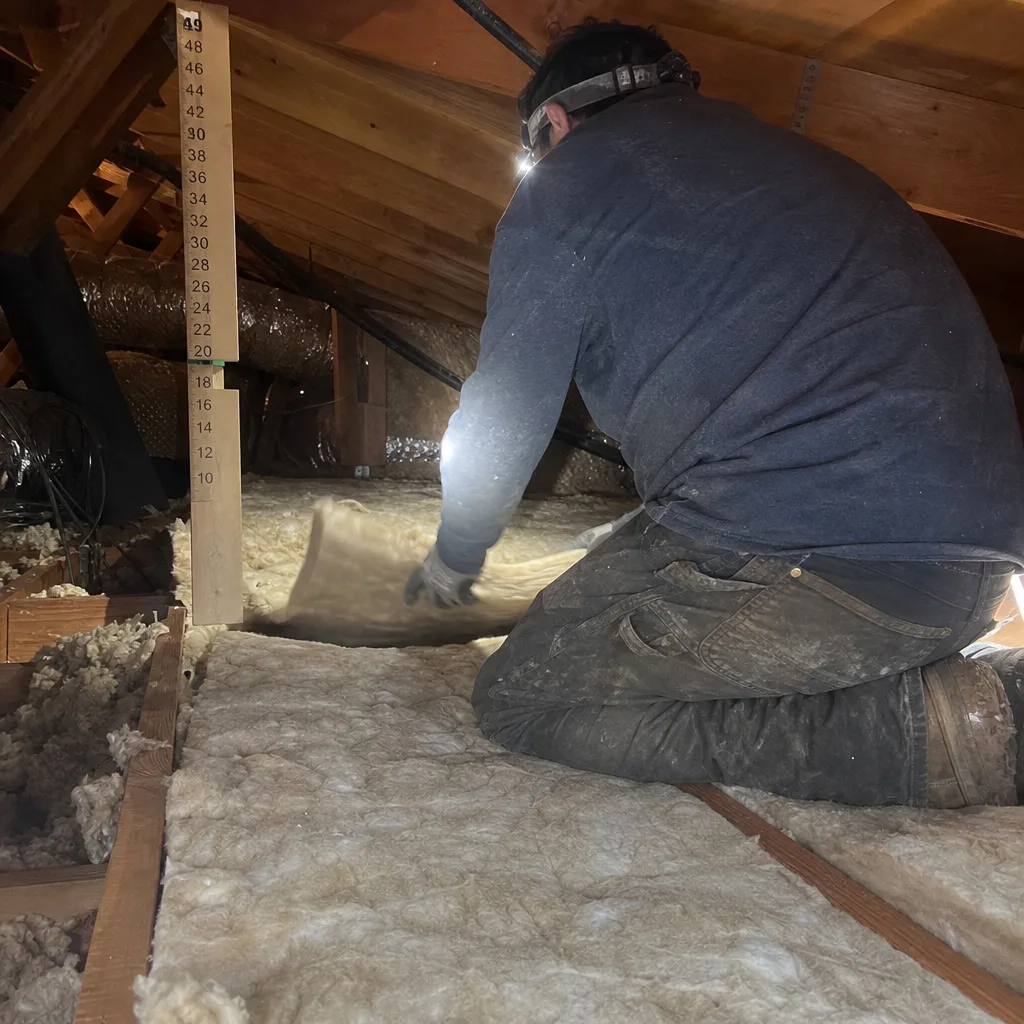
- Wall access method – open vs. closed cavity: If your walls are open during a remodel, every material option is on the table and installation is faster. Closed-cavity retrofit work (drilling into existing stucco or drywall, blowing in material, patching) takes more labor per square foot and limits your material options to flowable products like dense-pack cellulose, dense-pack fiberglass, or injection foam. Most Lake Forest homeowners contacting us for a retrofit are in this camp.
- Exterior finish type – stucco vs. wood siding: The majority of homes in Lake Forest built between 1980 and 2005 have three-coat stucco exteriors. Drilling through stucco and patching it cleanly costs more than drilling through wood lap siding. The patch has to be textured to match, which takes a skilled hand and adds time. Interior drilling through drywall is cleaner but means you’re patching interior walls, which affects your furniture and your schedule.
- R-value target and wall depth: California’s Title 24 energy code requires R-13 minimum in 2×4 walls and R-20 or R-21 in 2×6 walls for new construction. Most older Lake Forest homes were built with 2×4 framing, which limits the achievable R-value to roughly R-13 to R-15 regardless of material. If you’re doing an addition or a room conversion with 2×6 framing, you can achieve R-20 with dense-pack fiberglass or Rockwool batts, which affects total material cost.
- Home age and construction quality: Homes in Foothill Ranch built in the mid-1990s often have inconsistent blocking patterns inside the walls – horizontal fire blocks at mid-height that require additional drilling passes to fully fill each cavity. We find this on roughly one in three retrofit jobs in that vintage. Older homes from the early 1980s near the El Toro Road corridor sometimes have aluminum wiring or non-standard stud spacing that slows the job.
- Air sealing scope bundled with the insulation: This is where we differ from most insulation contractors in Lake Forest. Before we insulate any wall cavity, we assess whether the top plates, electrical penetrations, and wall-to-ceiling junctions have been air-sealed. Insulating a leaky wall cavity improves thermal resistance but does nothing for conditioned air bypassing the insulation through gaps. If air sealing is needed, that work happens first – it’s not an optional add-on. The cost for wall-level air sealing typically adds $300 to $900 to a whole-home wall job, but it’s the difference between an R-13 wall that performs like R-13 and one that performs like R-8 because air is moving through it.
- Material sourcing and availability: We use materials from Owens Corning, Johns Manville, Knauf, Rockwool, and GreenFiber, among others. There’s no proprietary product lock-in, which means the spec we write is driven by what performs for your wall type – not what we happen to warehouse. In late 2024 and into 2025, fiberglass batt pricing in Southern California increased roughly 12 to 18 percent due to supply chain adjustments; current 2026 pricing reflects that higher baseline. Dense-pack cellulose, made from recycled paper fiber and treated with borate, has stayed relatively stable.
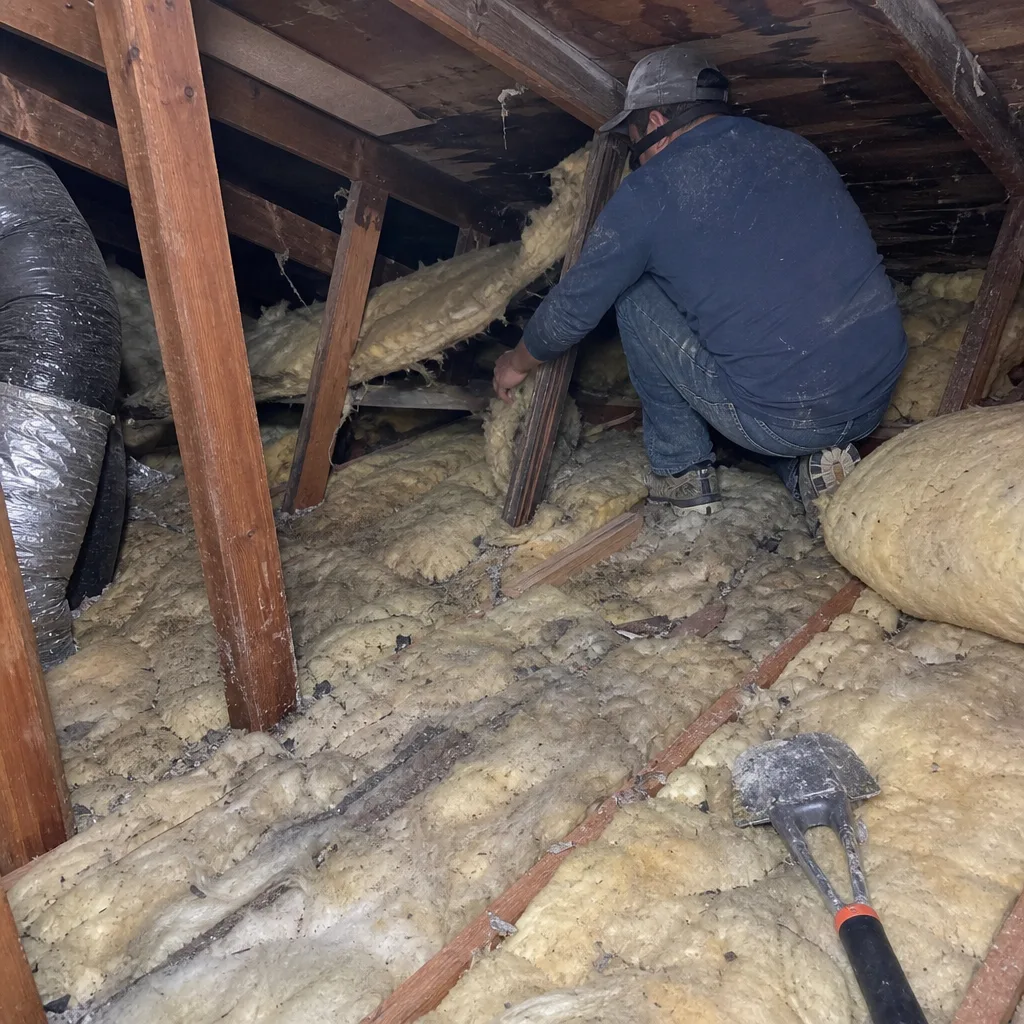 Before
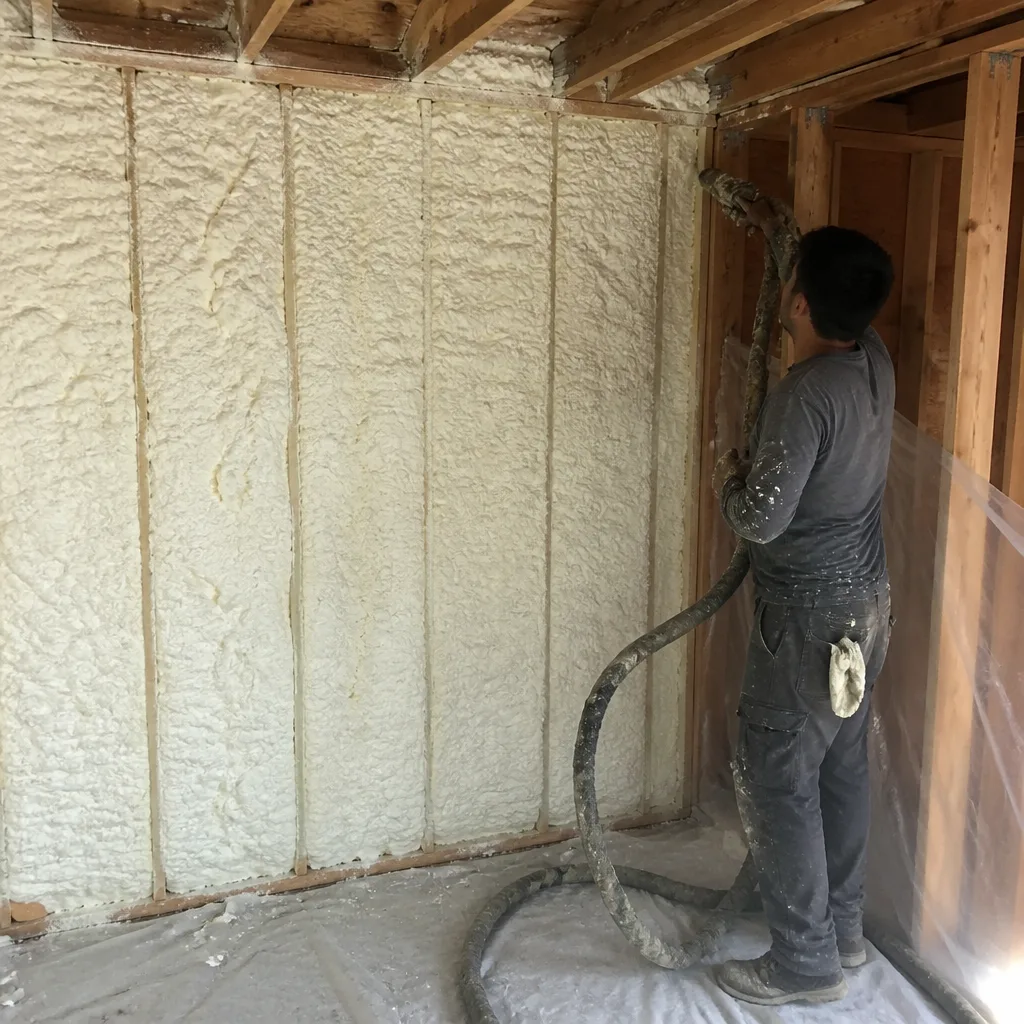 After
AfterHow to Save on Wall Insulation in Lake Forest
The single biggest money-saver on a wall insulation project is getting the scope right before the crew shows up. A job scoped correctly the first time – right material, right density, right access method – doesn’t get re-done. That’s not a sales pitch; it’s what nine years of insulation work across Lake Forest and the surrounding communities has shown us repeatedly.
Get a second opinion on any written estimate you already have
If you’ve received a quote from another contractor, we’ll read it with you. We offer a free second opinion on any written estimate – no obligation. What we’re looking for: Is the material specified by name and density? Is air sealing itemized separately or buried in a vague line item? Does the patch-and-repair scope match the access method quoted? Those details matter because they determine whether the job you pay for is the job you get.
Bundle wall insulation with attic work when the timing works
Crew mobilization – getting a team to your Lake Forest address, setting up, running hose and equipment – is a fixed cost whether we’re doing 400 sq ft of work or 1,400. If your attic also needs insulation or your crawl space needs a vapor barrier, scheduling those together almost always reduces your total cost compared to two separate visits. When we quote bundled projects, the savings typically run $300 to $700 compared to separate mobilizations.
Understand California’s utility rebate programs before you sign anything
Southern California Edison and SoCalGas have historically offered rebates for qualifying insulation upgrades, and the California Energy Commission has periodically run incentive programs tied to Title 24 compliance. Rebate availability changes frequently – what was available in 2024 may not look the same in 2026. Before you commit to a project, check the current offerings at energyupgradeca.org and the SoCal Edison rebate portal directly. We can tell you which materials and R-values have typically qualified; we can’t guarantee current rebate availability because those programs change outside our control.
Don’t underspec the air sealing to cut the budget
This is counterintuitive advice, but skipping air sealing to save $400 upfront often means you don’t get the energy reduction you expected and eventually pay for the work anyway. In the Lake Forest climate – hot, dry summers that push attic temperatures past 140°F, and cool winter nights that create pressure-driven infiltration – a wall with good R-value but unsealed penetrations will underperform noticeably. We’d rather tell you that clearly now than have you call us in two years wondering why your utility bill didn’t move.
Request a written scope before committing to any contractor
A written scope costs you nothing to request and tells you a great deal about the contractor. It should specify: material manufacturer and product name, installed R-value, access method, patch-and-repair plan, and what the warranty covers. If a contractor resists putting those details in writing, that’s useful information. Under the Haven Standard, a written price before any work starts isn’t a courtesy we offer – it’s how we operate on every single job.
To get a free estimate on your Lake Forest wall insulation project, call (657) 279-1249. We’ll give you a number you can actually use – not a range so wide it’s meaningless.
Lake Forest-Specific Context: Why Wall Insulation Here Is a Different Conversation
Lake Forest sits at roughly 800 to 1,200 feet elevation across most of its residential areas, which means the diurnal temperature swing – the difference between the daily high and the overnight low – is often 25 to 35 degrees Fahrenheit in summer. That’s more pronounced than coastal Orange County cities like Laguna Beach or Irvine’s western neighborhoods. What it means practically: walls that are uninsulated or under-insulated don’t just fail in the heat of afternoon; they bleed heat back into living spaces through the night as the slab and wall mass radiate stored heat. You feel it most in bedrooms on the west-facing exterior walls between 9 PM and midnight.
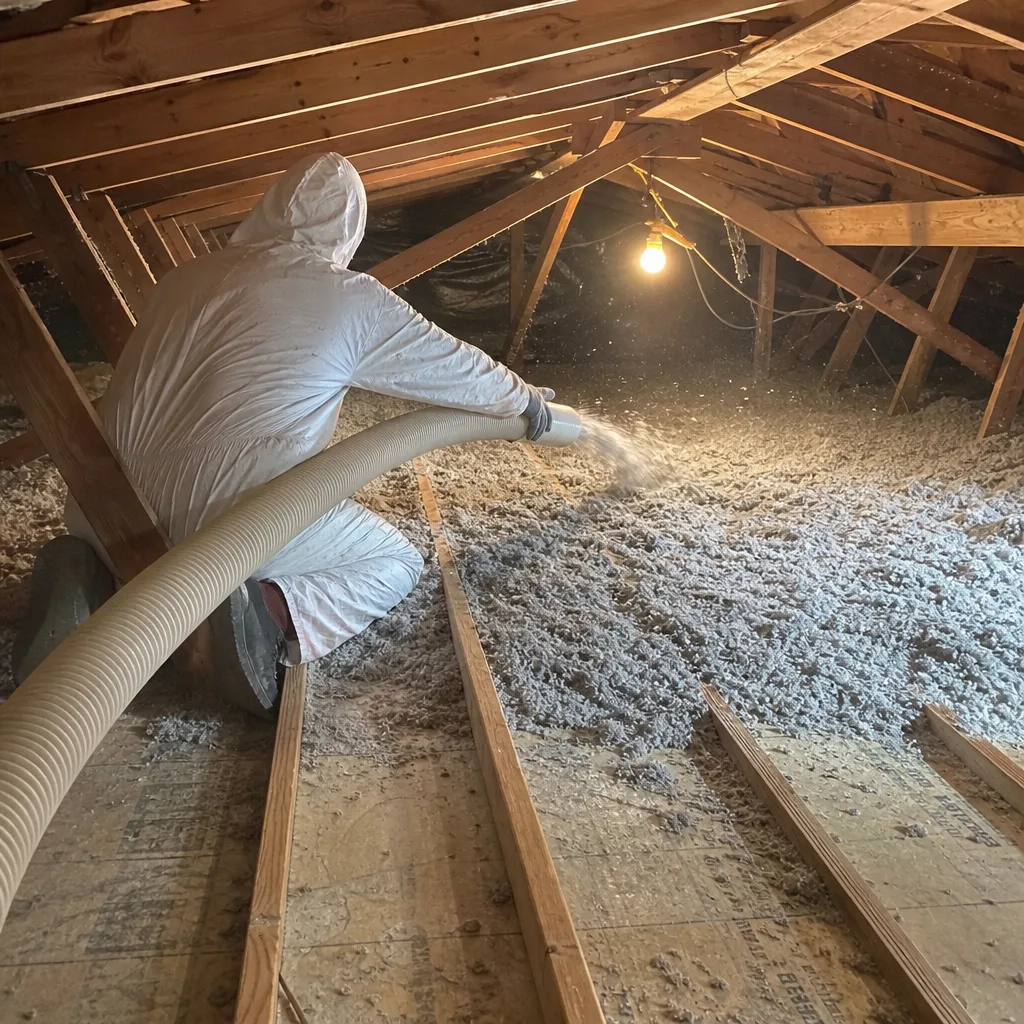
The homes in neighborhoods like Serrano, Lake Forest Keys, and the older sections near Bake Parkway were mostly constructed in the 1980s and 1990s with fiberglass batts – often installed loosely, sometimes with gaps or compression at the ends of cavities. When we drill into those walls during a retrofit assessment, we find voids in probably 40 percent of cavities on first pass. Dense-pack cellulose or dense-pack fiberglass, blown in at the right density (3.5 lb/cu ft for cellulose, 1.8 lb/cu ft for fiberglass), fills those voids and resists settling in a way that original batt installation didn’t.
The newer construction in Foothill Ranch, particularly homes built after 2005, more commonly has 2×6 exterior framing – which means deeper cavities and higher achievable R-values. If you’re in one of those homes and the insulation was installed to meet 2005 Title 24 minimums, it’s worth knowing that 2026 energy performance standards have moved, and a blower-door test will tell you whether the air sealing holds up to current expectations.
That blower-door test – a pressurization measurement that shows, in a single number, how much conditioned air your building envelope is losing – is the starting point on any job where air sealing is part of the scope. We publish the before and after numbers. Not because it’s a marketing point, but because a homeowner who can see that their home went from 3,800 CFM50 to 1,900 CFM50 knows exactly what they paid for.
Wall Insulation Options Side by Side
The material choice for wall insulation in Lake Forest mostly comes down to whether you’re doing a retrofit or new construction, and how much R-value you need to achieve. Here’s how the main options compare for typical Lake Forest applications:
Dense-Pack Cellulose
Made from recycled paper fiber treated with borate (a natural fire and pest retardant), dense-pack cellulose is the most commonly specified retrofit material in Orange County’s older housing stock for good reason. At roughly 3.5 lb/cu ft installed density, it resists settling and fills irregular voids well. R-value runs about R-3.7 per inch, so a 2×4 wall yields R-13 to R-14. GreenFiber is a material we use regularly. Cost advantage over fiberglass is real on large-volume jobs.
Dense-Pack Fiberglass
Johns Manville and Knauf both produce dense-pack fiberglass products designed for retrofit applications. Slightly lower density than cellulose, with R-value of about R-4.2 per inch installed. It’s inorganic, which matters if the wall has had any moisture history. In Lake Forest’s generally dry climate this is less of a concern than it would be in coastal markets, but it comes up on homes near Aliso Creek or properties with landscaping irrigation running close to the foundation.
Injection Foam
Injection foam – a two-part product that cures in place and expands to fill the cavity – is the premium closed-cavity retrofit option. Icynene and Demilec both produce injection-applicable formulations. It achieves roughly R-4.6 per inch and provides some air sealing benefit within the cavity itself, though it doesn’t substitute for top-plate air sealing. Higher cost per square foot but requires fewer drill passes per stud bay than blown-in products on some wall configurations.
Rockwool / Mineral Wool Batts
Rockwool (sold under the Rockwool brand, formerly Roxul) is the open-cavity option we specify most often when fire resistance or sound attenuation is part of the client’s goal alongside thermal performance. It achieves R-15 in a 2×4 cavity with the right product, is dimensionally stable, and resists moisture. In Lake Forest additions, converted garages, or new interior walls adjacent to noisy HVAC equipment, it’s the right call. Not suitable for closed-cavity retrofit work.
Closed-Cell Spray Foam
Closed-cell spray foam delivers the highest R-value per inch (R-6.0 to R-7.0 depending on formulation) and creates an air and vapor barrier in one application. The cost reflects that – it’s the most expensive open-cavity option. We specify it most often for specific situations: a bonus room over a garage, a wall adjacent to an unconditioned crawl space, or a high-performance remodel where the homeowner is targeting a specific energy metric. For standard Lake Forest wall retrofit work, it’s usually not the most cost-effective path to meeting Title 24 requirements.
The Air Sealing Step That Most Lake Forest Contractors Skip
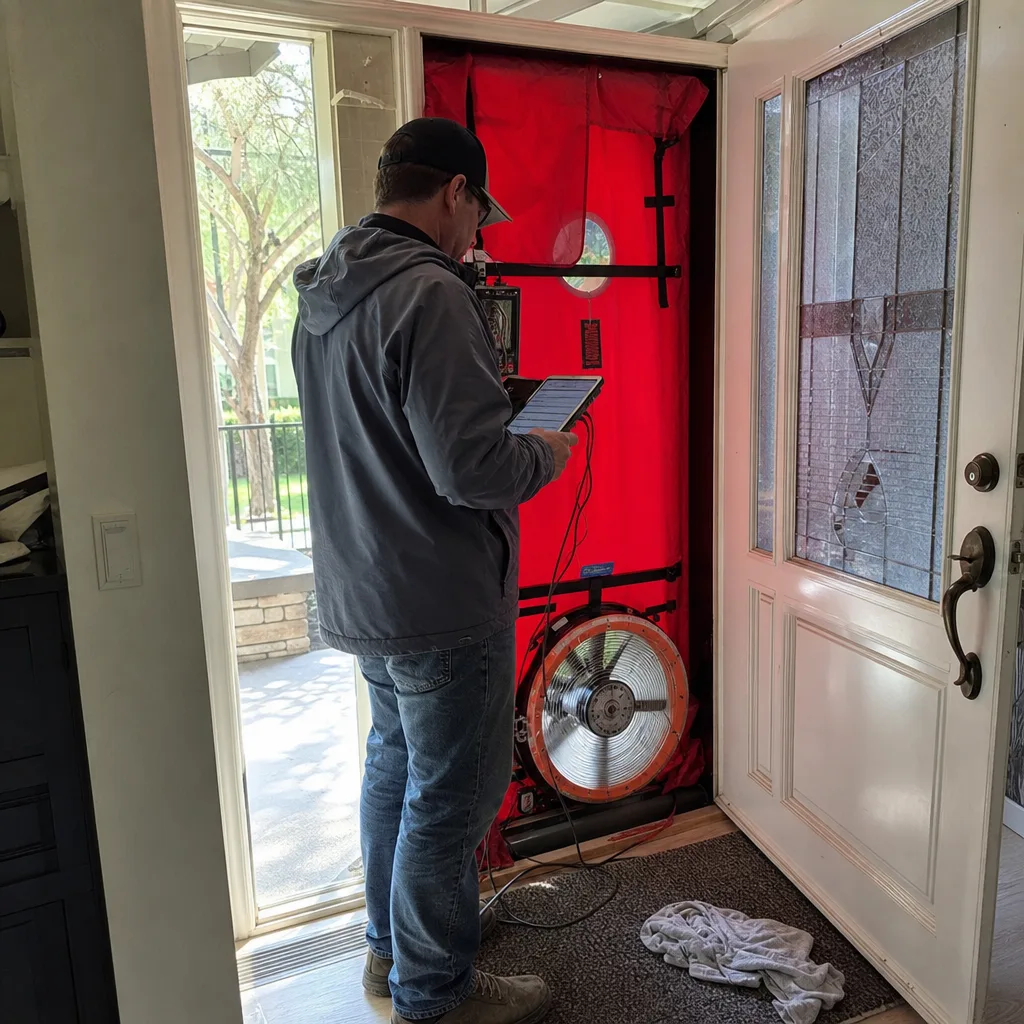
Before any wall insulation goes in on a job we’re running, we look at the top plates – the framing members at the ceiling line where the wall meets the attic floor – and the penetrations through the wall framing for electrical wiring, plumbing, and recessed fixtures. Those gaps can account for a significant fraction of a home’s total air leakage, and they exist in walls whether the wall cavity is insulated or not.
The order of operations matters: air seal first, then insulate. Blowing insulation over an unsealed wall assembly improves the R-value but doesn’t address the air movement carrying conditioned air out of the building. We won’t reverse that sequence on a job. It’s not a philosophical position – it’s that insulation that doesn’t perform to spec is insulation that generates callbacks, and we back every job with a 365-Day Done Right Promise.
If air sealing work is needed on your Lake Forest home, we scope it as a separate line item, explain what it involves, and show you the before-and-after blower-door numbers when the job is complete. You leave with documentation: the blower-door readings, the photo record of the work, and the written warranty. That’s what a completed job from Envelope Insulation Co. looks like.
FAQs: Wall Insulation Cost in Lake Forest
How much does it cost to insulate the walls of a 1,500 square foot home in Lake Forest?
A 1,500 sq ft single-story Lake Forest home typically has 750 to 1,000 sq ft of exterior wall cavity area. At current 2026 pricing, a dense-pack cellulose retrofit on that home runs $1,900 to $3,200 including drilling, insulation, and patch-and-paint. If you need injection foam instead of cellulose, expect $2,800 to $4,800. Those ranges assume standard stucco exterior, typical 2×4 framing, and one story. A two-story home of the same square footage adds roughly 30 to 40 percent more wall cavity area and adjusts cost accordingly. Call (657) 279-1249 for a written estimate specific to your address – we can usually provide a number within one visit.
Is it worth insulating walls in an older Lake Forest home that already has some insulation?
Often yes – but the answer depends on what’s actually in the walls now. Fiberglass batts installed in the 1980s and 1990s in Lake Forest frequently have voids, compression, or gaps that reduce effective R-value well below the labeled rating. A retrofit with dense-pack cellulose fills those voids and can meaningfully improve performance even in a wall that isn’t technically empty. The payback period in Lake Forest’s climate – where summer cooling loads are real – typically runs 6 to 10 years depending on the home’s current condition and energy use. We can assess what’s in your walls before quoting the work. That assessment is part of the free estimate process, not a separate charge.
How long does wall insulation installation take in a typical Lake Forest home?
A standard retrofit on a single-story Lake Forest home runs one to two days for a crew of two. That covers drilling, blowing, and patching. If the patch-and-paint work involves texture matching on stucco, the patch cures 24 hours before final paint, which adds a second visit for the finish coat. Larger homes or those with complex floor plans can extend to three days. We provide the schedule in writing before work starts – arrival time, expected completion, and any multi-day sequencing.
What’s the difference in cost between blown-in insulation and spray foam for walls in Lake Forest?
For a closed-cavity retrofit on an average Lake Forest home, blown-in dense-pack cellulose or fiberglass runs $1,500 to $3,500 total project cost. Injection foam for the same scope runs $3,000 to $6,000. Open-cell spray foam in an open-wall application (new construction or full remodel) runs $2,400 to $4,700. Closed-cell spray foam in the same application runs $5,400 to $9,400. The performance difference is meaningful: closed-cell foam delivers R-6 to R-7 per inch versus R-3.7 for cellulose, but for most Lake Forest 2×4 walls hitting R-13, cellulose gets you to the same destination at a lower cost. Spray foam makes the most sense when you need the vapor barrier function or when wall depth allows it to outperform blown-in materials on net. Call (657) 279-1249 and we’ll walk you through which spec makes sense for your walls specifically.
Does wall insulation require a permit in Lake Forest, CA?
Retrofit insulation blown into existing closed wall cavities generally does not require a building permit in Lake Forest under current City of Lake Forest building code interpretations – it’s treated as maintenance work rather than a structural or systems alteration. Open-wall insulation installed as part of a permitted remodel or addition is inspected as part of the broader permit scope, not as a standalone insulation permit. Air sealing work similarly does not typically trigger a standalone permit. That said, permit requirements can change, and if your project involves any structural modifications, electrical updates, or alterations to the building envelope beyond insulation, the broader scope may require permits. We’ll flag this in your written scope if it applies. When in doubt, the City of Lake Forest Community Development Department is the authoritative source.
What You Receive When the Job Is Done
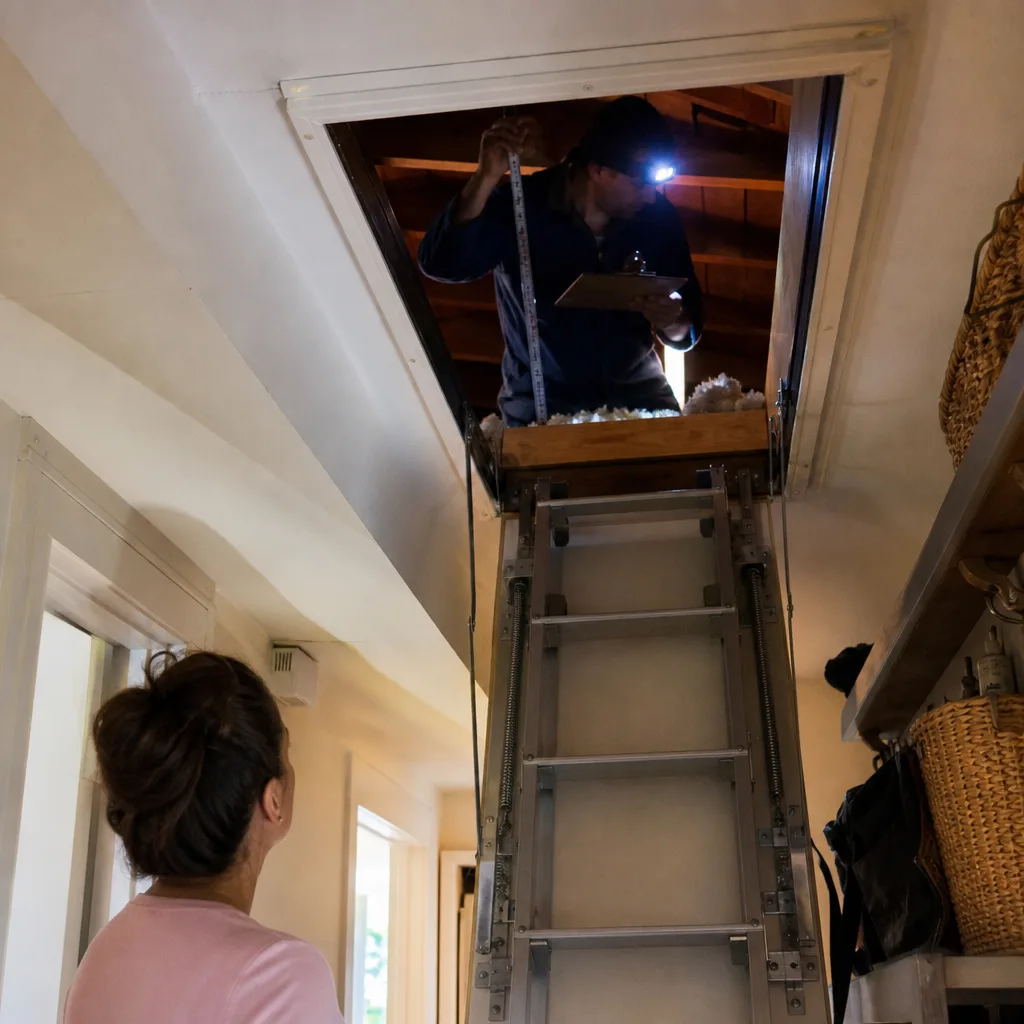
Before anyone shows up at your Lake Forest home, you have a written price and a written scope. Not a ballpark – a flat number that covers the work described. That’s Haven Standard Clause 1, and it applies to every job we run.
When the crew leaves, you have a Documented Photo Record showing the work completed – access points, material coverage, patch condition – and on any job where air sealing is in scope, you have before-and-after blower-door readings that show the actual change in your building envelope’s air leakage. That reading – expressed in CFM50, the volume of air moving through your envelope at 50 pascals of pressure – is the number that tells you whether the work performed to spec. We publish it because it’s the honest answer to “did this actually work?”
The 365-Day Done Right Promise backs every completed job. If something isn’t right within a year of completion, we make it right. That’s in writing too, delivered before work starts.
Wes Okafor leads the team at Envelope Insulation Co. and has been involved in building-envelope work in the Lake Forest area since the company’s founding in 2016. The standard of documentation and the sequence of work – seal first, then insulate, always with a written price – reflects what he’s seen happen when those steps get skipped. If you want to understand what’s in your walls and what it would take to fix it, that conversation starts with a free estimate and ends with numbers you can act on.
For more on what wall insulation work in this market involves, see our Wall Insulation in Lake Forest service page, or visit our home page for the full range of building-envelope services we offer.
Key Takeaways
- Most Lake Forest wall insulation projects cost $1,800 to $6,500 total; the middle range for a retrofit on a typical single-family home is $2,400 to $4,200.
- Dense-pack cellulose and dense-pack fiberglass are the standard closed-cavity retrofit materials for existing Lake Forest stucco homes; spray foam is the high-performance open-cavity option.
- Wall cavity area (not floor area) drives the material cost – a 1,800 sq ft home typically has 900 to 1,200 sq ft of exterior wall cavity.
- Stucco patching and texture matching adds $200 to $600 to most retrofit jobs and should appear as a line item in any written quote.
- Air sealing comes before insulation – always. Insulating without sealing first leaves air bypassing the insulation and reduces real-world performance.
- A written price before work starts isn’t optional at Envelope Insulation Co. – it’s how every job runs, under Haven Standard Clause 1.
- Before-and-after blower-door readings are provided on applicable jobs so you can verify the air-sealing result in a single number, not an estimate.
- The 365-Day Done Right Promise applies to all completed work – if it’s not right, we make it right.
Ready to Get a Real Number for Your Lake Forest Home?
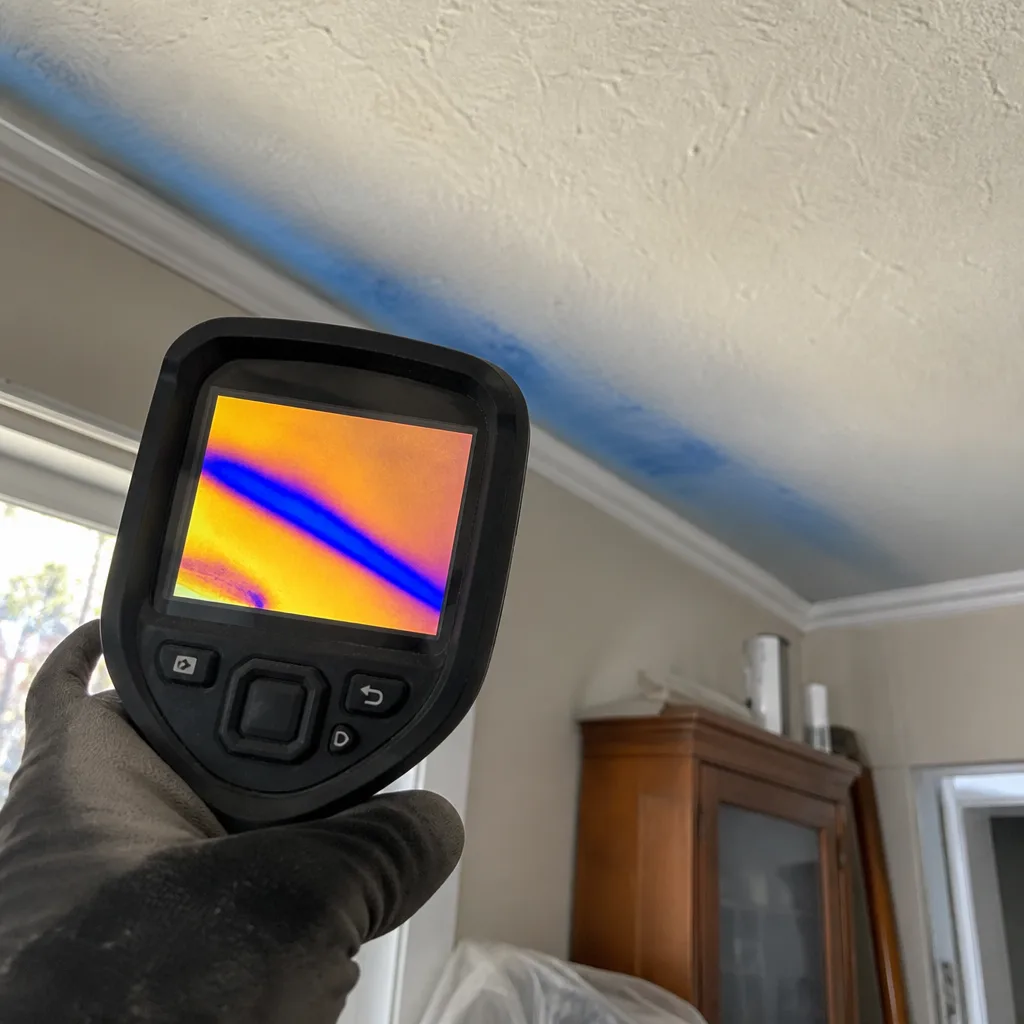
If you want to know what wall insulation will cost for your specific home in Lake Forest – not a national average, not a range too wide to be useful – call (657) 279-1249. We’ll schedule a free estimate, assess what’s in your walls, and give you a written price before any work starts. Wes Okafor and the team at Envelope Insulation Co. have been doing this work in Lake Forest since 2016, and the documentation you receive at the end of a job is the same standard we’d want if we were the ones writing the check.
Pricing reflects the Lake Forest market as of 2026. Topside Attic Insulation Lake Forest offers free estimates – call (657) 279-1249.
Written by Wes Okafor, Owner at Envelope Insulation Co., serving Lake Forest, CA since 2016.
What Our Customers Say
"The winter gas bill dropped by about a third. They had estimated a quarter, so they under-promised."
- Genevieve R."Two other companies quoted to blow more insulation on top of what was there. These were the only ones who said the existing material had to come out first, and explained why."
- Clifford E."They air-sealed the attic floor before insulating and showed me the blower-door number before and after. The upstairs is finally the same temperature as downstairs."
- Marisol D.