
How Much Does a Home Energy Audit Cost in Lake Forest?
A home energy audit in Lake Forest, CA typically runs between $250 and $650 for a standard diagnostic visit that includes a blower-door test, thermal imaging scan, and a written report. Homes over 2,500 square feet, or those with complex duct systems, crawl spaces, or multiple HVAC zones, often land closer to $500-$700. Most Lake Forest homeowners who schedule through a qualified contractor recoup that cost within the first season through utility savings alone – especially given Southern California Edison’s tiered rate structure, which penalizes homes with high baseline usage.
Home Energy Audit Cost Breakdown (2026)
A home energy audit in Lake Forest is not a single service – it’s a stack of diagnostic steps, and each one has a real cost attached. Here’s how the numbers break down for the 2026 market:
| Audit Component | Typical Cost Range (Lake Forest, 2026) | What It Tells You |
|---|---|---|
| Basic visual inspection only | $150 – $250 | Visible insulation gaps, obvious duct disconnects, accessible penetrations |
| Blower-door test (standalone) | $200 – $350 | Total air leakage rate in CFM50 – one number that quantifies envelope performance |
| Thermal imaging scan (IR camera) | $100 – $200 (add-on) | Cold/hot spots in walls, ceilings, and around can lights that are invisible to the naked eye |
| Duct leakage test (blower-door + duct pressurization) | $300 – $500 | How much conditioned air is lost through duct joints before it reaches the living space |
| Full diagnostic audit (blower-door + IR + duct + written report) | $400 – $650 | Complete picture: envelope losses, duct losses, insulation deficiencies, priority recommendations |
| Utility-rebate-compliant HERS audit | $500 – $900 | Required for certain SCE and SoCalGas rebate programs; produces a HERS rating score |
| Large home surcharge (3,500+ sq ft) | $75 – $200 added | Additional time for extra attic sections, multiple HVAC systems, crawl space access |
What pushes the price up in Lake Forest specifically: homes built in the 1970s-1990s tract developments along Aliso Creek Road and the older sections of El Toro often have spray-texture ceilings that hide bypasses around can lights, and those bypasses take longer to locate and document. Newer construction in the Portola Hills area tends to have better initial air barriers, but complex rooflines and cathedral ceilings add time to any IR scan. Homes with both an attic and a vented crawl space – less common in Lake Forest but present in some of the hillside lots near Whiting Ranch – require a second pressurization setup, which adds roughly $100-$150 to the base cost.
What pulls the price down: a straightforward single-story home under 1,800 square feet with a simple gable attic, no crawl space, and one HVAC zone is the easiest audit a technician will run. If you have recent duct work already sealed and tested, or if your home was built after 2006 under Title 24 Part 6 requirements, there’s less diagnostic ground to cover and less time on the clock.
What Affects Home Energy Audit Pricing in Lake Forest
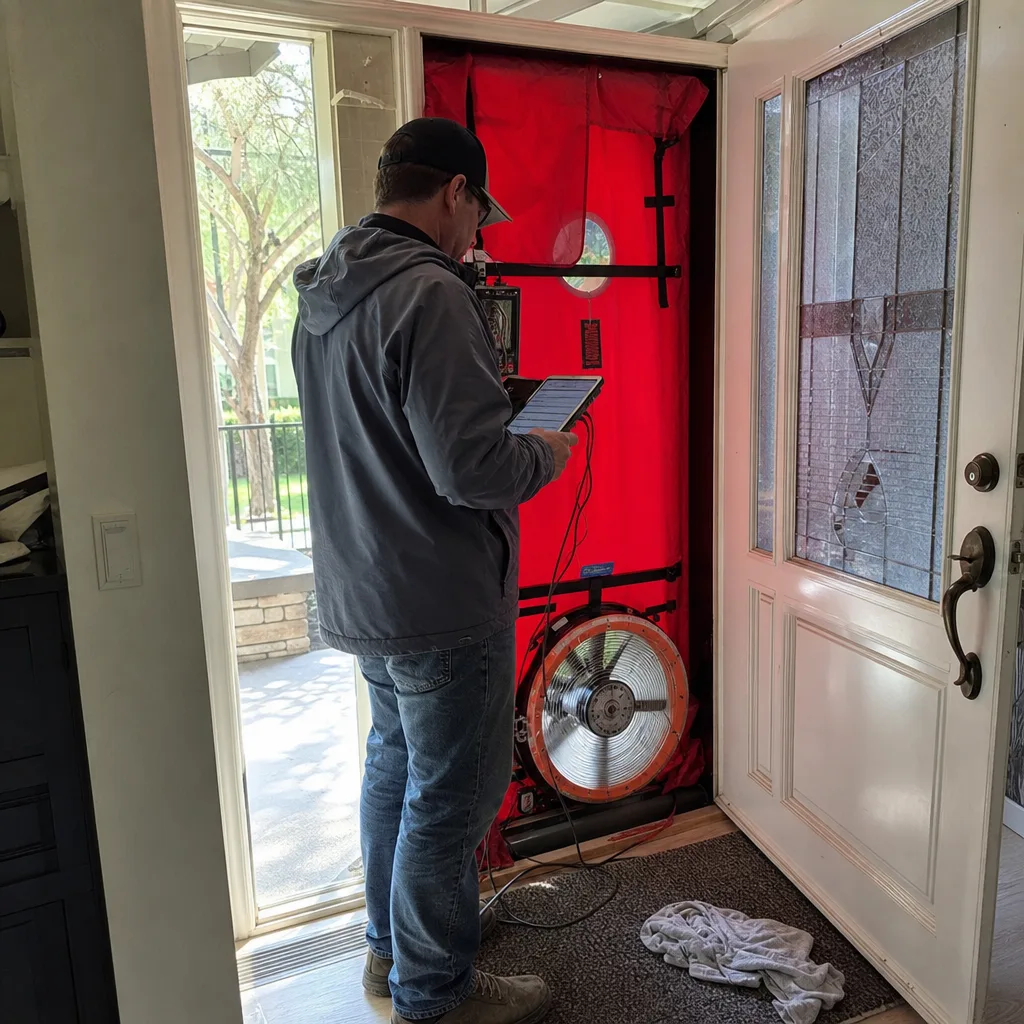
- Home size and square footage: The blower-door depressurization standard requires a technician to account for every accessible square foot of conditioned space. A 1,400-square-foot condo in Lake Forest’s Serrano Park area takes roughly 90 minutes to audit thoroughly. A 3,800-square-foot two-story in Foothill Ranch can take half a day. Time drives cost.
- Number of HVAC systems and duct zones: Lake Forest homes built in the late 1990s through the 2000s frequently have two-zone systems – one for each floor – which means two separate duct networks to pressurize and test. Each additional system adds setup time and, typically, $75-$150 to the duct-leakage portion of the audit.
- Attic type and accessibility: A clean, pull-down-stair attic with 30 inches of clearance is fast to inspect. A low-slope attic over a kitchen addition, or a partially finished bonus room with knee walls, can add significant crawling time. Some of the custom homes near Lake Forest Drive and the canyon-edge streets have hybrid roof systems that make thermal imaging harder to interpret – a detail that affects how long the reporting takes, not just the field visit.
- Southern California’s climate zone (IECC Zone 3B / CEC Zone 10): Lake Forest sits in a climate where summer attic temperatures regularly exceed 140-150°F and winter nights can drop into the mid-30s in the Saddleback Valley. That temperature swing means auditors are checking for cooling losses in summer and heating losses in winter, and a thorough written report addresses both – which takes more time than a single-season analysis.
- Rebate compliance requirements: If you intend to apply for a Southern California Edison Energy Upgrade California rebate or a SoCalGas rebate after completing insulation work, the audit may need to meet specific documentation standards, sometimes including a HERS Index rating. That compliance layer adds cost – typically $150-$300 above a standard diagnostic audit – but it also unlocks rebates that can offset a large share of your insulation project.
- Age and condition of existing insulation: Auditing a Lake Forest home with original 1980s fiberglass batts that have been disturbed by pest activity, HVAC technicians, or prior owner work takes longer to document than a clean attic. Rodent intrusion – a real issue in the brushland-adjacent neighborhoods near Whiting Ranch and Aliso and Wood Canyons – sometimes means the auditor needs to note contamination that affects both air-sealing access and insulation performance, which adds to report writing time.
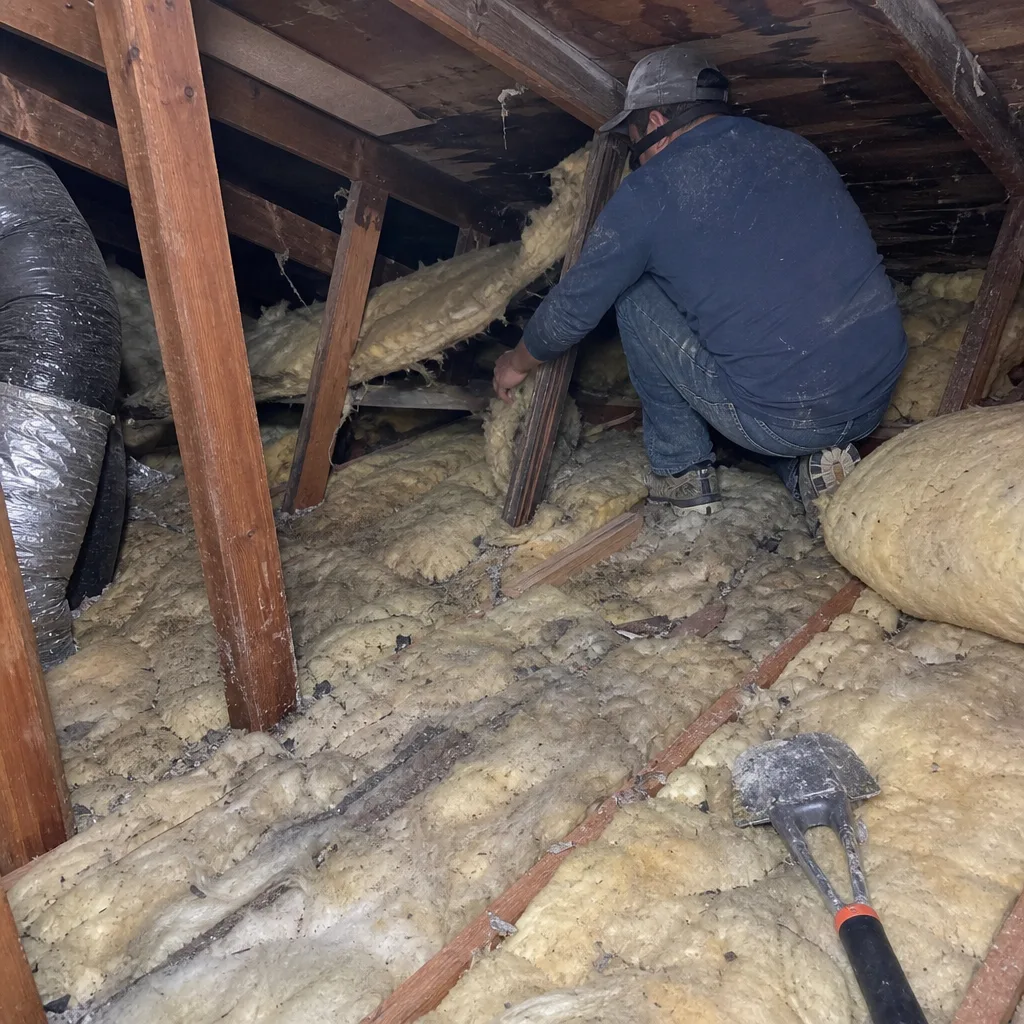 Before
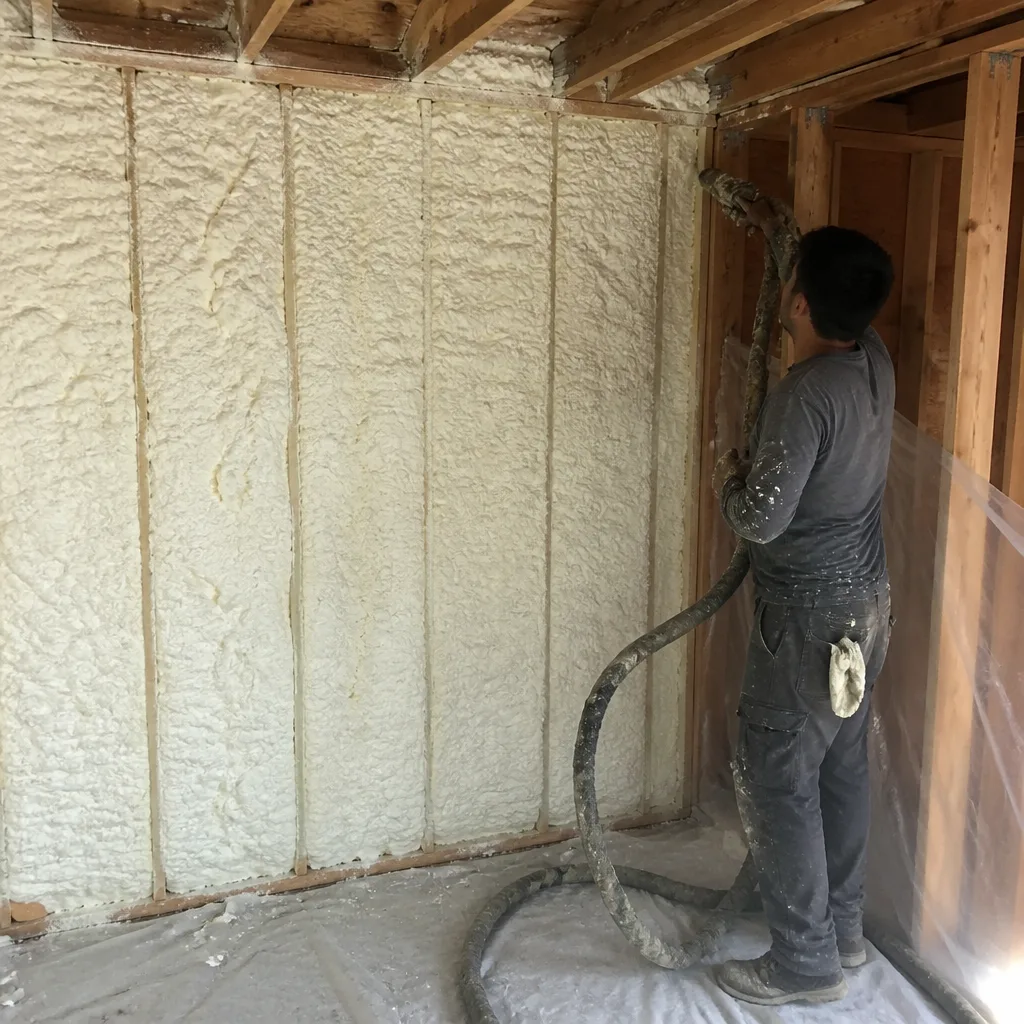 After
AfterWhat You Actually Get From a Home Energy Audit in Lake Forest
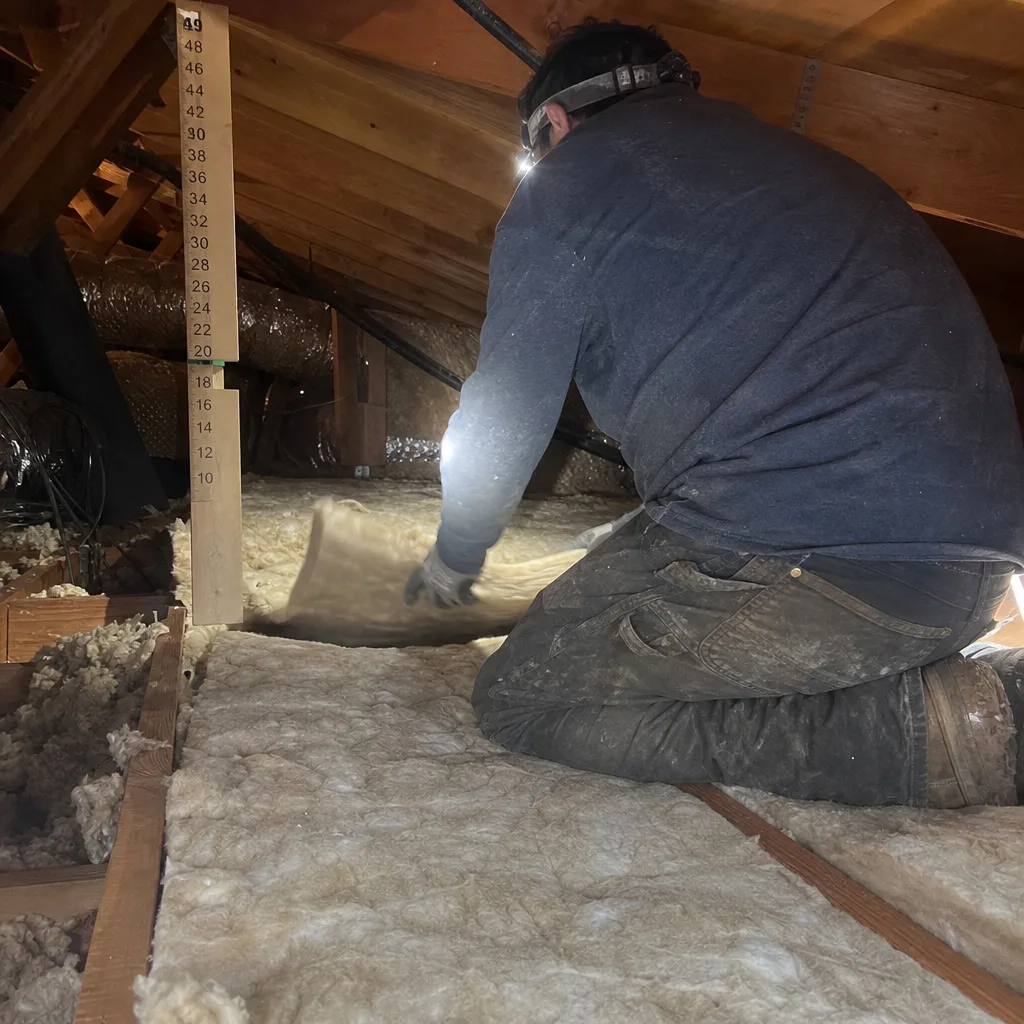
The dollar amount matters less when you understand what leaves with you after the visit. A properly run audit produces a written report that itemizes every significant air bypass, every insulation deficiency, and every duct loss point found – with measurements attached to each finding, not just descriptions. At Envelope Insulation Co., the technician’s visit closes with a Documented Photo Record, so you can see the exact locations of every finding rather than relying on a text description of a wall cavity you can’t see.
On any audit that includes a blower-door test, you receive before readings in CFM50 – cubic feet per minute at 50 Pascals of depressurization, which is the standardized number that tells you how much air your building envelope is losing. If you proceed with air-sealing work afterward, you get an after reading too, so the performance change is documented in the same unit, on the same scale. That’s not a marketing claim – it’s a measurement. A home that tested at 3,800 CFM50 before sealing and 1,950 CFM50 after has a documented, verifiable result that you can share with a future buyer, a utility rebate program, or a real estate appraiser who understands energy performance.
That matters in Lake Forest specifically because the resale market here – particularly in Foothill Ranch, Serrano, and the newer sections around Baker Ranch – has buyers who are increasingly asking for energy documentation the same way they ask for permits on additions. A written audit report with before-and-after numbers is something you keep in the home file.
For a full picture of what a diagnostic visit covers from our side, visit our Home Energy Audit in Lake Forest service page.
How to Save on a Home Energy Audit in Lake Forest
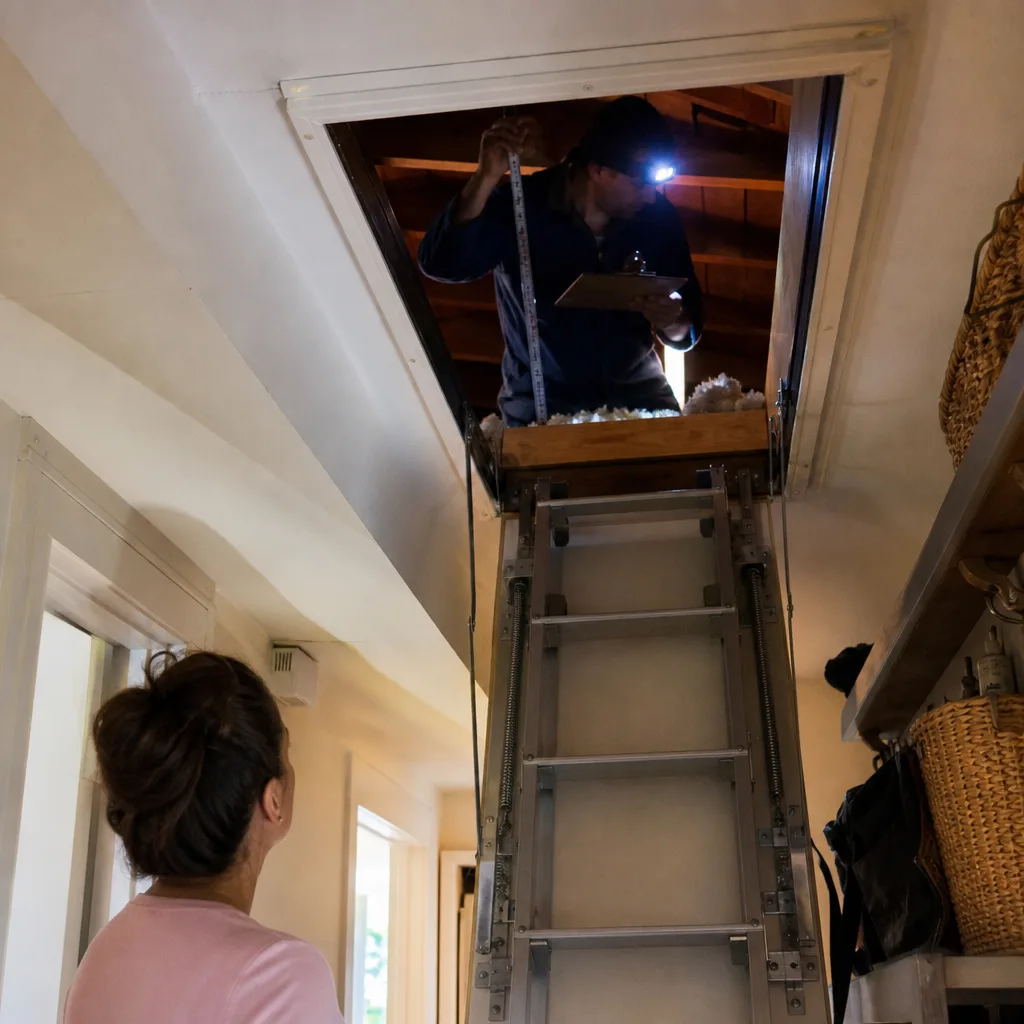
There are real ways to reduce what you pay for a Home Energy Audit in Lake Forest without cutting corners on what the audit actually covers.
Bundle the audit with a planned insulation project. Many Lake Forest homeowners schedule an audit, receive the written report, and then decide whether to proceed with insulation or air-sealing work. If you already know you’re going to address the attic – because your utility bills have been climbing or a prior inspector flagged thin insulation – some contractors, including Envelope Insulation Co., fold the audit findings into the project scope. The diagnostic work is completed, documented, and applied to the job rather than treated as a separate invoice.
Check SCE and SoCalGas rebate programs before scheduling. Southern California Edison’s Energy Upgrade California program has, at various points since 2016, offered rebates on both the audit and qualifying follow-on work. The rebate structure changes periodically, so the useful step is to check the current SCE rebate portal before you book – not after. A rebate-compliant audit costs more upfront but can return $100-$500 depending on the program cycle and what work follows.
Get a written scope before any audit starts. Under Haven Standard Clause 1, a written price before any work starts is non-negotiable at Envelope Insulation Co. That means you receive a flat price and a written scope before the technician lifts a tool. That written scope is also the document you can use to compare quotes from other contractors – and we offer a Free Second Opinion on any written estimate, so if you’ve received a competing quote, bring it to us and we’ll read it with you, line by line.
Target the right time of year. Lake Forest’s audit market is busiest in early summer (May-June) when homeowners first notice their June utility bills climbing, and in October before the heating season. Scheduling in late winter – February or March – typically means faster scheduling and occasionally better pricing from contractors who are moving into a slower season. A blower-door test works identically in February and July; there’s no performance advantage to auditing in one season versus another.
Ask what the audit report actually includes before booking. Some audit services in the Lake Forest area deliver a checklist. Others deliver a measured, photographed, written report with CFM50 readings, thermal images annotated with findings, and a priority-ranked recommendation list. The second type costs more and is worth more – particularly if you’re using it to plan a multi-phase improvement project or to document the home’s condition for a refinance or sale.
For a free estimate on an energy audit or a second opinion on a written quote you’ve already received, call us at (657) 279-1249 – a live person answers, no voicemail loop.
Lake Forest Energy Audit vs. Neighboring Cities: Context on Pricing
Prices for home energy audits in Orange County vary more than most homeowners expect. Lake Forest generally tracks with Mission Viejo and Rancho Santa Margarita for standard audits – homes of similar age, size, and construction type. Irvine tends to run slightly higher for full diagnostic audits because newer construction there often involves more complex mechanical systems and tighter initial envelopes that require more precise instrumentation to evaluate properly. Aliso Viejo and Laguna Hills are comparable to Lake Forest in most cases.
What makes Lake Forest slightly specific is the mix of construction eras: the El Toro corridor has homes from the 1970s and 1980s that were built before California’s Title 24 energy code took hold, meaning original insulation levels are frequently inadequate by current standards and air barriers are often nonexistent. Those homes tend to produce more findings per audit, which means the report is more complex and the follow-on work is more clearly justified. Foothill Ranch homes from the mid-1990s onward are better to start with but not necessarily well-maintained.
In practical terms: if a contractor quotes you $150 for a “full energy audit” in Lake Forest, ask exactly what equipment they’re using and what documentation you receive. A visual-only inspection at that price point is legitimate, but it is not the same service as a blower-door test with thermal imaging and a written report. The difference in what you learn – and what you can do with it – is significant.
What Happens After the Audit: Common Findings in Lake Forest Homes
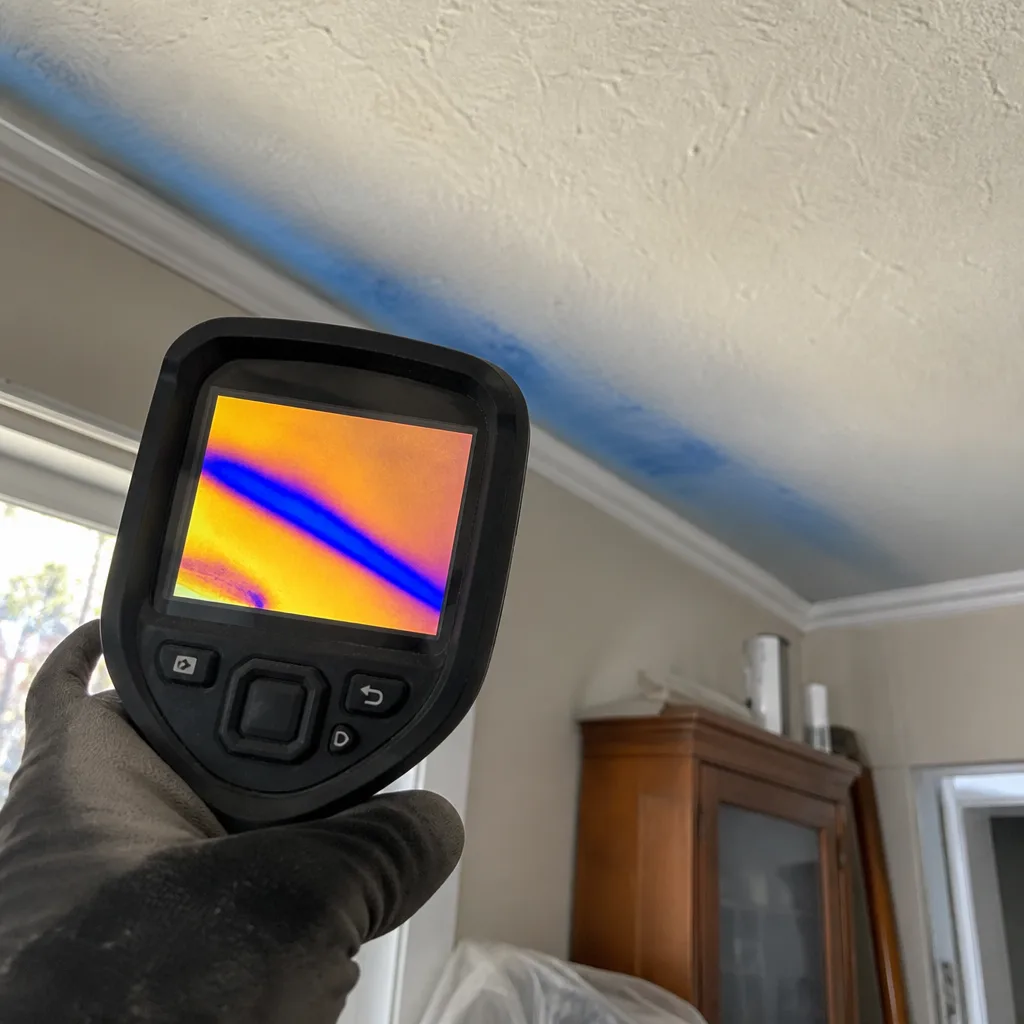
In our work across Lake Forest since 2016, certain patterns show up repeatedly. Knowing what auditors typically find here helps you understand why the audit costs what it costs – and why the findings usually justify the investment.
Can-light bypasses in 1990s-era ceilings: Recessed lighting installed before IC-rated, airtight fixtures became standard is one of the most consistent air-leakage sources in Lake Forest homes. Each can light that isn’t sealed is effectively a hole in the thermal envelope. A home with 20-30 can lights in the ceiling can be losing a measurable share of its conditioned air through them alone. These show clearly on a thermal camera and confirm on a blower-door test.
Top-plate bypasses at interior walls: Where interior partition walls meet the attic floor, there’s frequently a gap between the drywall and the framing that allows conditioned air to travel freely into the attic. This is an air-sealing problem, not an insulation problem – which is exactly why air sealing has to come first. At Envelope Insulation Co., we treat air sealing as a hard prerequisite: we won’t blow insulation over an unsealed attic floor, because covering bypasses with insulation doesn’t stop air movement – it hides it. The audit identifies these bypasses specifically so they can be addressed in the right sequence.
Duct leakage in garage-ceiling runs: In Lake Forest homes where the HVAC air handler is in the garage and ducts run through the ceiling into the living space, duct joints frequently leak into the garage rather than into rooms. This is a comfort problem – certain rooms never cool properly in July – and an efficiency problem, because you’re conditioning air that ends up in an unconditioned space. The duct pressurization test quantifies exactly how much.
Radiant heat load from the attic: Lake Forest’s summer sun loads are significant. An attic without a radiant barrier, or with one that’s installed incorrectly (shiny side facing the wrong direction, or pinned against the rafter so it can’t re-radiate), contributes meaningfully to cooling costs. The audit report will note radiant barrier condition and, where applicable, include it in the priority ranking for follow-on work.
The Audit-to-Project Sequence: How It Works at Envelope Insulation Co.
The audit is step one. What you do with it is step two. Those two steps are related but separate, and we keep them that way deliberately.
The audit produces a written report with findings, measurements, and a priority-ranked list of recommended work. Nothing in that report commits you to hiring us for anything. You own the report. You can take it to any contractor you choose, use it to apply for utility rebates, or file it in the home records. If you do decide to proceed with work through Envelope Insulation Co., the written price for that work – a flat price with a written scope and written warranty – comes before any crew shows up. That’s Haven Standard Clause 1, and it applies without exception.
When air sealing and insulation follow the audit, the job closes with before-and-after blower-door numbers, a Documented Photo Record of the completed work, and the 365-Day Done Right Promise in writing. If something isn’t done right within that 365-day window, we make it right – documented, written, no conditions attached.
For homeowners who want to understand the full scope of what home energy performance services look like – from audit through insulation through air sealing – that context helps make sense of why the audit is the right starting point rather than skipping straight to adding insulation.
FAQs: Home Energy Audit Cost in Lake Forest
How much does a home energy audit cost in Lake Forest, CA in 2026?
A standard home energy audit in Lake Forest runs between $250 and $650 for most single-family homes. That range covers a blower-door test, a thermal imaging scan, and a written report with findings and recommendations. A basic visual-only inspection starts closer to $150, and a full HERS-rated audit for utility rebate compliance can reach $700-$900 depending on home size and complexity. Call (657) 279-1249 for a free estimate specific to your home’s size and configuration.
Is a home energy audit worth the cost in Lake Forest?
For most Lake Forest homeowners, yes – particularly in homes built before 2000, which make up a significant portion of the housing stock in the El Toro corridor and the older sections near Aliso Creek Road. The audit identifies specific, measurable losses – in CFM50 for air leakage, in R-value for insulation deficiency, in percentage for duct leakage – rather than offering general advice. Homeowners who use the findings to prioritize air sealing and insulation work typically see SCE bill reductions of 15-30% in high-use months, and the audit report documents the home’s condition in a way that can support utility rebate applications and future resale disclosures. Call (657) 279-1249 if you’d like to talk through whether an audit makes sense for your specific situation before committing.
How long does a home energy audit take in Lake Forest?
A full diagnostic audit – blower-door test, thermal imaging, and duct pressurization – takes 2 to 4 hours for a typical Lake Forest home under 2,500 square feet. Larger homes, homes with multiple HVAC zones, or homes with both an attic and a crawl space can run 4-6 hours. The written report is typically delivered within 1-2 business days of the visit. Call (657) 279-1249 to get a time estimate for your specific home before you schedule.
Can I get a free home energy audit in Lake Forest?
Southern California Edison has offered free or subsidized audits through its Energy Upgrade California program at various points, and SoCalGas has similar programs. Availability changes with program cycles and funding, so the current SCE rebate portal is the right place to check first. Separately, Envelope Insulation Co. offers free estimates on audit and insulation work – that’s not the same as a full diagnostic audit, but it does include an on-site assessment of visible insulation conditions and a written price for recommended work. Call (657) 279-1249 for that visit.
What’s the difference between a home energy audit and an insulation inspection?
An insulation inspection is a subset of what a full energy audit covers. An audit includes pressurized air leakage testing (blower-door), duct leakage testing, thermal imaging, and a complete written report – it measures losses you cannot see with a visual inspection alone. An insulation inspection evaluates what’s present, where gaps exist, and what the approximate R-value is, but it does not measure how much air the building envelope is actually losing. For Lake Forest homes where air leakage is frequently a larger loss than insulation deficiency, skipping the blower-door test means the report can’t tell you whether adding insulation will actually solve your comfort or efficiency problem. Call (657) 279-1249 to discuss which type of assessment fits your situation and budget.
Key Takeaways: Home Energy Audit Cost in Lake Forest (2026)
- Standard full diagnostic audit in Lake Forest: $250-$650 for most homes under 2,500 square feet.
- Blower-door test alone: $200-$350; thermal imaging add-on: $100-$200.
- HERS-rated audit for utility rebate compliance: $500-$900 depending on home size.
- Homes in the El Toro corridor (pre-2000 construction) tend to produce more findings per audit – which means more actionable recommendations.
- Air sealing must come before insulation; the audit identifies the specific bypass locations that determine the correct sequence of work.
- Every audit from Envelope Insulation Co. closes with a Documented Photo Record and, when a blower-door test is included, before readings in CFM50.
- A Written Price Before Any Work Starts applies to all follow-on work – no exceptions under Haven Standard Clause 1.
- The 365-Day Done Right Promise covers all completed work in writing.
If you want a direct, written estimate for a home energy audit in Lake Forest – or a second opinion on a written quote you’ve already received – call Envelope Insulation Co. at (657) 279-1249. A live person answers. You’ll get a named technician, a confirmed time, and a written price before anyone arrives.
Written by Wes Okafor, Owner at Envelope Insulation Co., serving Lake Forest since 2016.
Pricing reflects the Lake Forest market as of 2026. Topside Attic Insulation Lake Forest offers free estimates – call (657) 279-1249.
What Our Customers Say
"They photographed rodent damage in the old insulation that we had no idea about, and priced the exclusion work separately so we could decide."
- Harriet N."The winter gas bill dropped by about a third. They had estimated a quarter, so they under-promised."
- Genevieve R."Two other companies quoted to blow more insulation on top of what was there. These were the only ones who said the existing material had to come out first, and explained why."
- Clifford E.