
Johns Manville Radiant Barrier Installation: The Lake Forest Owner’s Guide
We stock and install Johns Manville-compatible radiant barrier systems in Lake Forest, with most attic retrofits running $1,800 to $3,400 depending on roof pitch and square footage. Same-day installation is available when we have your roof configuration on file from a prior energy audit or site visit. Most Lake Forest homeowners discover their radiant barrier is failing when the upstairs bedrooms won’t cool below 78 degrees even after the AC runs continuously, or when their summer electric bill jumps 30% or more against the prior year.
Which Johns Manville Models This Applies To
Johns Manville produces radiant barrier products across several product lines, and matching the correct material to your existing system matters for warranty continuity and fire-code compliance. The JM AP Foil-Faced Polyiso line, commonly found in Lake Forest homes built between 2004 and 2018, uses a foil facing rated for Class A interior finish; the facing can delaminate from the polyiso core if attic temperatures exceed 180°F repeatedly, which happens more than you’d think in south-facing attics above the Baker Ranch and Portola Hills areas during August and September. The JM Formaldehyde-free fiberglass batt with radiant barrier facing is a different animal entirely, designed for wall cavities rather than attic rafter applications, and we’ve found it misinstalled in at least a dozen Lake Forest attics where a previous contractor treated all reflective-faced insulation as interchangeable.
To identify what you have, check the printed product code on the foil facing, usually visible at the attic hatch or where a section has pulled loose. The code format is JM-XXXX-YY, where the last two digits indicate the facing weight and temperature rating. We stock both the OEM foil facing replacement rolls and the full polyiso replacement boards on our truck; for older JM systems where the product line has been discontinued, we source equivalent aftermarket barrier material from Reflectix that meets the same ASTM C1313 emissivity standard, which is the spec that actually governs performance, not the brand name on the roll.
Signs Your Johns Manville Radiant Barrier Installation Is Failing
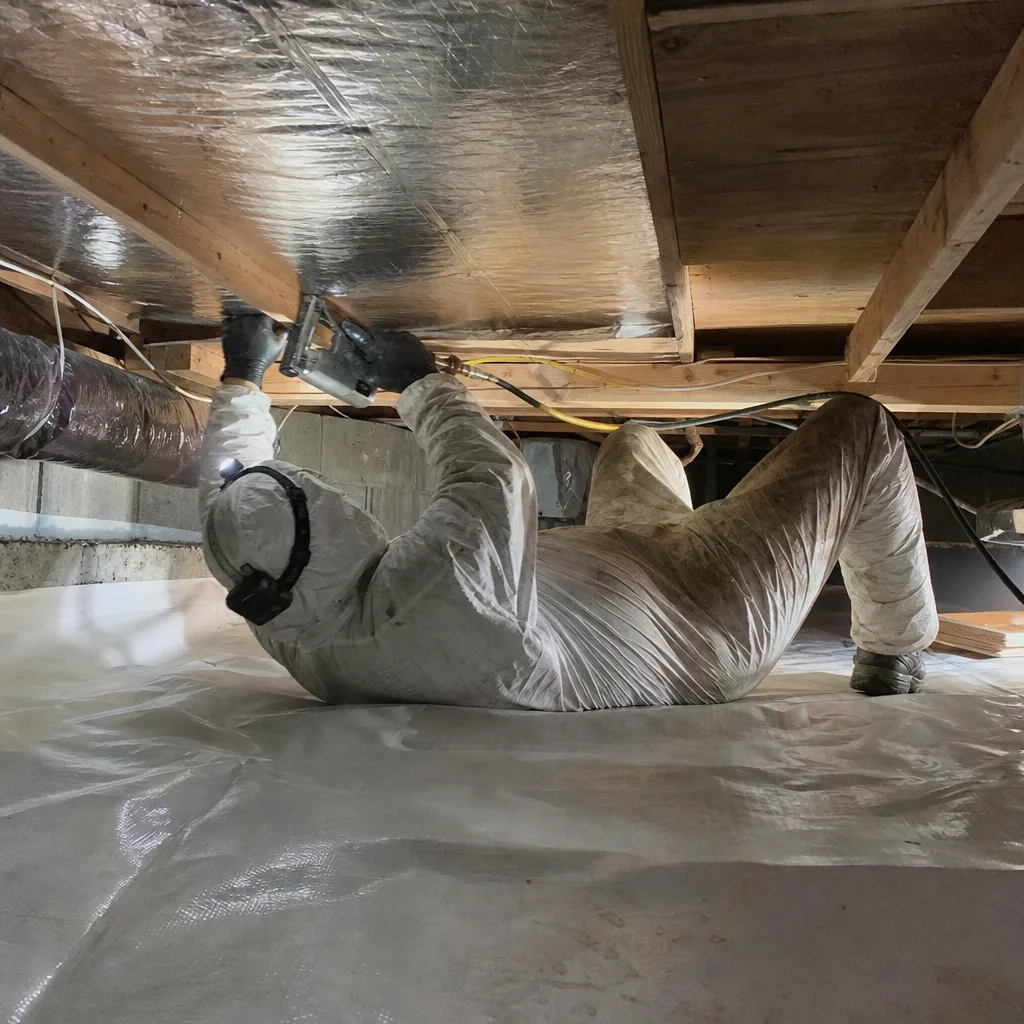
- Upstairs rooms run 8-12 degrees hotter than downstairs by mid-afternoon. This temperature stratification happens when the radiant barrier’s emissivity has degraded above 0.10, meaning it no longer reflects infrared heat back toward the roof deck. In Lake Forest’s inland climate, where roof surface temperatures regularly hit 160°F, a failing barrier dumps that heat straight into conditioned space.
- Your summer electric bill has climbed 25-40% year-over-year with no rate change. The AC compressor runs longer cycles to overcome radiant heat gain that the barrier used to block. We’ve measured attic heat flux increases of 35% in Foothill Ranch homes where the foil facing had oxidized to a dull gray.
- You see dust accumulation on the barrier surface that won’t wipe clean. This indicates the foil facing has begun to corrode or delaminate, creating microscopic pores that trap particles. Clean foil should wipe to a mirror finish; persistent dulling means the reflective layer is compromised.
- Sections of barrier have pulled loose from rafters or show sagging between fasteners. JM’s original staple-tabs can fatigue after 10-15 years of thermal cycling, especially in attics with poor ventilation. A sagging barrier creates an air gap on the wrong side, converting a reflective system into a convective heat trap.
- Moisture staining appears on the ceiling drywall below the barrier. This is the serious one. A compromised barrier can create localized cold spots where attic humidity condenses against the ceiling plane. In Lake Forest’s occasional winter marine layer intrusions, we’ve seen this lead to mold amplification within one season.
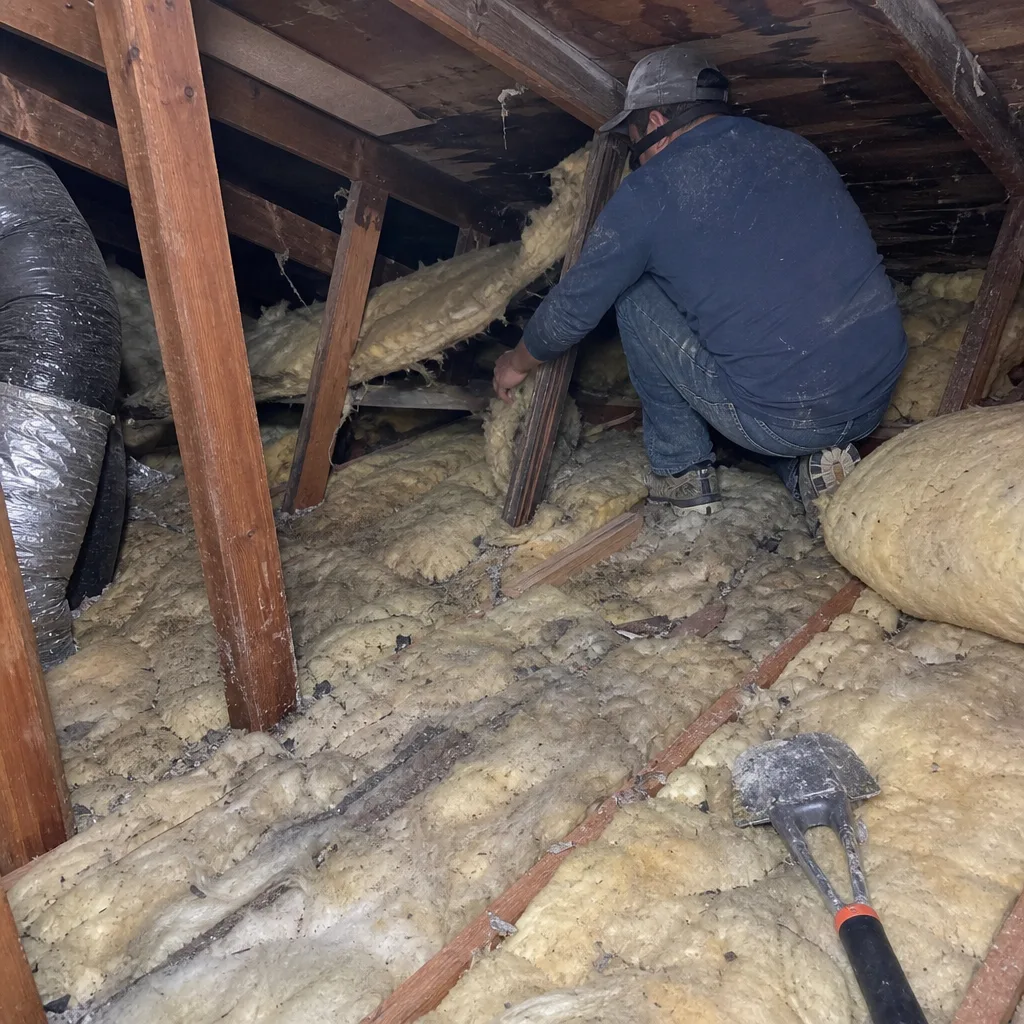 Before
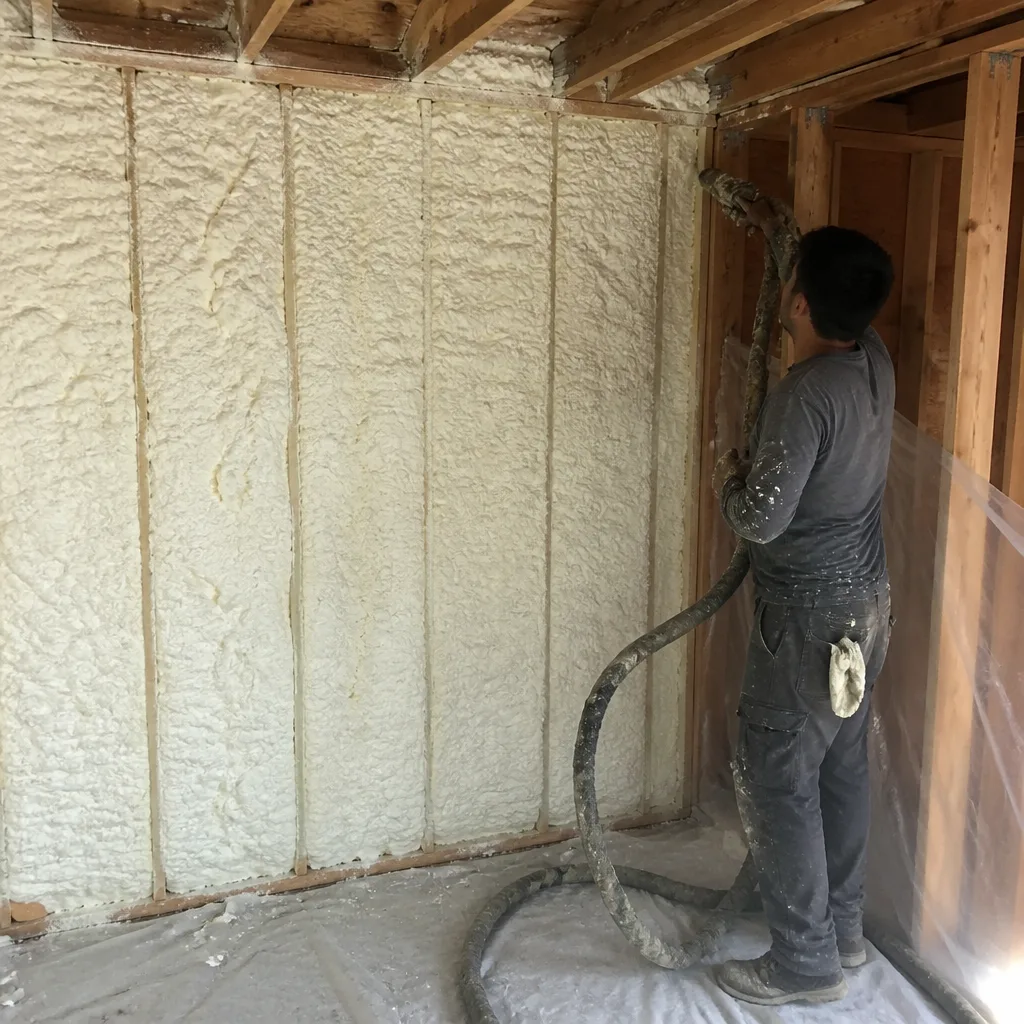 After
AfterReplacement Cost & What’s Included
Most Johns Manville radiant barrier replacements in Lake Forest run $1,800 to $3,400 for attics between 1,200 and 2,800 square feet of floor area. The lower end covers straightforward retrofits with good attic access, minimal obstructions, and intact existing insulation that doesn’t require disturbance. The upper end applies to steep-pitch roofs above 8/12, attics with limited hatch access requiring temporary platform installation, or jobs where we must remove degraded blown-in cellulose before the barrier can be properly fastened.
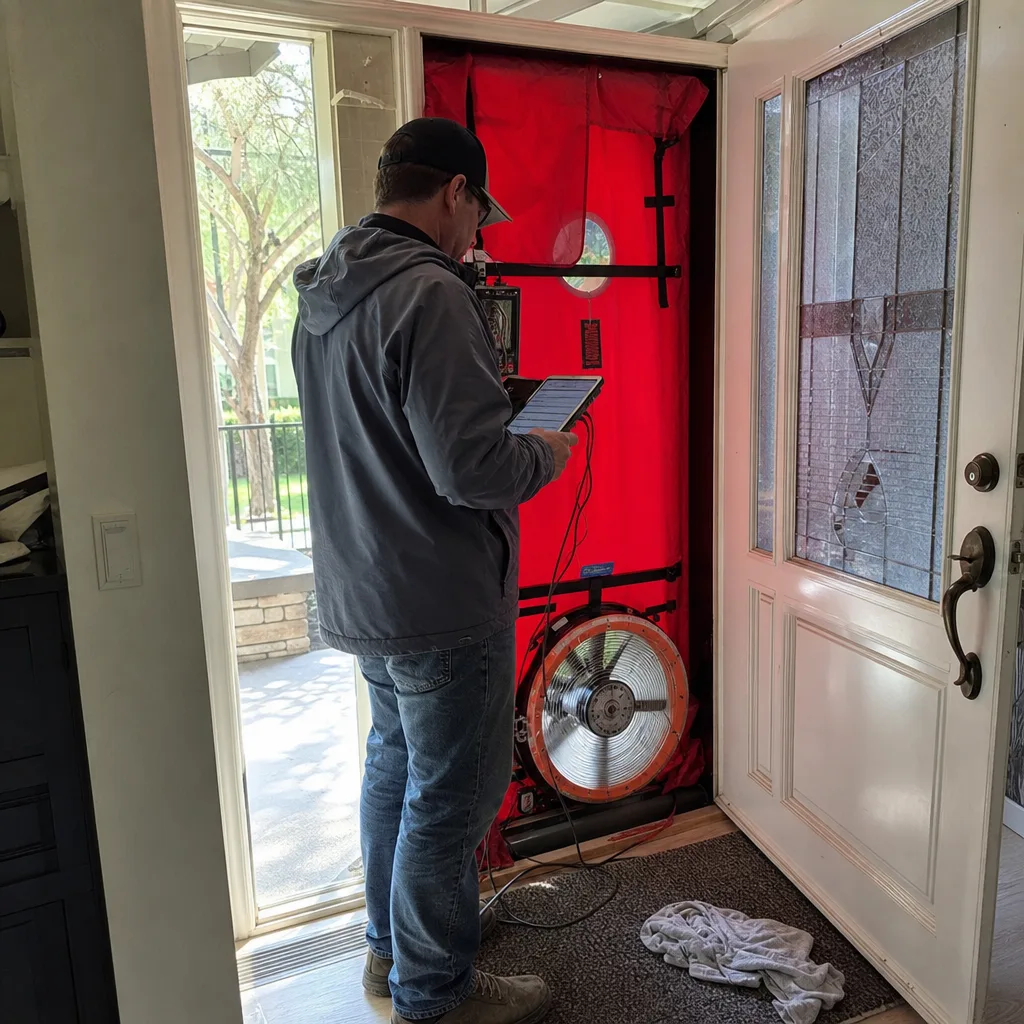
That price includes the barrier material, all fasteners and sealing tape rated for high-temperature attic exposure, labor, and our post-installation documentation package. We do not quote by the square foot over the phone; every Lake Forest job gets a site visit where we measure actual rafter spacing, check for existing air bypasses around chimney chases and top plates, and deliver a written price before any work starts. Under Haven Standard Clause 1, that written price is flat, not estimated, and includes our 365-Day Done Right Promise. Applicable jobs also receive before-and-after blower-door readings so you can verify we didn’t just hang foil and leave the air leaks untouched.
DIY or Call Us?
There’s no high-tension spring or electrical hazard in radiant barrier work, but there are genuine risks that DIYers consistently underestimate. Attic heat exhaustion is real; we’ve found homeowners who started at 7 AM and were nauseous by 9:30 in a Lake Forest attic in July. More critically, stepping through ceiling drywall is the most common injury we see, and it happens when someone misjudges joist spacing while focused on fastening overhead.
What you can safely check: confirm the product code on your existing barrier, photograph any sagging or staining from the attic hatch without entering, and verify your attic ventilation intake isn’t blocked by insulation at the soffits. What goes wrong with DIY installs: improper fastener spacing that lets the barrier flutter and fatigue, gaps at valleys and hips that create thermal bypasses, and the nearly universal mistake of installing barrier over unsealed air leaks, which pressurizes the attic with conditioned air and can actually increase your cooling load. Seal the bypasses first. Then insulate. The R-value on the bag means nothing if the air has somewhere else to go. If you want it done with the bypasses sealed and the numbers to prove it, call us at (657) 279-1249.
FAQs
In Lake Forest’s climate, a properly installed JM radiant barrier should perform for 15 to 25 years before emissivity degradation becomes measurable. The foil facing on the AP Foil-Faced line typically shows functional decline around year 18 in south-facing attics with poor ventilation; we’ve documented this with thermal imaging in homes near Lake Forest’s Orchard Hills development. Call (657) 279-1249 if you’re unsure whether yours has reached end of life, estimates are free.
Localized patching is possible if less than 15% of the surface area is compromised and the remaining facing tests below 0.10 emissivity with a handheld meter. In practice, by the time Lake Forest homeowners call us, the degradation is generalized across the attic due to the uniform thermal stress of our inland-sun climate. Patching also leaves seam transitions that can become future failure points. Call (657) 279-1249 and we’ll test what you have, no charge for the assessment.
Most residential radiant barrier replacements in Lake Forest are completed in one working day, typically 4 to 7 hours depending on attic square footage and whether air sealing of top plates and penetrations is included. We won’t skip the sealing to save time; it’s built into our scope on every job. Same-day installation is available when we have your roof configuration documented from a prior visit. Call (657) 279-1249 to check availability.
We stock JM-compatible foil-faced polyiso boards, standalone radiant barrier rolls meeting ASTM C1313, and the high-temperature fastening hardware specific to attic installations. For discontinued JM product lines, we carry Reflectix equivalent material that matches the thermal performance spec. We do not stock every JM SKU; if your system requires a specific discontinued facing weight, we can typically source it within 48 hours. Call (657) 279-1249 with your product code and we’ll confirm what we have on the truck today.
Topside Attic Insulation Lake Forest is an independent service provider and is not affiliated with or authorized by Johns Manville Corporation. We source materials from multiple manufacturers including Johns Manville, Reflectix, Owens Corning, and Knauf based on performance specifications and availability.
Ready to get your attic performance back? Call (657) 279-1249 for a free estimate. We’ll measure your actual attic conditions, deliver a written price before any work starts, and leave you with the documentation that proves what changed.
Written by Wes Okafor, Owner, Topside Attic Insulation Lake Forest at Topside Attic Insulation Lake Forest, serving Lake Forest and nearby areas.