
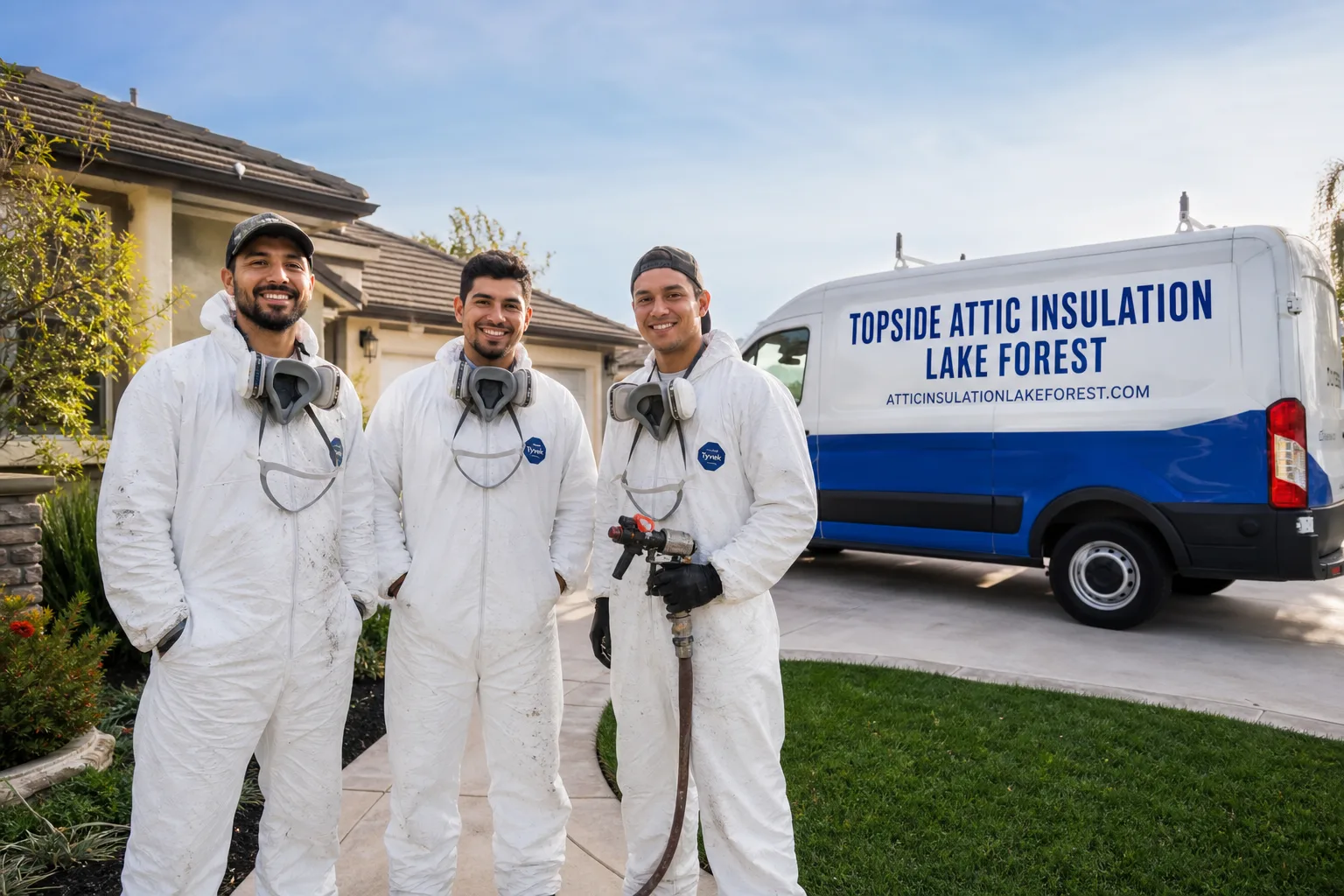
Fast, Reliable Blown-In Insulation Across Tustin
Blown-in insulation in Tustin typically runs $1,800-$4,500 for a standard attic, with dense-pack wall work in Old Town bungalows starting around $2,400. Most jobs are completed in a single day, and we dispatch crews to Tustin from our Los Angeles office with same-week availability. Call (657) 279-1249 for a written price before any work starts.
We’ve worked in Tustin long enough to know the city isn’t one housing market - it’s two. Old Town’s pre-1950 craftsman bungalows with plaster over lath and zero wall insulation sit barely two miles from Tustin Ranch’s 1989-1995 stucco tracts with settled fiberglass batts and unsealed recessed cans. That split drives every estimate we write here. Our Blown-In Insulation team treats both eras differently because the building science demands it.
Why Topside Attic Insulation Lake Forest Is Tustin’s Preferred Blown-In Insulation Company
We’ve sealed and insulated over 9,000 homes since 2016, and a measurable share of them have been in Tustin - from the 1920s Victorians near Main Street to the production tracts off Jamboree and Irvine Boulevard. Tustin homeowners leave reviews that mention the same thing: we show the blower-door numbers, not just promise them.
Our response time to Tustin is typically same-week, with emergency scheduling available when attic temperatures are spiking Edison bills into the mid-summer red zone. Dispatch is coordinated from our Los Angeles office, but the crew that arrives at your door knows Tustin’s permit requirements, its two-generation housing stock, and the specific failure patterns that show up in each zone.
Under Haven Standard: Arrive on schedule, you get a named technician and a text when they are on the way. Every job closes with a Documented Photo Record and, on applicable work, before-and-after blower-door readings. The 365-Day Done Right Promise applies to all completed work.
Our Blown-In Insulation Services in Tustin
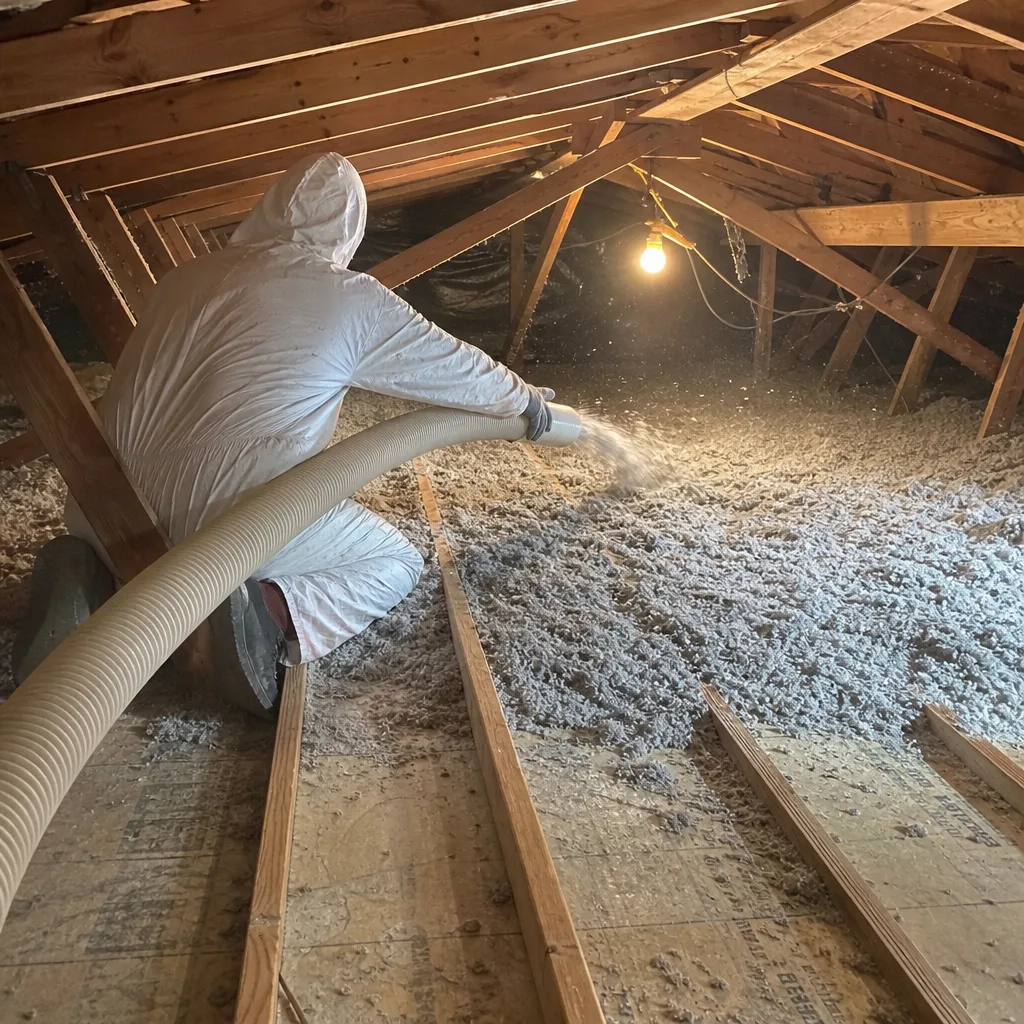
Blown-In Cellulose
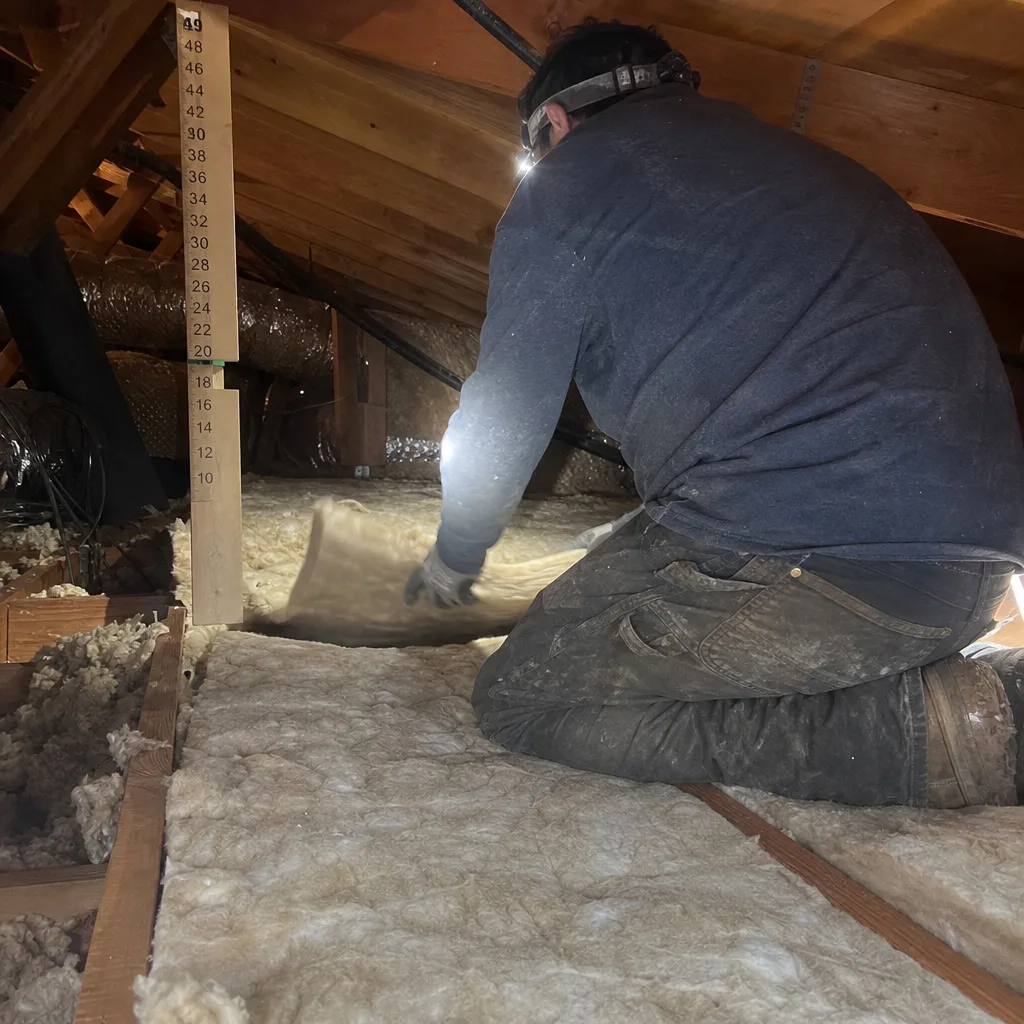
We use GreenFiber cellulose for Tustin Ranch retrofits where settled R-19 batts need topping toward current Title 24 2022 targets. Cellulose packs well around irregular joist bays and carries a higher recycled content than fiberglass alternatives. In a 1992 Tustin Ranch tract home off the Irvine Boulevard corridor, our crew blew in GreenFiber cellulose to top the settled R-19 batts back toward current Title 24 2022 targets, but only after installing air-sealing boots on eight unsealed recessed can lights that had been dumping conditioned air straight into the 145°F attic since the house was built. The homeowner reported the thermal swing between afternoon and overnight finally stopped showing up as a monthly Edison spike, and we used Owens Corning and Knauf blown-in on other stops nearby that same week.
Blown-In Fiberglass
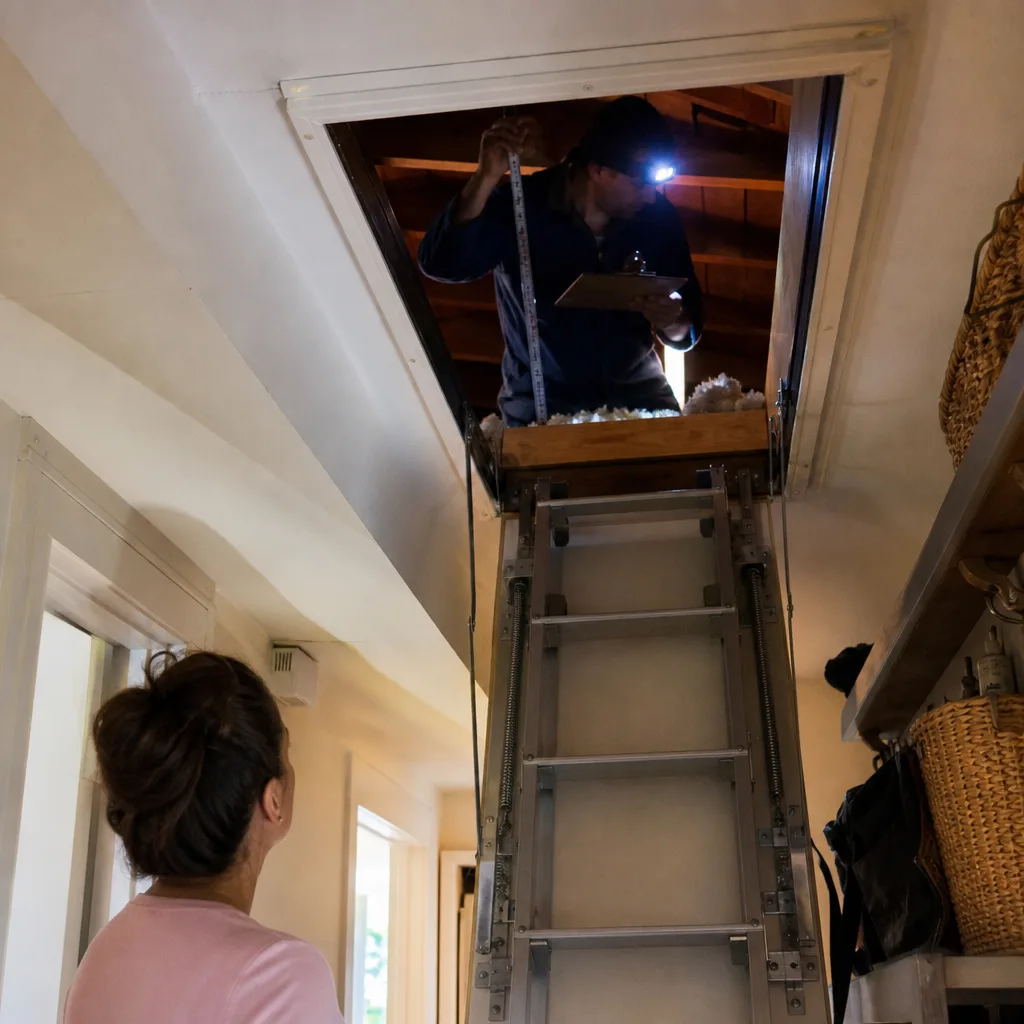
Fiberglass works well in Tustin Legacy’s mid-2000s construction where existing insulation meets older Title 24 benchmarks but falls short of 2022 requirements. We source from Owens Corning and Knauf, blowing to precise depth markers so homeowners can verify coverage during final walkthrough. The material doesn’t settle as aggressively as cellulose, which matters in Tustin’s 140°F summer attics where compression reduces R-value over time.
Dense-Pack Wall Insulation
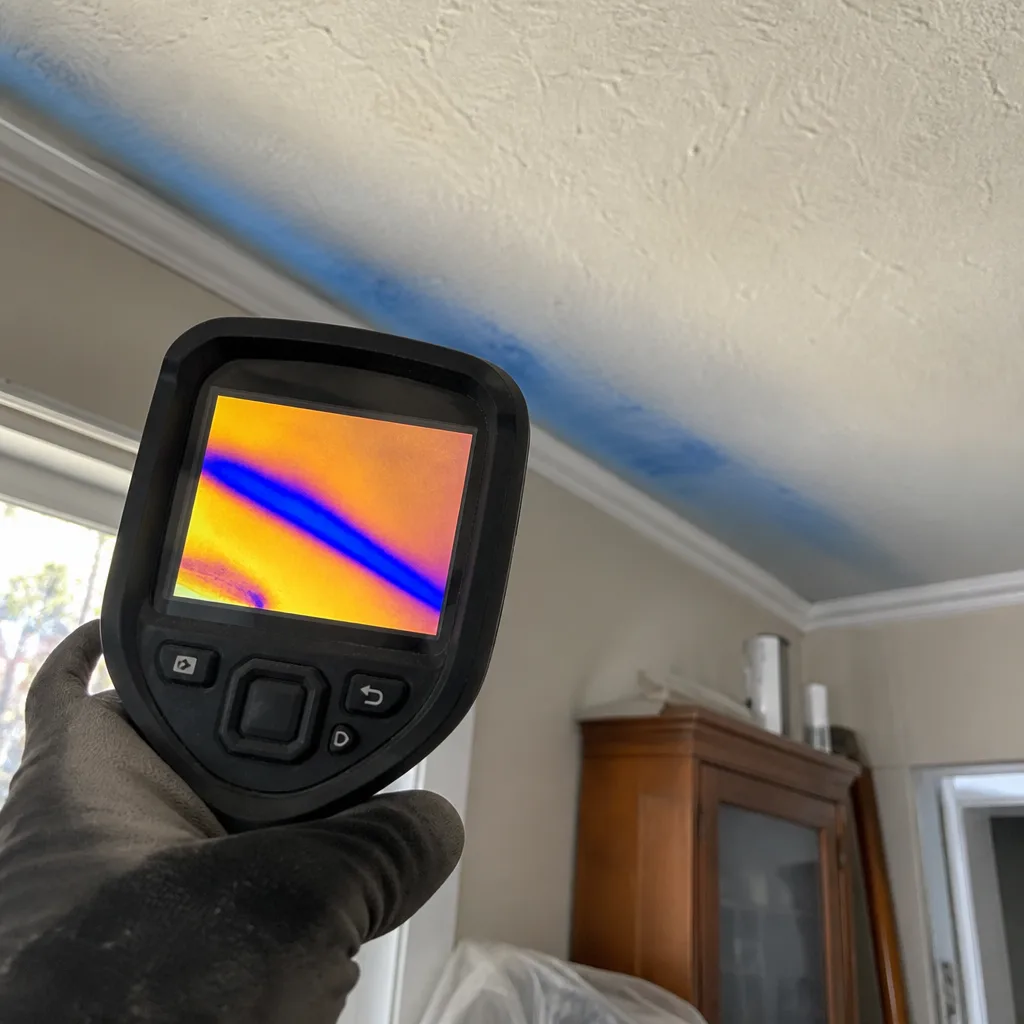
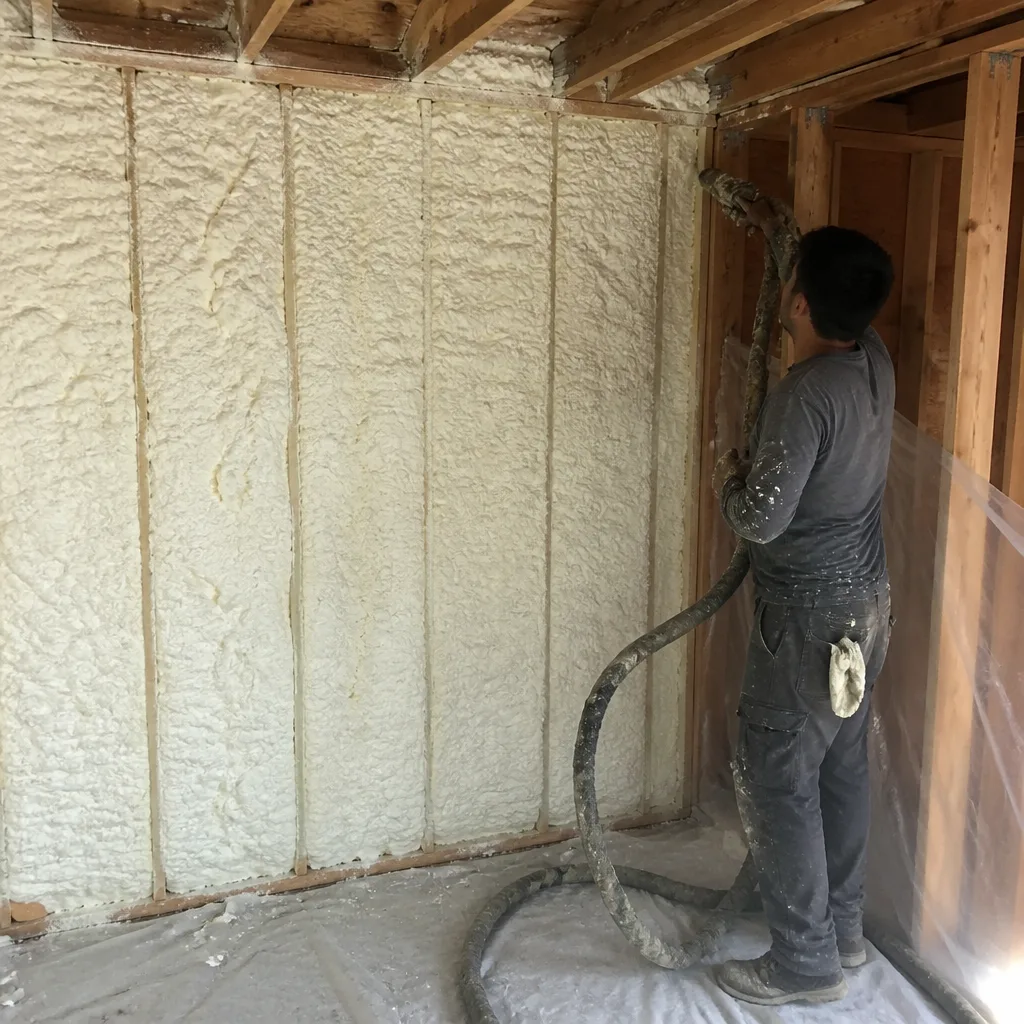
Old Town Tustin’s pre-1950 bungalows with plaster-over-lath walls can’t take a blown-in attic top-off and call the job done. These homes have zero wall cavity insulation, and dense-pack cellulose or fiberglass is the only path that actually closes the envelope. We drill strategic access points, pack the cavity to 3.5 pounds per cubic foot for cellulose, and patch with matching texture. It’s slower work than attic blowing. It’s also the only method that stops the thermal bleed these homeowners feel as drafts in winter and wall heat in summer.
Blown-In Top-Up
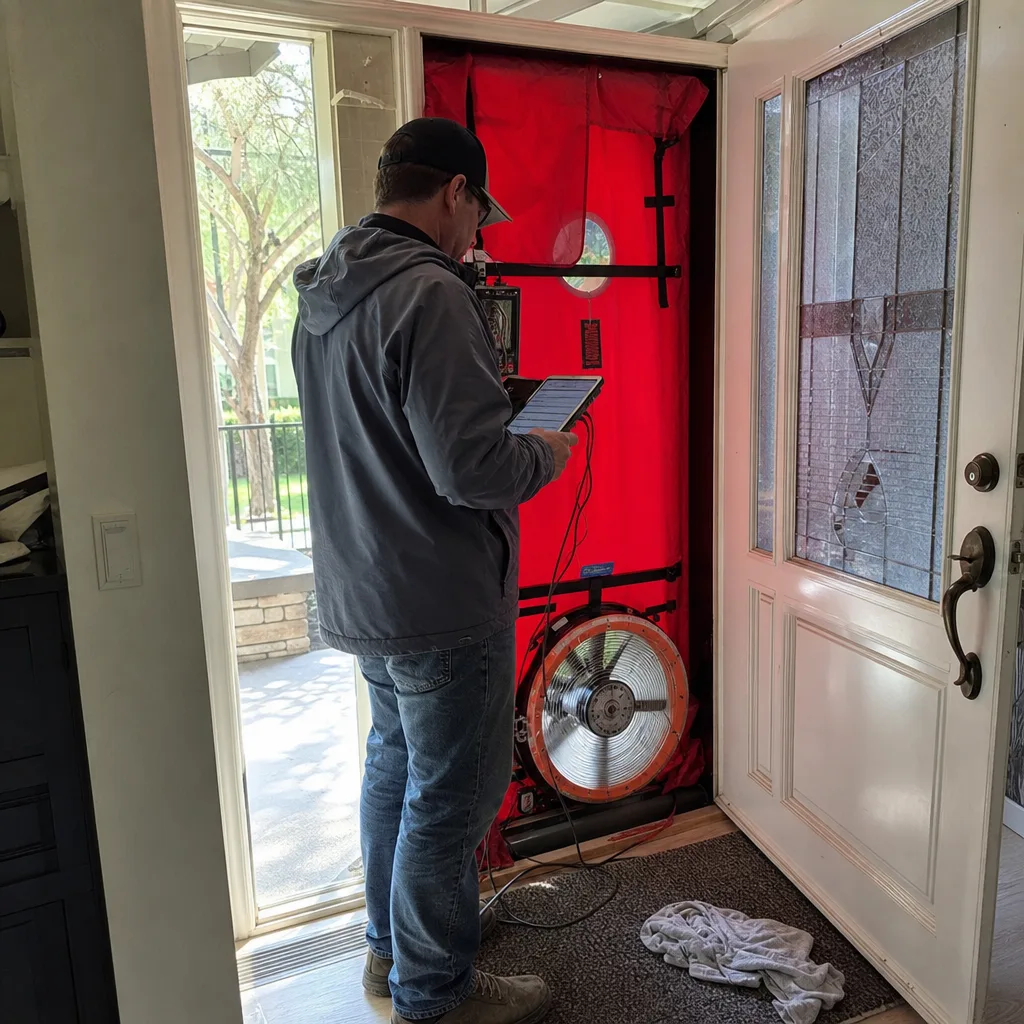
The most common call we get in Tustin Ranch: “Can you just add more on top?” Sometimes, after sealing. Never before. A blown-in top-up over unsealed top plates, eave bays, and can-light penetrations bridges gaps without closing them. We air-seal first - top plates, can lights, penetrations, chimney chases - then blow to the depth that hits your target R-value. The result shows up on the blower-door test and, a month later, on your Edison bill.
What happens when you call
- 1
A real person answersNo phone trees - you reach a local pro.
- 2
You get an upfront price rangeHonest numbers before anyone is dispatched.
- 3
A background-checked tech heads outLicensed & insured, dispatched right away.
- 4
You approve before work beginsNothing starts until you say go.
 Before
 After
AfterTrusted Brands We Service in Tustin
We stock materials from Owens Corning, Johns Manville, Knauf, and GreenFiber for Tustin jobs, with no proprietary product lock-in. For spray foam applications that complement blown-in work, we also carry Icynene and Demilec. Our crews pull from local supplier inventory, so we’re not waiting on freight while your attic sits open. Every material spec is written into the scope you sign before work starts, with alternates noted if you prefer a different manufacturer.
Common Blown-In Insulation Problems We See in Tustin Homes
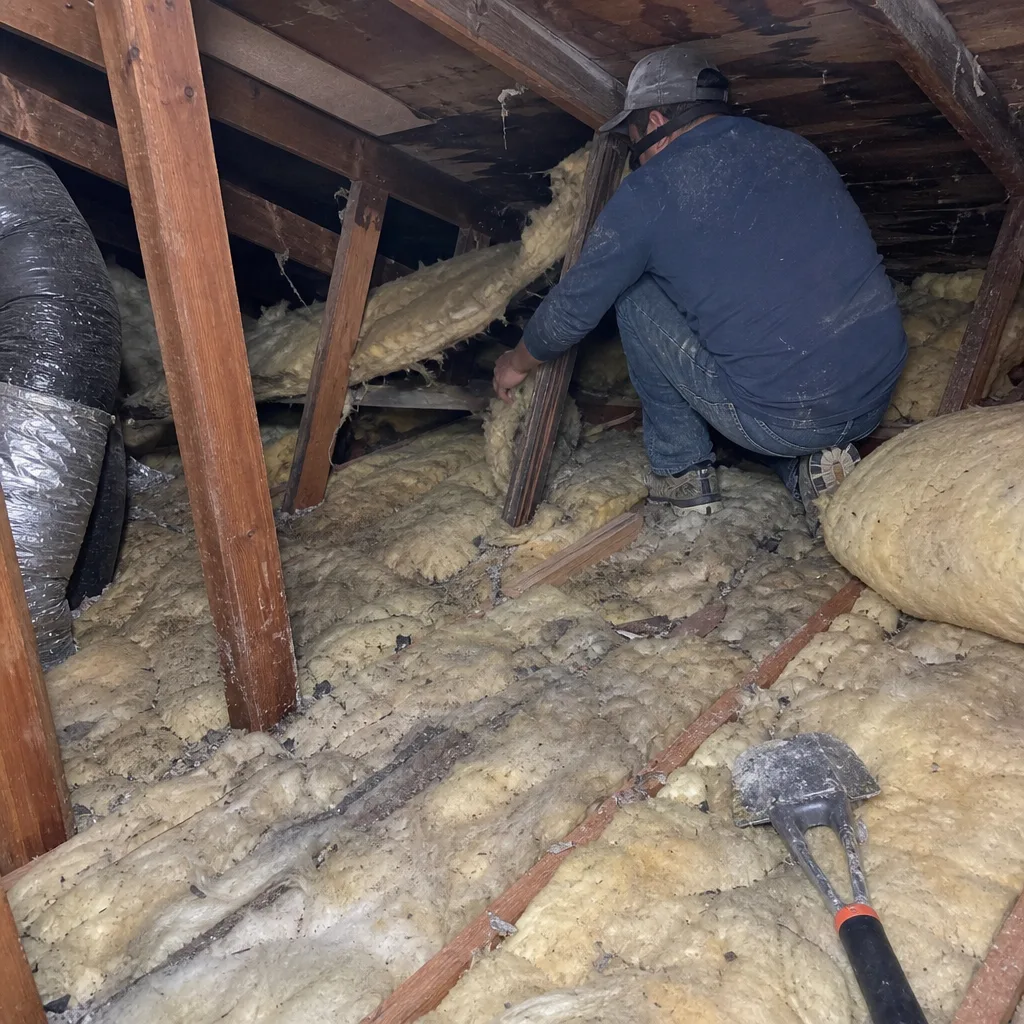
- Settled R-19 batts in Tustin Ranch tract homes. The 1989-1995 production homes were built with fiberglass batts that compress and shift over thirty years, leaving top plates and eave bays thin. Added blown-in over the top just bridges these gaps unless the envelope is sealed first.
- Unsealed recessed can lights as open thermal bypasses. Standard practice in that era of Tustin Ranch construction was to punch can lights through attic drywall without air-sealing boots. City inspectors now require these sealed on any permitted insulation or HVAC upgrade, which catches homeowners off guard mid-project.
- Zero wall insulation in Old Town Tustin bungalows. Pre-1950 craftsman and Victorian homes with plaster over lath have empty wall cavities. Blown-in attic work alone won’t stop the heat transfer through those walls; dense-pack insulation is required to meet any modern standard.
- Tustin’s thermal hinge exaggerating every envelope flaw. Summer attic temperatures exceed 140°F while winter nights drop into the low 40s - a swing meaningfully larger than coastal Newport Beach 12 miles west. Poor insulation shows up on Edison bills here in a way it simply doesn’t in milder zones.
Pricing for Blown-In Insulation in Tustin, CA
Most blown-in attic jobs in Tustin run $1,800-$3,200 for a standard 1,200-2,000 square foot attic with air sealing included. Dense-pack wall insulation in Old Town Tustin bungalows typically starts at $2,400 and ranges to $5,500 depending on cavity depth, access difficulty, and plaster repair scope. Blown-in top-ups over existing insulation, after proper air sealing, generally fall between $1,200-$2,800.
| Service | Tustin Price Range |
|---|---|
| Blown-in attic (new, with air sealing) | $1,800 - $3,200 |
| Blown-in top-up (over existing, after sealing) | $1,200 - $2,800 |
| Dense-pack wall insulation | $2,400 - $5,500 |
| Air sealing only (prep for insulation) | $800 - $1,800 |
What moves the number: attic square footage, existing insulation condition, can-light count requiring boots, and whether the home is in Tustin Ranch’s tract construction or Old Town’s balloon-framed era. We provide a Free Second Opinion on any written estimate you’ve already received. Every price is flat, written, and signed before anyone lifts a tool - Haven Standard Clause 1. Call (657) 279-1249 for your written estimate.
We Also Serve Cities Near Tustin
Our crews work throughout central Orange County, including Tustin and neighboring Santa Ana, Orange, Irvine, and Villa Park. The same written-price protocol, same documented photo record, same blower-door verification applies whether we’re in a 1920s bungalow or a 1990s stucco tract. Dispatch from our Los Angeles office coordinates scheduling across all service areas.
Serving Tustin, CA - Our Local Coverage Area
We’re based in the Tustin area and know this community well. Use the map below to see our service coverage - if you’re nearby, we can almost certainly help.
FAQs - Blown-In Insulation in Tustin
You can, but you’ll be insulating over air leaks that defeat the new material’s performance. Tustin Ranch’s 1989-1995 homes were built with unsealed top plates, eave bays, and recessed can lights - all open paths for conditioned air to escape. We air-seal these penetrations first, then blow to depth. Call (657) 279-1249 for a written scope showing exactly what your home needs before any insulation goes in.
They need both, but the walls are the critical gap. Pre-1950 craftsman and Victorian homes in Old Town Tustin have plaster over lath with zero wall cavity insulation; attic work alone won’t stop the thermal bleed through those walls. Dense-pack cellulose or fiberglass, installed through strategic access holes and patched to match, is the only method that closes that envelope. Call (657) 279-1249 and we’ll walk the specific path for your home’s era.
Yes. City of Tustin inspectors now enforce air-sealing boots on recessed can lights as a condition of permit approval for insulation or HVAC upgrades. This wasn’t required when Tustin Ranch’s production homes were built in the late 1980s and early 1990s, so homeowners are often surprised mid-project. We identify can-light count and boot requirements during our initial assessment and write them into the scope from day one. Call (657) 279-1249 to avoid a permit hold.
Not directly. Tustin sits in a transitional zone between the coastal marine layer and the warmer inland basin; while Newport Beach’s salt air corrodes exterior hardware faster, Tustin’s issue is thermal swing, not moisture degradation. Summer attic temperatures here exceed 140°F while winter nights hit the low 40s - a larger swing than coastal cities 12 miles west. That swing makes insulation performance visible on Edison bills, but the materials themselves don’t face salt-air degradation. Call (657) 279-1249 for a blower-door test that shows exactly where your conditioned air is escaping.
We stock Owens Corning, Knauf, and GreenFiber for blown-in cellulose and fiberglass applications in Tustin, with Icynene and Demilec available for spray foam complement work. No proprietary lock-in - the material spec is written into your scope, with alternates noted if you prefer. We pulled GreenFiber and Owens Corning for three Tustin Ranch jobs in a single week this past summer. Call (657) 279-1249 to discuss which material fits your home’s specific envelope condition.
Ready for a written price before any work starts? Call (657) 279-1249 today. We’ll schedule a blower-door assessment, identify your home’s specific air-leak pattern - whether you’re in a 1920s Old Town bungalow or a 1992 Tustin Ranch tract - and deliver a flat, written estimate with scope, warranty, and material spec included. No work starts without it. Haven Standard Clause 1.
Written by Wes Okafor, Owner at Topside Attic Insulation Lake Forest, serving Tustin since 2016.