
Attic Insulation Top-Up in Lake Forest, CA
An attic insulation top-up adds blown-in insulation over your existing material to bring it up to the R-38 or R-49 depth that Lake Forest’s climate zone (Zone 10) actually calls for. Most homes in Lake Forest built before 2005 are sitting at R-19 or less – enough to pass code in the year they were built, but not enough to hold conditioned air when a Santa Ana wind pushes outdoor temps past 100°F. A top-up typically costs between $900 and $2,400 depending on attic square footage and current depth, and for many homeowners it’s the single highest-return upgrade they can make to a home that’s already drafty in July and expensive to cool in August.
Before we add a single inch of insulation, though, we air seal. That distinction matters more than the insulation itself – and it’s the reason we built Topside Attic Insulation Lake Forest around that sequence. If you’re researching this service for the first time, the Attic Insulation in Lake Forest parent page covers the full scope of what we do. This page focuses specifically on top-up work: who needs it, what we do, what it costs, and what you’ll have in hand when we leave.
To schedule a free attic assessment or get a written price before any work starts, call (657) 279-1249. A live person answers – no voicemail.
When You Need an Attic Insulation Top-Up
A top-up isn’t the right move for every attic. If there’s pest damage, moisture intrusion, or contaminated old insulation, removal comes first. But for a structurally sound attic where the existing material is simply too thin, adding Attic Batt Insulation depth is faster and less expensive than a full tear-out. Here are the situations where a top-up is almost always the correct call:
- Your home was built between 1975 and 2000. Most Lake Forest neighborhoods from this era – Portola Hills, the tracts along Bake Parkway, older sections near Trabuco Road – were built to R-19 or R-21 standards. California’s Title 24 now calls for R-38 minimum in Climate Zone 10, and R-49 is the recognized performance target. That gap is the top-up.
- Your upstairs rooms are noticeably hotter than downstairs from June through September. This is the most common complaint we hear from Lake Forest homeowners. Heat radiating through a thin attic floor into second-story living space is a depth problem. A blower-door test will tell you whether air leakage is also a factor, but often the insulation depth alone is the bottleneck.
- Your energy bills climbed after a rate increase but your habits didn’t change. If SoCalEdison bills jumped faster than the published rate changes, the house is working harder than it should. Thin attic insulation is usually on the short list of causes.
- A home energy auditor flagged your attic R-value on a report. We read these reports in detail before we quote. If an audit identified R-15 or R-19 in a Zone 10 attic, that’s a documented gap we can close with a top-up – provided the existing insulation is clean and dry.
- You’re refinancing, selling, or pulling permits for an addition. An attic inspection during escrow or a city permit review can surface an insulation deficiency that needs to be corrected before close. We can document the pre- and post-condition with photos and depth readings.
- Your current insulation is settled, compressed, or thin in spots but not contaminated. Blown-in fiberglass and cellulose settle over time. An attic floor that measured R-30 in 2005 may be reading R-22 today where foot traffic or settling has compressed the material. A top-up restores the designed R-value.
Our Attic Insulation Top-Up Process
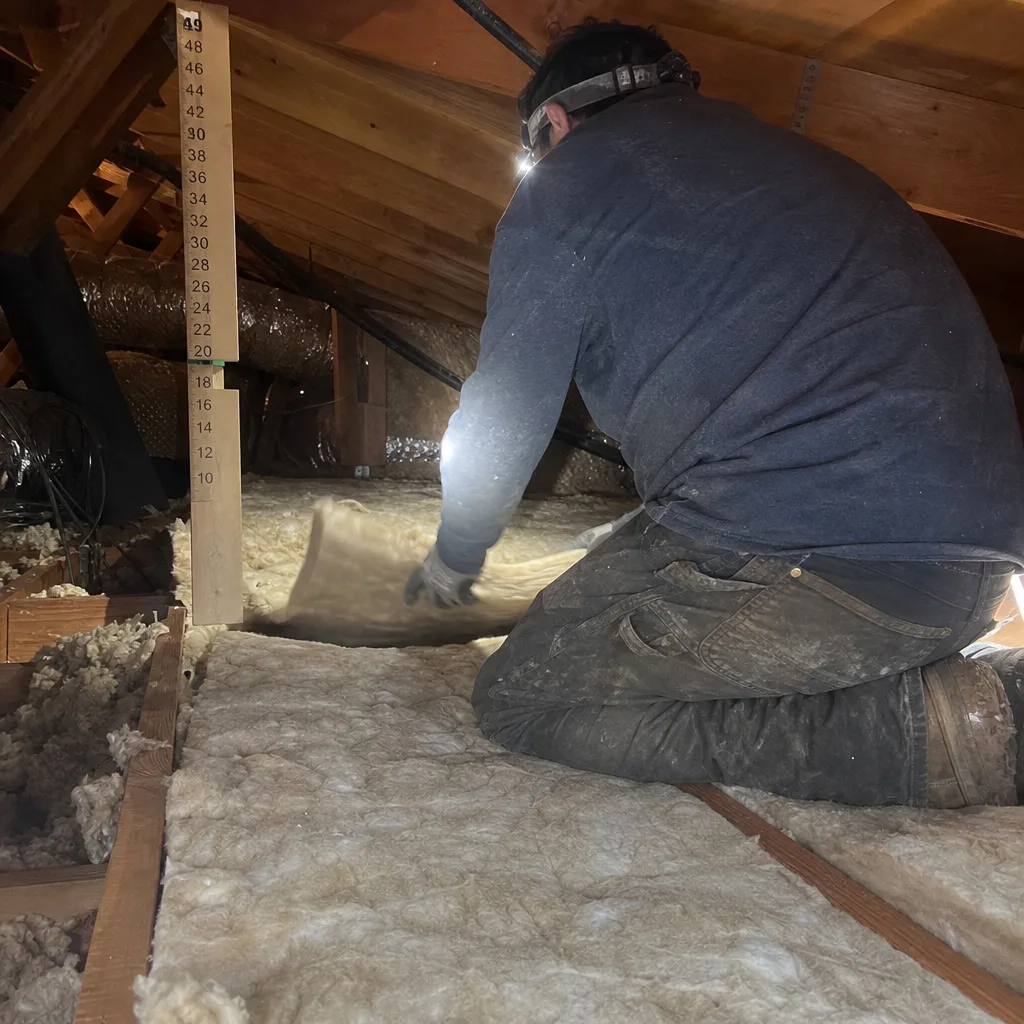
Every top-up we do follows the same sequence. The order isn’t arbitrary – air sealing before insulation is a technical requirement, not a preference. Blowing insulation over unsealed penetrations without Attic Baffles & Ventilation Prep just buries the leak. We don’t do that.
- Pre-work inspection and blower-door test. Before we price anything, we go into the attic and measure existing depth at multiple points, document the current R-value, and photograph the condition of the existing insulation. On applicable jobs we also run a blower-door test – a pressurization measurement that shows, in a single number (CFM50), how much conditioned air the home’s envelope is losing. This reading gives us a baseline. If it’s high, air sealing is on the scope before any insulation is added. You receive the pre-work reading in writing.
- Written price delivered before anyone starts. Under Haven Standard Clause 1, you get a flat price, a written scope, and a written warranty before we lift a tool. The top-up price includes air sealing if it’s needed. Nothing is added after the fact. This is the part of our process that gets cited most often in our documented job records – homeowners want to see the number before the work, not after.
- Air sealing of penetrations, top plates, and can lights. We seal every penetration in the attic floor: recessed can lights (the biggest single source of attic-to-living-space air transfer in Lake Forest homes built before 2002), top plates at interior and exterior walls, plumbing and electrical penetrations, and any HVAC boot gaps we find. We use fire-rated spray foam and mastic-sealed seams where code requires. We do not blow insulation until this step is done.
- Blown-in insulation to target depth. Once the attic floor is sealed, we install blown-in insulation – typically Knauf EcoBatt or a GreenFiber cellulose product, depending on the existing material and your preference. We blow to depth markers we set across the attic floor so the finished depth can be verified by you or a third party. For a Zone 10 attic, we target R-49 unless a specific code compliance depth is required.
- Post-work blower-door test (where applicable). On jobs where air sealing was part of the scope, we run a second blower-door reading after the work is complete. The before and after numbers are both documented and delivered to you. The improvement shows up as a measurable CFM50 reduction – not a claim, a number. A job where we drop a home from 3,800 CFM50 to 1,900 CFM50 is a different deliverable than one where we just added depth.
- Documented photo record and closeout. Every job closes with a photo record: pre-work attic condition, air sealing work in progress, finished insulation depth at multiple points, and any anomalies we found that fall outside the top-up scope. You receive this documentation before we leave the property. The 365-Day Done Right Promise applies from the close date – if anything isn’t right within the first year, we come back and make it right.
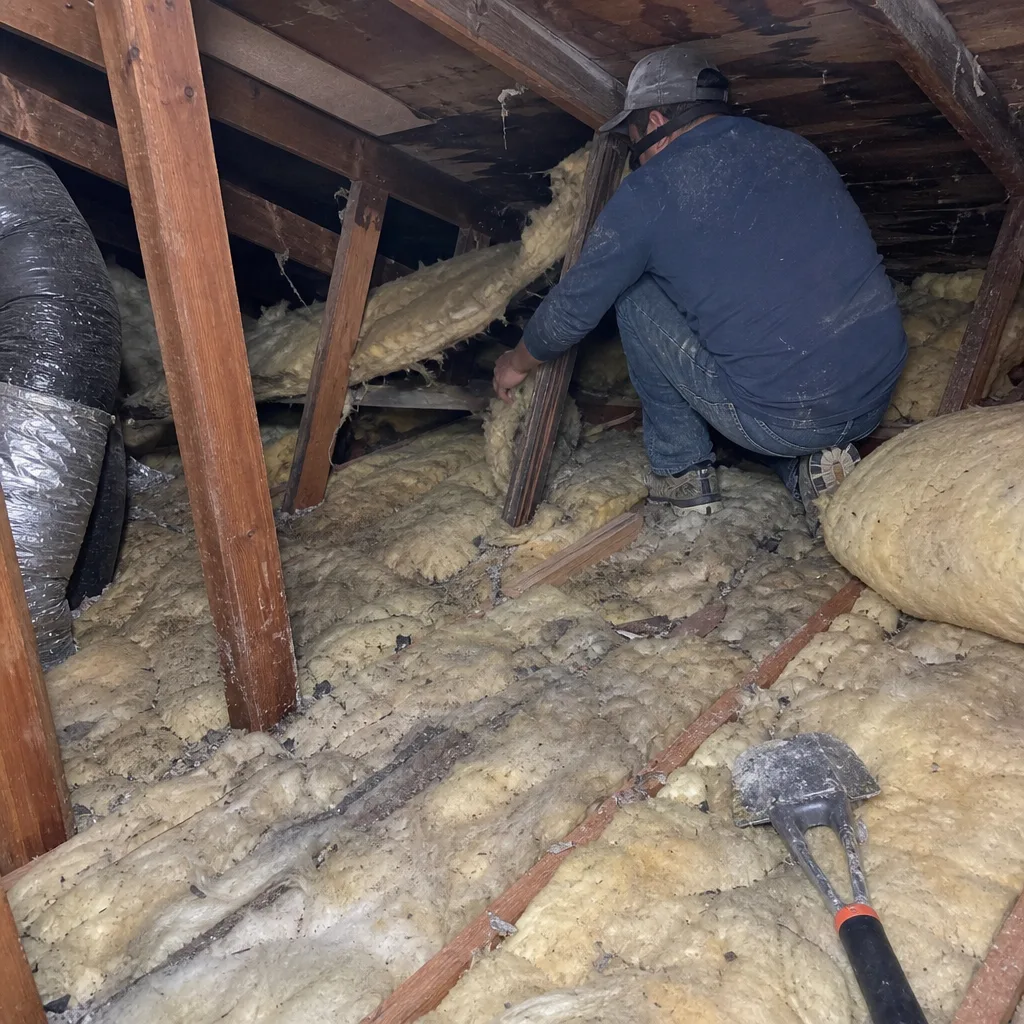 Before
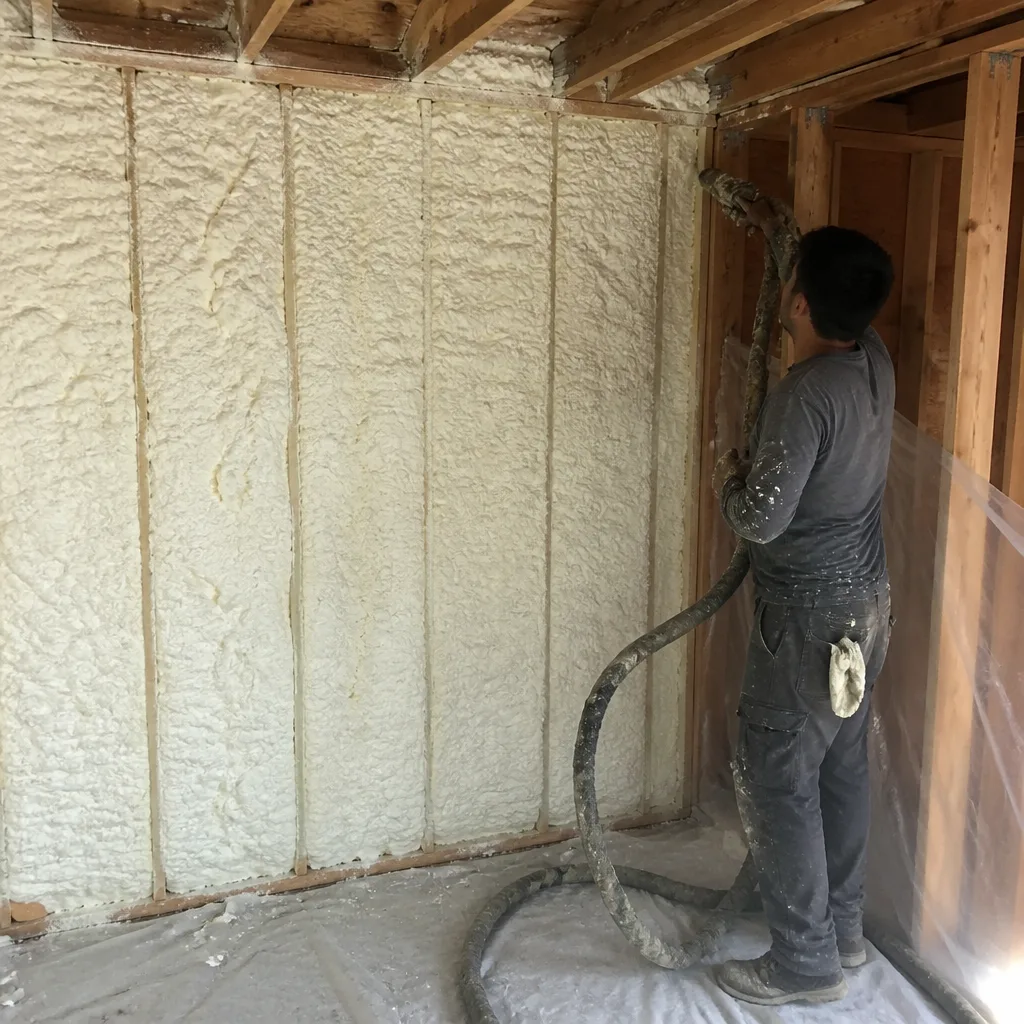 After
AfterAttic Insulation Top-Up Pricing in Lake Forest
Most attic insulation top-up jobs in Lake Forest run between $900 and $2,400 for the insulation work alone. If air sealing is also on the scope – which it usually is when we find can lights or unsealed top plates – add $300 to $700 depending on the number of penetrations and attic complexity.
Here’s what drives the number up or down:
- Attic square footage. A 1,200-square-foot attic costs less to top up than a 2,400-square-foot one. Most Lake Forest single-family homes in the Portola Hills and Foothill Ranch areas run 1,400 to 1,800 square feet of attic space.
- Current R-value depth. Going from R-19 to R-49 requires more material than going from R-30 to R-49. The starting point matters.
- Number of penetrations requiring air sealing. A 1990s Lake Forest home with a dozen unsealed recessed can lights will add time and material to the air-sealing step. We count them during the inspection and include the number in your written scope.
- Attic access and pitch. Low-pitch attics with limited clearance take longer to work in safely. We name that in the scope rather than padding the line items.
- Insulation material choice. Blown-in fiberglass (Knauf, CertainTeed) and blown-in cellulose (GreenFiber) price similarly per R-value installed. We’ll give you both options in writing if there’s a meaningful cost difference.
We publish price ranges on this page because asking someone to call for pricing before they’ve seen a number is a waste of everyone’s time. That said, the only number that matters for your job is the written price on your scope – and that starts with a free attic assessment. Call (657) 279-1249 to schedule yours. No estimate fee, no obligation, and the written price comes with a Free Second Opinion guarantee: bring us any competing written estimate and we’ll go through it line by line with you.
Quick Pricing Reference
| Scope | Typical Range (Lake Forest) |
|---|---|
| Top-up only (insulation, no air sealing) | $900 – $2,400 |
| Air sealing add-on (penetrations, can lights, plates) | $300 – $700 |
| Combined top-up + air sealing (most common) | $1,200 – $3,100 |
| Blower-door test (pre/post, included on applicable jobs) | Included in scope |
FAQs – Attic Insulation Top-Up in Lake Forest
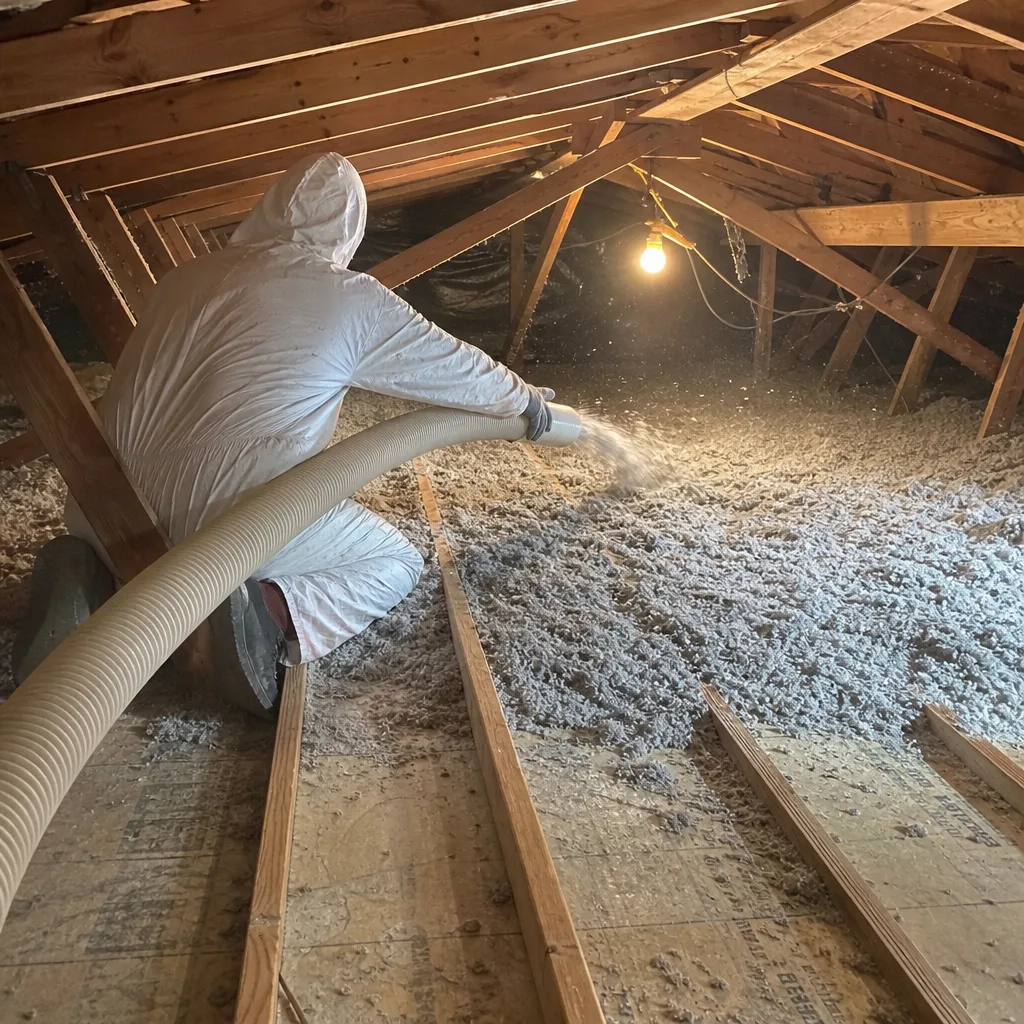
Can you top up insulation without removing the old material first?
Yes, in most cases – provided the existing insulation is dry, pest-free, and not contaminated with mold or rodent activity. We inspect and photograph the existing material during the pre-work assessment. If it’s clean and structurally intact, we add depth on top of it. If we find moisture damage, compacted material from rodent nesting, or visible contamination, we’ll tell you that before we quote a top-up – because adding insulation over compromised material would give you a worse result, not a better one. Removal and replacement would be the right scope in that case, and we’ll say so in writing. For more on what the full Attic Insulation in Lake Forest service line covers, the parent page has the complete breakdown.
How much does an attic insulation top-up cost in Lake Forest?
Most Lake Forest top-up jobs run between $900 and $2,400 for the insulation portion, with air sealing adding $300 to $700 when it’s needed – which is most of the time in homes built before 2002. The combined scope typically falls between $1,200 and $3,100. What moves the number is your attic’s square footage, the gap between current and target R-value, and how many unsealed penetrations we find. We put the exact number in writing before anyone starts. Call (657) 279-1249 to schedule a free assessment and get your written price.
Do I need a permit for an attic insulation top-up in Lake Forest?
In Lake Forest, adding blown-in insulation to an existing attic typically does not require a building permit under the City of Lake Forest’s municipal code, as it’s classified as a like-for-like energy improvement rather than structural work. Air sealing penetrations falls under the same category. That said, if your project is part of a broader renovation that pulls a building permit, the insulation work may fall under Title 24 review. We document depth readings and air-sealing scope on every job so you have the paper trail if a permit inspector or energy rater asks for it later.
How long does an attic insulation top-up take?
Most top-up jobs in Lake Forest are completed in a single day – typically four to seven hours depending on attic size and how much air sealing is on the scope. A 1,600-square-foot attic with moderate penetration sealing usually runs about five hours from setup to closeout. You’ll know the scheduled window in advance, get a text when the technician is on the way, and receive your documented photo record and blower-door results before the crew leaves. Under The Haven Standard, we name the technician assigned to your job before the appointment – not after.
What R-value should my Lake Forest attic be?
Lake Forest sits in California Climate Zone 10. Title 24 sets R-38 as the code minimum for existing homes, but the performance target – and what we recommend for homes being upgraded rather than just brought to minimum code – is R-49. At R-49 you have enough thermal resistance to hold conditioned air through a 105°F Santa Ana day without your AC running continuously. Many older Portola Hills and Foothill Ranch homes we assess are sitting at R-19 or R-21, which means the attic floor is delivering less than half the thermal resistance the climate calls for. A top-up to R-49 is a measurable change – before and after blower-door numbers document the air-sealing side of that improvement.
Key Takeaways
- An attic insulation top-up adds blown-in material over existing insulation to reach the R-38 to R-49 depth Lake Forest’s Climate Zone 10 calls for.
- Air sealing – can lights, top plates, and penetrations – is completed before any insulation is added. We don’t reverse that order.
- Most combined top-up and air-sealing jobs in Lake Forest run between $1,200 and $3,100. Written price before work starts, always.
- Before-and-after blower-door readings are documented on every applicable job so you can verify the air-sealing result in a single number.
- The 365-Day Done Right Promise applies to every job we complete. If it isn’t right, we come back.
- We’ve completed this work in more than 9,000 homes since 2016 – every one with a written scope and a documented photo record at closeout.
If you’re ready to find out exactly where your attic stands, schedule a free assessment with Topside Attic Insulation Lake Forest. We’ll measure the existing depth, photograph the attic floor, run a blower-door test if air leakage is suspected, and hand you a flat written price before anyone starts work. Call (657) 279-1249 – a live person picks up, any time. Or visit our home page to learn more about the full range of building-envelope services we provide across Lake Forest and the surrounding area.
Written by Wes Okafor, Owner at Topside Attic Insulation Lake Forest, serving Lake Forest since 2016.