
Insulation Before & After in Lake Forest, CA
Photos don’t exaggerate. A homeowner in Portola Hills can look at a picture of their own attic floor, see the gaps around the top plates and the compressed fiberglass over the hallway, and understand exactly why the second bedroom never stays cool in August. We’ve documented every job we’ve done in Lake Forest since 2016, and this gallery shows what changed, how we measured it, and what the homeowner received in writing when we left.
Recent Transformations
Attic Air Sealing and Blown-In Insulation - Foothill Ranch Split-Level

The blower-door test read 3,800 CFM50 before we touched anything, which is high for a 1,900-square-foot split-level built in 1987. The previous contractor had blown fiberglass over the original batts without sealing the top plates or the chase around the furnace vent, so conditioned air was pumping into the attic year-round. We pulled back the existing insulation, sealed every penetration with fire-rated caulk and foam, reinstalled the insulation, and added blown-in cellulose to R-49. The post-test read 2,100 CFM50. The homeowner got the before-and-after numbers in writing, plus a photo record of every sealed joint.
Spray Foam Insulation - Lake Forest Keys Knee-Wall Conversion

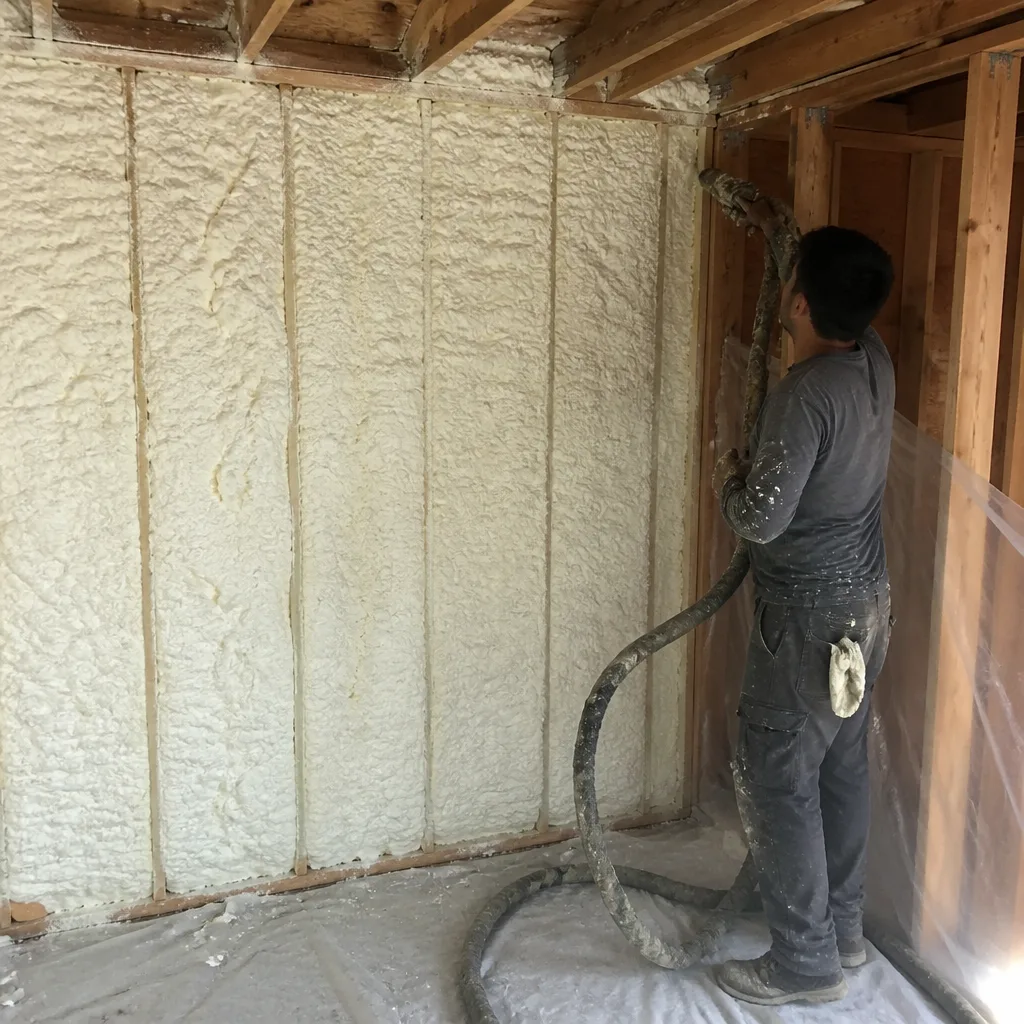
The upstairs bonus room in this Lake Forest Keys home was technically finished but unusable from June through October; the knee walls behind the drywall were uninsulated studs open to the vented attic. We removed the fiberglass batts that had been stuffed in the floor joists, applied 2 inches of closed-cell spray foam to the roof deck and knee walls to convert the space to conditioned attic, and air-sealed the floor plane below. The room now holds within 2 degrees of the thermostat setpoint. The closed-cell foam also acts as a vapor barrier, which matters in Lake Forest’s marine-influenced climate where summer humidity can spike overnight.
Crawl Space Encapsulation and Vapor Barrier - Baker Ranch New Build

This 2019 Baker Ranch home had a vented crawl space with bare soil and no vapor barrier, which is unfortunately common in that development phase. The subfloor insulation was falling out in strips, and the homeowner could smell mustiness in the downstairs hallway during Santa Ana wind events. We removed the degraded batts, graded the soil, installed a 12-mil reinforced polyethylene vapor barrier sealed at all seams and piers, and applied 2 inches of closed-cell spray foam to the stem walls. The crawl space now reads below 60% relative humidity on our meter in all seasons. The photo record includes the soil condition before, the seam welding process, and the final humidity reading.
Insulation Removal and Replacement - Portola Hills Rodent Damage

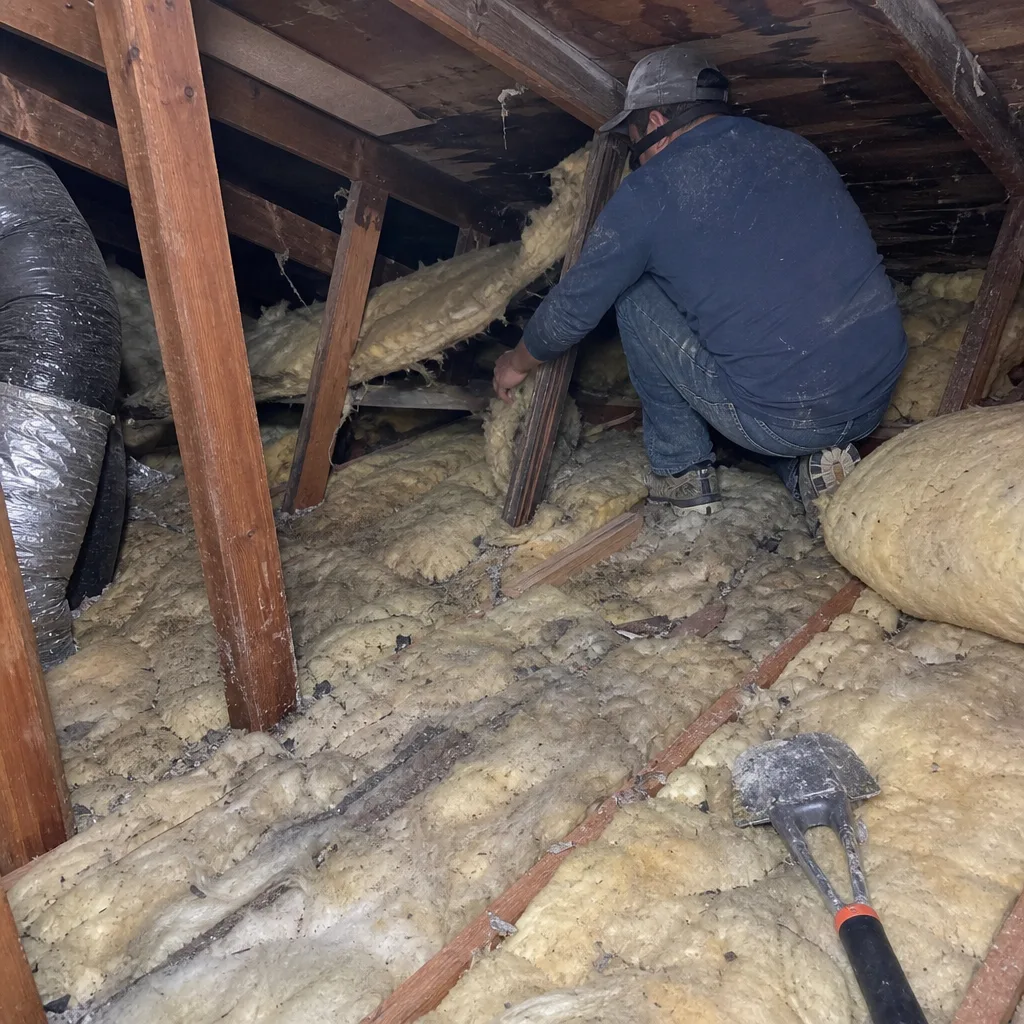
The homeowner in Portola Hills called after finding a dead roof rat in the attic during a December cold snap. We found 6 inches of contaminated fiberglass batts with visible droppings throughout, compressed to roughly R-11 where it was supposed to be R-30. We removed all contaminated material, HEPA-vacuumed the deck, sanitized with an enzyme treatment, rodent-proofed the vent screens and eave gaps with 1/4-inch hardware cloth, and installed new blown-in cellulose to R-49. The photo record includes the contamination pattern, the sealed entry points, and the final blow depth measured against the joists. Written price was delivered before any removal started.
Radiant Barrier Installation - Rancho Viejo Two-Story

This Rancho Viejo home had excellent insulation levels but no defense against radiant heat gain through the roof deck, which is the dominant cooling load problem in Lake Forest’s inland-slope microclimate. The attic was hitting 140°F in July afternoons, and the upstairs HVAC couldn’t keep up despite running continuously. We installed a perforated radiant barrier foil across the bottom of the rafters, maintaining the vented attic assembly while blocking 95% of radiant transfer. The attic temperature dropped to 108°F on the same 92°F ambient day the following summer. The homeowner received the infrared camera images and the surface temperature readings in the photo record.
Wall Insulation and Air Sealing - Lake Forest Highlands Retrofit

The Lake Forest Highlands home was built in 1974 with uninsulated 2×4 walls and no sheathing air barrier, which explains why the living room was cold in January even with the furnace cycling. We dense-packed the walls with cellulose through exterior siding removal (reinstalled with matching texture), then applied a fluid-applied air barrier to the sheathing before re-siding. The blower-door reading dropped from 4,500 to 2,800 CFM50, and the homeowner reported the furnace running 40% less the first winter. The written scope specified the siding match, the cellulose density target, and the air barrier product by name.
What Every Homeowner Receives
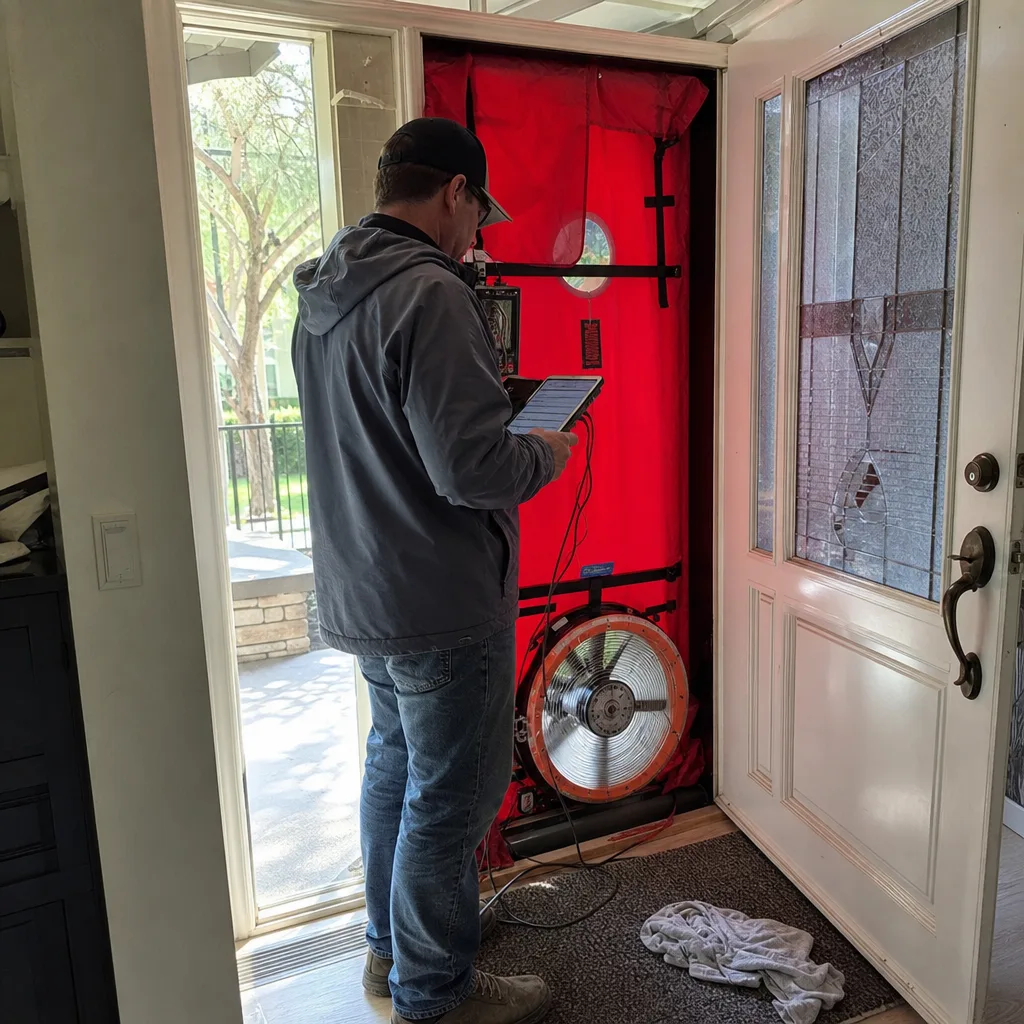
Every job in this gallery follows the same closeout sequence. You get a written price before anyone lifts a tool, under Haven Standard Clause 1. You get a documented photo record of the work area, the problem we found, the correction in progress, and the finished condition. On air-sealing jobs, you get before-and-after blower-door numbers that show, in a single figure, how much conditioned air your home was losing. And you get the 365-Day Done Right Promise in writing, with a named technician and a text when they’re on the way.
We’ve sealed and insulated over 9,000 homes since 2016. The materials come from Owens Corning, Johns Manville, Knauf, Rockwool, CertainTeed, Icynene, Demilec, and GreenFiber, whichever product fits your assembly and budget. No proprietary lock-in. If you have a written estimate from another contractor, we’ll read it with you line by line.
 Before
 After
AfterWant Results Like These?
Call (657) 279-1249. A live person answers, 24/7. We’ll schedule a free assessment, deliver a written price before any work starts, and show you exactly what changed in your attic or crawl space when we’re done. Wes Okafor and the crew at Topside Attic Insulation Lake Forest have been working in this city since 2016, and we’ve probably already been in a home on your street.
Written by Wes Okafor, Owner at Topside Attic Insulation Lake Forest, serving Lake Forest since 2016.