
Icynene Attic Insulation: The Lake Forest Owner’s Guide
We stock and install Icynene-compatible open-cell and closed-cell spray foam insulation for Lake Forest attics, with most retrofits running between $3,800 and $7,200 depending on existing conditions and square footage. Same-day assessment is available when you call (657) 279-1249, and we carry Icynene-specified components on our trucks for homes near the Foothill Ranch Town Centre corridor and throughout the Baker Ranch development. Most Lake Forest homeowners discover their Icynene insulation has failed when a summer utility bill jumps 30% or more, or when a home energy audit reveals the original R-value no longer matches what the builder claimed in 2015-2020 construction.
Which Icynene Models This Applies To
Icynene produces two primary formulations relevant to Lake Forest attics: open-cell LD-C-50 (light density, 0.5 lbs/ft³) and closed-cell MD-C-200 (medium density, 2.0 lbs/ft³). The product code is stamped on the cured foam itself, visible where attic access panels or recessed can lights have been cut through the original application. We also find paper tags left by the original applicator on rafter bays in Baker Ranch homes, typically dated 2016-2019.
The critical compatibility gotcha in this climate: Icynene’s open-cell requires a vapor retarder coating in Zone 3 mixed-humidity counties, which Orange County technically skirts. We’ve found original Lake Forest installations that skipped this step, leading to moisture accumulation on the foam’s cold side during Santa Ana wind events when relative humidity spikes overnight. For retrofits, we verify whether your existing layer is LD-C-50 or MD-C-200 before specifying any touch-in or full replacement, since the two products cannot be layered directly without a separation barrier. OEM Icynene is specified; we also source Demilec-equivalent closed-cell when the original product is discontinued, matched by density and R-value per inch, never by appearance alone.
Signs Your Icynene Attic Insulation Is Failing
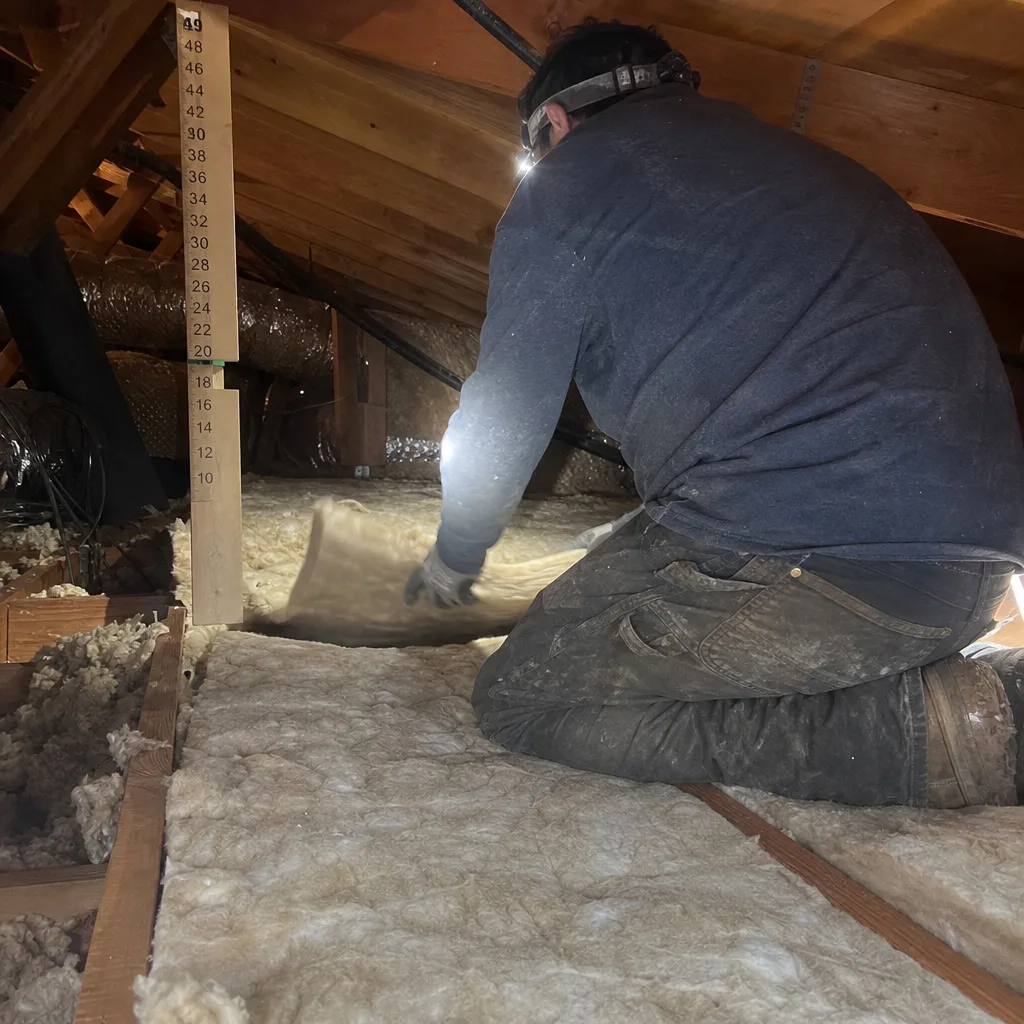
- Discoloration or yellowing of the foam surface. UV degradation from unsealed attic vents or gable-end screening gaps breaks down the polymer skin. In Lake Forest’s high-UV environment, this typically appears first on south-facing roof pitches after 8-12 years.
- Crumbly texture or powder when touched. This indicates hydrolytic degradation, common where open-cell Icynene was installed without proper vapor management. The foam loses its structural adhesion to the substrate and begins shedding particulate into the attic air.
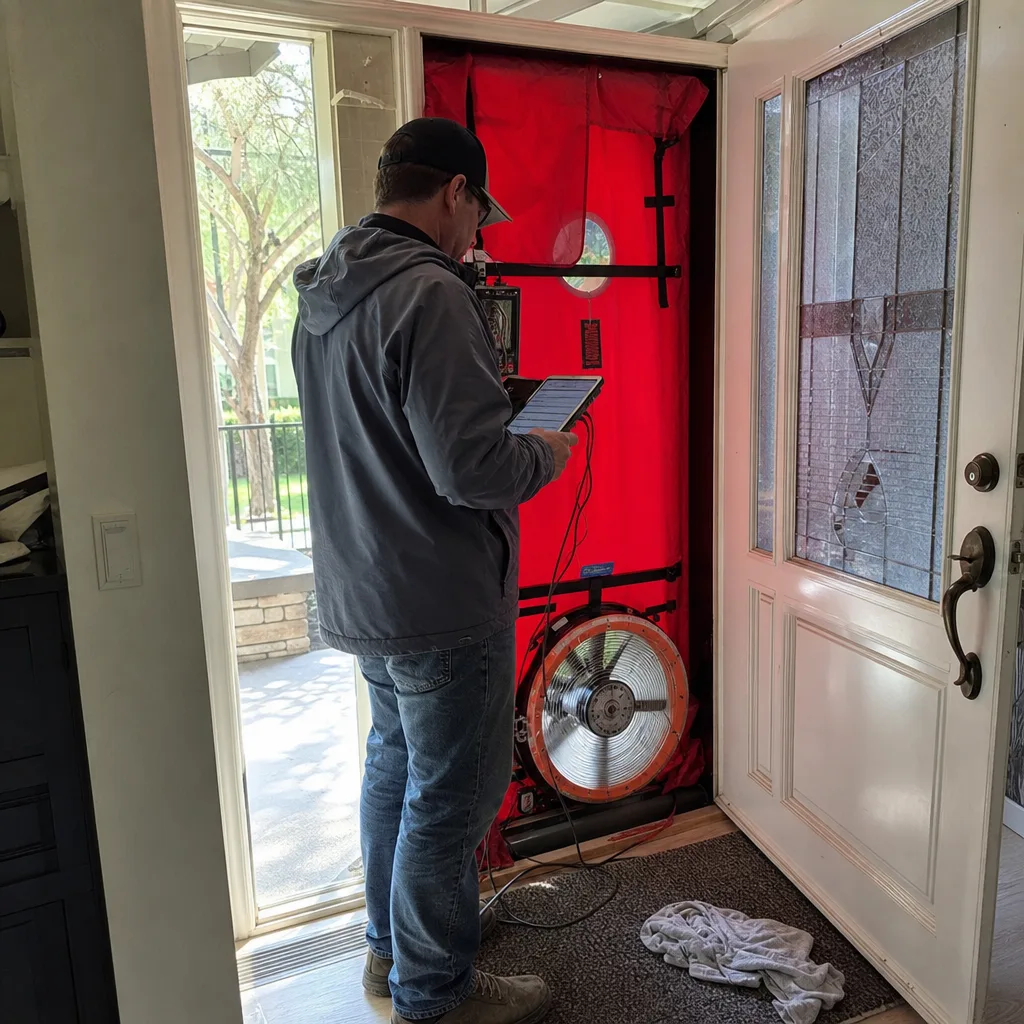
- Temperature stratification between rooms. When Icynene pulls away from rafter tails or top plates, conditioned air finds bypass paths. We measure this with a blower-door test - a pressurization reading that shows, in one number, how much air your building envelope is losing - and typically find 30-50% higher CFM50 in homes with failed adhesive bonds.
- Musty odors after rain. Failed closed-cell can develop micro-fractures that trap moisture against sheathing. Lake Forest’s occasional heavy winter rains, concentrated in December through February, exploit these cracks before summer heat can dry them.
- Visible shrinkage gaps at perimeter walls. Icynene can contract 2-4% during cure; improper application temperature or substrate moisture during original install leaves permanent gaps. These are especially common in original 2015-2017 Baker Ranch construction where builders rushed dry-in schedules.
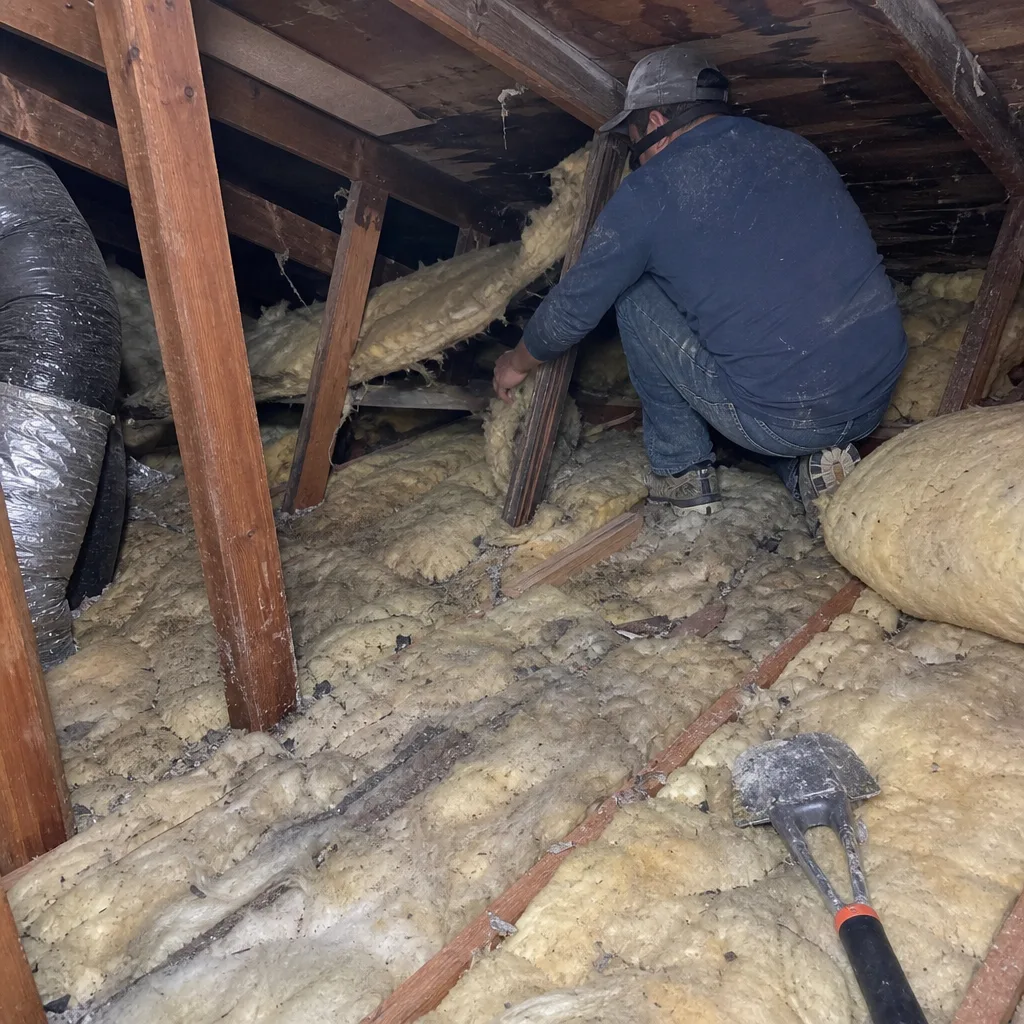 Before
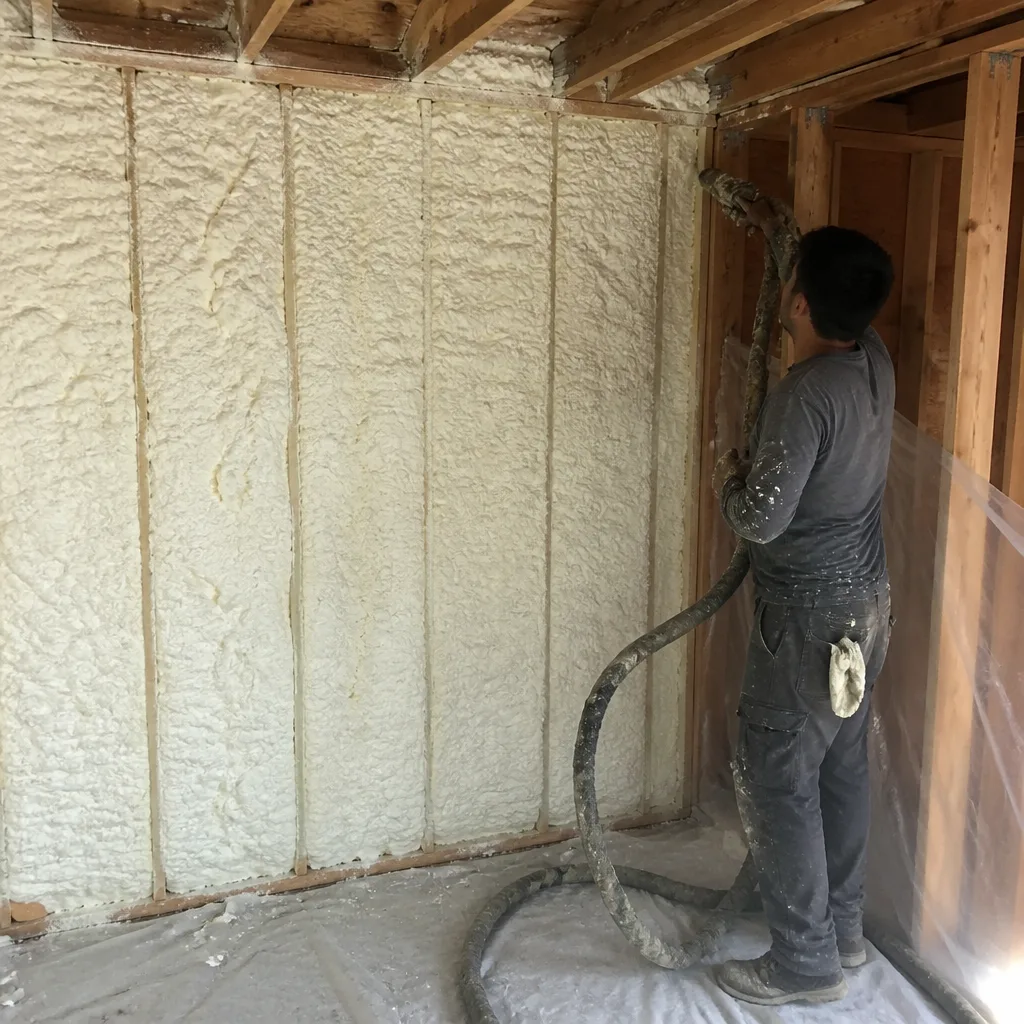 After
AfterReplacement Cost & What’s Included
Most Icynene attic insulation replacements in Lake Forest run $3,800-$5,400 for partial retrofits (select bays or perimeter remediation) and $5,800-$7,200 for full attic reapplication. The spread depends on three factors: whether existing foam must be removed or can be topped, the accessibility of the attic (cathedral ceilings through Foothill Ranch add labor), and whether we find unsealed top plates that should have been addressed in the original installation.
Every quote includes removal and disposal of failed material, substrate prep and moisture verification, air sealing of all top plates and penetrations before foam application, and the Icynene product with matching density specification. We publish before-and-after blower-door numbers on every job so you can verify the air-sealing result. Work carries our 365-Day Done Right Promise, with the written scope and warranty delivered before anyone lifts a tool - Haven Standard Clause 1.
DIY or Call Us?
There’s no safe DIY path for spray foam insulation. Two-component polyurethane chemistry requires controlled temperature, humidity, and mix ratios; off-ratio foam fails structurally and releases isocyanates without proper respiratory protection. What you can check safely: verify the product code stamped on your existing foam, photograph any discoloration or gaps, and note which rooms show temperature variation. Do not cut into or disturb failing foam - degraded material releases respirable particles.
We carry Icynene-compatible components on our trucks and can assess your attic’s condition without a callback window. Call (657) 279-1249; a live person answers 24/7. We’ll read any competing written estimate with you - our Free Second Opinion - and deliver your own written price before any work starts.
FAQs
Properly applied Icynene lasts 20-30 years, but we’ve found original installations in Lake Forest failing at 8-12 years due to skipped vapor retarders on open-cell or application during wet framing. The high-UV, low-nighttime-humidity Santa Ana pattern accelerates surface degradation when attic ventilation is poorly balanced. Call (657) 279-1249 for an assessment of your specific installation age and condition - estimates are free.
Localized delamination or shrinkage gaps can sometimes be cut back and filled with matching-density foam, but only if the substrate is dry and the original adhesive failure is limited to accessible areas. Widespread hydrolytic degradation or UV breakdown requires full removal; patching over crumbling foam traps the failure underneath. We document the extent with photos before recommending either approach - your photo record is included on every visit.
Most Lake Forest homes in the 1,800-2,800 square foot range require two days: one for removal, substrate drying verification, and air sealing; one for foam application and cure monitoring. Cathedral ceilings or attics with extensive stored contents add a half day. We do not rush the cure - Icynene’s structural integrity depends on it.
We stock Icynene LD-C-50 and MD-C-200 on our trucks for Lake Forest calls, along with Demilec equivalents for discontinued specifications. Same-day assessment is available; foam application typically schedules within 48-72 hours after the written scope is approved, since substrate moisture readings must be within spec before we spray. Call (657) 279-1249 to check current availability for your model.
Topside Attic Insulation Lake Forest is an independent service provider, not affiliated with Icynene. We also stock parts for Reflectix and other building envelope materials.
Seal the bypasses first. Then insulate. The R-value on the bag means nothing if the air has somewhere else to go.
Written by Wes Okafor, Owner, Topside Attic Insulation Lake Forest at Topside Attic Insulation Lake Forest, serving Lake Forest and nearby areas.