
Rockwool Attic Air Sealing: The Lake Forest Owner’s Guide
Rockwool attic air sealing in Lake Forest typically runs $340-$780 installed, depending on attic square footage and how many top plates, can lights, and duct penetrations need sealing. We stock Rockwool-compatible firestop sealants, SAFE mineral wool batts for damming, and metal flashing for flue and chimney gaps on every truck, and most replacements are completed same-day. Homeowners usually figure out something’s wrong when their upstairs rooms won’t stay cool in August despite new insulation, or when their energy auditor hands them a blower-door number above 3,500 CFM50 and points to the attic hatch.
Which Rockwool Models This Applies To
Rockwool’s Comfortbatt, Comfortboard 80, and AFB (Acoustical Fire Batts) are the mineral wool products we see most often in Lake Forest attics, especially in homes built between 1985 and 2010 near Portola Hills and Baker Ranch where original fiberglass was swapped out in the 2010s. The air sealing components that mate to these products aren’t branded by Rockwool themselves - Rockwool makes the insulation, not the sealants or firestop systems - so compatibility depends on matching the material properties, not a model number lookup.
Rockwool is mineral wool, which means it won’t burn (melting point near 2,150°F) but it won’t stop air either. The sealing layer is what matters: fire-rated acrylic sealants like 3M CP-25WB+ or Hilti CFS-S SIL for top plates and electrical penetrations; intumescent escutcheon rings for can lights; and galvanized metal flashing with Rockwool SAFB (Sound Attenuation Fire Blankets) for chimney and flue clearances. We verify what you’ve got by checking the bag stamp if any remains, measuring the cavity depth, and testing the existing sealant with a probe - if it crumbles or pulls away from the top plate, it’s failed. OEM-spec sealants run $18-$34 per tube; we also carry St. Gobain FC-200 as a quality aftermarket equivalent that meets the same ASTM E814 rating at roughly 15% less cost. The wrong sealant with Rockwool is a real problem: standard latex caulk will off-gas and shrink against the alkalinity of mineral wool, creating a gap within two years.
Signs Your Rockwool Attic Air Sealing Is Failing
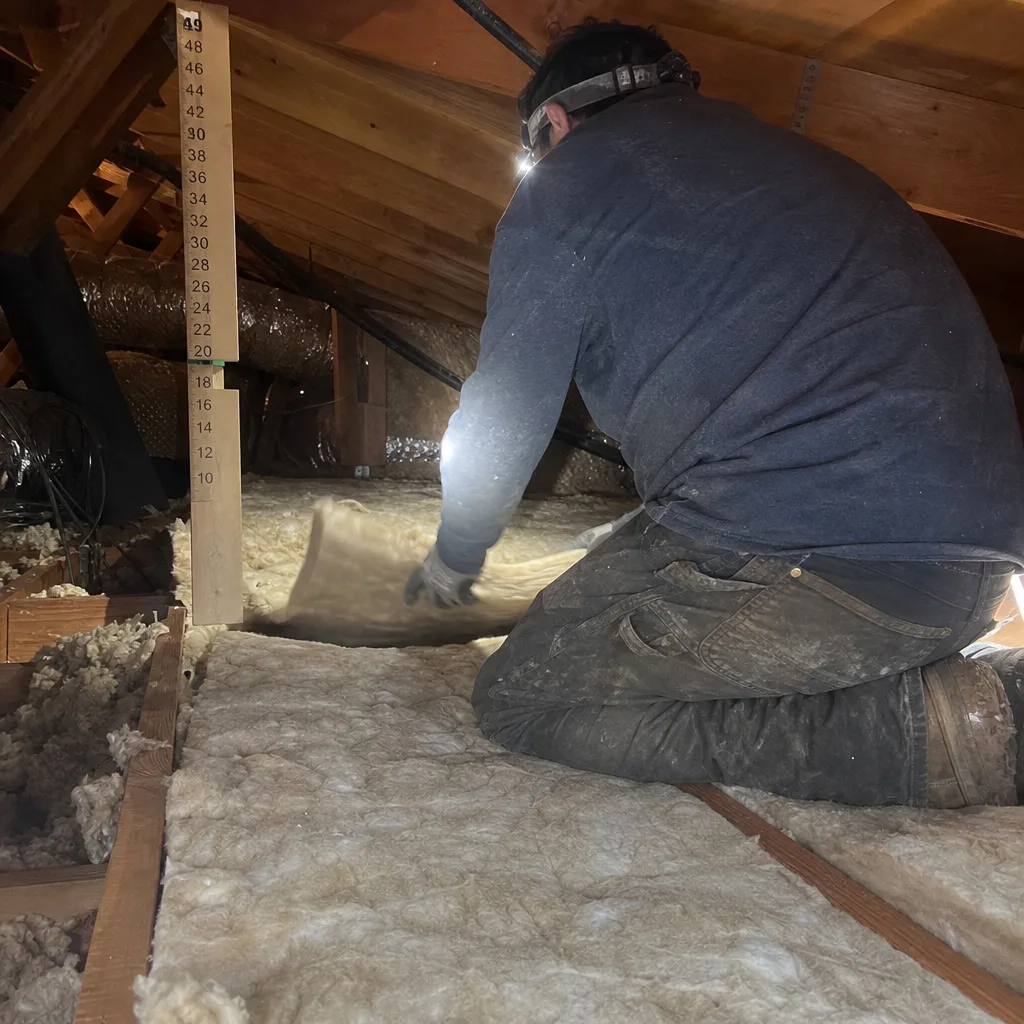
- Dust streaks on the insulation surface. Air moving through gaps carries fine particles that deposit on the top fibers of your Rockwool. In Lake Forest, where Santa Ana winds pressurize attics in fall, these streaks often run in directional patterns pointing back to the leak source - usually a top plate or recessed light housing.
- Temperature stratification between floors. Your downstairs holds at 72°F but the master bedroom runs 6-10 degrees warmer. This happens when conditioned air escapes through unsealed attic bypasses faster than your HVAC can replace it; the Rockwool above does nothing to stop the airflow.
- Ice damming or moisture staining on the ceiling. Warm, humid interior air hits the cold roof deck through gaps around duct boots or chimney chases, condensing on the sheathing. In Lake Forest’s milder climate this shows as dark water stains rather than ice, especially north-facing slopes that never fully dry.
- Can lights that flicker or fail prematurely. Unsealed IC-rated housings pull attic air through the fixture, overheating the transformer and carrying dust onto the contacts. We’ve found fixtures in Foothill Ranch homes running 40°F above ambient because the sealant ring was never installed.
- Blower-door test shows minimal improvement after insulation upgrade. You added Rockwool or another insulation product but your CFM50 barely dropped. Insulation over an unsealed attic is, in Wes Okafor’s words, “putting a lid on a colander” - the air still moves, just through a thicker filter.
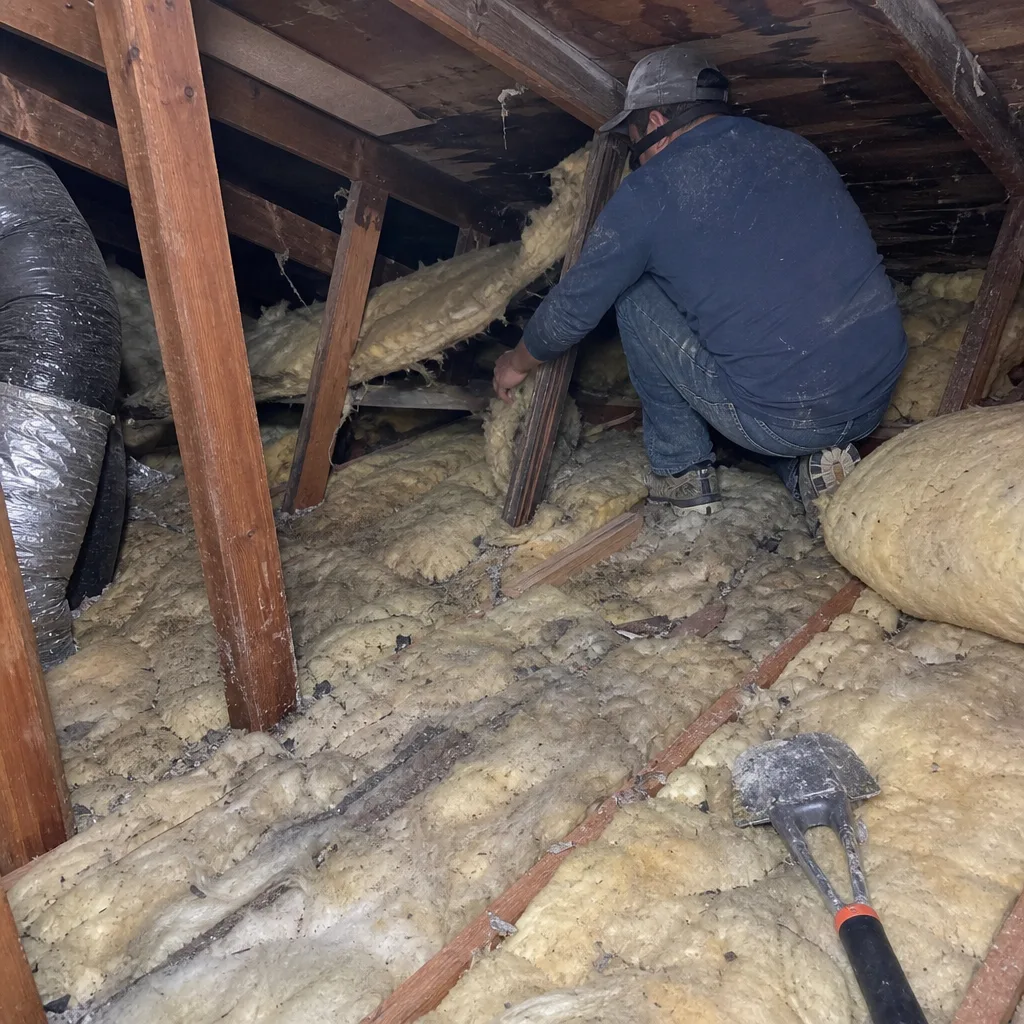 Before
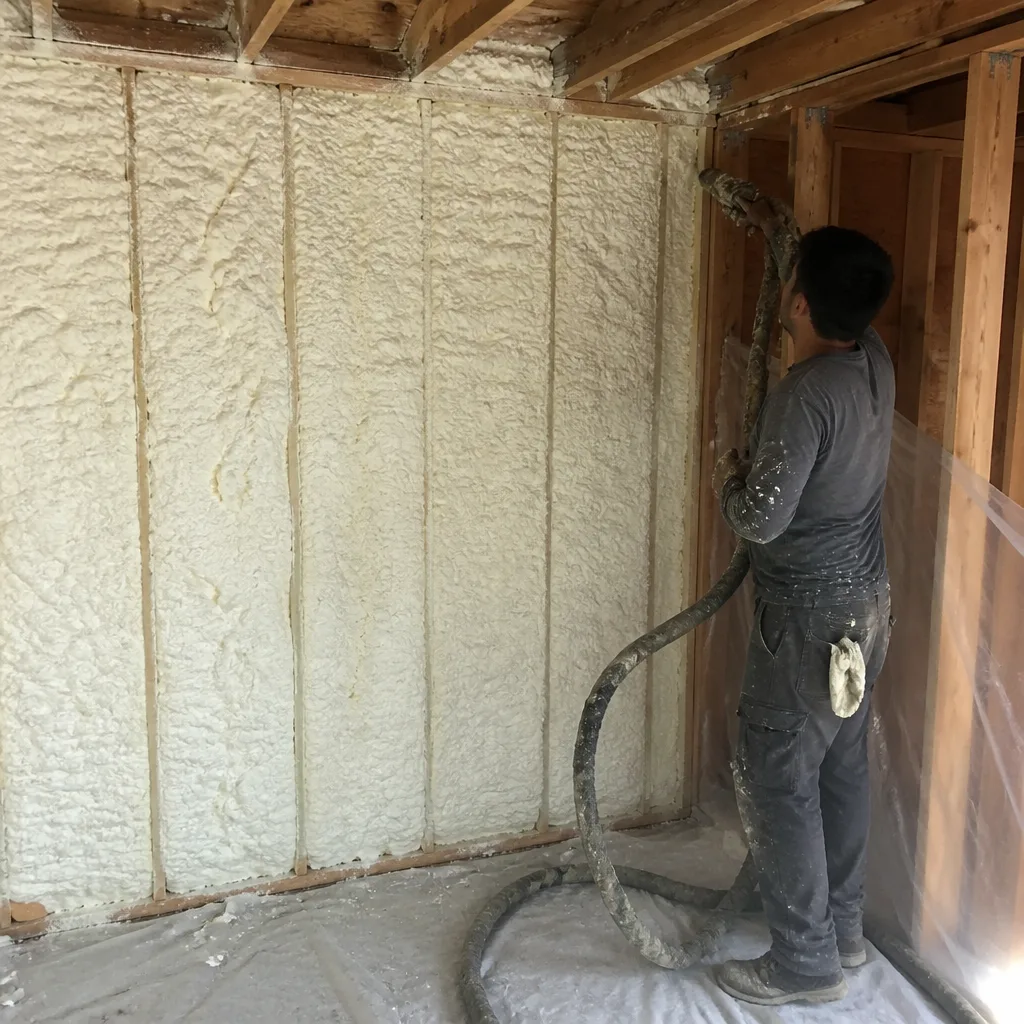 After
AfterReplacement Cost & What’s Included
Most Rockwool attic air sealing jobs in Lake Forest fall between $340 and $780, with smaller single-story homes near Lake Forest’s historic core at the low end and multi-level homes in Baker Ranch or Portola Hills with 15+ can lights and complex duct soffits at the high end. That range covers labor, fire-rated sealants, metal flashing, escutcheon rings, and any Rockwool SAFB or Comfortboard needed for proper damming around heat sources.
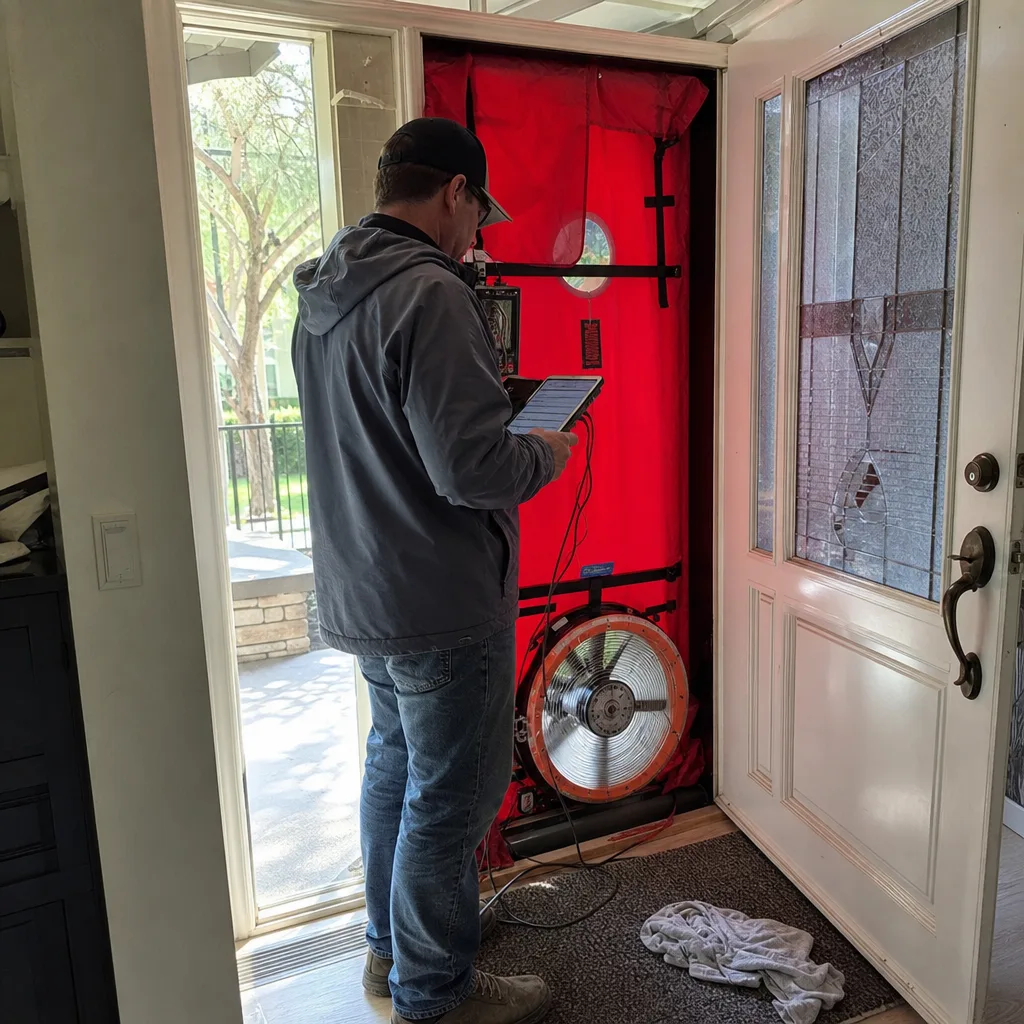
What moves the price: attic accessibility (truss spacing, existing decking), number of penetrations to seal, whether we need to remove existing insulation to access the top plates, and if the original contractor used incompatible sealants that must be fully removed first. We don’t quote over a vague description - Haven Standard Clause 1 requires a written price before any work starts, so we inspect first. Every job includes a Documented Photo Record of all sealed penetrations, pre- and post-installation blower-door readings where applicable, and the product data sheets stapled to your invoice. The 365-Day Done Right Promise covers labor and materials; if a seal fails or a gap reopens, we return and fix it.
DIY or Call Us?
There’s a short list of what a homeowner can safely check: lift the attic hatch and look for obvious gaps around the frame, shine a flashlight on can lights to see if escutcheon rings are present, and check for discolored or crumbly sealant at visible top plates. If you find gaps, note their location with photos - that’s useful information.
Where DIY goes wrong: working near active flues and chimney chases requires proper firestop clearances and metal flashing that most homeowners don’t stock; sealant selection is specific to the penetration type and fire rating; and without a blower-door test, you can’t verify that sealing actually worked. In Lake Forest’s older homes near El Toro Road, we’ve found live knob-and-tube wiring buried in insulation that the homeowner didn’t know was active. For anything beyond a visual check, call (657) 279-1249. We’ll give you a free second opinion on any written estimate you’ve already received, and we won’t start work until you have our price in writing.
FAQs
Properly installed fire-rated sealants last 20-30 years, though in Lake Forest’s dry climate with seasonal temperature swings, we recommend a visual inspection every 10 years. Sealant near active chimneys or flues may need earlier attention due to thermal cycling. Call (657) 279-1249 to schedule a look - estimates are free.
Spot repairs work if the original sealant is compatible and the gap is under 1/4 inch. If the existing material is standard latex caulk or silicone, it needs full removal - neither bonds reliably to mineral wool or meets fire codes for attic penetrations. We assess this during inspection and tell you which applies.
Most single-story homes in Lake Forest take 4-6 hours; two-story homes with complex attic framing or 15+ penetrations run a full day. We arrive with materials on the truck, so there’s no delay for parts. You’ll get a written start and completion time in your scope before we begin.
Yes - we carry 3M CP-25WB+, Hilti CFS-S SIL, St. Gobain FC-200, galvanized flashing, intumescent escutcheon rings, and Rockwool SAFB on every truck. Topside Attic Insulation Lake Forest is an independent service provider, not affiliated with Rockwool, and we also stock parts for Reflectix and other building envelope systems.
Ready to stop losing conditioned air through your attic? Call (657) 279-1249 for a free estimate. We’ll inspect your Rockwool installation, identify every bypass that needs sealing, and give you a written price before any work starts - that’s the Haven Standard, and it’s how we’ve handled 9,000+ homes since 2016.
Written by Wes Okafor, Owner, Topside Attic Insulation Lake Forest at Topside Attic Insulation Lake Forest, serving Lake Forest and nearby areas.