
Knauf Vapor Barrier Installation: The Lake Forest Owner’s Guide
Knauf vapor barrier installation in Lake Forest typically runs $1,800-$3,400 for a full crawl-space or attic-floor application, depending on square footage and whether the existing barrier needs complete removal. We stock Knauf Insulation’s Faced Batt and EcoSeal-compatible vapor retarder systems on our trucks, and most Lake Forest jobs can be started same-day once we’ve walked the space. Homeowners usually discover a failing vapor barrier when they spot condensation droplets on the underside of their existing plastic, catch a musty smell rising from the crawl space, or notice their spring energy bills climbing despite no thermostat change.
Which Knauf Models This Applies To
Knauf’s vapor barrier ecosystem breaks into three product families we regularly match in Lake Forest. The Knauf Insulation Faced Batt line (kraft-faced fiberglass batts with built-in vapor retarder) comes in R-13 through R-38, with the facing direction critical: warm-side-down in our climate zone. The EcoSeal System pairs water-based elastomeric air-sealing with unfaced batts plus a supplemental polyethylene sheet. The Insulation Board line (primarily EPS and XPS rigid boards) requires a separate 6-mil poly barrier when used below-grade or in crawl spaces.
Identification starts with the yellow-and-black Knauf label on any existing batts, or the printed spec sheet left by the original installer. Measure your existing barrier thickness: 6-mil polyethylene is standard for crawl spaces, but we’ve found 4-mil installed in Lake Forest tract homes from the 2018-2021 build wave, and that lighter gauge degrades faster in our clay-heavy soils. OEM Knauf vapor retarder facing uses an asphalt-impregnated kraft paper with a perm rating near 1.0; quality aftermarket equivalents (CertainTeed MemBrain, Johns Manville FSK-25) perform similarly but must be matched to the specific Knauf batt density to avoid sagging or facing separation.
One compatibility gotcha: Knauf’s EcoSeal water-based sealant is alkaline when wet and can degrade standard polyethylene if applied directly without the manufacturer’s specified cure time. We’ve pulled failed barriers in the Baker Ranch area where this exact mismatch occurred.
Signs Your Knauf Vapor Barrier Installation Is Failing
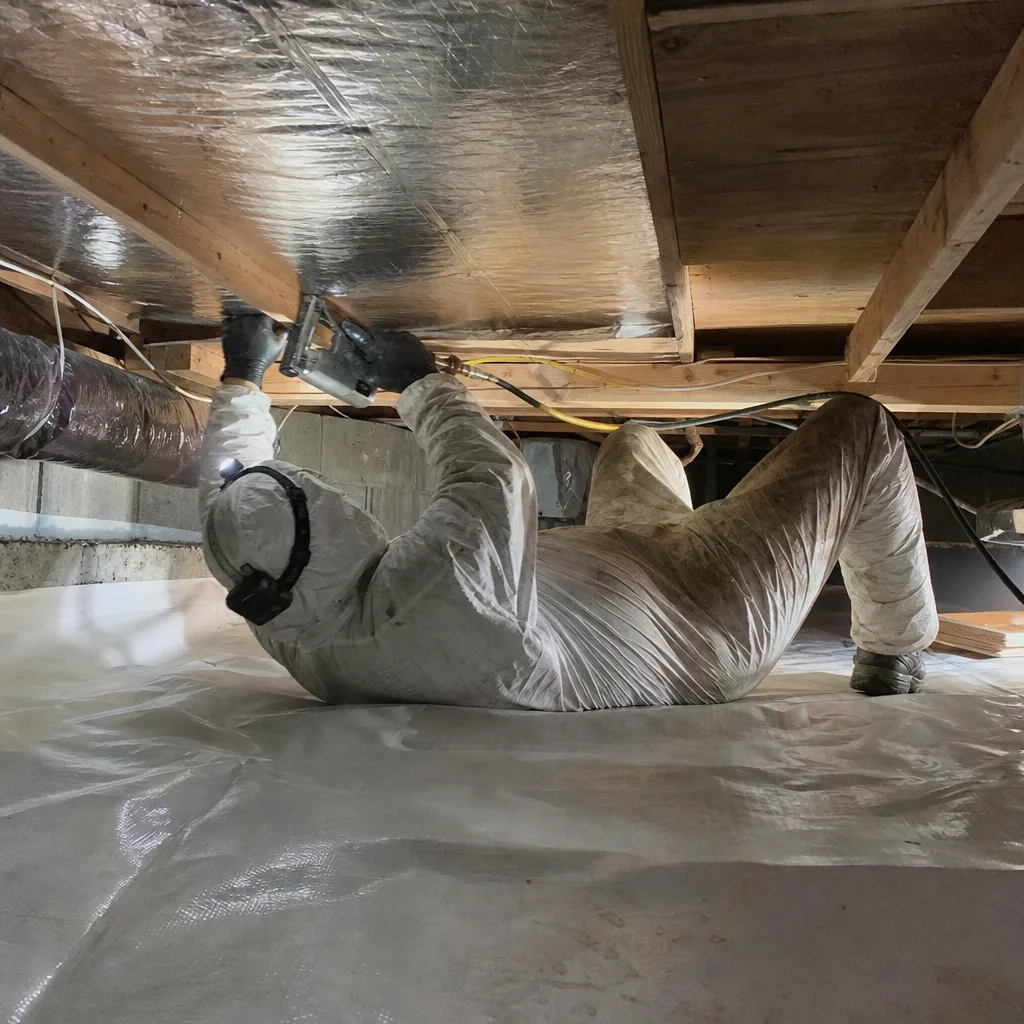
- Condensation pooling on the barrier underside. This means warm, moist interior air is reaching the cold surface, either because the barrier has torn at seams or the original install missed taping the overlaps. In Lake Forest’s mild but humid spring months, we see this most in homes near the lake basin where groundwater sits higher.
- Musty odor rising through floor registers. Once the vapor barrier loses continuity, soil moisture evaporates directly into the crawl space air. That moisture load gets pulled into your HVAC return if the ductwork runs below grade. The smell is mold metabolites, and it means your indoor air quality is already compromised.
- Sagging or detached barrier sections. Knauf’s kraft facing can delaminate from the fiberglass core when chronically damp, and polyethylene sheeting pulls free from fasteners when the wood expands and contracts through our dry summers and wet winters. We find this routinely in Foothill Ranch homes with south-facing crawl space vents that bake the framing.
- Insulation compression or discoloration. Wet fiberglass loses its R-value fast; a vapor barrier failure lets moisture wick upward, matting the batts and creating brown staining from tannin in the soil. If you can see the joist tops through compressed insulation, the barrier failed months ago.
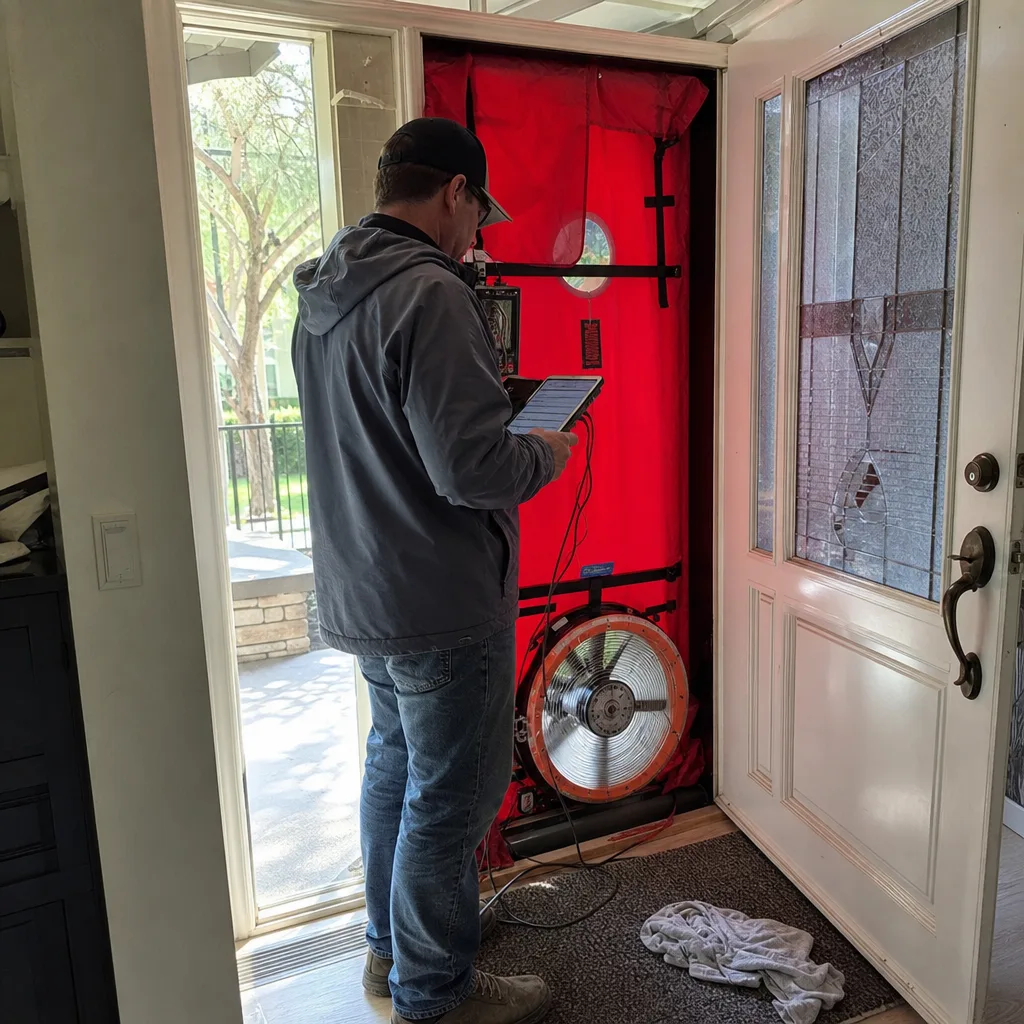
- Spring energy bills climbing year-over-year. A compromised vapor barrier forces your HVAC to dehumidify air it already conditioned. We measure this with blower-door tests: one Lake Forest home near Portola Hills showed 3,800 CFM50 before we resealed the crawl space, dropping to 2,400 after proper vapor barrier and air-sealing work.
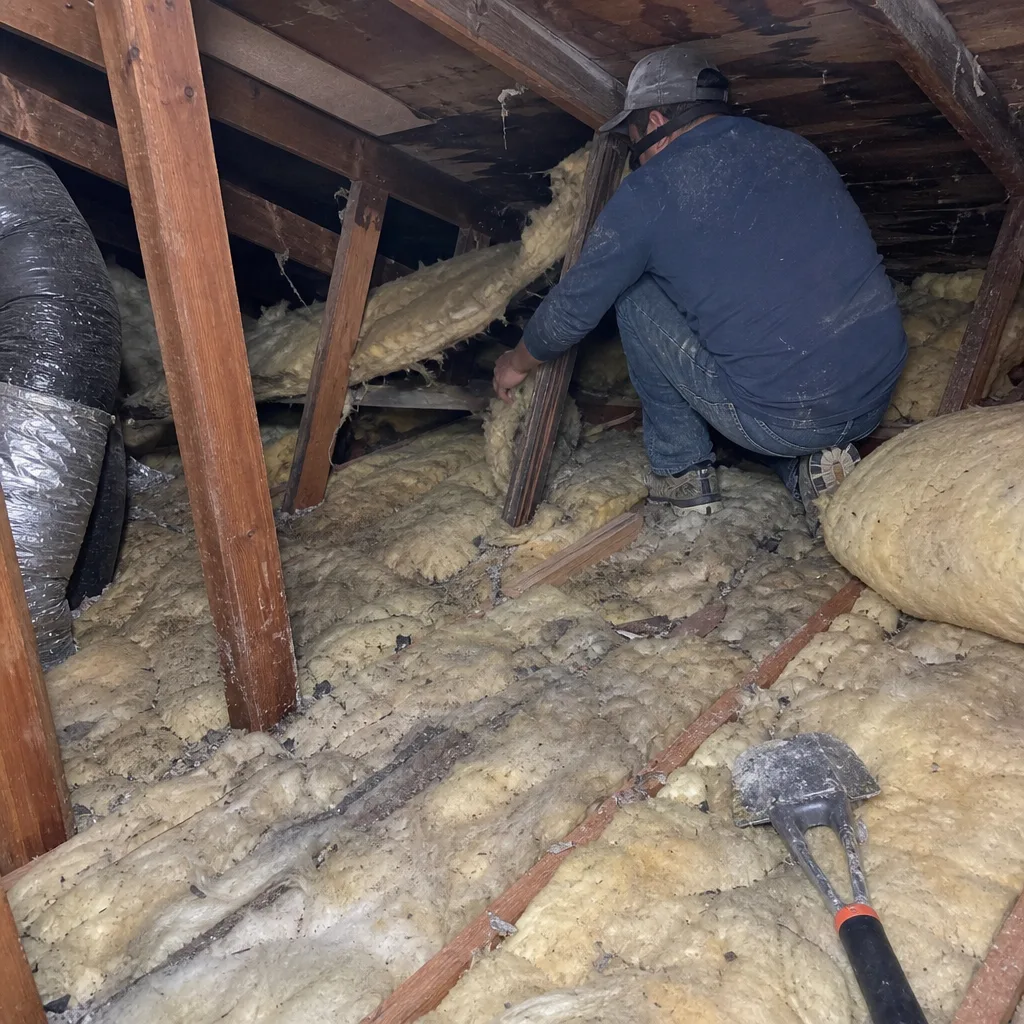 Before
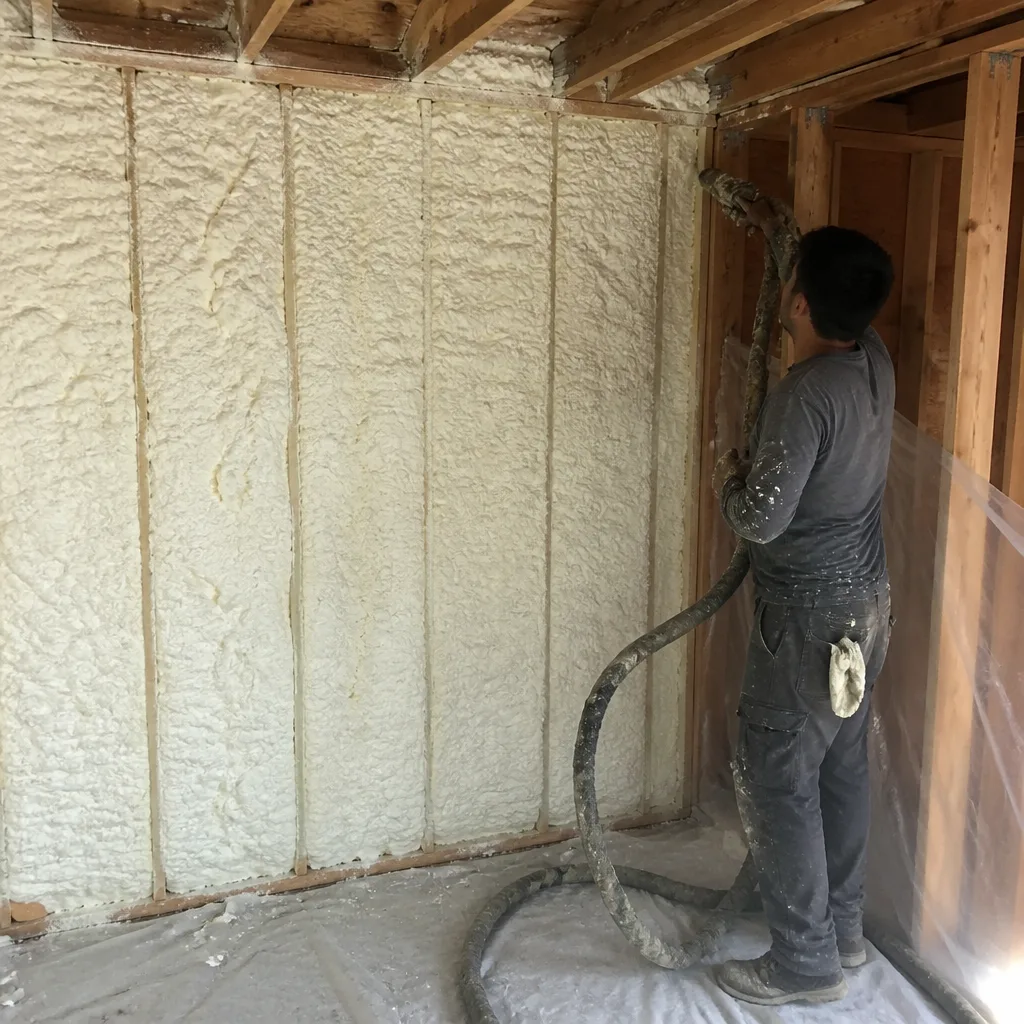 After
AfterReplacement Cost & What’s Included
Most full Knauf vapor barrier replacements in Lake Forest run $1,800-$3,400 installed. The low end covers a clean crawl space under 1,000 square feet with accessible clearance, using 6-mil polyethylene with sealed seams and mechanical fastening to foundation walls. The high end includes complete removal of degraded existing material, remediation of minor mold on joists, installation of Knauf Faced Batt with proper warm-side orientation, and full perimeter sealing with mastic tape.
What drives the range: square footage, clearance height (less than 18 inches requires specialized tools), whether the existing barrier is asbestos-containing (pre-1990 homes), and if we need to relocate ductwork or plumbing to achieve continuous coverage. Every quote is flat and written before work starts, Haven Standard Clause 1. The 365-Day Done Right Promise covers labor and materials; product defects fall to Knauf’s manufacturer warranty. We deliver a Documented Photo Record showing pre-condition, seam detail, and post-install coverage verification.
| Component | Typical Range |
|---|---|
| 6-mil polyethylene, 1,000 sq ft | $680-$920 |
| Knauf Faced Batt R-19, materials only | $1.10-$1.40/sq ft |
| Labor: removal + install | $840-$1,600 |
| Seam tape, fasteners, mastic | $180-$340 |
| Full job, typical 1,200 sq ft crawl space | $2,200-$3,200 |
DIY or Call Us?
There’s safe reconnaissance and then there’s work that belongs to someone with a respirator and a headlamp. A homeowner can verify barrier condition with a flashlight and a camera: photograph sagging, tears, or pooling water, and note any mold patches larger than a dinner plate. Do not enter a crawl space with active water intrusion, visible rodent activity, or a structural sag in the floor above.
Where DIY goes wrong: polyethylene seams require pressure-sensitive tape rated for damp substrates, not hardware-store duct tape that releases in six months. Proper overlap is 12 inches minimum, run up foundation walls 6 inches, and mechanical fastening every 24 inches. More critically, installing a vapor barrier without first sealing air bypasses at the rim joist and top plates is, as Wes Okafor puts it, “putting a lid on a colander.” The R-value on the bag means nothing if the air has somewhere else to go. For a written price and same-week scheduling in Lake Forest, call (657) 279-1249.
FAQs
Properly installed 6-mil polyethylene lasts 15-20 years in Lake Forest’s climate; kraft-faced batts in vented crawl spaces often show facing degradation in 8-12 years due to our seasonal humidity swings. Call (657) 279-1249 for an exact quote on replacement - estimates are free.
Patching works for isolated punctures smaller than a fist using compatible polyethylene tape, but widespread embrittlement, seam failure, or mold-contaminated backing means full replacement is the only lasting fix. Call (657) 279-1249 for an exact quote - estimates are free.
Most residential crawl spaces in Lake Forest take one day for removal and replacement, or two days if air sealing and new Knauf Faced Batt are added. We arrive with materials on the truck. Call (657) 279-1249 to check same-week availability.
Yes - we carry 6-mil polyethylene sheeting, Knauf Faced Batt in R-13 through R-38, and EcoSeal-compatible accessories on our Lake Forest trucks. We also stock Reflectix radiant barrier products for combined vapor-and-heat applications. Call (657) 279-1249 to confirm compatibility with your specific Knauf system.
Topside Attic Insulation Lake Forest is an independent service provider and is not affiliated with Knauf Insulation. We source materials from multiple manufacturers including Knauf, Owens Corning, Johns Manville, and others based on job-specific requirements.
Written by Wes Okafor, Owner, Topside Attic Insulation Lake Forest at Topside Attic Insulation Lake Forest, serving Lake Forest and nearby areas.