
Johns Manville Attic Cleaning & Rodent Proofing in Lake Forest: What to Know First
We provide independent Johns Manville attic cleaning and rodent proofing in Lake Forest, with most jobs completed in one to two days and a written price delivered before any work starts. As an independent Johns Manville service provider, we are not affiliated with or authorized by the manufacturer, which means we source parts based on what actually fixes the problem, not what protects a dealer agreement. Most Lake Forest homeowners who call us about Johns Manville insulation are dealing with rodent contamination in attics that were insulated between 2005 and 2015, when JM’s Climate Pro blow-in fiberglass and Spider custom sealant systems were installed in large volumes across Orange County tract developments. If your attic has that telltale gray-pink fiberglass with the compressed “walking paths” where rodents have tunneled, we have likely seen the exact same setup in a home off Bake Parkway or near Portola Hills. Call (657) 279-1249 for a written estimate.
How Johns Manville Products Fail - and How We Fix Them
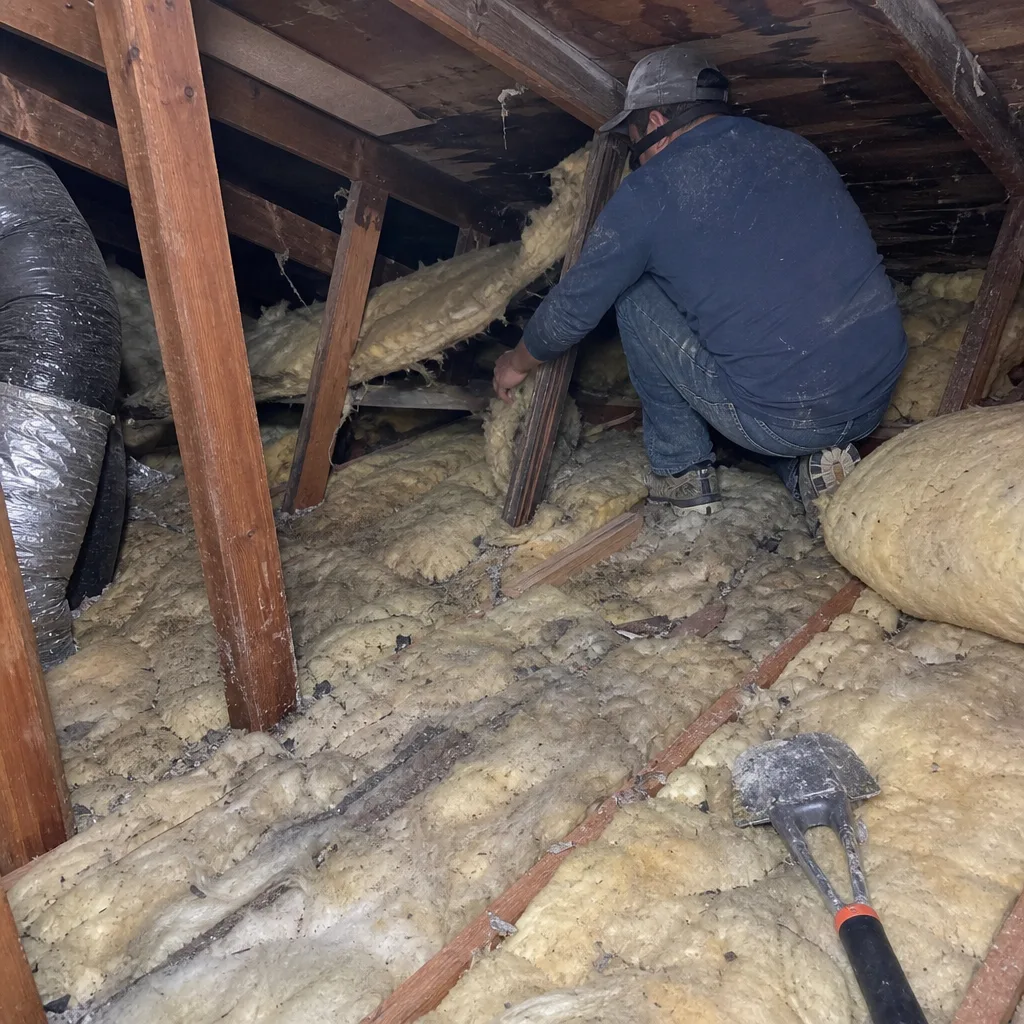
- Climate Pro blow-in fiberglass collapses under rodent traffic. The fine-glass strands in JM’s Climate Pro system (the loose-fill product labeled R-30 to R-60 on the bag) were never designed to support the compressive load of roof rats or mice running the same path nightly. In Lake Forest’s mild climate, rodents stay active year-round, and within 18 months of infestation the insulation depth at travel corridors drops from 14 inches to under 3 inches. We remove the contaminated batts, sanitize the substrate, and reinstall only after rodent-proofing is complete. Seal the bypasses first. Then insulate. The R-value on the bag means nothing if the air has somewhere else to go.
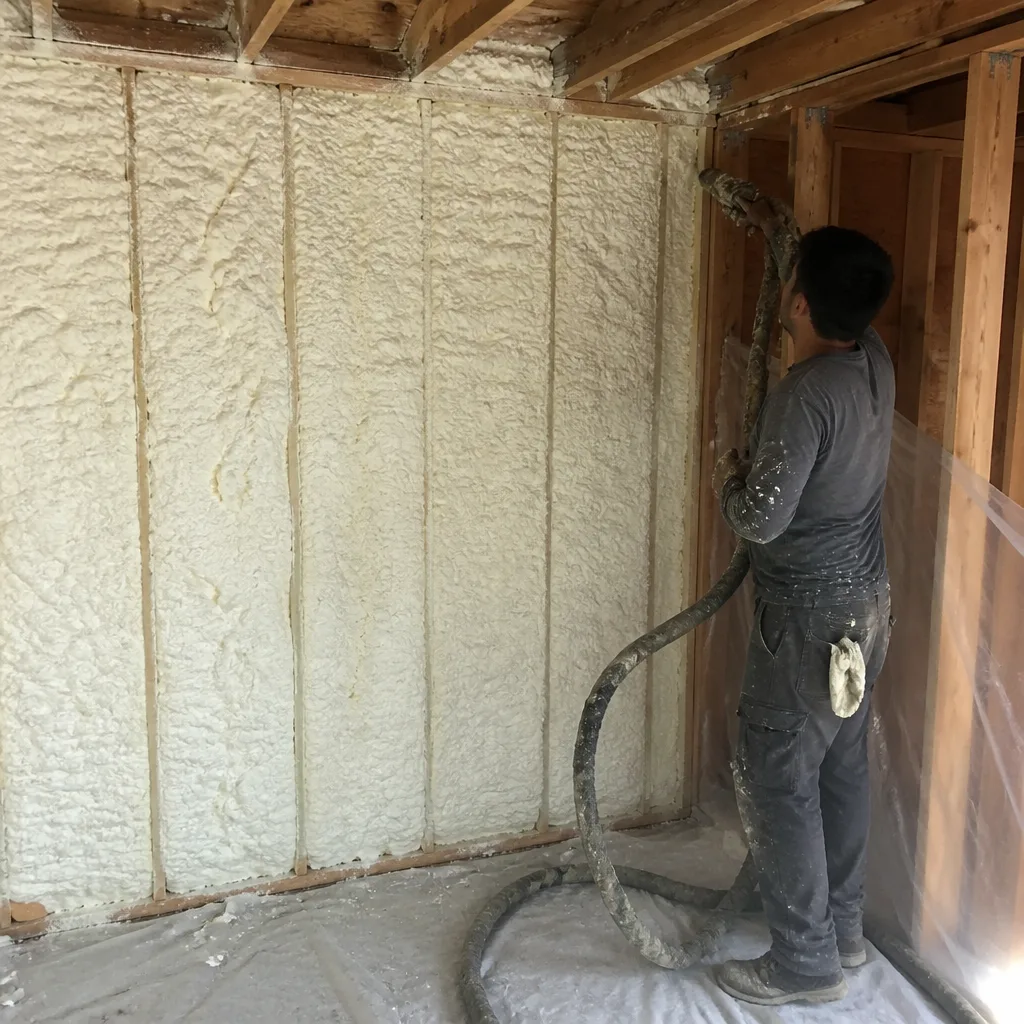
- Spider custom sealant degrades when saturated with rodent urine. JM’s Spider system, a spray-applied fiberglass that hardens into a monolithic blanket, creates an excellent air barrier when clean. But rodent urine is acidic enough to hydrolyze the acrylic binder over time, causing the surface to powder and detach from top plates. We see this most often in Lake Forest’s older Foothill Ranch builds where Spider was used as a premium upgrade. Our fix: complete removal of the degraded section, HEPA vacuuming of the friable residue, application of an enzyme-based decontaminant, then re-sealing with a rodent-resistant barrier before any new insulation goes in.
- Formaldehyde-free binders in pre-2012 JM batts attract nesting behavior. Johns Manville switched to a bio-based binder in 2008 to eliminate formaldehyde emissions, but early formulations used plant-derived starches that rodents found palatable for nest material. If your Lake Forest home has JM batts with a faint corn-sweet smell in humid conditions, you likely have this generation. We document the binder type by lot number, remove the attractive material, and replace with a current-generation product that maintains the formaldehyde-free claim without the rodent appeal.
- Sound Control batts in bonus-room ceilings compress unevenly under combined rodent and moisture load. Lake Forest’s marine layer pushes humidity into unvented kneewall spaces, and when rodents nest in JM’s Sound Control batts (the denser, 2.5 lb/ft³ product used for acoustic dampening), the material mats into hard, uneven clumps that lose both thermal and acoustic performance. We see this pattern in homes near Whiting Ranch Wilderness Park where temperature swings are sharper. Our approach: remove the compromised batts, inspect the roof sheathing for condensation staining, install proper baffles, then replace with fresh material only after the envelope is verified dry.
- AP Foil-faced polyiso boards delaminate at rodent entry points. JM’s AP Foil-faced polyiso (the rigid foam boards with the bright foil facing, often used in conditioned attic assemblies) creates a hard surface rodents cannot chew through, but they exploit any gap at the perimeter. Once inside the assembly, their body heat and respiration drive moisture against the foil, causing the facer to separate from the foam core in a bubble pattern. We cut out the delaminated sections, trace the entry path to its source (usually an unsealed duct penetration or electrical chase), and restore the assembly with proper rodent exclusion before patching.
Our Johns Manville Attic Cleaning & Rodent Proofing Process
- 1
Written price before entry. We inspect the attic access, document the visible JM product type from the hatch, and deliver a flat price with scope before anyone puts on a respirator. No surprises.
- 2
Product identification and hazard assessment. Our techs photograph the JM lot numbers, note the installation era, and test for active rodent presence using UV fluorescence on joist tops. We also check for asbestos in pre-1990 vermiculite that may have been capped with JM fiberglass, a common Lake Forest retrofit pattern.
- 3
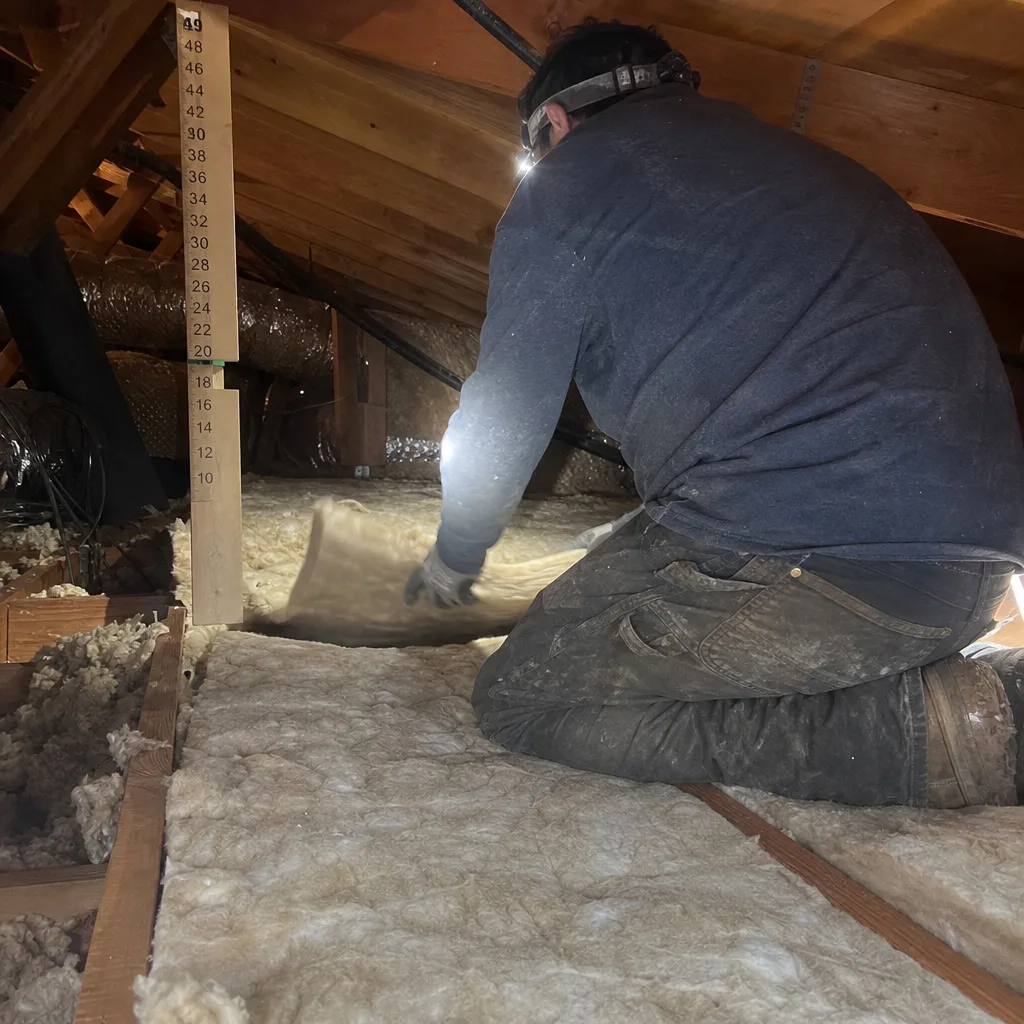
Removal and decontamination. Contaminated JM material is bagged in the attic, never dragged through living space. HEPA vacuums run continuously. Enzyme treatment follows on all organic staining.
- 4
Rodent-proofing and air sealing. We seal every penetration larger than 1/4 inch with stainless steel mesh and copper wool (rodents cannot pull or chew through), then blower-door test the attic floor if the rest of the envelope is being addressed. Wes Okafor trained on blower doors at Olive-Harvey College before most Lake Forest homes were built; the number matters.
- 5
Reinstallation with documentation. New insulation goes in only after the space is verified clean, dry, and sealed. You get depth measurements at four corners, product data sheets stapled to the invoice, and photos of the completed work.
- 6
365-Day Done Right Promise activation. The written warranty is in your hand before the crew leaves. If rodents re-enter through our work, we return and fix it.
 Before
 After
AfterWhat Johns Manville Attic Cleaning & Rodent Proofing Costs in Lake Forest
Most Johns Manville attic cleanouts and rodent-proofing jobs in Lake Forest run between $2,800 and $6,400, with the final price pinned to three factors: how much JM material must come out, whether the substrate needs enzyme treatment or full replacement, and how many penetrations require sealing.
| Scenario | Typical Range |
|---|---|
| Climate Pro removal, light contamination, no replacement | $2,800 - $3,900 |
| Spider system removal with degraded binder, re-sealing required | $4,200 - $5,600 |
| Full cleanout, decontamination, rodent-proofing, new JM or equivalent insulation | $5,100 - $6,400 |
| AP Foil polyiso repair with delamination and entry tracing | $3,500 - $5,200 (per affected zone) |
Homes near Lake Forest’s steeper rooflines, like those backing Aliso Creek or in the Portola Hills elevations, sometimes require additional safety rigging that adds $400-$800. We also service Reflectix radiant barrier systems when they are part of the same assembly. Every estimate is free, written, and valid for 30 days. Call (657) 279-1249 to schedule.
Why Lake Forest Homeowners Call Topside Attic Insulation Lake Forest for Johns Manville Work
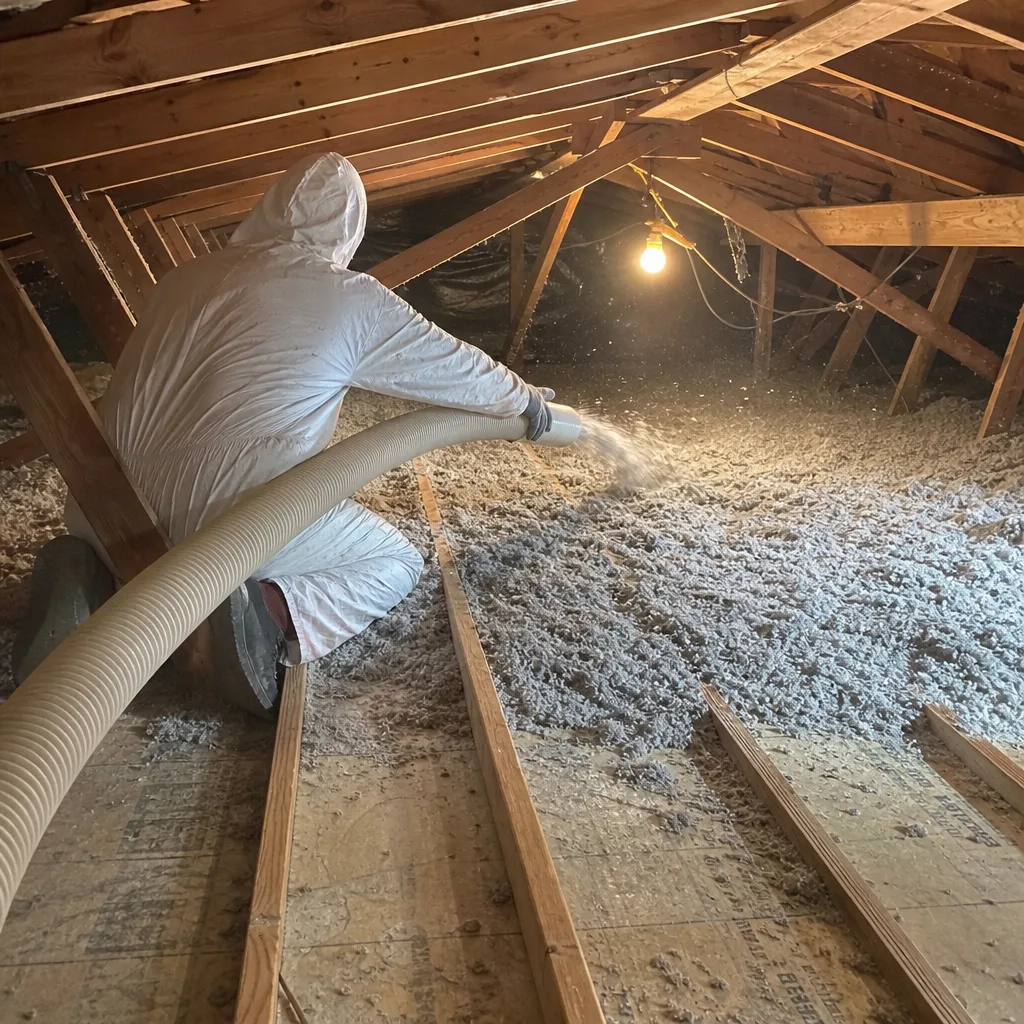
We have cleaned and restored Johns Manville insulation in over 200 Lake Forest homes since 2016, and we have learned the product-specific failure patterns that general pest-control companies miss. Our technicians are background-checked and uniformed; calls are answered by a live person, 24/7. Every job closes with a Documented Photo Record and, where applicable, before-and-after blower-door numbers so you can verify the air-sealing result. The 365-Day Done Right Promise is not a slogan; it is a written warranty delivered before anyone starts. We also work with Reflectix and other brands, so if your attic has a mixed-manufacturer assembly, we do not force a single-source solution that leaves gaps.
FAQs
Johns Manville’s limited warranty on installed insulation covers manufacturing defects, not damage from rodents or improper maintenance, so removal for cleaning does not affect coverage that was already limited. We document the original lot numbers and installation condition before any material comes out, so if a legitimate defect claim exists, the evidence is preserved. Call (657) 279-1249 and we will review your specific JM product line and install date.
We source current-generation Johns Manville products through standard distribution when they are the right choice for the assembly, but we are not locked to any single brand. For some Lake Forest homes with specific acoustic or fire-resistance requirements, we may recommend Knauf, Owens Corning, or Rockwool based on what the building code and your budget actually require. The written scope names the exact product before work starts.
If the JM material is less than 10 years old, has not been compressed below labeled depth, and shows contamination limited to surface droppings rather than saturated nesting, we can often HEPA-vacuum and sanitize in place. If the binder has degraded, the fiberglass has matting that will not loft, or rodents have established multi-generation nesting, replacement is the only code-compliant path. We show you the photos and explain which category your attic falls into before you decide.
Most Lake Forest appointments are scheduled within 3 to 5 business days, with emergency rodent-active cases prioritized. We do not book more crews than we can supervise properly, so peak season (March through May, when roof rats begin breeding cycles) may stretch to 7 to 10 days. A live person answers (657) 279-1249 24/7 to check current availability.
No, and in most Lake Forest jurisdictions it violates health department guidance on rodent-affected spaces. Covering contaminated insulation traps urine proteins and pheromones that attract future rodents, and it masks the structural damage (chewed wiring, compromised vapor barriers) that we find in roughly 30 percent of JM attics we open. The proper sequence is remove, decontaminate, proof, then reinstall. We will show you the code references and our photo documentation from previous jobs if you want to see why.
Written by Wes Okafor, Owner, Topside Attic Insulation Lake Forest at Topside Attic Insulation Lake Forest, serving Lake Forest and nearby areas.