
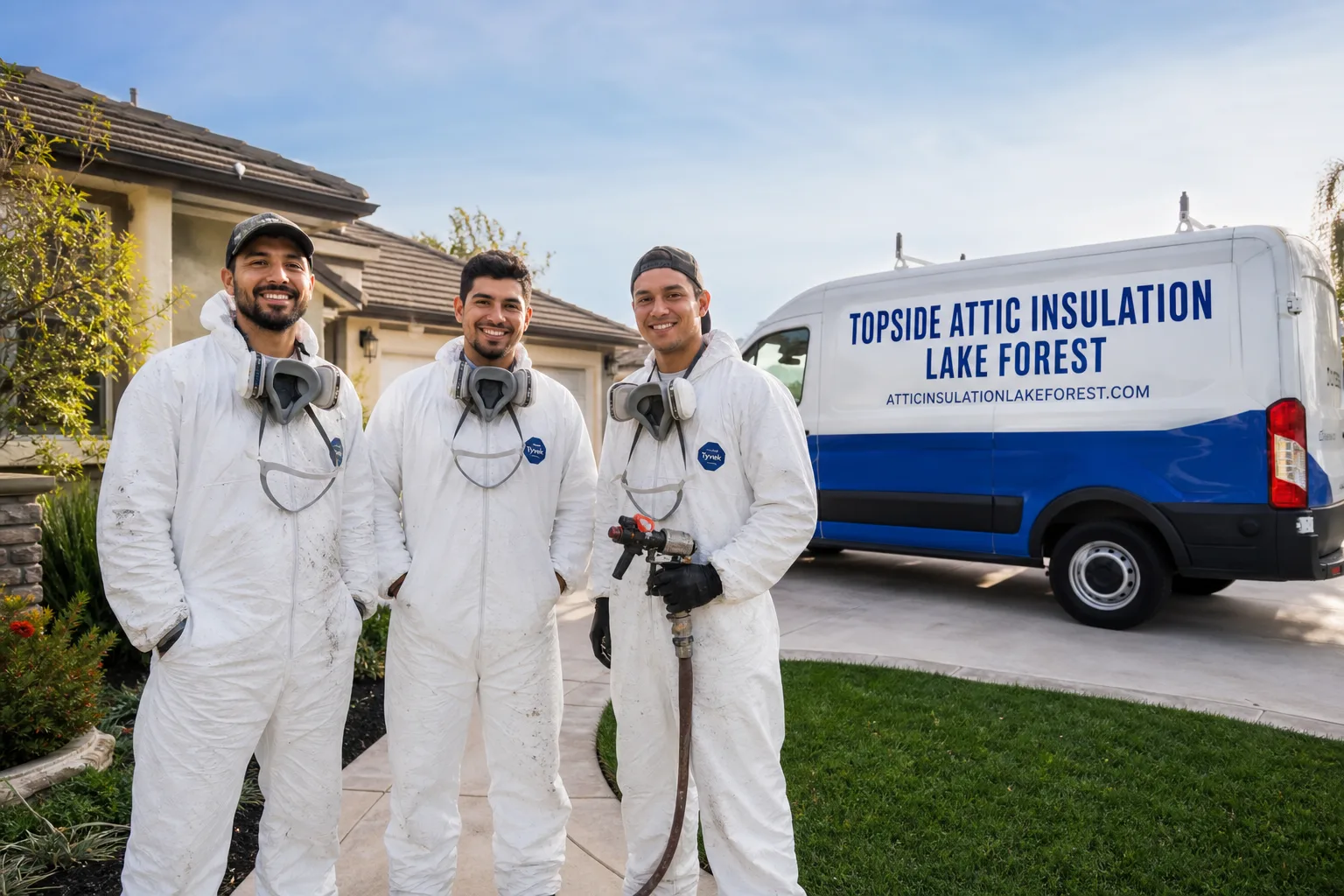
How Much Does Spray Foam Insulation Cost in Lake Forest?
Spray foam insulation in Lake Forest, CA typically costs between $1,800 and $6,500 for a whole-attic or crawl space application, with most residential jobs landing between $2,400 and $4,200 depending on square footage, foam type, and how much air sealing work the building envelope needs first. Open-cell foam runs roughly $0.44 to $0.65 per board foot installed, while closed-cell foam runs $1.00 to $1.50 per board foot – and in Lake Forest’s climate zone 8B, the choice between the two matters more than people expect.
Spray Foam Insulation Cost Breakdown (2026)
Here is how our Spray Foam Insulation services pricing breaks down across the most common applications in Lake Forest homes. These figures reflect current material and labor costs in the south Orange County market, not national averages pulled from a spreadsheet.
| Application | Foam Type | Typical Price Range | Notes |
|---|---|---|---|
| Attic roof deck (1,000 sq ft) | Open-cell, 5.5″ | $1,800 – $2,600 | Converts attic to conditioned space |
| Attic roof deck (1,500 sq ft) | Open-cell, 5.5″ | $2,600 – $3,800 | Common in Serrano, Portola Hills tracts |
| Attic roof deck (1,000 sq ft) | Closed-cell, 2″ | $2,200 – $3,200 | Higher R-value per inch, vapor retarder |
| Attic roof deck (1,500 sq ft) | Closed-cell, 2″ | $3,200 – $4,800 | Best for homes near El Toro Rd corridor |
| Crawl space encapsulation + spray foam | Closed-cell, 2″ | $2,800 – $5,200 | Includes vapor barrier when applicable |
| Rim joists and band joists only | Closed-cell, 2″ | $600 – $1,100 | High-ROI air sealing target in older tracts |
| Garage ceiling (600 sq ft) | Open-cell, 3.5″ | $900 – $1,500 | Common for attached garages in Lake Forest |
| New construction wall cavities (per 1,000 sq ft wall) | Open-cell, 3.5″ | $1,400 – $2,400 | Requires open framing access |
| Bonus room / knee wall application | Closed-cell, 2″ | $1,200 – $2,400 | Frequent in two-story Lake Forest homes built 1988-2005 |
| Full attic air sealing + open-cell spray foam (1,200 sq ft) | Open-cell with air sealing | $2,800 – $4,200 | The complete building-envelope approach |
What Pushes the Price Up
Attic access matters a lot in Lake Forest’s housing stock. Homes in the older sections of the city – particularly the tracts built along Jeronimo Road and in the Lake Forest Drive corridors during the late 1980s and early 1990s – often have low-pitch rooflines and tight attic clearances under 24 inches. When a technician can’t stand or crouch comfortably, setup and spray time both increase, and that labor cost shows up in the estimate.
Foam thickness is the other major variable. In California’s Title 24 energy code, a conditioned attic assembled with open-cell spray foam generally needs to hit R-19 at minimum for the roof deck application, and many homeowners targeting meaningful cooling-season savings are going to R-30 or beyond. More thickness means more board feet, and the price scales linearly. Closed-cell foam achieves higher R-values at lower thickness – R-13 at just 2 inches – which can actually reduce material volume and offset some of the higher per-board-foot cost.
What Keeps the Price Down
Jobs where the attic floor doesn’t need to be cleared first, where existing blown-in insulation doesn’t need removal, and where the roof framing is clean and accessible tend to come in at the lower end of those ranges. A home in the newer Foothill Ranch or Baker Ranch sections of Lake Forest that was built to tighter standards often needs less air sealing prep before the foam goes in, which reduces total job time. Combining spray foam with other envelope work – say, doing the attic and the crawl space in one mobilization – also reduces the cost per application because the crew is already there and the equipment is already charged.
What Affects Spray Foam Insulation Pricing in Lake Forest
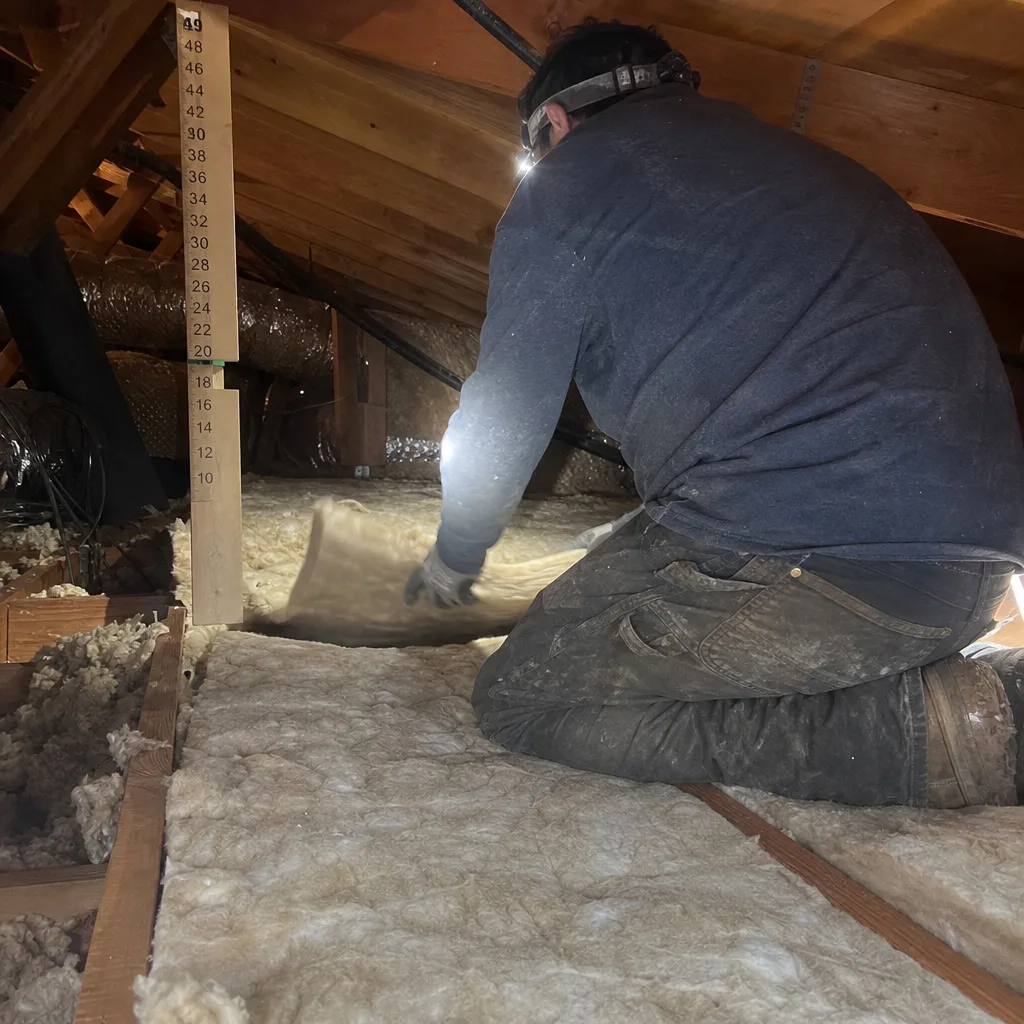
- Foam type: open-cell vs. closed-cell. Open-cell foam costs less per board foot ($0.44-$0.65 installed) but requires more thickness to reach a given R-value. Closed-cell ($1.00-$1.50 per board foot) is denser, acts as a vapor retarder, and is the right call for areas with any moisture risk – including crawl spaces under homes in the hillside sections of Lake Forest near the Whiting Ranch watershed. The choice isn’t about budget alone; it’s about which foam is appropriate for the location in the building.
- Square footage and geometry. A 1,000-square-foot attic roof deck and a 1,500-square-foot attic roof deck are not 50% more expensive in a linear way – labor setup costs are similar, so larger jobs often cost less per square foot than smaller ones. Unusual geometry – cathedral sections, knee walls, dormers – adds time and material waste, and those costs are real.
- Air sealing prerequisite. At Envelope Insulation Co., air sealing of top plates, can lights, and penetrations is completed before any spray foam is added – not as an optional upsell but as a condition of the job. This is what the Spray Foam Insulation in Lake Forest service page describes in detail. In Lake Forest homes built before 2000, attic bypasses – the gaps around light fixtures, plumbing chases, and wall top plates – are common and significant. Sealing them adds $300 to $900 to a typical job, and skipping them means a portion of the conditioned air the spray foam is meant to retain will simply route around it.
- Existing insulation removal. If there is old, degraded fiberglass batts or rodent-contaminated blown-in cellulose in the attic that needs to come out before spray foam can go on the roof deck, that removal runs $800 to $2,200 depending on depth and contamination level. This is a separate line item and will be written out clearly on any Envelope Insulation Co. estimate – it will never appear as a surprise charge on the day of the job.
- Accessibility and attic height. As noted above, low-pitch rooflines are common in the Lake Forest housing stock. Tight attic clearances add labor time. So does a pull-down attic ladder that can’t accommodate equipment staging – some homes require a temporary exterior access point, which adds setup cost that a transparent written estimate will call out before work starts.
- California Title 24 compliance requirements. Lake Forest falls under California’s Building Energy Efficiency Standards, and any permitted insulation work needs to meet minimum R-value thresholds. For newly conditioned attic assemblies, that typically means R-19 to R-38 depending on the assembly type and the compliance path chosen. Jobs that need to be pulled with a permit add permit fees ($150 to $350 for most Orange County residential insulation permits), which is worth accounting for in the budget. Envelope Insulation Co. includes permit guidance in the written scope for any job where a permit is required.
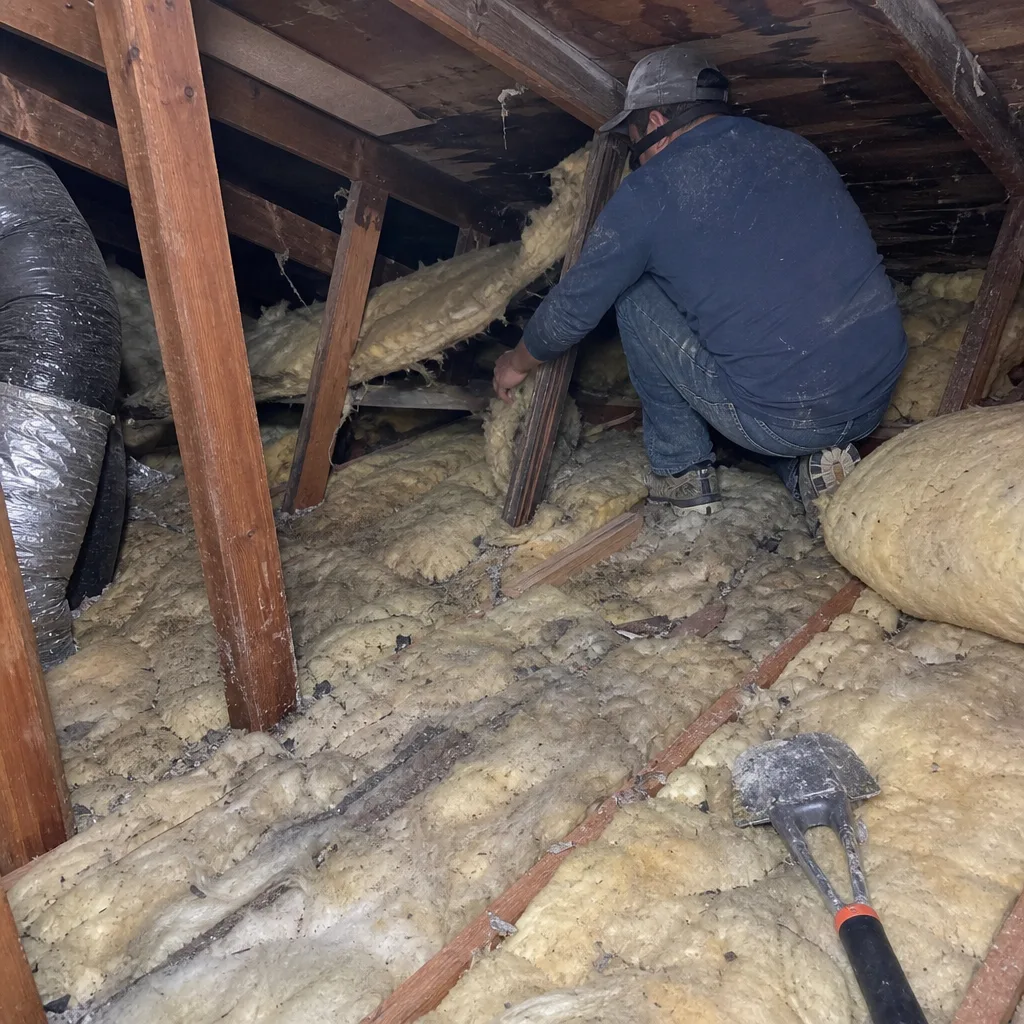 Before
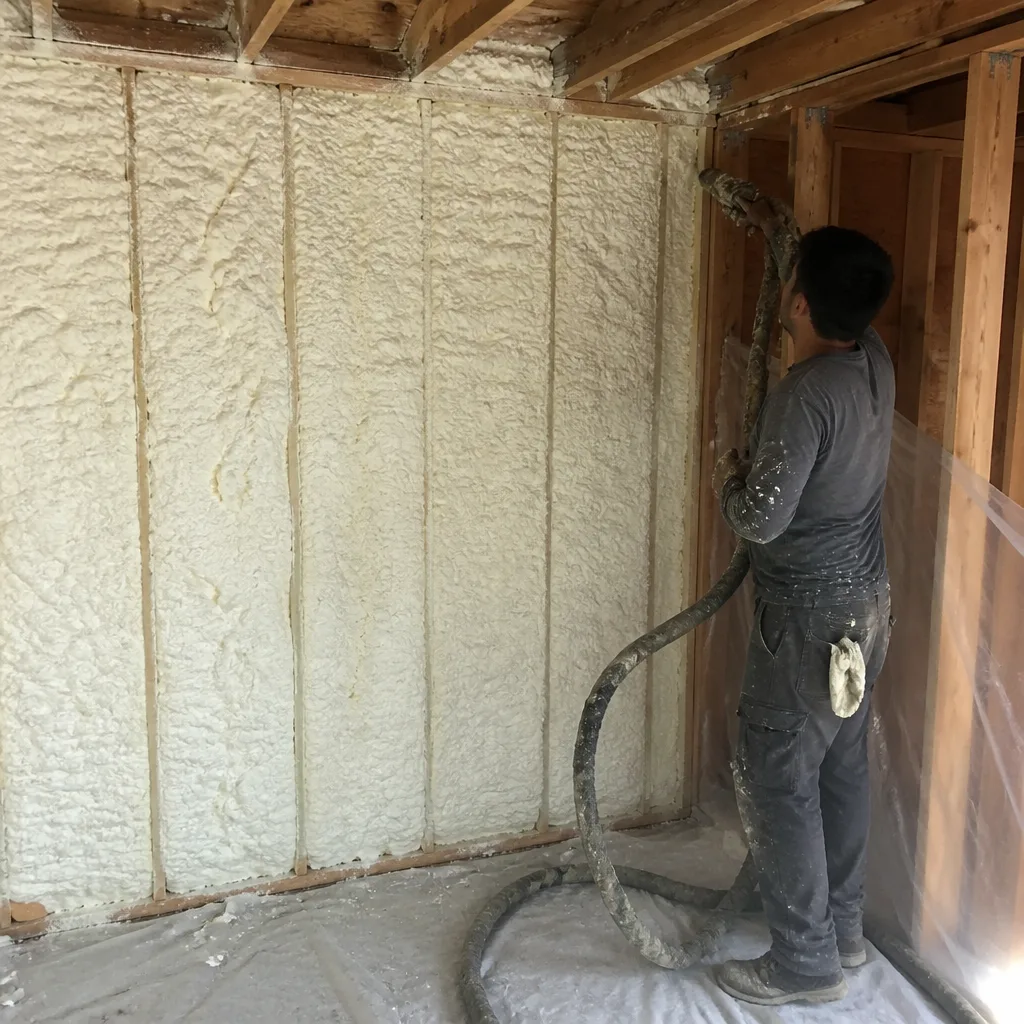 After
AfterOpen-Cell vs. Closed-Cell Spray Foam in Lake Forest: Which One?
This question comes up on nearly every estimate in Lake Forest, and the answer isn’t the same for every part of the house.
Open-cell spray foam – sometimes called half-pound foam because its density runs about 0.5 lb per cubic foot – is softer, expands aggressively, and does a good job filling irregular cavities. It’s vapor-permeable, which means moisture can move through it. In a ventilated attic being converted to a conditioned (unventilated) attic assembly, open-cell at 5.5 inches delivers roughly R-20, which meets California’s Title 24 minimum for most Lake Forest roof assemblies. It costs less per board foot than closed-cell and is the right choice for roof deck applications in this climate where vapor control is not a primary concern.
Closed-cell spray foam – two-pound foam – is rigid, dimensionally stable, and acts as both an insulator and a Class II vapor retarder. At 2 inches it delivers roughly R-13; at 3 inches, approximately R-19. It’s the correct choice for crawl space walls and floors, rim joists, any area exposed to bulk moisture risk, and applications where structural stiffening of the sheathing is a secondary benefit. It costs more per board foot, but in many applications you need less of it to hit the required R-value.
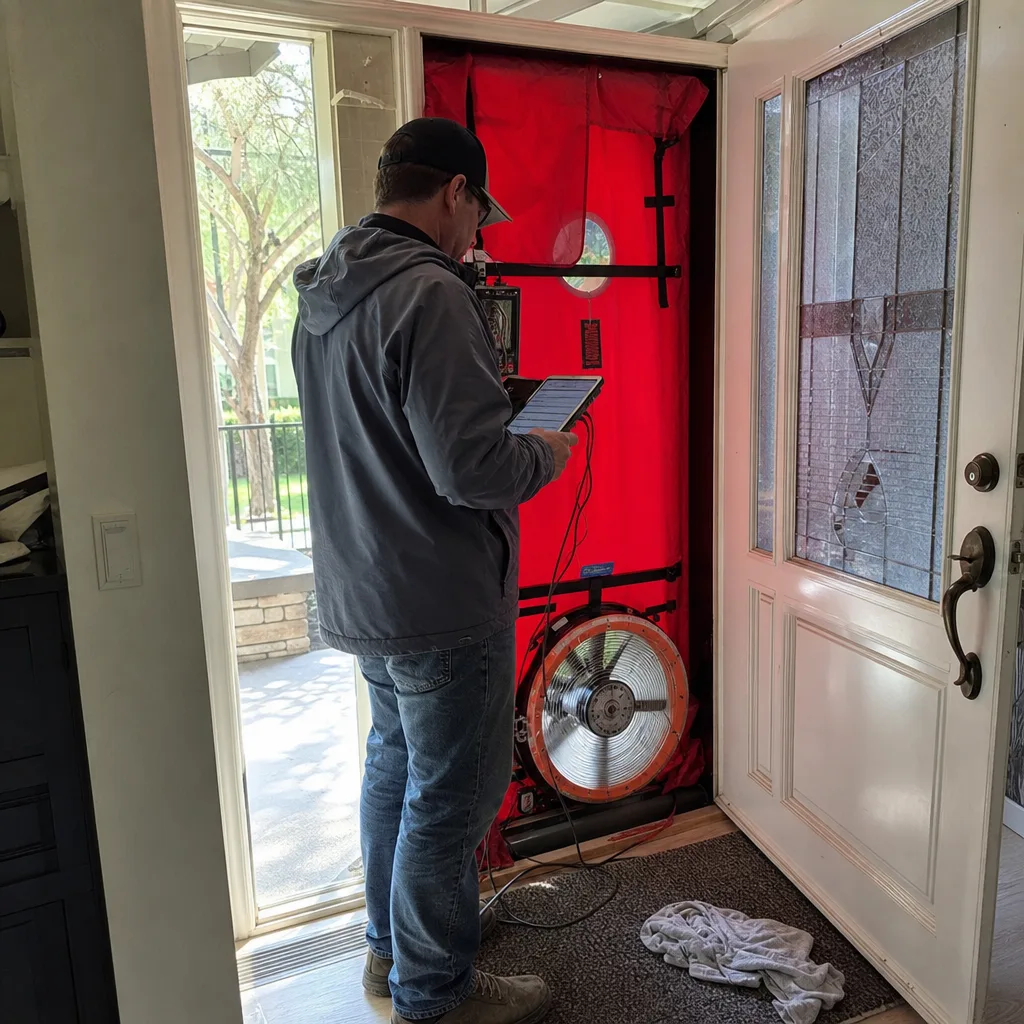
Some Lake Forest homes – particularly hillside properties in the Canyon communities – end up with a hybrid assembly: closed-cell on the first inch or two for vapor control and air sealing, then open-cell over the top for cost-effective R-value. This is a legitimate approach and one that a blower-door test – a pressurization reading that shows, in one number, how much air the building envelope is losing – can verify after installation.
The Air Sealing Step That Changes the Math
Spray foam is an excellent air barrier as well as an insulator, which is one reason it outperforms blown-in fiberglass at the same R-value in real-world conditions. But spray foam applied over an attic floor with open bypasses doesn’t seal those bypasses – it only insulates the space above them. The conditioned air in your Lake Forest home’s living space will still find its way into the attic through every unsealed top plate, can light housing, and plumbing chase it can reach.
This is why Envelope Insulation Co. treats air sealing as a hard prerequisite, not an optional add-on. Before any spray foam goes in, the crew seals top plates, recessed light housings, plumbing and wiring penetrations, and any other identified attic bypasses using two-component foam, fire-rated caulk, or rigid board depending on the opening size and fire code requirements. The cost of this step is written into the estimate as a separate line item so you can see exactly what you’re paying for it.
On applicable jobs, Envelope Insulation Co. runs a before-and-after blower-door test – measuring the building’s air changes per hour at 50 pascals of pressure, or ACH50 – so the homeowner has a documented number showing the envelope’s performance before the crew arrived and after they left. In Lake Forest homes we’ve worked in near the Saddleback Valley area, it’s not unusual to see a starting ACH50 reading in the range of 6 to 9 – which means the home’s entire air volume turns over six to nine times per hour when pressurized to the test standard. Post-sealing readings in the 3 to 4 ACH50 range are common after a thorough sealing and spray foam application, and those numbers show up in the documented record that every customer receives.
How to Save on Spray Foam Insulation in Lake Forest
Get the scope right before you approve anything
The biggest source of overpaying for spray foam is approving a scope that’s too large for the actual problem – or too small, which means the job gets done twice. A good estimate starts with a real assessment: where is the air leaking, what’s the existing R-value, and what does California Title 24 require for this specific assembly? Envelope Insulation Co. publishes a written price before any work starts, every time, and that price reflects an actual inspection of the attic or crawl space rather than a per-square-foot guess over the phone.
Combine applications in one mobilization
If your Lake Forest home has both an attic and a crawl space that need work, scheduling them together saves the mobilization cost – typically $200 to $400 – that gets built into every separate job visit. Ask your estimator to quote both applications at once and compare the combined price to separate estimates.
Check for SCE and SoCalGas rebates
Southern California Edison and SoCalGas both offer rebate programs for insulation upgrades in existing homes. As of 2026, SCE’s residential insulation rebates can reach $0.10 to $0.20 per square foot for qualifying attic insulation applications that bring the home to R-38 or higher. Spray foam jobs that include a blower-door test and verified air sealing can also qualify for additional rebates under certain program tracks. These programs change, so confirm eligibility directly with SCE or SoCalGas before counting on a specific dollar amount – but it’s worth asking your contractor to document the R-value and ACH50 reading in a format that supports a rebate application.
Ask for a free second opinion on any written estimate
If you have a written estimate from another contractor, Envelope Insulation Co. will read it with you at no charge. This isn’t a sales tactic – it’s a practical check on whether the scope described in another quote matches what your home actually needs. Sometimes competing estimates miss the air sealing step entirely, or specify a foam type that isn’t right for the application, and reading the scope line by line makes that visible.
Don’t skip the air sealing to cut the budget
This one runs counter to how most people think about cost-cutting, but it matters. Spray foam installed over unsealed attic bypasses delivers a fraction of the energy performance the R-value implies. The right order is: seal first, then insulate. Paying for spray foam without the sealing step is paying full price for a partial result, and the energy savings that were supposed to offset the investment don’t materialize at the rate the math suggests. The air sealing step typically adds $300 to $900 to the total job – a small fraction of the total that changes the real-world performance substantially.
To get a written price for your Lake Forest home’s specific situation, call (657) 279-1249. A live person will answer – no voicemail, no callback window.
Why Lake Forest Homes Often Need More Than Just Insulation
Lake Forest sits in the inland edge of Orange County, where summer temperatures regularly exceed 95°F and Santa Ana wind events in fall and winter can drive air infiltration hard through any gaps in the building envelope. The housing stock is a mix of older tracts – many built between 1978 and 1995 along the El Toro Road and Lake Forest Drive corridors before California’s energy codes tightened – and newer planned communities like Foothill Ranch and Baker Ranch built to more current standards.
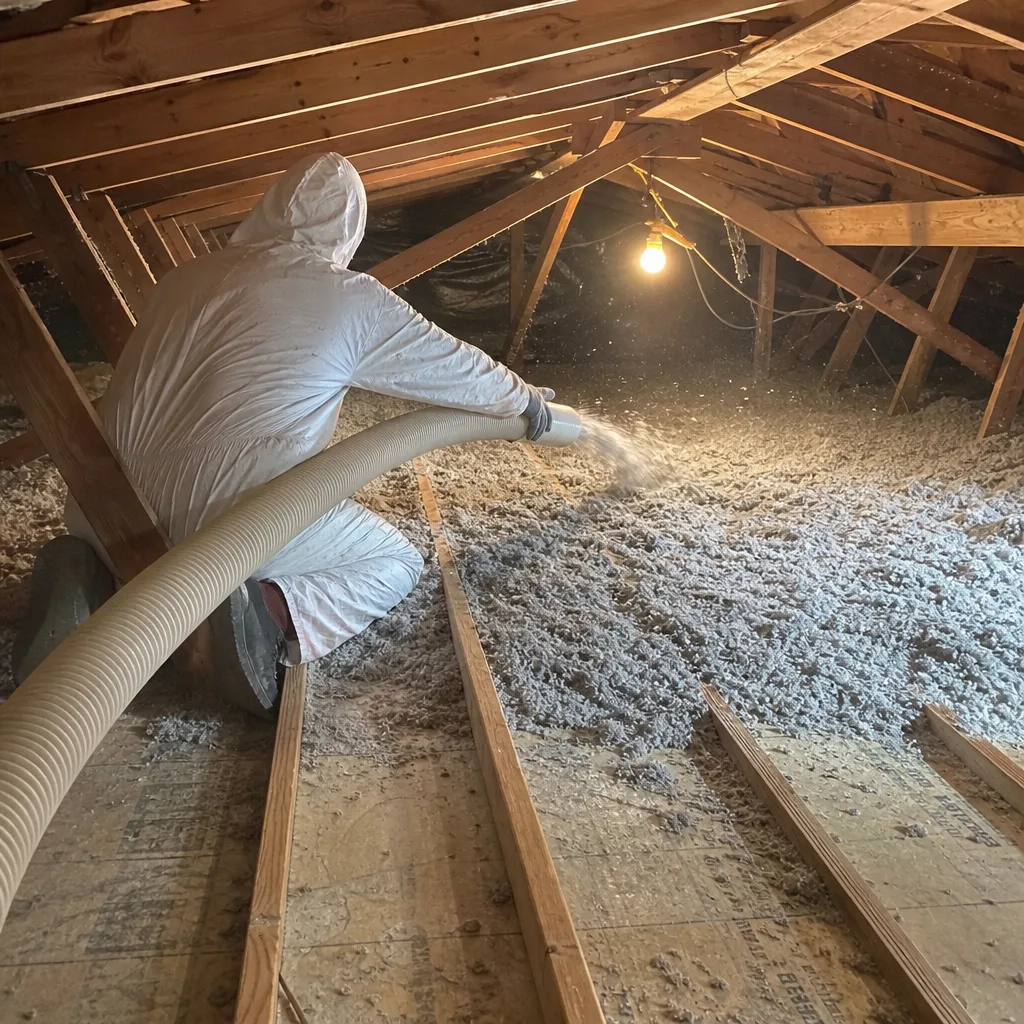
The older tracts are where spray foam often makes the biggest difference, because those homes were built when attic air sealing wasn’t a standard practice. Recessed light fixtures that penetrate the attic floor without any housing seal, wall top plates with no blocking, and HVAC ducts that run through unconditioned attic space – all of these are common findings in a Lake Forest attic inspection on a home built before 1995.
In Portola Hills, where hillside lots mean crawl spaces with varying height and some moisture exposure from slope drainage, closed-cell spray foam on the crawl space walls and subfloor is often the right answer – both for the thermal performance and for the vapor control it provides. The Whiting Ranch area has similar characteristics. These aren’t generic observations; they’re patterns that show up consistently in the homes we inspect in those neighborhoods.
Baker Ranch and the newer sections of Foothill Ranch, by contrast, were built under stricter Title 24 requirements and often have pre-sealed can lights, better duct systems, and starting air leakage rates that are already tighter. Spray foam in these homes is often a targeted upgrade – rim joists, garage ceilings, or a specific assembly that the original builder left underperforming – rather than a whole-attic overhaul.
The Documentation You Should Expect to Receive
Under Haven Standard Clause 1 – Written Price Before Any Work Starts – every Envelope Insulation Co. estimate is a flat, written price with a written scope and a written warranty delivered before anyone lifts a tool. There is no “call for pricing” here, because asking someone to call for pricing while claiming to offer upfront pricing is a contradiction. The estimate you receive will have specific line items: square footage, foam type, thickness, R-value, air sealing scope, and any removal or prep work included.
When the job is done, you receive a Documented Photo Record – photos of the before and after condition, included on every job as standard documentation, not available by request. On applicable jobs, you also receive the before-and-after blower-door readings so you can see, in a single number, what the air sealing actually accomplished. That number – ACH50 before and after – is the documented evidence that the work performed matched the scope you agreed to.
The 365-Day Done Right Promise covers all completed work. If it’s not done right, Envelope Insulation Co. makes it right. That commitment is in writing before anyone starts.
FAQs – Spray Foam Insulation Cost in Lake Forest
How much does spray foam insulation cost per square foot in Lake Forest?
Open-cell spray foam installed in Lake Forest runs approximately $0.44 to $0.65 per board foot, and closed-cell runs $1.00 to $1.50 per board foot. A board foot is one square foot of coverage at one inch of thickness, so a 1,000-square-foot attic roof deck sprayed at 5.5 inches with open-cell foam involves 5,500 board feet of material – which puts the installed material cost alone in the $2,400 to $3,600 range before labor and setup. Total installed cost for that job in the Lake Forest market typically runs $1,800 to $2,800 for the foam application, with additional cost if air sealing or removal is included. Call (657) 279-1249 for a written number specific to your home’s square footage and assembly type.
Is spray foam worth it compared to blown-in insulation in Lake Forest?
Spray foam costs more upfront than blown-in fiberglass or cellulose, but in Lake Forest homes with significant air leakage – which includes most houses built before 1995 – spray foam’s air-barrier properties deliver energy savings that blown-in alone can’t match. A blower-door test before and after installation quantifies the difference: in older Lake Forest tracts, we regularly see ACH50 readings drop from 7 or 8 down to 3 to 4 after a sealed-and-spray-foam application, a reduction that translates to real cooling-season savings given how hard air conditioning systems work in the Saddleback Valley heat. Blown-in insulation is the right choice for many attic floors; spray foam is the right choice when you’re converting to a conditioned attic assembly or when air sealing the existing bypasses isn’t sufficient on its own. The right answer depends on your home’s specific starting condition, which is why the inspection comes before the recommendation.
Does spray foam insulation require a permit in Lake Forest, CA?
In most cases, yes – spray foam insulation that converts a ventilated attic to a conditioned (unventilated) attic assembly is a permitted change to the building’s thermal envelope and requires a City of Lake Forest building permit. Permit fees for residential insulation work in Orange County typically run $150 to $350. Jobs limited to rim joists, crawl space walls, or minor air sealing additions may or may not require a permit depending on scope and dollar value – your written estimate from Envelope Insulation Co. will identify whether a permit is required for your specific job and include that cost as a line item. California’s Title 24 compliance documentation is part of the permitted-job record.
How long does spray foam insulation last in a Lake Forest home?
Spray foam insulation – both open-cell and closed-cell – does not degrade, compress, or settle the way fiberglass batts do over time. Properly installed closed-cell spray foam has a documented service life of 80+ years in most residential applications; open-cell foam is similarly durable under normal conditions. The practical caveat is that spray foam applied in an attic with an active moisture intrusion or pest problem can be damaged by those conditions independently of the foam’s material properties – which is one reason the inspection and air sealing step matters. A home that had a rodent problem and contaminated blown-in insulation in the attic needs that contamination removed and the entry points sealed before spray foam goes in, not after.
Can spray foam insulation reduce my energy bills in Lake Forest?
In a Lake Forest home with significant attic air leakage, a properly executed spray foam application – with air sealing done first – can reduce cooling and heating energy use by 15% to 30% in real-world conditions, though the actual figure depends on the home’s starting leakage rate, HVAC system efficiency, and usage patterns. The blower-door test Envelope Insulation Co. runs before and after the work gives you a measured performance change rather than an estimated one. A home starting at ACH50 of 8 that finishes at ACH50 of 3.5 has cut its air infiltration roughly in half, which the energy model will translate to a specific dollar reduction in annual utility costs. Those numbers will be in your documented record. For a written estimate with a real price for your Lake Forest address, call (657) 279-1249 – a live person answers.
Related Insulation Services in Lake Forest
Spray foam is one part of a complete building-envelope approach. Depending on what the inspection finds, your Lake Forest home may also benefit from attic air sealing as a standalone service, blown-in insulation for the attic floor, crawl space encapsulation with a vapor barrier, or a home energy audit that benchmarks the whole envelope before any work starts. Envelope Insulation Co. has provided all of these services to Lake Forest homeowners since 2016, with 9,000+ homes sealed and insulated across the region – every one of them with a written price before work started and a documented record when the crew left.
Learn more about the full service and approach on the home page, or get specific information about the foam application process on the Spray Foam Insulation in Lake Forest page.
Get a Written Price for Your Lake Forest Home
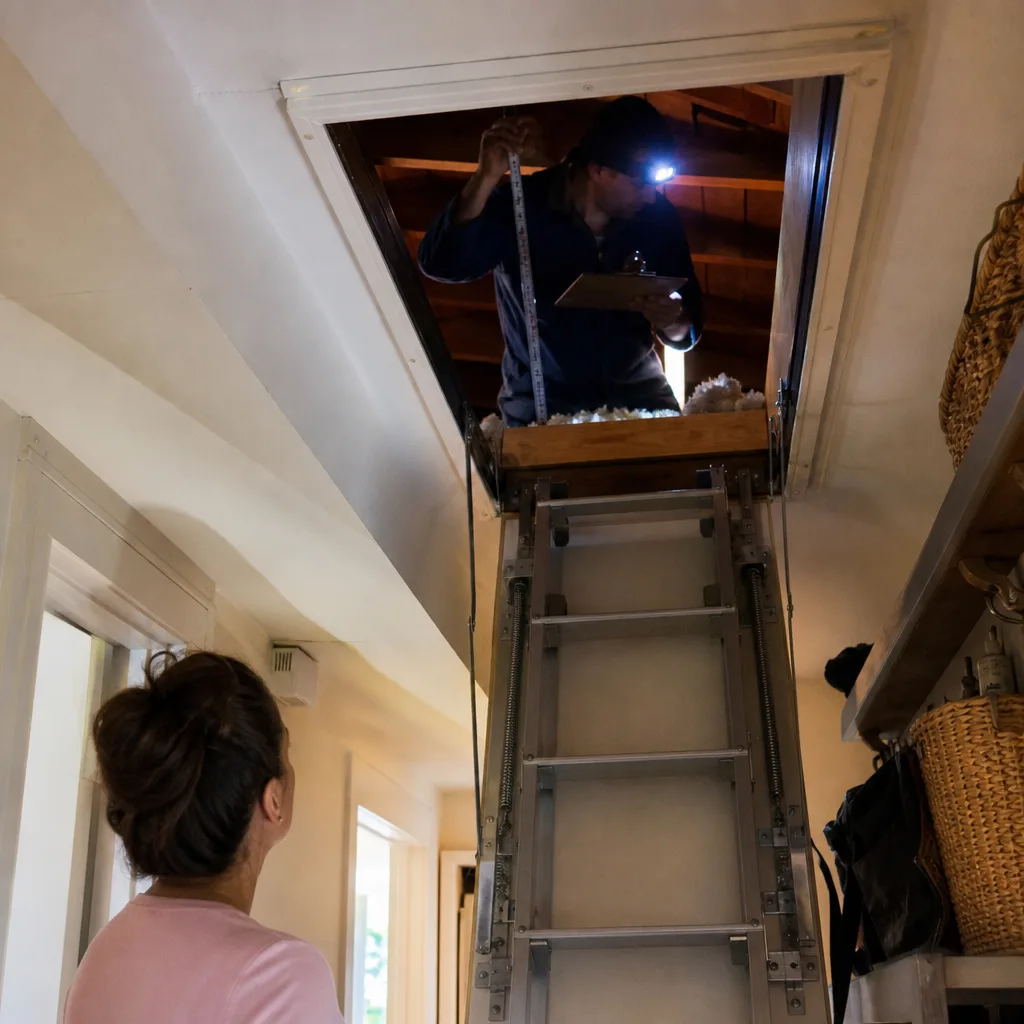
Spray foam insulation in Lake Forest runs $1,800 to $6,500 for most residential applications, and the specific number for your home depends on square footage, foam type, attic access, and how much air sealing work the envelope needs before the foam goes in. Envelope Insulation Co. will inspect your attic or crawl space, identify what’s there and what’s missing, and give you a flat written price with a written scope and written warranty before anyone starts work. No estimate windows, no verbal ballparks, no surprises on installation day.
Call (657) 279-1249 to schedule a free estimate. A live person answers – not a voicemail, not a callback form. Wes Okafor and the Envelope Insulation Co. team have been doing this work in Lake Forest and across Orange County since 2016, and every job closes with a documented photo record and, on applicable jobs, a before-and-after blower-door reading so you can see exactly what the work accomplished.
Key Takeaways
- Spray foam insulation in Lake Forest costs $1,800 to $6,500 for most residential jobs, with most whole-attic applications landing between $2,400 and $4,200.
- Open-cell foam runs $0.44 to $0.65 per board foot installed; closed-cell runs $1.00 to $1.50 per board foot.
- Air sealing – of top plates, can lights, and penetrations – must be done before spray foam is added, not after. Skipping it reduces the real-world performance of the foam substantially.
- Older Lake Forest tracts (built 1978-1995) along El Toro Road and Lake Forest Drive corridors typically have higher starting air leakage and benefit most from the sealed-then-insulated approach.
- Before-and-after blower-door readings are documented on every applicable job – so you have a number, not a feeling, showing what the work accomplished.
- Every Envelope Insulation Co. estimate is a flat written price with a written scope before anyone starts. Call (657) 279-1249 for yours.
Written by Wes Okafor, Owner at Envelope Insulation Co. (operating as Topside Attic Insulation Lake Forest), serving Lake Forest, CA since 2016. Pricing reflects the Lake Forest market as of 2026. Topside Attic Insulation Lake Forest offers free estimates – call (657) 279-1249.
What Our Customers Say
"The winter gas bill dropped by about a third. They had estimated a quarter, so they under-promised."
- Genevieve R."Two other companies quoted to blow more insulation on top of what was there. These were the only ones who said the existing material had to come out first, and explained why."
- Clifford E."They air-sealed the attic floor before insulating and showed me the blower-door number before and after. The upstairs is finally the same temperature as downstairs."
- Marisol D.